

When Did Pokémon Cards Come Out? Japan in 1996, the U.S. in 1999, and What the Dates on Your Cards Mean
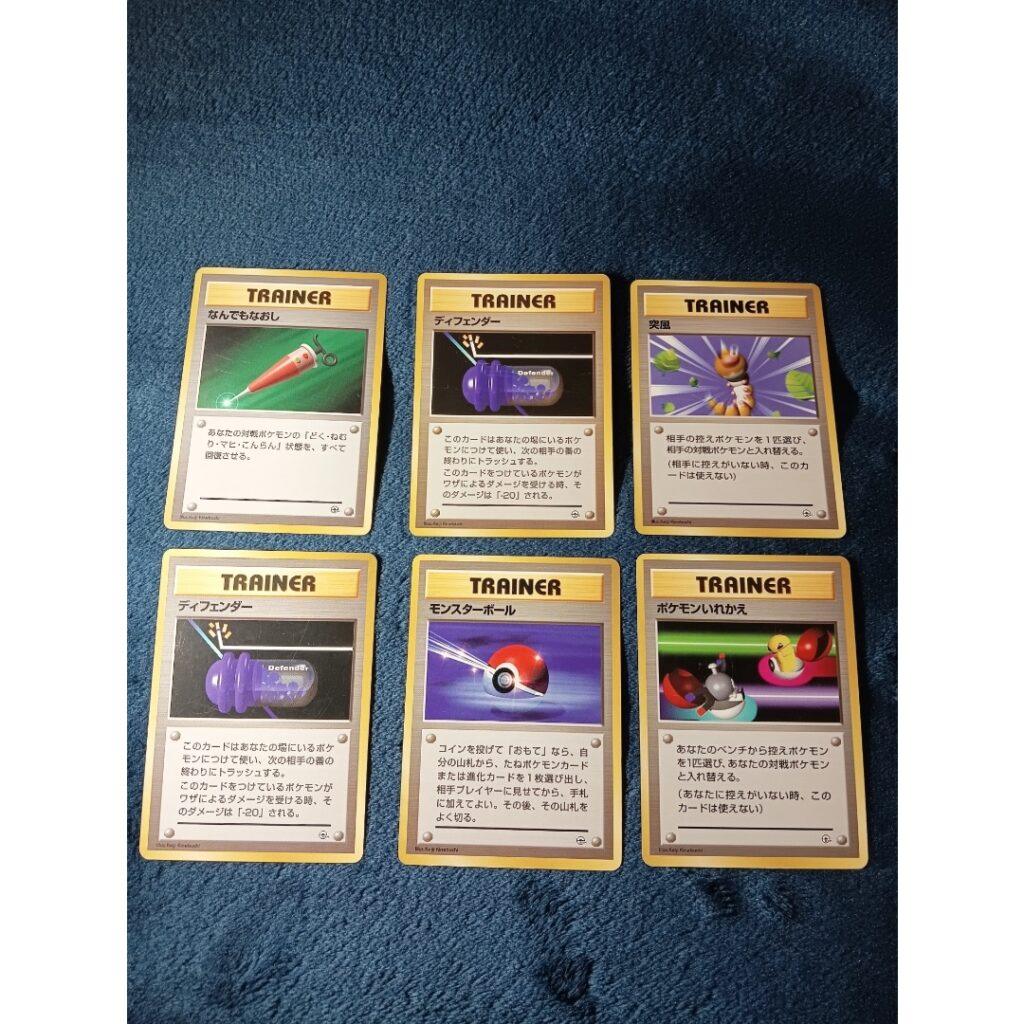
You dug out a stack of old Pokémon cards, looked at the fine print along the bottom, and found the year 1995. That number is not the card’s print date. Pokémon cards came out in Japan on October 20, 1996, and the first English cards did not reach U.S. shelves until January 1999, so a card marked 1995 was printed years after the date it carries. Below are the dates collectors mix up, which cards are genuinely the oldest, and current graded-market values for cards from 1999.
| Date | What happened | Where |
| February 1996 | Pokémon Red and Green launch on Game Boy | Japan |
| October 20, 1996 | First Pokémon TCG starter pack and expansion pack | Japan |
| September 1998 | Pokémon Red and Blue launch on Game Boy | U.S. |
| January 1999 | Base Set, the first English card set | U.S. |
| 1995 | A copyright year printed on cards, not a release date | — |
When Pokémon Cards Came Out in Japan: October 20, 1996
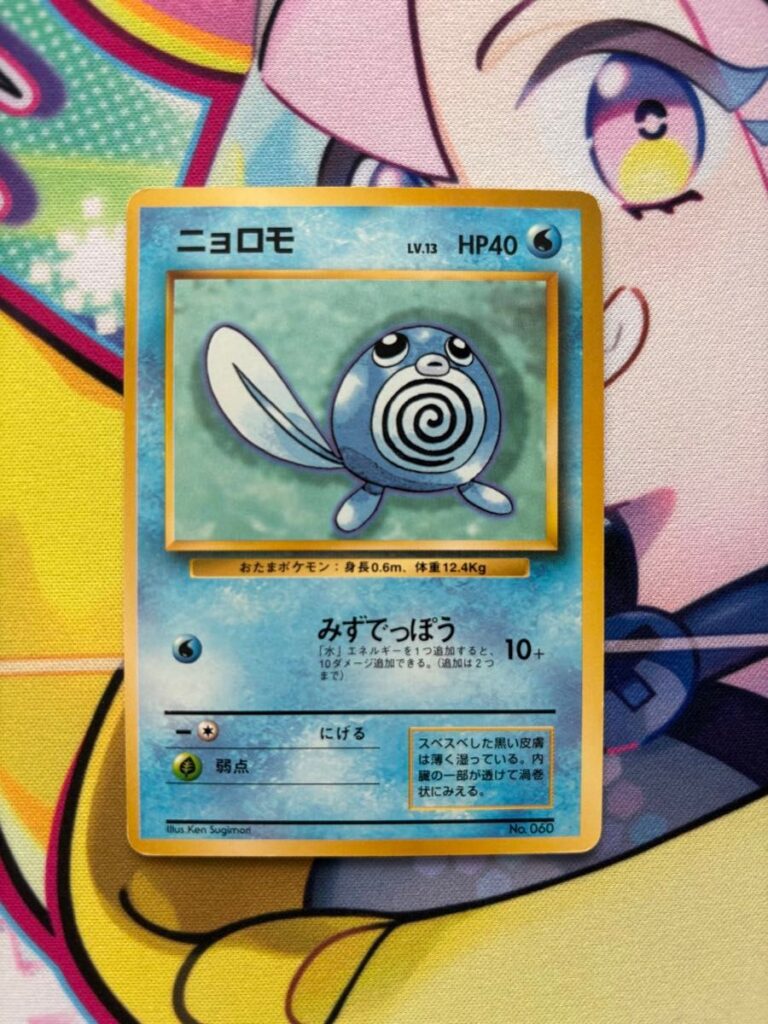
Everything else in this article hinges on one date in Japan. Two things are worth pinning down about it:
- What was released on launch day
- Why the cards came after the video games
That sequence matters more than it sounds, because it explains the confusion around the years printed on the cards.
The First Starter Pack and Expansion Pack
The Pokémon Trading Card Game went on sale in Japan on October 20, 1996. The official Pokémon Card Game 20th Anniversary site marks that exact date as the beginning of the game, and The Pokémon Company records October 1996 as the month of the Japanese launch.
Two products were released that day: the first starter pack and the first expansion pack, according to the chronology published on the same anniversary site.
No earlier Pokémon TCG product exists. Japan came first, and every other language followed. The game reaches its 30th anniversary in October 2026.
Why the Cards Arrived Eight Months after the Game Boy Games
The card game followed the video games, not the other way around. Pokémon Red and Green were released for the Game Boy in Japan in February 1996, and the cards came eight months later in October.
That short gap points to a distinction worth carrying forward. Pokémon as a franchise existed before the trading card game did, and the companies behind it were claiming rights to the property before a single card was printed.
Keep that in mind when you turn a card over and read the years on it. Those dates refer to the franchise’s copyright history, not the date your individual card was printed.
When Pokémon Cards Came Out in the U.S.: January 1999
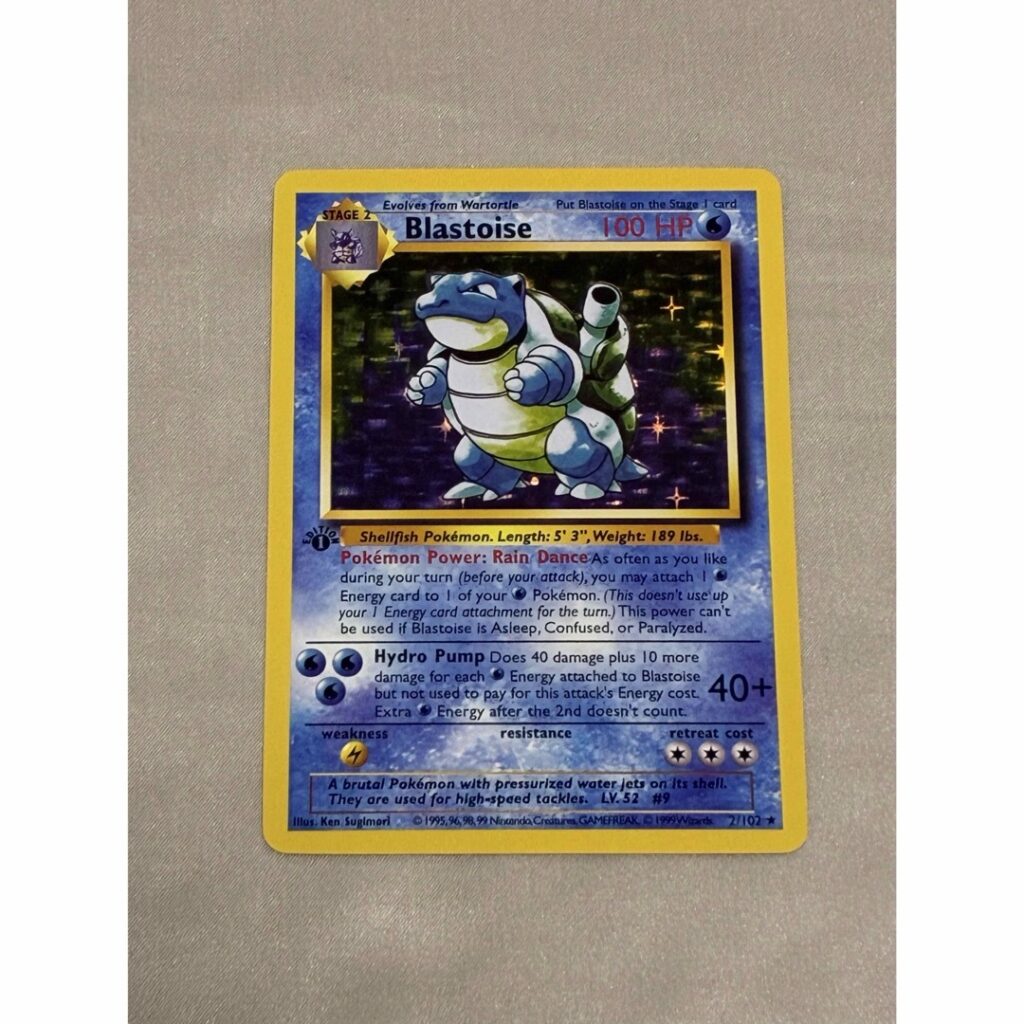
The U.S. release came more than two years after the Japanese launch, which surprises people who assume their childhood cards were the originals. Two details matter most about the English-language launch:
- Which set came first and who published it
- Why the same set exists in three different printings
The second becomes especially important once you start comparing card values.
The Base Set Was the First English Pokémon Set
The Pokémon Company records January 1999 as the U.S. launch of Pokémon Card Game: Base Set. The publisher’s Japanese chronology identifies the same month as the start of Pokémon card sales in America.
Base Set contained 102 cards and was produced by Wizards of the Coast, a company based in Renton, Washington, per PSA’s Set Registry. The 1st Edition cards shipped only in 11-card booster packs containing seven commons, three uncommons, and one rare, and about one in every three packs held a holographic rare.
Pokémon Red and Blue had already been released in the United States in September 1998, roughly four months before the cards.
- Any card printed in English dates from 1999 or later
- Cards from 1996 to 1998 exist in Japanese only
1st Edition, Shadowless, and Unlimited
Base Set had three major printings, and the one your card comes from can dramatically affect its value. CGC Cards documents the sequence.
Every card in the first run carried a 1st Edition symbol. Cards from the second run dropped that symbol and are known as Shadowless, because they lack the drop shadow that was added in later printings. A third run added that shadow to the right side of the art box, and those Unlimited cards are the most common of the three versions.
In general, earlier printings are worth more. 1st Edition ranks highest, followed by Shadowless, then Unlimited.
| Printing | 1st Edition stamp | Drop shadow |
| 1st Edition | Yes | No |
| Shadowless | No | No |
| Unlimited | No | Yes |
Why Your Pokémon Cards Say 1995
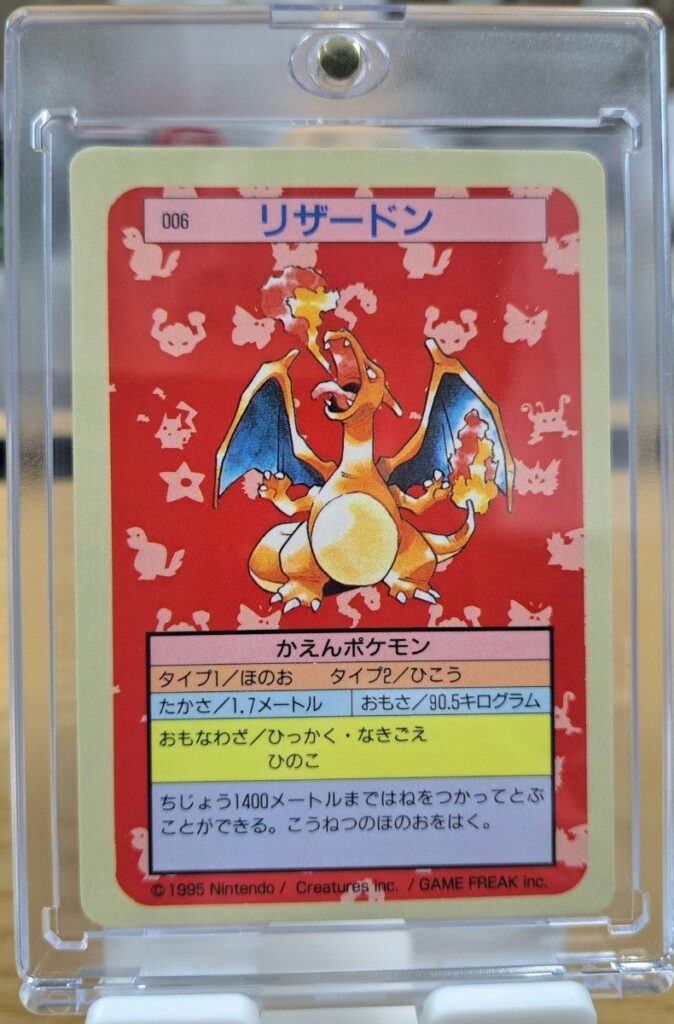
This is where much of the confusion begins, and the answer may be disappointing but it is straightforward. Two things explain it:
- What the year on the card records
- What sellers mean when they list 1995 or 1996 Pokémon cards
Neither answer makes your card older, though both stop you from chasing the wrong thing.
The Year on the Card Is a Copyright Line, Not a Print Date
The years printed along the bottom edge of a Pokémon card are part of the copyright notice for Nintendo, Creatures, and GAME FREAK. They are generally understood to record when those companies claimed rights to the property, rather than the date an individual card was printed.
The arithmetic settles it. The first Pokémon cards went on sale on October 20, 1996, so no Pokémon trading card was manufactured in 1995. English-language cards did not appear until January 1999, which puts more than three years between a 1995 copyright line and the card itself.
Multiple years often appear together on one card. That list grows as the copyright notice is updated, and none of those years necessarily tells you when your particular card was printed.
- A card marked 1995 is not a card made in 1995
- The Pokémon TCG itself did not exist until October 1996
- The year in the copyright line has no bearing on what a card is worth
What People Mean by 1995 and 1996 Pokémon Cards
Search either phrase and you get two different things. Listings described as 1995 Pokémon cards are usually later cards that happen to carry a 1995 copyright line, and some are novelty cards or promotional cards distributed with snack products, which were never part of the trading card game.
Cards described as 1996 Pokémon cards may genuinely date to the first Japanese release. Those are the earliest trading card game products, and they match the October 1996 launch recorded on the official chronology.
One rule cuts through both. If you have an English-language Pokémon card, it was released no earlier than 1999.
The Oldest Pokémon Cards and the First Card Ever Made
Two different questions get asked as though they were one. It helps to separate them:
- Which cards are genuinely the oldest
- Which card is the famous one people search for
The answers are completely different cards with vastly different market values.
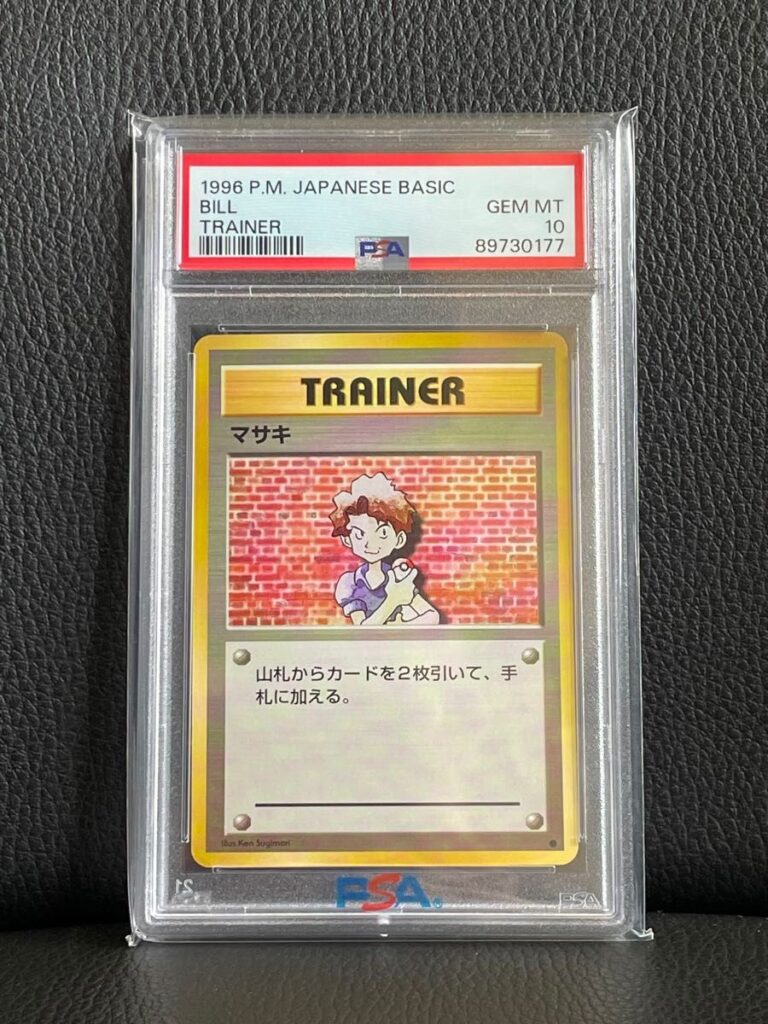
The 1996 Japanese Base Set
The oldest Pokémon cards are the Japanese ones released on October 20, 1996 — the first starter pack and first expansion pack listed in the publisher’s own chronology. They feature Generation I Pokémon, including Charizard, Blastoise, and Venusaur.
The first English-language cards arrived more than two years later. The oldest Pokémon cards are printed in Japanese, which is why the Japanese secondary market is where they still circulate today.
Cards from those original sets have continued to trade domestically in Japan, and singles from the era appear on Japanese marketplaces regularly.
The Pikachu Illustrator and Its Record-Breaking Auction Sale
The card people usually mean by “the first Pokémon card ever made” is the Pikachu Illustrator, and it is not the oldest card. Logan Paul owned the most famous copy until February 2026, when he sold it at auction. It is generally believed to have been awarded as a prize in a 1998 CoroCoro Comic illustration contest, two years after the game launched.
Its fame comes from scarcity. PSA has graded fewer than 50 copies in total, and exactly one has reached the top GEM-MT 10 grade.
That single copy set the record. Guinness World Records recognizes the February 16, 2026 sale through Goldin Auctions at $16,492,000 as both the most expensive Pokémon card and the most expensive trading card ever sold at auction.
What Pokémon Cards from 1999 Are Worth Today
Age alone does not determine value, and the 1999 Base Set contains both cheap cards and extremely valuable ones. Three factors put the numbers in context:
- What Base Set cards fetch on the graded market
- Whether million-dollar Pokémon cards are real
- What separates the expensive cards from the rest
All the figures below come from PSA’s price guide as of July 2026, so the values are directly comparable.
Are 1999 Base Set Cards Worth Anything?
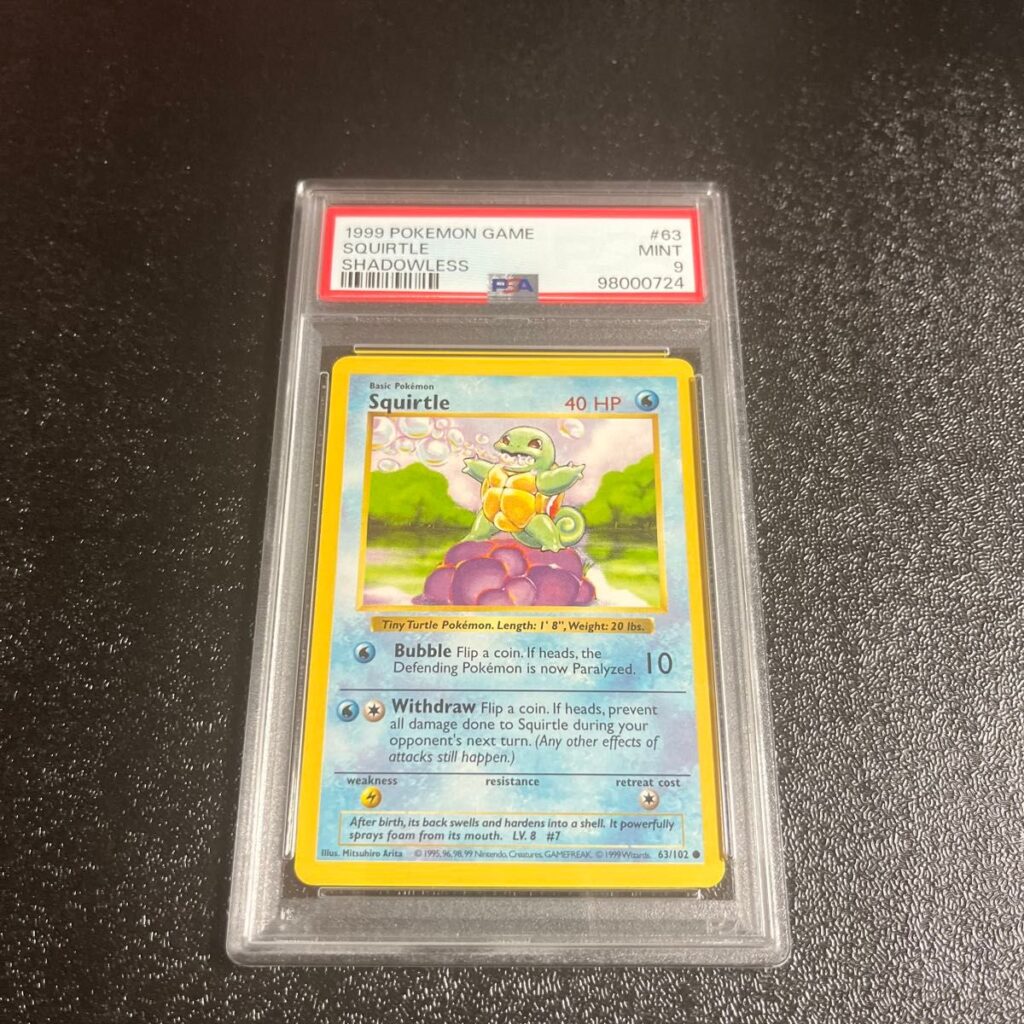
Values within the 1999 Base Set span several orders of magnitude, and where your card lands depends on the printing more than the year. A 1st Edition holographic Charizard carries a $181,900 guide value at PSA 10, dropping to $17,700 at PSA 9 and $10,600 at PSA 8, per PSA CardFacts.
The Unlimited version of the same Charizard is worth far less: $10,000 at PSA 10 and $800 at PSA 9. PSA has also graded many more of them — around 8,470 at PSA 9 alone, compared with 729 copies of the 1st Edition version.
| Card and printing | PSA 10 | PSA 9 | PSA 8 |
| Charizard, 1st Edition holo | $181,900 | $17,700 | $10,600 |
| Charizard, Unlimited holo | $10,000 | $800 | $500 |
| Pikachu, Shadowless common | $100 | $60 | $25 |
PSA Price Guide, as of July 2026. Guide values are reference figures rather than guaranteed sale prices.
That bottom row is the honest answer for most people. A common card from the first English set is worth around $25 to $100 even after grading, and guide values and actual sale prices can differ significantly.
Pokémon Cards Worth Over $1 Million
Million-dollar Pokémon cards exist, and the Pikachu Illustrator is the reason the question keeps coming up. PSA’s guide puts it at $4 million at PSA 10, $840,000 at PSA 9, and $480,000 at PSA 8.
Auction results broadly support those estimates. A PSA 8 copy sold for $480,000 through Goldin Auctions in October 2022, and a PSA 7 changed hands at $375,000 in February 2021.
Condition alone can change the value by an order of magnitude. The $16,492,000 result applies to the single PSA 10 in existence, not to every copy of the Pikachu Illustrator.
Supply is what puts these cards in another category. Contest and tournament prizes were distributed in extremely limited quantities, which is a different world from cards pulled out of retail packs.
What Decides the Value of an Old Card
Three features do nearly all the work, and the year printed on the card is not among them. Holographic cards account for most of the set’s value: only 16 of the 102 Base Set cards are holos, and they were the hardest cards to pull from packs, as PSA’s set guide notes.
Printing comes next, and you can identify it visually in seconds using the stamp and the shadow. Condition is the final major factor — the same 1st Edition Charizard runs from $10,600 at PSA 8 to $181,900 at PSA 10.
Work through your own cards in this order:
☐ Does the artwork have a holographic finish?
☐ Is there a 1st Edition stamp below the left side of the artwork?
☐ Is there a gray drop shadow along the right edge of the artwork box?
☐ Are the corners still sharp, with no white showing?
☐ Is the surface free of scratches and print lines?
Pokémon Cards in 2026: New Sets and the 30th Anniversary
New Pokémon card expansions arrive several times a year, and 2026 is a landmark year for the trading card game. All dates below are the official release dates announced by The Pokémon Company.
The English expansion Mega Evolution—Pitch Black was released on July 17, 2026 with over 115 cards, according to Pokemon.com.
The anniversary set follows two months later. Pokemon.com gives 30th Celebration a release date of September 16, 2026, and the Japanese publisher notes that it is the first Pokémon card product to launch worldwide on the same day. The game itself turns 30 in October 2026.
For scale, The Pokémon Company reported more than 85 billion cards produced across 16 languages and more than 90 countries and regions, as of the end of March 2026.
| Expansion | Release date | Note |
| Mega Evolution—Pitch Black | July 17, 2026 | Over 115 cards |
| 30th Celebration | September 16, 2026 | First simultaneous worldwide release |
Where to Find Cards from the Japanese Sets That Started It All
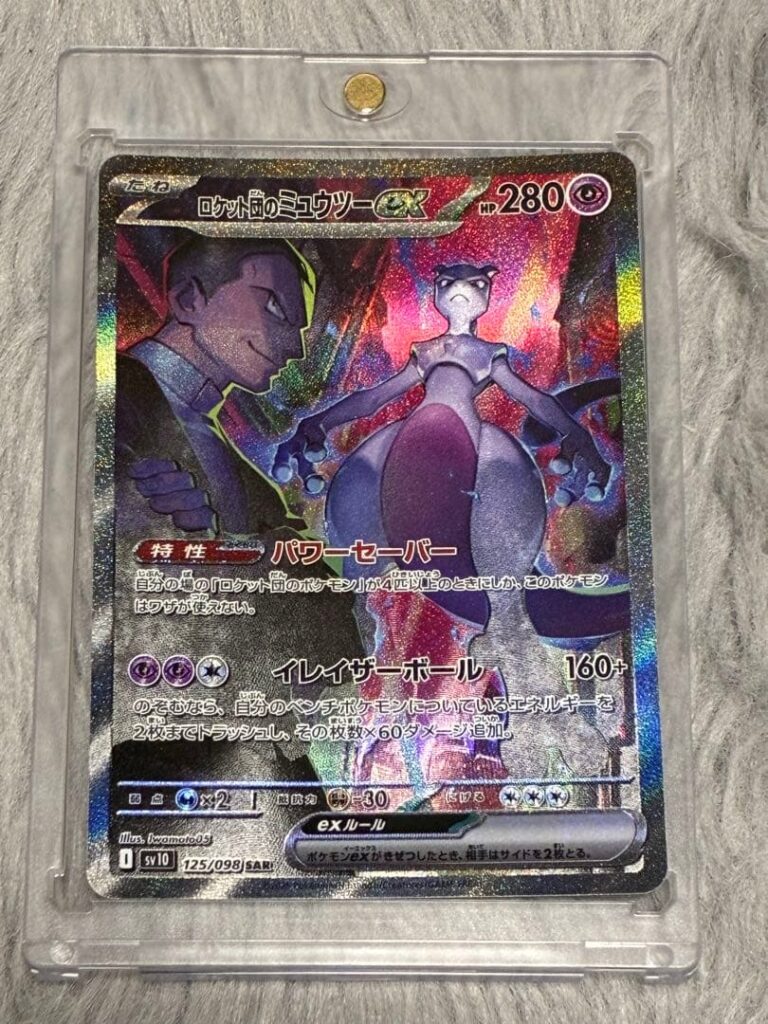
Knowing the cards began in Japan in 1996 raises an obvious follow-up: can you own one? To find and buy one, you need two things:
- The name the earliest Japanese cards go by
- A way to buy from sites that do not ship abroad
Neither is complicated, but the terminology used in Japan is unfamiliar to most English-speaking collectors.
What Japanese “Old Back” Cards Are
Japanese cards from 1996 through the early 2000s have a card back that differs from the modern design. Collectors and shops in Japan group them under a single term that translates as “old back”, and listings treat it as a category rather than a description.
The appeal is similar to that of 1st Edition and Shadowless cards among English-speaking collectors. Japanese collectors use their own terminology for these early printings, and English-language guides rarely mention it.
Prices vary widely. Energy cards from the era appear in bulk lots for a few hundred yen, while a single old-back Venusaur or Charizard is listed at six figures in yen.
How to Buy from Japanese Marketplaces
Most Japanese marketplaces — Rakuten, Mercari, Rakuma, Surugaya, magi — sell only within Japan and will not ship to an overseas address. A proxy service closes that gap by receiving the item at a Japanese address and forwarding it on, so you pay Japanese domestic prices for the card itself.
The process is the same regardless of which marketplace lists the card:
- Find the listing on a Japanese marketplace, or search from the proxy service’s own interface.
- Submit a buy request. The service pays the seller and handles any contact with them.
- Leave the card in the warehouse while you look for others. Neokyo includes 45 days of free storage, letting you combine several purchases into a single shipment.
- Request shipment and select a carrier.
Neokyo charges ¥350 per order, applied once if you buy multiple copies of the same item in one buy request, plus ¥500 for packaging up to 2 kg. International shipping is charged at the carrier’s rate with no markup added, and any import duties or taxes in your own country are yours to pay.
Check the full fee breakdown on Neokyo
When Pokémon Cards Came Out: The Short Answer
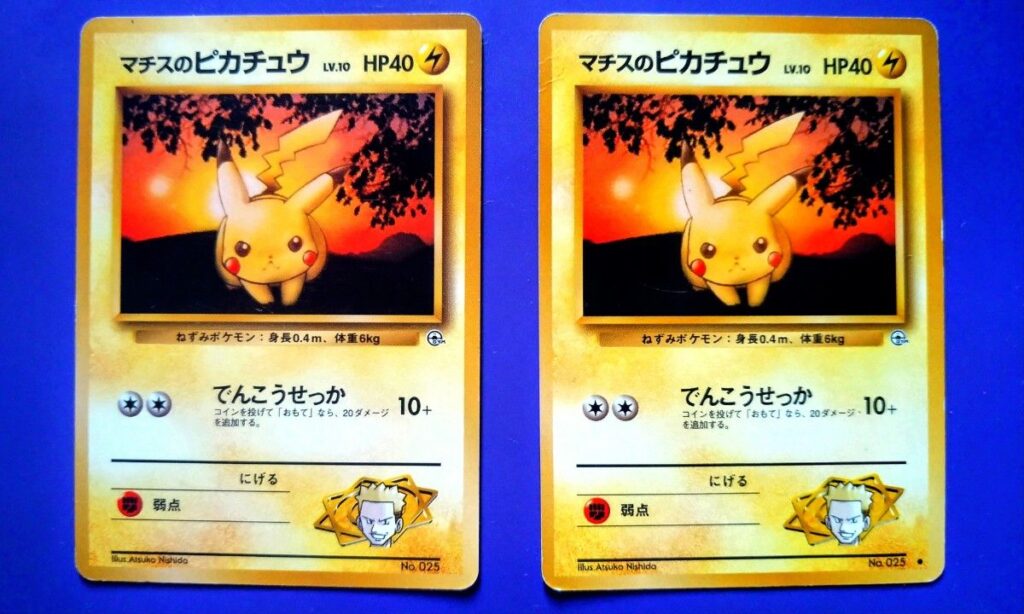
Pokémon cards came out on October 20, 1996 in Japan, and in January 1999 in the United States. Those two dates answer nearly every variation of the question. The year printed in the copyright line does not, because it records a copyright claim rather than a print run.
What your cards are worth comes down to whether they are holographic, which of the three Base Set printings they belong to, and what condition they are in. Run the five-point check above and you will know within a minute whether the card may be worth having professionally graded.
And if the part that stuck with you was that the whole thing started in Japan more than two years earlier, cards from those original 1996 sets continue to appear on Japanese marketplaces.