

How to Identify First Edition Pokémon Cards | Explaining the Value of Initial Print Runs
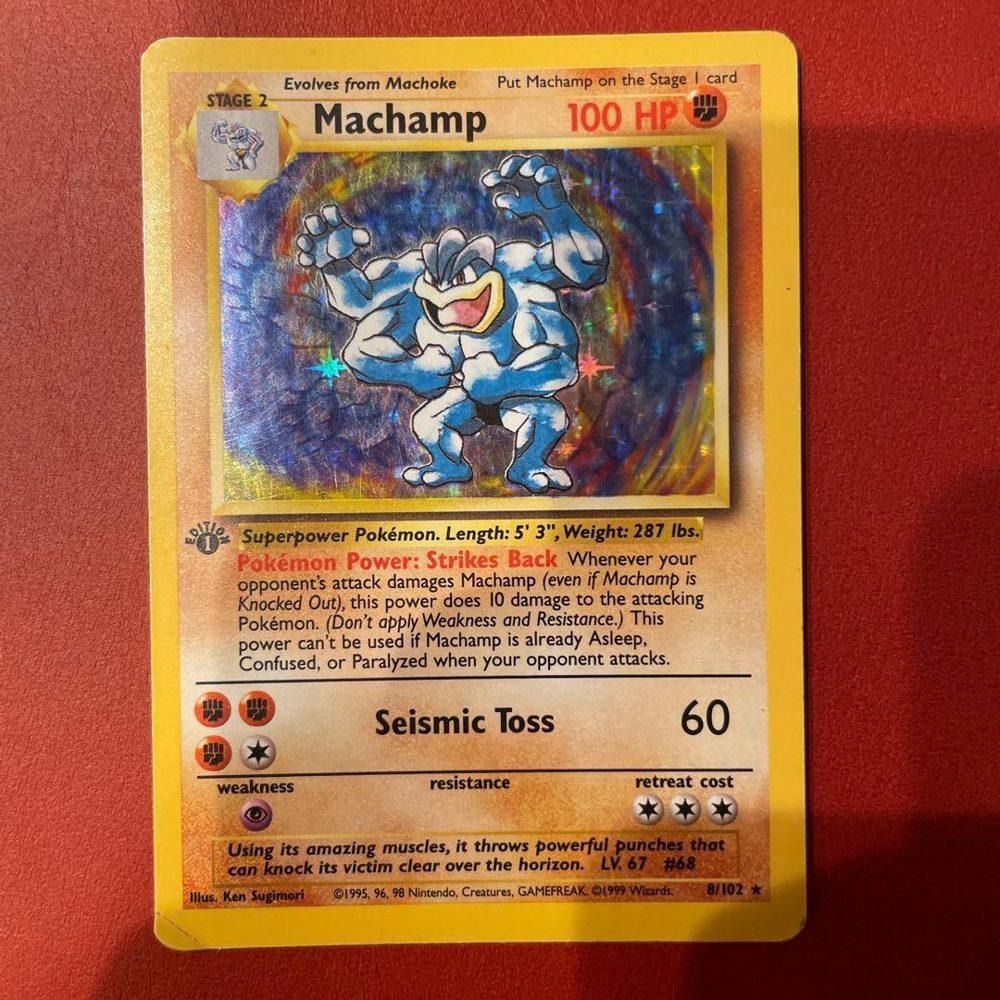
“First Edition” in Pokémon cards does not simply mean “old cards.” It indicates the version printed first within a specific set, identified using the “1st Edition” stamp on English cards and the “1 EDITION” mark on Japanese cards depending on the era as clues.
Particularly with the English Base Set, the three versions—First Edition, Shadowless, and Unlimited—are easily confused. In the Japanese version, the structure of circulating supply differs from the English version, and there are sets where Unlimited copies are scarcer than 1ED. Having a stamp alone does not automatically make a card rare or high-value.
What Are First Edition Pokémon Cards?
In the English version, a black “1st Edition” stamp was added to cards to distinguish the very first distributed print run. In the initial printing of the Base Set released in the US in 1999, it was included on all cards, designed with the number “1” enclosed in a black circle surrounded by “EDITION.”
However, “cards from the first released set” and “First Edition cards” are not synonymous. Even for cards included in the same Base Set, the printing period and design differ depending on the print run, and not every set possesses a First Edition version.
Where Is the First Edition Mark Located?
In the English Base Set, the position of the mark differs depending on the type of card.
| Card Type | Mark Location on English Base Set |
| Pokémon | Left side of the illustration frame, lower-left |
| Trainer | Bottom-left of the card |
| Energy | Top-right of the card |
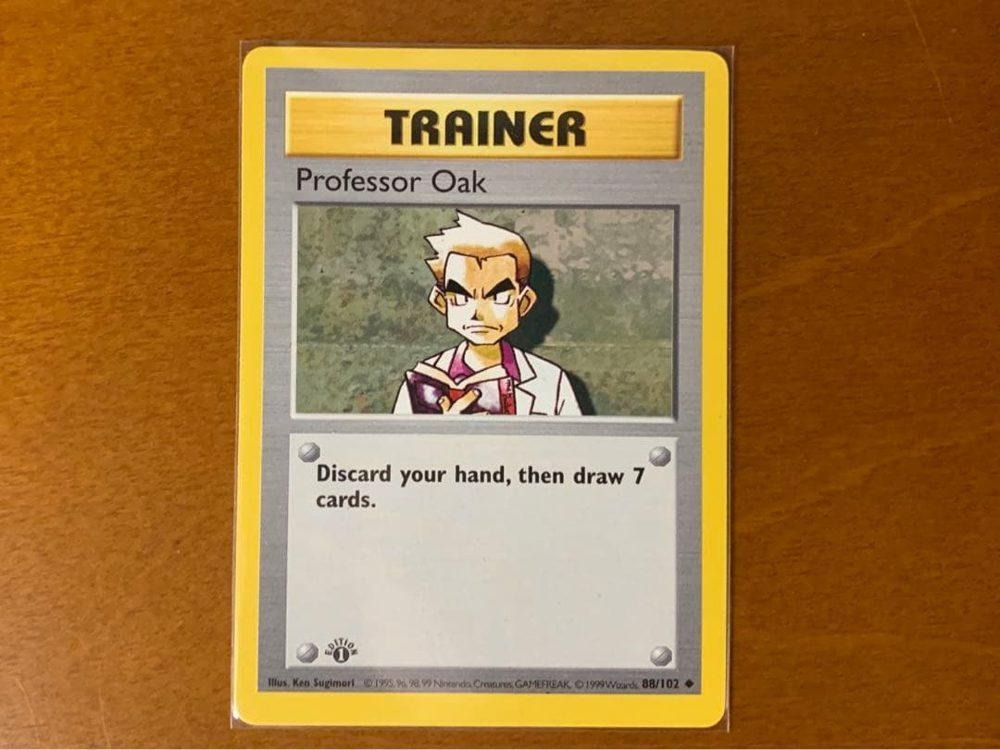

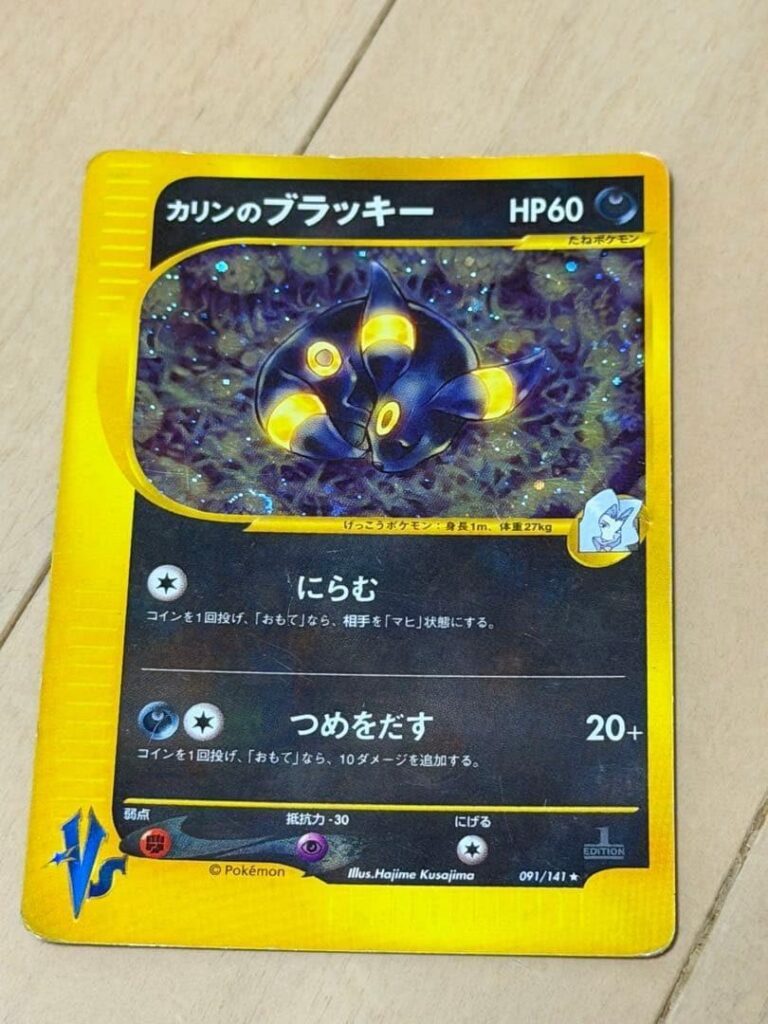
The Japanese “1 EDITION” mark is a different design composed of a large “1” and the letters “EDITION.” While the mark is on the bottom of the card, its position is not uniform across eras and card layouts; actual examples can be verified in official Pokémon card images from the DP, BW, and XY eras showing the “1 EDITION” mark on the lower-left of both Pokémon and Trainer cards. Furthermore, CGC explains that the 1 EDITION mark was not used on Japanese Energy cards.
Differences Between First Edition, Shadowless, and Unlimited
In the English Base Set, following First Edition, an early print run without the stamp was produced, which is called Shadowless because there is no drop shadow on the right side of the illustration frame. Because drop shadows were added in the subsequent Unlimited print run, the edition is identified by the combination of the stamp and the shadow.
| Verification Item | First Edition | Shadowless | Unlimited |
| 1st Edition Stamp | Present | Absent | Absent |
| Shadow Right of Illustration Frame | Absent | Absent | Present |
| Print Order | First / Initial | Next early print | Subsequent regular print |
First Edition Base Set cards basically feature the same early design as Shadowless, but there are exceptions in special distribution and print variations such as Machamp.
Additionally, the classification “Shadowless” is used primarily for the English Base Set, and is not a method applied to classify subsequent sets like Jungle or Fossil in the same manner.
Sets Where First Edition Exists in the English Version
In the English version, the First Edition stamp indicating initial printing was used for approximately three years, from Base Set to Neo Destiny. According to CGC, the 10 sets possessing a First Edition version during this period are: Base Set, Jungle, Fossil, Team Rocket, Gym Heroes, Gym Challenge, Neo Genesis, Neo Discovery, Neo Revelation, and Neo Destiny.
The exception is Base Set 2, which has no First Edition version because it is centered on reprints. Following Neo Destiny, First Edition stamps were no longer used in the English version.
Base Set Exceptions and Print Variations
Machamp: A Prime Example Where “1st Edition Stamp” Does Not Equal “Rarity”
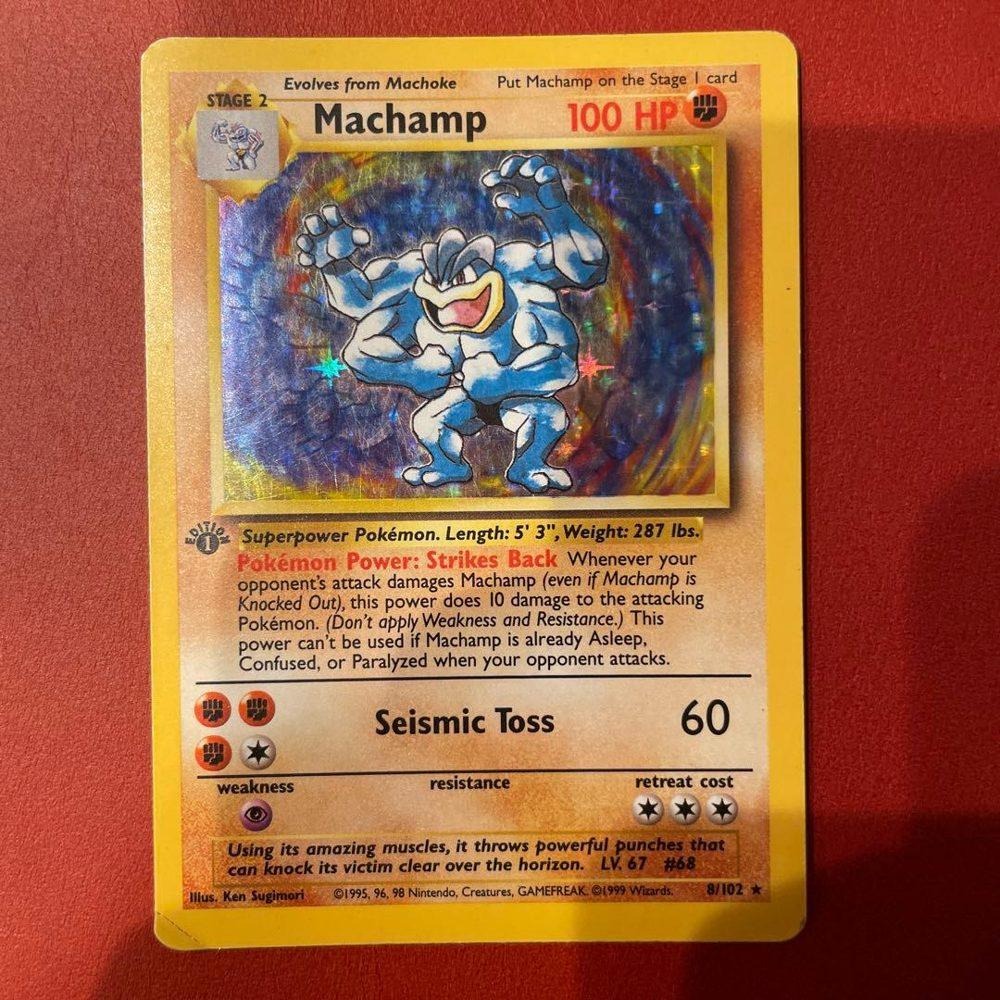
Machamp in the generally distributed English Base Set features a 1st Edition stamp; however, it was not included in booster packs and was enclosed in the widely sold 2-Player Starter Set. Even with the stamp attached, it does not possess the same rarity as other First Edition Holos pulled at low probabilities from booster packs, and PSA explains it as an example that is difficult to command a premium.
There are also other variations such as the Trainer Deck A version, the 1999–2000 copyright notation version, and the CD-ROM Starter Kit version. CGC explains that the CD-ROM Starter Kit version utilizes Cosmos Holo rather than Galaxy Star Holo.
Differences in foil specifications such as Holo, Reverse Holo, and Mirror are explained in detail in our guide covering “Differences Between Reverse Holo and Holo.”
Pikachu’s Red Cheeks and Yellow Cheeks
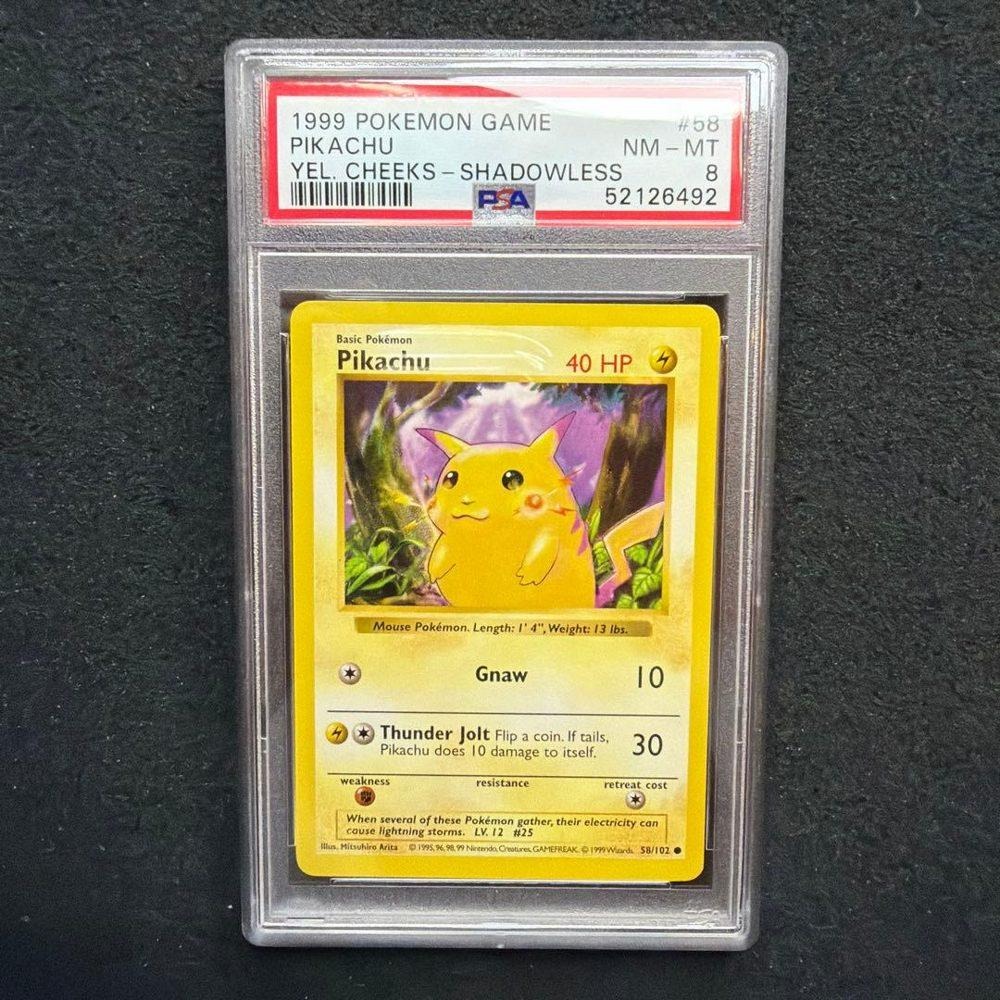
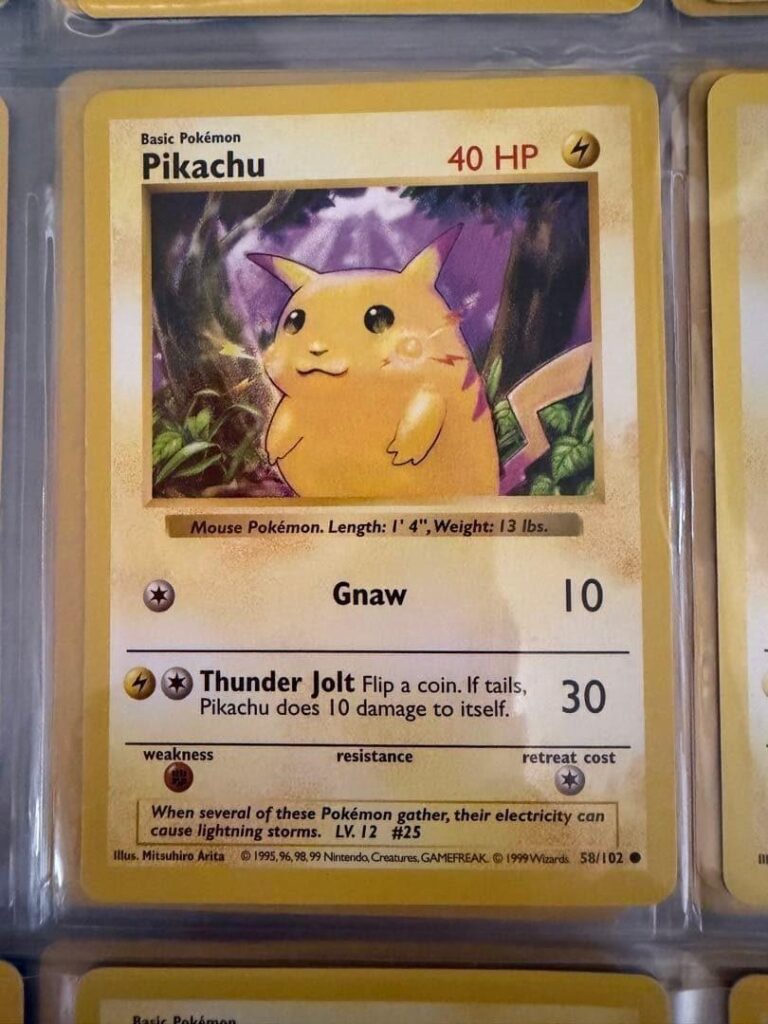
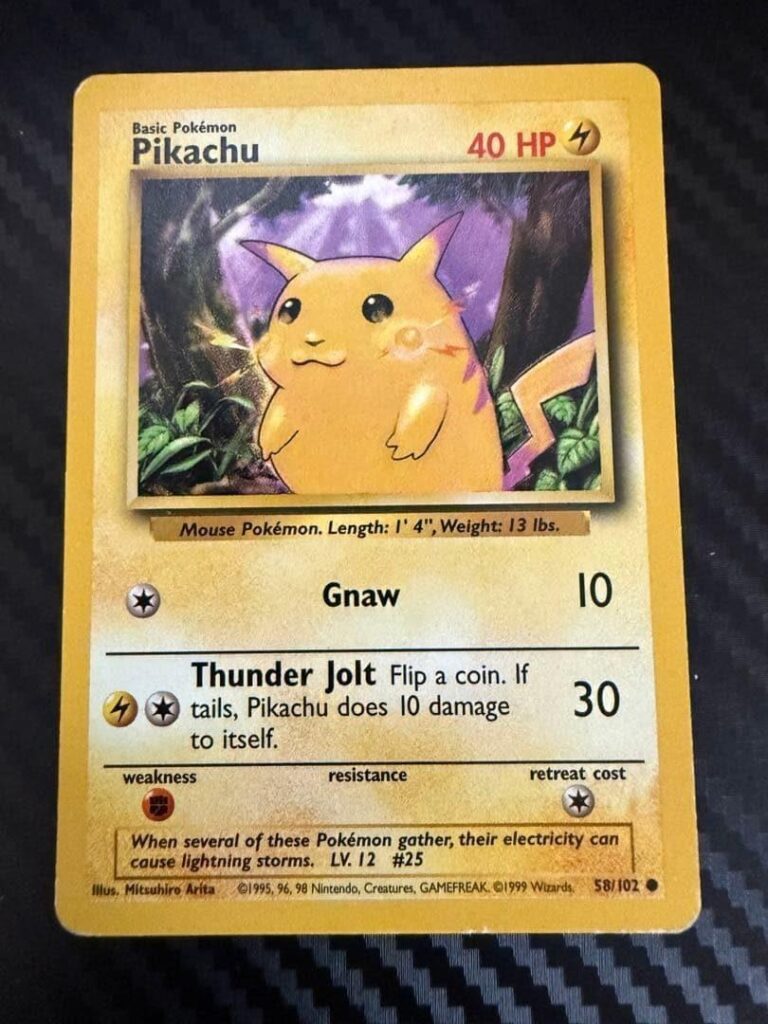
In the Base Set Pikachu, there are variations with red cheeks (Red Cheeks) and yellow cheeks (Yellow Cheeks).
In PSA’s commentary, both Red Cheeks and Yellow Cheeks exist in the English First Edition, with Red Cheeks tending to be more sought after by collectors. However, the cheek color and the presence of the First Edition stamp are separate printing differences.
Because both have been verified in Shadowless versions as well, it cannot be judged that “red cheeks mean First Edition” or “yellow cheeks mean Unlimited.”
While Red Cheeks is a popular print variation, that alone does not guarantee high value or rarity.
Initial Printings and 1ED in Japanese Pokémon Cards
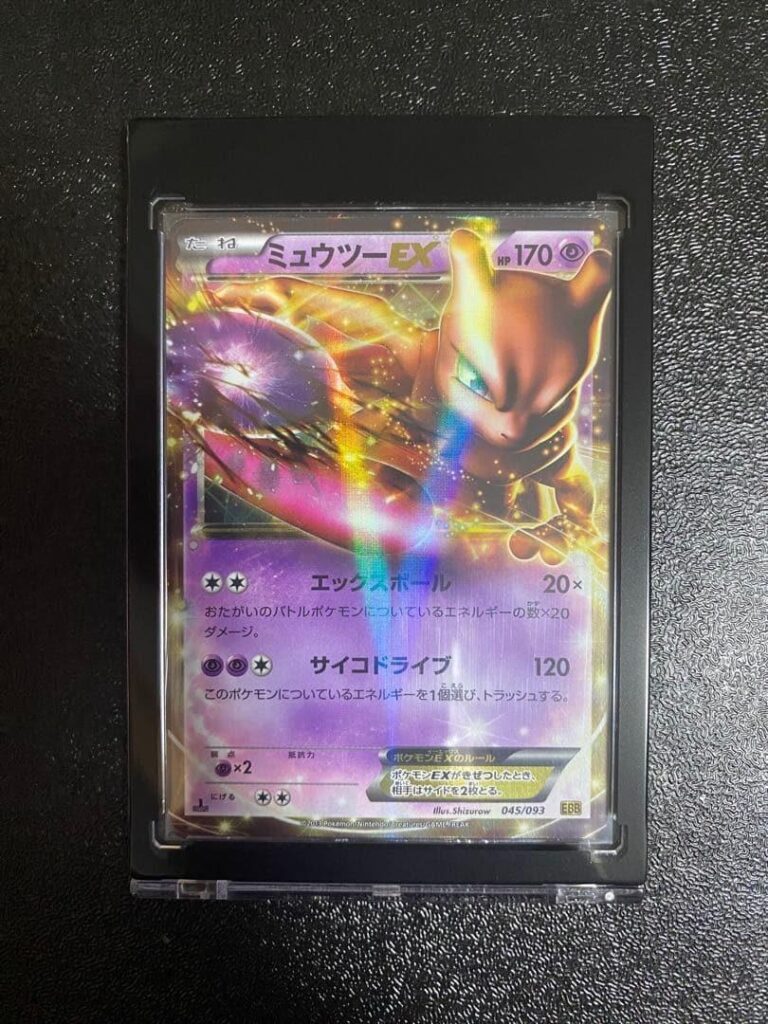
While the First Edition stamp ceased to be used after Neo Destiny in the English version, the “1 EDITION” mark was introduced in Japan starting with Pokémon VS in 2001.
This system continued across multiple series including Pokémon Web, and was used until the 20th Anniversary Set in 2016. Explaining Japanese 1ED as a notation limited to the ADV and PCG eras is incorrect.
Japanese 1ED Has a Different Value Structure from the English Version
The most critical thing to note regarding Japanese 1ED is that the First Edition version is not necessarily fewer in quantity.
CGC explains that in the Japanese version, there are often sets where the First Edition print run was far larger than the Unlimited print run. If the initial production was released to the market in massive quantities, followed by a small additional print run of Unlimited copies, the Unlimited version lacking the mark becomes harder to find.
In the Japanese version, the English-style thinking of “With 1ED = Expensive, Without 1ED = Cheap” cannot be directly applied, requiring verification of circulating supply per set and per card.
“Old Back” (Kyu-Back) Does Not Mean First Edition
“Old Back” (Kyu-back) in the Japanese version refers to cards utilizing the early pocket monsters back design. Containing multiple sets and print periods, being Kyu-back itself does not signify the very first printing.
For items listed as “Old Back / First Edition” (旧裏・初版), verify whether it refers to printing immediately after release, No Rarity Symbol, specific wording/layout, or simply an old Kyu-back card.
“No Rarity Symbol” Is a Different Concept from 1ED
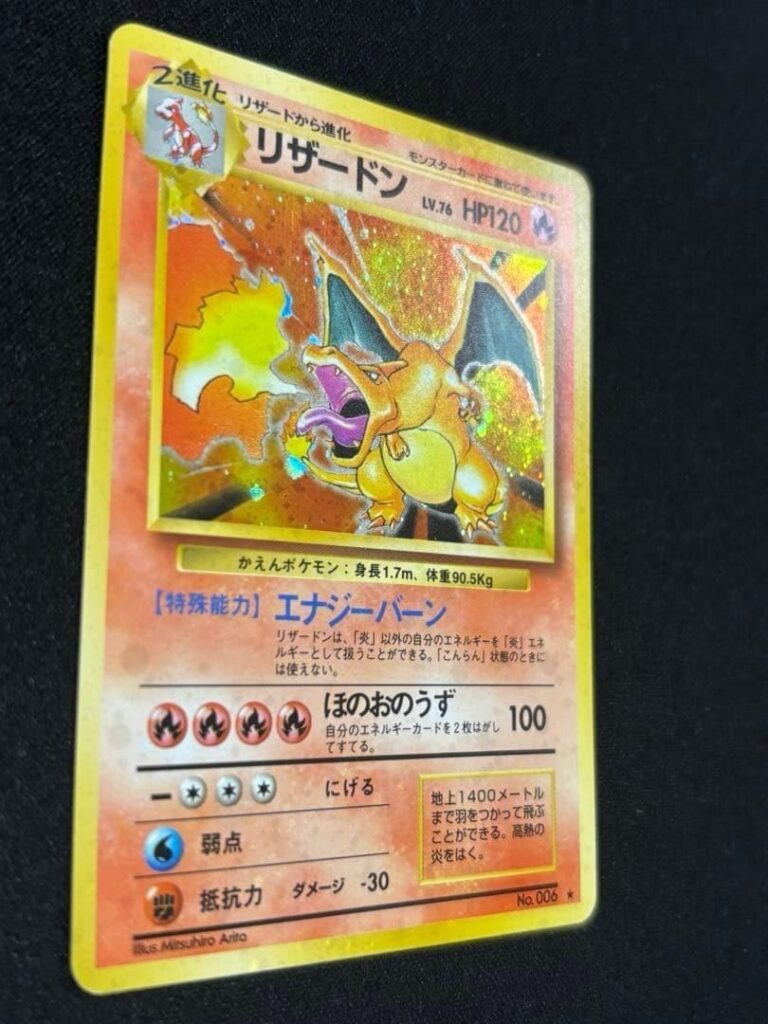
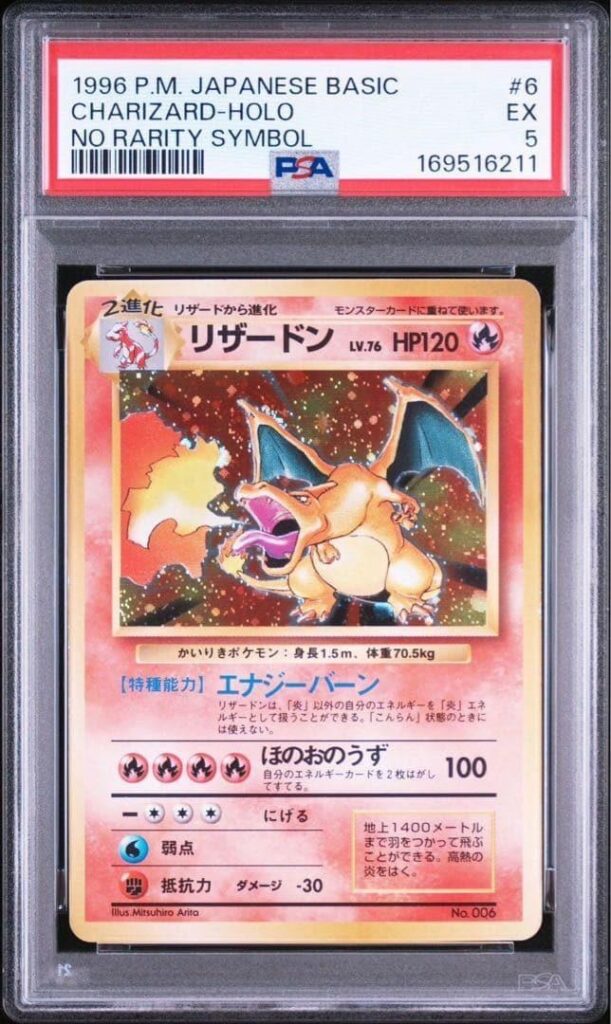
The earliest print run of the Japanese Base Set released in 1996 contains cards lacking the rarity symbol in the bottom-right corner, known as “No Rarity Symbol,” which CGC describes as cards originating from the very first printing.
However, these are not the same as cards bearing the “1 EDITION” mark used from 2001 onward.
No Rarity Symbol, Old Back (Kyu-back), Japanese 1ED, and Unlimited are all separate identification axes. Oversimplifying with “no mark means First Edition” or “old back means initial print” will lead to confusing cards from different eras and specifications.
Are First Edition Cards Always Expensive?
While the First Edition mark is an important material for assessing value, it is not the sole condition that determines price. Its mechanism of rarity also differs from limited distribution promo cards. Prices are influenced by the following factors:
- Pokémon and Card Popularity: Demand differs between popular Pokémon like Charizard or Pikachu and Common cards.
- Holo vs. Non-Holo: Early sets had low insertion rates for Holos; PSA notes that Base Set Holos appeared at a rate of approximately 1 in every 3 packs.
- Card Condition: If the condition is poor, it may be traded at a lower price than an Unlimited copy in excellent condition.
- Language and Region: The market differs between English First Edition, Japanese 1ED, and other language versions; transaction prices of different languages cannot be compared directly.
- Print Variations: Multiple specifications exist even for the same card number, such as Machamp’s Cosmos Holo or Pikachu’s cheek color.
- Grading Tier: Prices of graded cards cannot be applied directly to raw (ungraded) cards.
Always compare market values against completed transaction prices of the same set, language, First Edition classification, print variation, and similar condition/grade.
How to Verify Fake First Edition Stamps and Mislabeling
Because First Edition cards are sometimes traded at high values, caution is necessary regarding fake stamps added later or mislabeled listings.
- Stamp Position and Shape: Correct locations differ for Pokémon, Trainers, and Energies; verify whether the number “1,” circle, and letter spacing match genuine items.
- Ink Density: Because CGC individually authenticates a light stamp variation known as “Gray Stamp,” a faint stamp does not automatically mean “fake.”
- Set Consistency: Confirm whether a First Edition version exists for that set. Base Set 2 and Legendary Collection do not have First Edition versions.
- Photos of the Actual Item: Rather than stock images, photos of the actual item showing zoomed-in marks, the full card, front and back, card number, and set symbol are required.
For high-value cards, do not judge authenticity solely through image comparison; consider graded copies or verification by experts. For verification methods including printing, font, and texture, also refer to our guide on identifying fake Pokémon cards.
Search Terms When Looking for First Edition / Initial Print Cards in Japan
Because the meaning of “初版” (Initial Print) is not standardized in Japanese listings, specify the exact version you are seeking:
- To search for English First Edition: Card Name + 1st Edition
- To search for Japanese 1ED: Set Name or Card Name + 1ED
- To search for Unlimited version: Set Name + アンリミ (Unlimi)
- To search for early Japanese Old Back prints: Card Name + 旧裏 マークなし (Kyu-back No Mark)
Do not judge by the word “初版” in the item title alone; verify the set, card number, position of stamps/marks, and for the English Base Set, the presence of drop shadows using photos of the actual item.
On Neokyo, you can search the Japanese market by properly utilizing Japanese terms such as 1ED, アンリミ (Unlimi), and 旧裏 (Kyu-back).
Frequently Asked Questions
Are First Edition and Shadowless the same thing?
No, they are not the same. Standard First Edition cards feature the early design without shadows, but Shadowless refers to the subsequent print run that lacks the First Edition stamp. There are also exceptions like Machamp.
Is Japanese 1ED always more expensive than Unlimited?
Not necessarily. In the Japanese version, 1ED was distributed in larger quantities for certain sets, making Unlimited copies scarcer. Circulating supply per card and per set must be checked.
Is “No Rarity Symbol” considered First Edition?
Cards without rarity symbols from the 1996 Japanese Base Set originate from the very first print run, but operate under a different mechanism from the “1 EDITION” mark used from 2001 onward. They should not be treated as identical concepts.
A stamp is merely a starting point. Only after identifying the set, language, drop shadow, card number, and print variation can you determine which version it is and what it should be compared against.