

Vintage Pokemon Cards: How to Identify Them and What They Are Worth
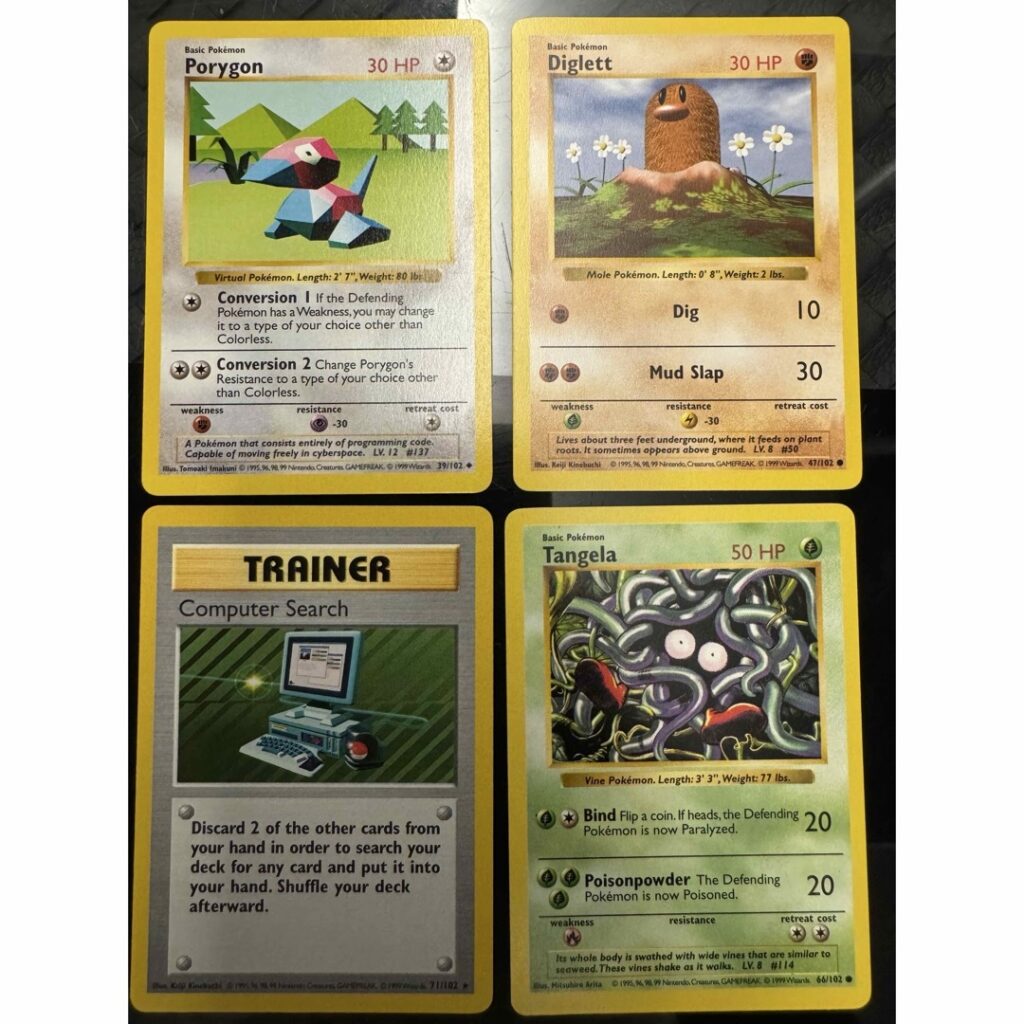
If a box of old Pokémon cards has resurfaced, the first thing to settle is whether any of them count as vintage. For English cards, that means the Wizards of the Coast era, 1999 to 2003. Japanese cards start earlier, in 1996, and the “1995” printed at the bottom of the oldest cards is not a print year.
This guide covers the identifying features to look for on the card itself, what drives its value, and what comparable cards sell for by grade. All pricing and website information was checked on August 27, 2026, so treat the figures as a snapshot rather than a live quote.
What Counts as Vintage Pokemon Cards
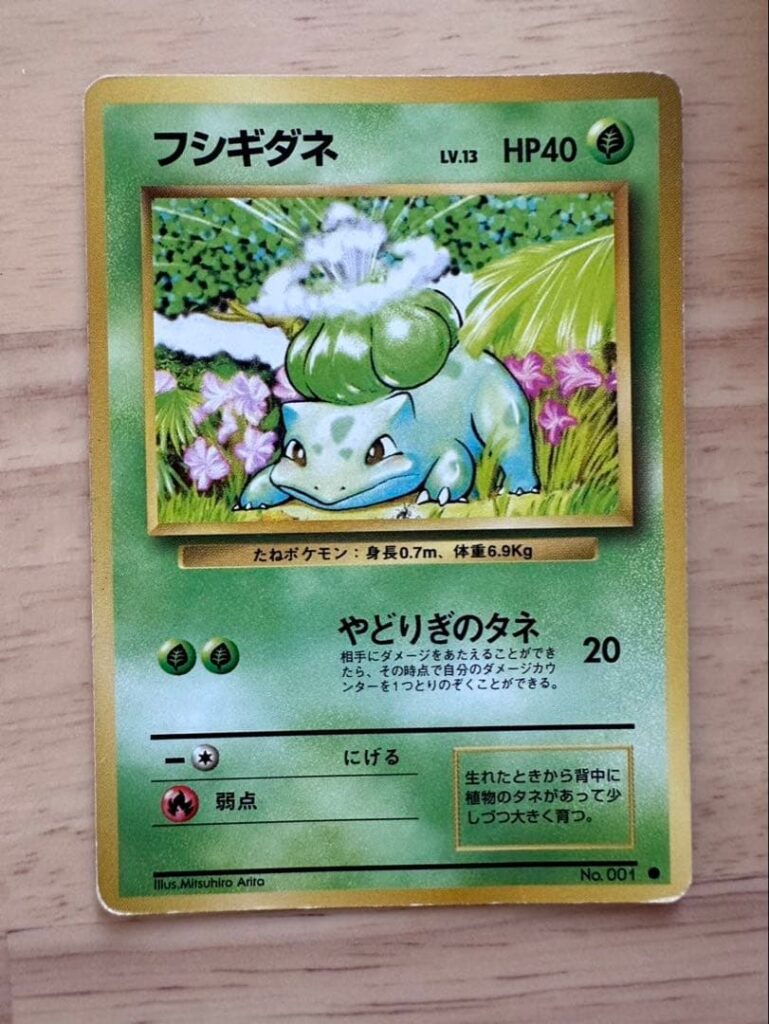
There is no official cutoff, so separate the English timeline from the Japanese one before you sort anything.
- For English cards, vintage means the Wizards of the Coast era, 1999 to 2003
- Japanese cards started in 1996 and English cards in 1999
- The 1995 copyright line is not the print year
For English Cards, Vintage Means the Wizards of the Coast Era, 1999 to 2003
Vintage is a convention among collectors rather than an official category. The PSA Pokémon Collecting Basics Guide notes that vintage and modern are not clearly defined in Pokémon and the cutoff is often disputed — some collectors include the EX era, others stretch it to Black & White. What almost everyone agrees on is that the Wizards of the Coast cards, 1999 to 2003, are undisputedly vintage.
Wizards of the Coast, the company behind Magic: The Gathering, held the English printing license for those five years. Its first-generation releases ran from Base through Gym Challenge before the line moved into the Neo era, and its final set was Skyridge in 2003.
Nintendo took over the license that same year. The first Nintendo set, EX Ruby & Sapphire, arrived on June 18, 2003, and that handover marks the practical end of the vintage window.
| Set name | Year | Set symbol | Generation |
| Base Set | 1999 | Generally identified by having no set symbol | First |
| Jungle | 1999 | A symbol resembling Vileplume | First |
| Fossil | 1999 | A symbol resembling the skeletal hand on Aerodactyl | First |
| Base Set 2 | 2000 | Not covered here | First |
| Team Rocket | 2000 | The capital letter “R” | First |
| Gym Heroes | 2000 | An amphitheater, black stage with white tiers | First |
| Gym Challenge | 2000 | An amphitheater, white stage with black tiers | First |
| Neo Genesis | 2000 | Two overlapping stars | Second |
| Neo Discovery | 2001 | A Mayan temple | Second |
| Neo Revelation | 2001 | Three Legendary Beasts escaping the Burned Tower | Second |
| Neo Destiny | 2002 | A blue sparkle above a white sparkle | Second |
| Legendary Collection | 2002 | A medallion | — |
| Expedition Base Set | 2002 | A Poké Ball drawn as a lowercase “e” | e-Card |
| Aquapolis | 2003 | A water droplet with a city skyline inside | e-Card |
| Skyridge | 2003 | A symbol representing the two Japanese sets behind it | e-Card |
| EX Ruby & Sapphire | 2003 | A jewel — first Nintendo set, the boundary | — |
Japanese Cards Started in 1996 and English Cards in 1999
Japanese cards came first. The official 20th anniversary chronicle dates the first expansion pack and starter pack to October 20, 1996, while The Pokémon Company International records the English game debuting across North America and Europe in 1999.
Those three years matter because the term covers a different period depending on whether the card is Japanese or English. This guide treats Japanese cards as vintage from their October 1996 debut through 2003, roughly matching the end of the Wizards of the Coast era.
Japan also had formats that never appeared in the English line, including the Southern Island movie pack, gift packs and the early expansion sheets. Japanese sets were usually released first, and an English set was sometimes built from more than one Japanese release. PSA notes that first edition symbol placement, set symbols, layouts, foil patterns and card backs all differ between the two languages.
One date is worth remembering before you sort. Japan changed the card back design in July 2001, which gives you a clean line between earlier and later cards.
| Japanese cards | English cards | |
| Release start | October 20, 1996 | 1999 |
| Treated as vintage here | Roughly 1996 to 2003 | 1999 to 2003 |
| Early exclusive formats | Southern Island, gift packs, expansion sheets | None |
| Set names | Differ; several may combine into one English set | Sometimes built from multiple Japanese sets |
| Card back change | July 2001 | Not applicable |
| Marks and layout | First edition mark, set symbol, layout, foil, back all differ | Differ from Japanese |
The 1995 Copyright Line Is Not the Print Year
The oldest English cards carry a line reading something like “© 1995, 96, 98 Nintendo, Creatures, GAMEFREAK. © 1999 Wizards.” That leading 1995 is the start year of the rights notice, not the year of printing. Pokémon still uses the convention today, with its corporate footer beginning “©1995–”.
The first cards went on sale in October 1996, so no Pokémon card was released in 1995. Grading companies draw the same distinction: PSA changed its labeling of the Japanese Topsun set from 1995 to 1997 to reflect the set’s actual release date.
To narrow down a set, use the set symbol and check it against the table above. Reading the copyright line to separate print runs is something this guide covers for the English Base Set specifically. On its own, the presence of “1995” tells you nothing about rarity or value.
Note
The 1995 on your card starts the rights notice; it is not the print year. Pokémon cards first went on sale on October 20, 1996, so no Pokémon card was released in 1995. To narrow down the set, match the set symbol against the table above. Using the copyright line to distinguish print runs is specific to the English Base Set.
How to Tell If Your Old Pokemon Cards Are Vintage
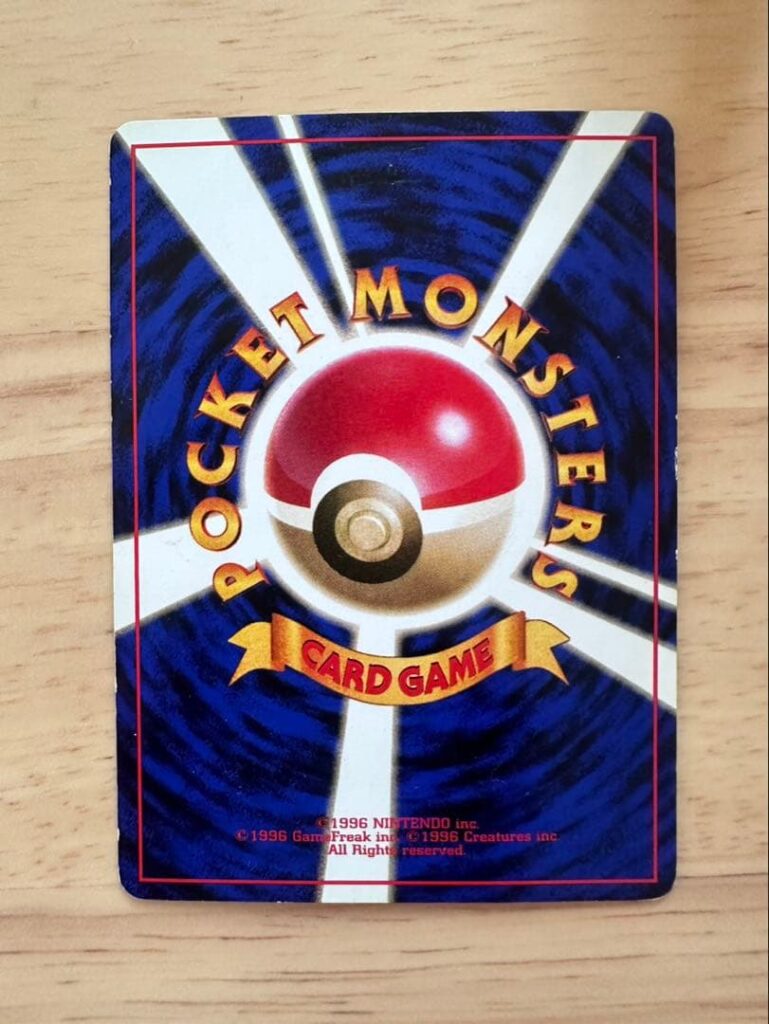
Start with the back of the card, because the language decides which path you follow. For English cards, use the set symbol where this guide provides one; Base Set 2 is not covered by the symbol table. If the set had 1st Edition printings, the stamp can also help identify the print run.
Japanese cards can usually be narrowed to a period: an older back means vintage under this guide, while the newer back introduced in July 2001 only places the card in July 2001 or later, so the 2003 boundary cannot be settled from the card alone. If you need that certainty, look the card number up on the official Japanese card list.
☐ Start with the card back. A Japanese card has a Japanese-language back; an English card has the English back. This also tells you which path to follow.
☐ English cards: find the set symbol in the lower corners or near the lower right of the art box, then check the lower left of the art box for the round black “Edition 1” stamp.
☐ English Base Set cards only: look along the right side of the artwork border for a drop shadow, then read the copyright line to separate 1st Edition, Shadowless and Unlimited.
☐ Japanese cards: look at the lower right for the expansion mark and the first edition mark — a large “1” above the word “EDITION.” Japanese cards printed before 2001 carry no first edition mark.
On English Cards, the Set Symbol Beside the Card Number Names the Set
This step is for English cards; if you are holding a Japanese card, skip to the first edition mark below. Nearly all English cards carry a set symbol or set code tied to a specific release, and PSA notes that the location of the marking varies by set but is typically in the lower corners of the card or near the lower right corner of the art box.
The shapes are collected in the table above. Match what you see against it and you have your set — a capital “R” points to Team Rocket, two overlapping stars to Neo Genesis, a medallion to Legendary Collection. Base Set is generally identified by the absence of a symbol, which makes a blank corner a clue in itself. Card numbers are formatted as “number / total in set,” and the total can help narrow the candidates.
A 1st Edition Stamp Marks the First Print Run
A 1st Edition card comes from the earliest run of a set. On English cards, PSA describes a small circular black stamp reading “Edition 1,” placed near the lower left corner of the art box. Not every set carried the marking, so its absence does not always mean a later run. Where it does appear, first printings are typically considered more desirable and more valuable than their Unlimited counterparts.
Japanese cards use a different design. According to CGC, the Japanese symbol is a large number “1” above the word “EDITION” in capitals between two horizontal lines, sitting in the lower right corner of Pokémon and Trainer cards. It never appeared on Japanese Energy cards.
Timing matters more than placement here. CGC dates the practice to 2001, when the Pokémon VS set introduced first edition symbols to Japanese print runs, continuing until the 20th Anniversary set in 2016. Japanese cards printed before the introduction of Pokémon VS in 2001 therefore carry no first edition marking at all. The expansion mark sits nearby: the official Japanese regulation page places it in the lower right on cards up to the XY BREAK series.
This narrows the date range, but it does not identify the specific set. An older back puts the card between 1996 and 2001 and counts as vintage here; a newer back with a first edition mark dates it to the Pokémon VS set or later; a newer back without one points to a later run or a card from 2016 onward. None of those clues tells you whether a card with the newer back dates from before or after 2003, so search the card number on the official Japanese card list if you need that.
Further reading: How to Identify First Edition Pokémon Cards
| Print run mark | English cards | Japanese cards |
| Appearance | Round black “Edition 1” stamp | Large “1” above “EDITION” between two lines |
| Position | Near the lower left of the art box | Lower right corner of the card |
| In use from | Base Set onward | Pokémon VS, 2001, onward |
| Not applied to | — | Energy cards |
Shadowless Cards Have No Drop Shadow Beside the Artwork
Shadowless is a print run found only in the 1999 Base Set. Shadowless cards, like Unlimited cards, carry no 1st Edition symbol, but they also lack the drop shadow that normally runs along the side of the artwork border.
The sequence explains why. Once the 1st Edition run ended, the stamp was removed, while the missing shadow and thin HP font remained — those are the Shadowless cards. The shadow was added later and the HP font was thickened, resulting in the Unlimited print run.
Shadowless copies are typically more desirable than Unlimited, though they usually sit behind 1st Edition. That places them in the middle of the Base Set ladder rather than at the top.
Further reading: What Are Shadowless Pokémon Cards?
On English Base Set Cards, the Copyright Line Identifies the Print Run
For the English Base Set, the copyright line is one of the most reliable ways to distinguish print runs. The rights holders, the publisher, and a sequence of years appear together, and that sequence changes with the print run.
Beckett records 1st Edition and Shadowless cards reading “© 1995, 96, 98, 99 Nintendo, Creatures, GAMEFREAK. © 1999 Wizards,” with Unlimited reading “© 1995, 96, 98 Nintendo, Creatures, GAMEFREAK. © 1999 Wizards.” The final Base Set run reads “© 1999-2000 Wizards.”
Beckett also calls the copyright date the most consistent identifier on the card, since it survives wear better than the visual differences. If there is no 1st Edition stamp and “99” appears twice in the copyright line, the card is Shadowless.
Further reading: When Did Pokémon Cards Come Out?
| Print run | Copyright line | 1st Edition stamp |
| 1st Edition | © 1995, 96, 98, 99 Nintendo, Creatures, GAMEFREAK. © 1999 Wizards. | Yes |
| Shadowless | © 1995, 96, 98, 99 Nintendo, Creatures, GAMEFREAK. © 1999 Wizards. | No |
| Unlimited | © 1995, 96, 98 Nintendo, Creatures, GAMEFREAK. © 1999 Wizards. | No |
| Final Base Set run | © 1995, 96, 98 Nintendo, Creatures, GAMEFREAK. © 1999-2000 Wizards. | No |
What Makes Vintage Pokemon Cards Worth Money
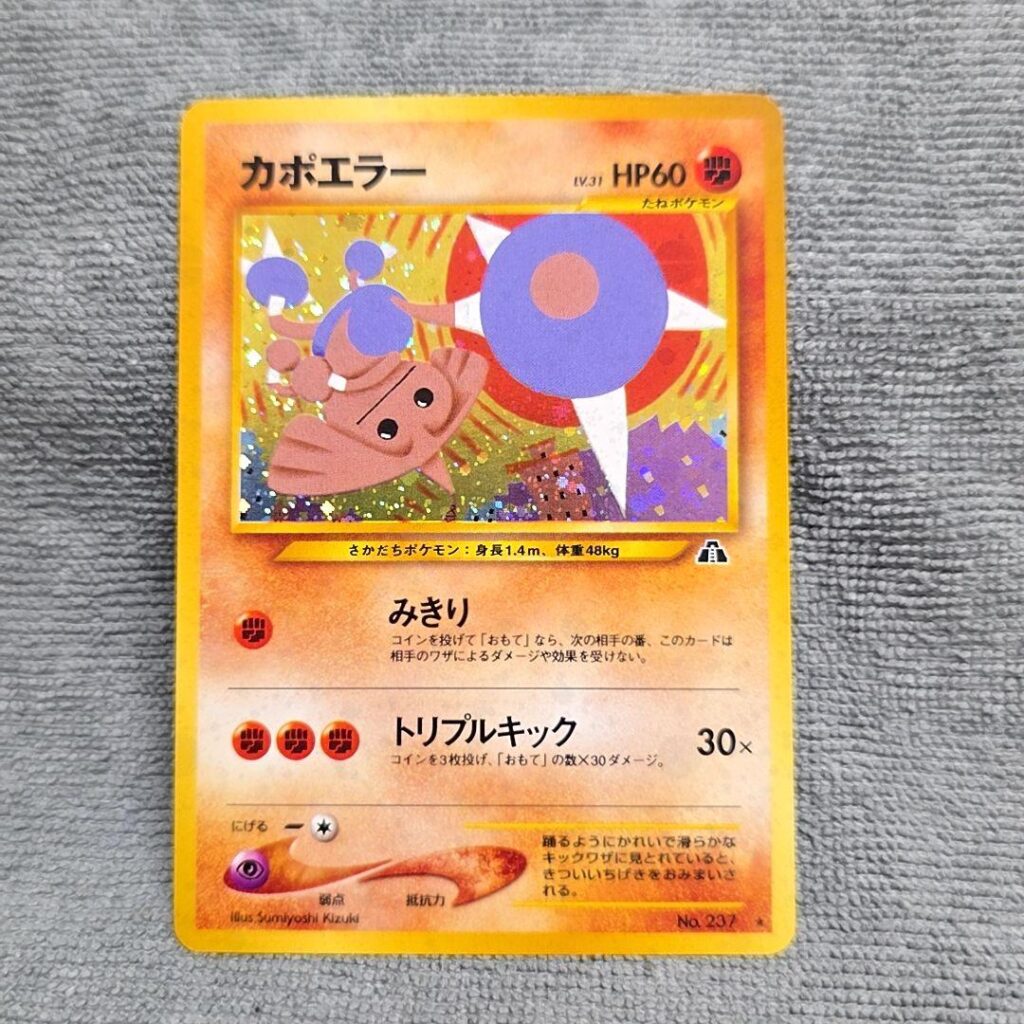
Age is not what puts a price on a card. Three things do, and they compound.
- Rarity — holo, 1st Edition, Shadowless and limited promos
- Condition — centering, edges and PSA grades
- Demand — Charizard, Pikachu and the Eeveelutions stay in demand
Rarity: Holo, 1st Edition, Shadowless, and Limited Promos
Rarity symbols come first, and they are simple: a black circle for common, a black diamond for uncommon, a black star for rare. Vintage sets stick mainly to those three, without the extra tiers modern sets added. PSA is careful to note that rarity symbols do not always indicate a card’s potential value.
Holofoil is one of the clearest indicators of collectibility. Cards with a holographic foil treatment on the artwork are considered more desirable and more valuable, and PSA notes that this is especially true for vintage cards.
Print run adds another layer of value: 1st Edition typically commands the highest prices, followed by Shadowless and then Unlimited. Scarcer runs can command higher prices — nobody knows the exact figure for Base Set 1st Edition, but PSA reports estimates of fewer than 10,000 copies of each card.
Promos work differently. They were handed out to mark movie releases and store openings, or as prizes for illustration contests and the World Championships, so they never had a normal print run. Where distribution was extremely limited, the effect is dramatic: PSA reports that only four copies of each first-, second-, and third-place tournament card were distributed, and that a PSA Authentic example would likely command $50,000 or more as of August 2026.
Condition: Centering, Edges, and PSA Grades
Condition can move the same card by an order of magnitude. PSA grades on a 10-point scale, looking at the surface, edges, corners, and centering. A PSA 10 is described as essentially a perfect card — extremely well-centered, with pristine corners and no surface damage, blemishes or imperfections.
The gaps are wide. For the 1999 Unlimited Base Set Charizard-Holo, the most recent PSA 10 price was $30,100, against $3,850 in PSA 9 and about $1,290 in PSA 8, all as of August 2026.
The spread is far larger for the 1st Edition version, averaging about $136,000 in PSA 10 and about $37,000 in PSA 9 at the same date. Ungraded copies lack a third-party grade, so they tend to sell for less than graded examples of the same card.
Demand: Charizard, Pikachu, and the Eeveelutions Stay in Demand
Demand determines which scarce cards command the strongest prices. PSA draws a neat contrast with sports cards: a Pokémon’s appeal comes not from athletic performance but from the role it plays in the wider franchise.
Starters lead. Bulbasaur, Charmander, Pikachu and Squirtle are the most popular subjects, and cards showing their fully evolved forms — Blastoise, Charizard, Venusaur — are typically in high demand. Legendary and Mythical Pokémon such as Lugia, Mew, Mewtwo, Rayquaza, and Zapdos can also attract strong demand because of their status within the franchise, while Gengar and Umbreon have strong cult followings for entirely different reasons.
The Eeveelutions also have broad, lasting appeal among collectors. A PSA 10 1st Edition Umbreon from Neo Discovery sold on eBay for $760 in September 2017, and a PSA 10 Vaporeon from EX Delta Species reached about $1,190 in late January 2021.
Within one set and one print run, demand does the rest. Among 1999 1st Edition Base Set holos, PSA 10 Charizard sits at about $182,000 against $1,100 for Machamp, as of August 2026.
Which Vintage Pokemon Cards Are Worth Money
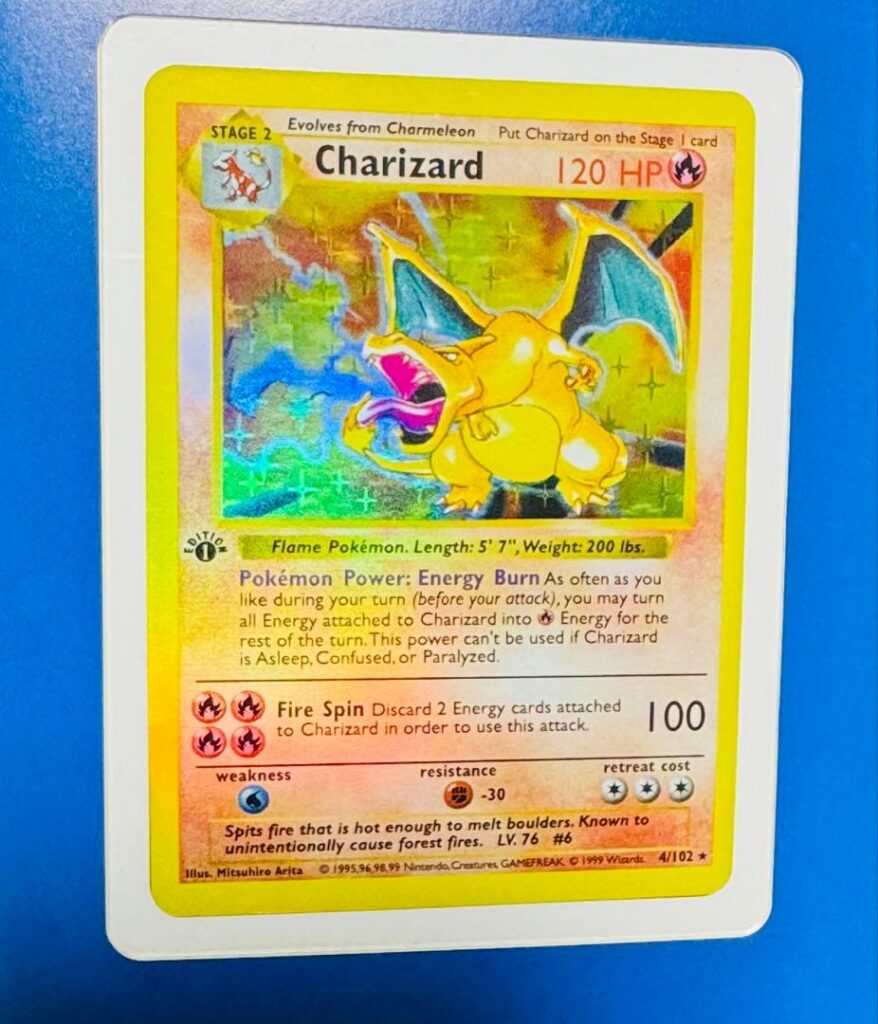
Print run and grade drive the price, not the year printed on the card. The table below sets out where the named cards sit as of August 2026.
| Card and print run | PSA 10 | PSA 9 | PSA 8 | NM 7 | PSA 10 population |
| Base Set Charizard-Holo, 1st Edition | about $182,000 | about $37,000 | — | — | 123 |
| Base Set Charizard-Holo, Shadowless | about $54,700 | about $6,740 | about $2,810 | about $1,980 | 58 |
| Base Set Charizard-Holo, Unlimited | $30,100 | about $1,960 | about $1,290 | about $593 | 488 |
| Base Set Blastoise-Holo, Unlimited | about $3,760 | about $788 | about $257 | about $157 | 381 |
| Base Set Pidgeotto, Unlimited | about $136 | about $40 | $8.50 | $9.99 | 240 |
| Base Set Psychic Energy, Unlimited | $43 | $10.50 | $3.25 | $8.20 | 425 |
| XY Evolutions Charizard-Holo | $1,900 | $125 | $75 | — | — |
Prices as of August 27, 2026, from PSA’s card data and price guide.
Record-Setting Examples: The Pikachu Illustrator and 1st Edition Base Set Charizard
The headline numbers belong to cards where extremely limited distribution meets the top grade. The Pikachu Illustrator was never sold at retail — Guinness World Records notes it was released only as a prize in a 1998 illustration contest. PSA has graded 49 copies — exactly one of them is a PSA 10, with 15 in PSA 9 and 12 in PSA 8.
That single copy set the record. On February 16, 2026 it sold through Goldin Auctions for about $16.5 million, the highest price paid for any Pokémon card at auction and, as of February 2026, for any trading card at auction. The same card had changed hands before in a private sale rather than an auction, selling for about $5.28 million on July 22, 2021: $4 million in cash plus a PSA 9 copy valued at $1,275,000.
The 1st Edition Base Set Charizard-Holo is another marquee example, though at a much lower price level. PSA lists the most recent PSA 10 price at about $182,000 and the average PSA 10 price at about $136,000; the PSA 10 population is 123. Auction results for that grade include about $400,000 in March 2021, about $271,000 that September and $252,000 in January 2022. Both examples combine exceptional scarcity with top condition, though the scale of that scarcity differs.
Vintage Holos: Where Most Collectible Cards Sit
If something in your box is worth real money, this is where it most likely lands. Unlimited holos show a clear decline in price as the grade falls. The 1999 Base Set Blastoise-Holo averages about $3,760 in PSA 10, about $788 in PSA 9, about $257 in PSA 8, about $157 in NM 7 and about $91.50 in EX-MT 6.
Population counts rise as grades fall, which shows where most of the graded supply sits: that card has 381 copies in PSA 10 against 4,927 in PSA 9 and 10,153 in PSA 8. Fossil holos follow a similar pattern, with the 1st Edition Raichu-Holo averaging about $1,910 in PSA 10, $354 in PSA 9, $94.50 in PSA 8 and about $55.20 in NM 7.
A scarcer print run can raise prices across every grade. Shadowless Base Set Charizard-Holo most recently traded at about $54,700 in PSA 10, with a PSA 10 population of 58, compared with $30,100 for Unlimited, which has a PSA 10 population of 488. In PSA 9 the averages are about $6,740 and about $1,960.
When choosing your next card, three criteria apply to both English and Japanese cards: a holo of a popular Pokémon, a mid-grade with a relatively large graded population, and a budget ceiling set before you start looking. Print-run distinctions matter mainly for English cards here — start with Unlimited and leave Shadowless and 1st Edition for later, since prices can rise sharply for scarcer print runs. Japanese cards have no equivalent of Shadowless, so condition and budget become the main filters instead.
Commons, Energy Cards, and Reprints
Three groups sit at the bottom, for different reasons. Commons and basic Energy simply have low values in absolute terms. Base Set 2 and Legendary Collection are reprint-focused releases from the Wizards of the Coast era, so they are vintage, but they trade below the originals of the same Pokémon. XY Evolutions and Celebrations fall outside the vintage window entirely, and because the artwork matches, they are the ones people mistake for originals.
The prices are much more modest. Base Set Pidgeotto sits at about $136 in PSA 10, about $40 in PSA 9 and $8.50 in PSA 8, and Base Set Psychic Energy runs $43, $10.50 and $3.25 across those grades. The 2016 XY Evolutions Charizard-Holo runs $1,900 in GEM-MT 10, $125 in MT 9 and $75 in NM-MT 8, against about $182,000 for the 1st Edition Base Set card.
Reprints do carry design tells. PSA lists a different set symbol and new Cosmos foil on 2000 Base Set II, a different symbol on 2002 Legendary Collection, a different symbol plus updated card text, HP and attack damage on 2016 XY Evolutions, and new glitter foil with a 25th Anniversary logo on 2021 Celebrations. Age alone does not determine a card’s value.
How to Check Vintage Pokemon Card Values Yourself
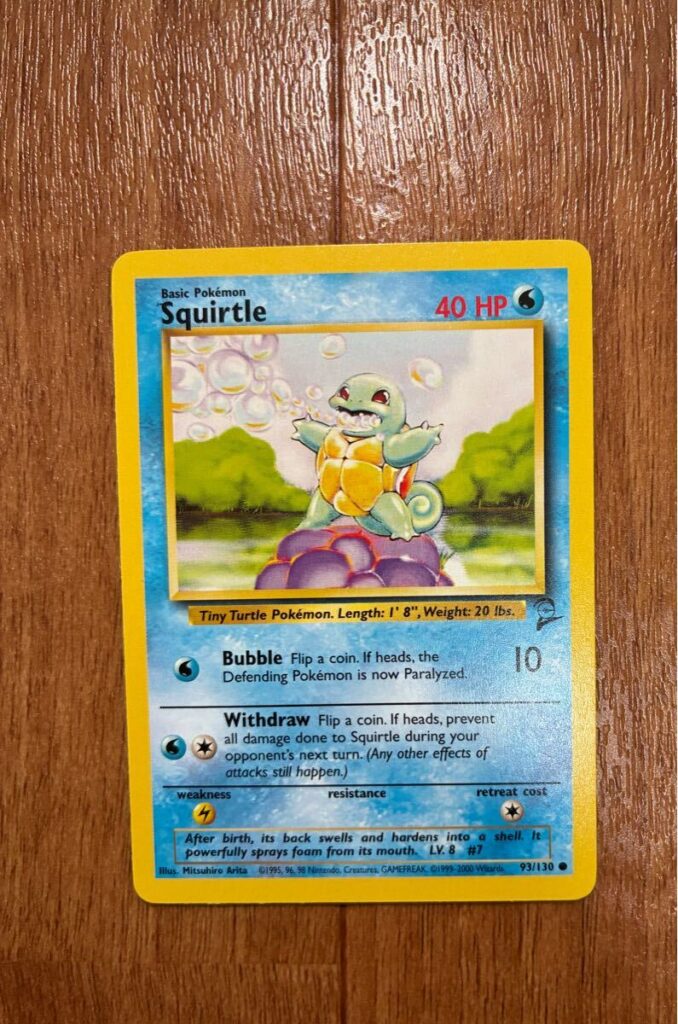
Every figure above has a date attached for a reason. Check current comps yourself before you buy or sell.
- PSA, TCGplayer and eBay show real selling prices
- Japanese marketplaces can price the same cards differently
PSA, TCGplayer, and eBay Show What Cards Actually Sell For
Which source you use depends on whether your card is graded. For graded cards, start with PSA’s own card data, which lists most recent price, average price and PSA price by grade alongside the number of copies graded. Its price guide does the same across a whole set at once, with columns for NM-MT 8, MT 9 and GEM-MT 10, and the auction results section adds real sale dates, prices, grades and auction houses.
For an ungraded card, TCGplayer’s Market Price is a better benchmark, calculated from recent sales across the platform rather than from what sellers are currently asking. eBay covers the same ground from another angle: select the completed listings option in the search to see what comparable cards sold for.
One mistake is easy to make. Do not compare an ungraded card with a PSA 10 price — find sold examples in the same print run and roughly the same condition instead. Matching grade and print run is what makes any of these numbers meaningful.
Japanese Marketplaces Can Price Cards Differently
Japanese cards turn up on Mercari, Yahoo Auctions and Suruga-ya, which is where you will see cards that never reach Western storefronts. Prices are shown in yen.
You can check sold prices there too, and Yahoo Auctions is the better starting point. Its closed-auction search covers the most recent 180 days and reports the lowest, average and highest winning bids along with the number of results. It also separates winning price from starting price in its sort options, so you are not reading a seller’s opening figure as a sale.
Mercari can show sold items by filtering the listing status, though the platform uses fixed prices, which means the figure shown is the same as the asking price rather than a bid outcome. Search by card name and number so results stay comparable.
Because Japanese and Western marketplaces move independently, prices for the same card may differ between them. Once you have compared those yen-denominated prices with Western comps, a proxy service can give you access to the Japanese listings, and Neokyo’s Japanese Pokémon TCG page is covered later in this guide.
Where to Buy Vintage Pokemon Cards, Including Japanese Stock
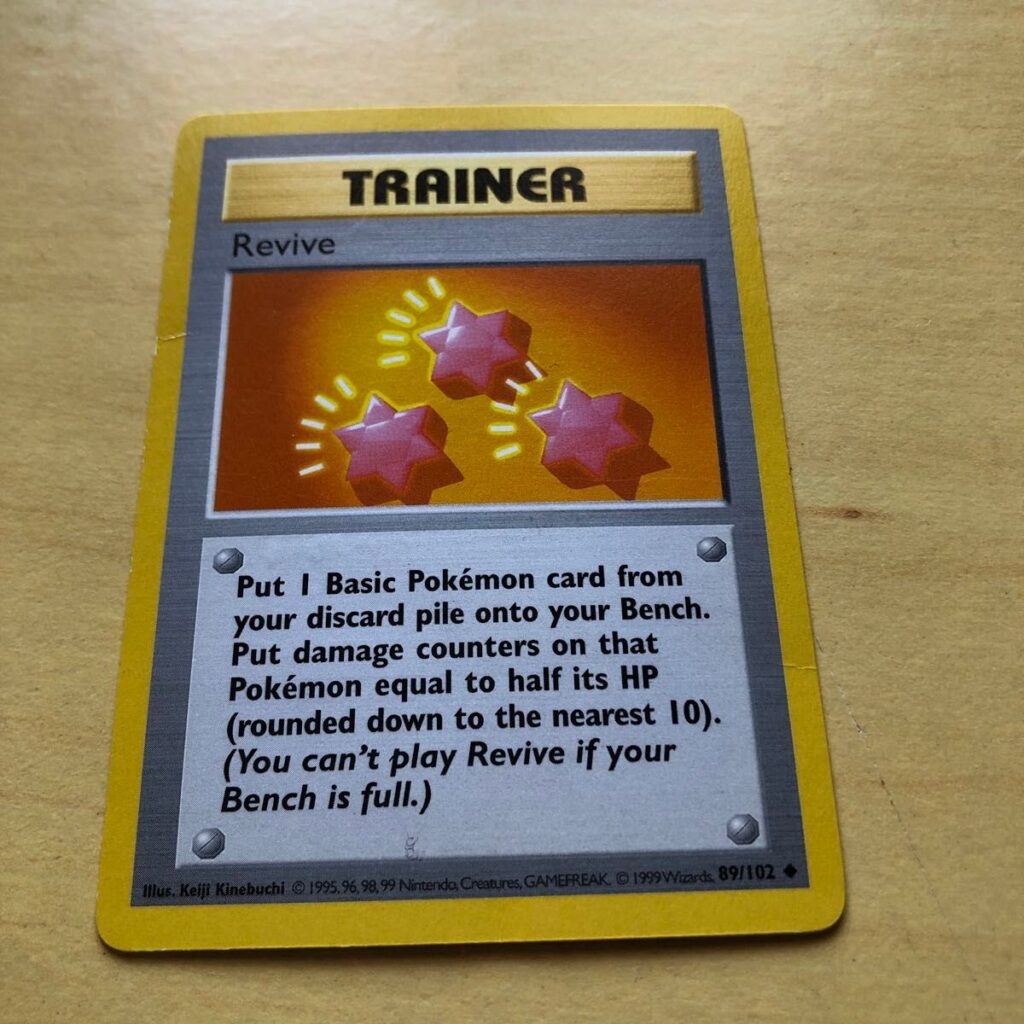
If you came here to check the value of a card you already own, you have what you need. What follows is for anyone considering their next purchase, starting with what you can buy without leaving home.
| Platform | What it is | Ships directly overseas |
| Mercari | C2C marketplace | No — sellers ship to a designated address in Japan |
| Yahoo Auctions | Auction format | Not stated publicly |
| Suruga-ya (.jp) | Used and new retailer | No — overseas shipping not offered |
| magi | Trading-card marketplace | Not stated publicly |
Japanese Marketplaces Where Vintage Cards Are Listed
Mercari is a person-to-person marketplace, and its corporate description highlights its payment deposit system and its use of AI to monitor for fraud. Yahoo Auctions uses a bidding format, with the current price, time remaining, and activity from other bidders visible while you decide. Suruga-ya sells used and new stock online, and magi is a marketplace built for trading cards.
These are domestic services, and some cannot ship to an address outside Japan. Mercari states that sellers send items to a designated address within Japan, and Suruga-ya’s Japanese site states plainly that overseas shipping is not offered.
Buying Japanese Listings Through a Proxy Service
A proxy service buys on your behalf and handles the transaction in Japan. Neokyo covers listings on Mercari, Yahoo Auctions, Rakuma, Suruga-ya and magi.
Orders can be stored in Neokyo’s warehouse free of charge for up to 45 days, which lets you request several cards be consolidated into one or more parcels. Neokyo’s Pokémon TCG page aggregates Pokémon card listings and lets you switch between marketplaces from one screen. Before you commit to anything, the next section covers what to check in a listing.
If You Visit Japan: Card Shops in Tokyo and Kyoto
Akihabara is where many specialty card shops are concentrated. Hareruya 2 operates its Akihabara Tower store at 1-2-13 Sotokanda, Chiyoda-ku and an Akihabara Annex at 1-2-5, and Card Labo has its Akihabara store on the ninth floor of the Akihabara Radio Kaikan at 1-15-16.
Used-goods chain Suruga-ya has its main Akihabara store at 3-11-3 Sotokanda, where the ground floor was renovated into a trading-card floor focused on Pokémon. Kyoto has options too: Suruga-ya’s Kyoto Teramachi store at 534-2 Ebisunocho, Shimogyo-ku, and Hareruya 2’s Kyoto store at 557-1 Higashi-Shiokoji-cho, Shimogyo-ku. Suruga-ya also lists some of its in-store inventory on its marketplace, so certain cards available at physical locations can also be bought online — which, with inventory turning over daily, is the realistic route if a trip is not in the cards.
Vintage Pokemon Cards: What to Check Before You Buy
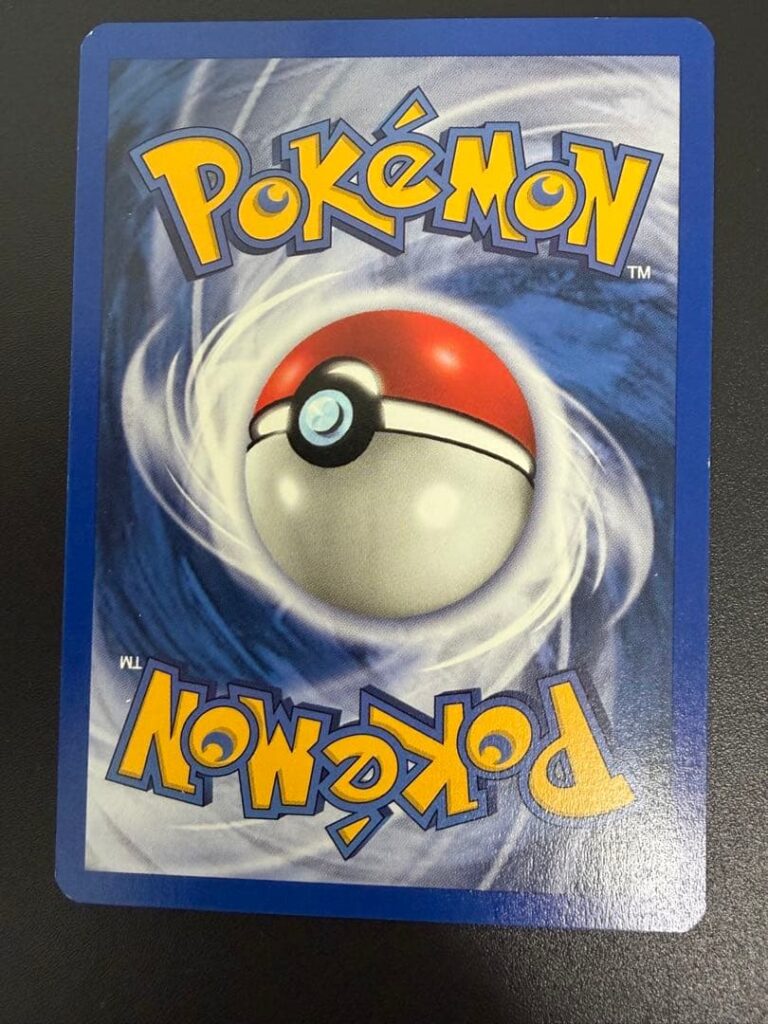
Six checks stand between a listing and a purchase you will not regret. These assume you are buying online — in a shop, you can inspect the same details directly on the card.
Print run, set and period. For English cards, match the set symbol against the table in this guide to name the set; sets without a shape listed there cannot be pinned down here. Where the set carried a 1st Edition marking, the stamp helps identify the print run, and for Base Set, the drop shadow and copyright line distinguish Shadowless from Unlimited. For Japanese cards, the combination of the pre- or post-July 2001 card back and the lower-right first edition mark narrows the card to a period rather than identifying a specific set.
Condition and grade. If the card is professionally graded, use that grade as your baseline. For ungraded cards, inspect the corners, edges, and centering, and remember that the price jump from PSA 9 to PSA 10 can be substantial.
Market level. Compare against sold examples in the same print run and grade. Use PSA’s card data for graded copies, TCGplayer Market Price and eBay completed listings for ungraded ones, and Yahoo Auctions closed results for Japanese listings.
Authenticity checks. Where this guide lists a set symbol, check it against the listing, and check the stamp’s appearance and position on sets that carried one, plus the copyright line on Base Set. Walk away if what you see contradicts those details, or if the photos never show the places you need to look. A set with no shape listed here, such as Base Set 2, cannot be identified from this guide’s symbol table — check the card number and copyright year instead. For Japanese cards, confirm the first edition mark’s look and position, and that a card presented as pre-2001 is not carrying a mark it should not have.
Shipping route. Some items listed on Japanese marketplaces cannot be shipped to an address outside Japan, so decide before you bid or buy whether you are using a proxy service. Settling that first also tells you which parcels can be grouped together.
Total cost. Compare the total cost rather than the listing price alone. Buying an item from a Japanese listing can add domestic shipping in Japan, proxy service fees, international shipping, and any import duties or taxes in your country, so compare that total with prices from comparable sales.
Further reading: Fake Pokémon Cards Guide