

Japanese Pokémon Card Back: Design, Old Back, and How to Spot a Fake
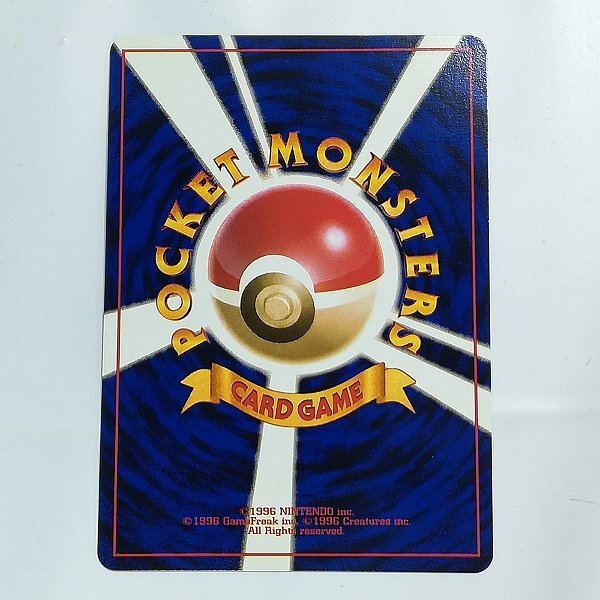
Turn a Japanese Pokémon card over and its back looks nothing like the back of an English card. That difference is documented: the official tournament rules distinguish Japanese card backs from those used on all other Pokémon cards. Here is what the back shows, how it compares with the English back, when it changed, and what it tells you about authenticity and value.
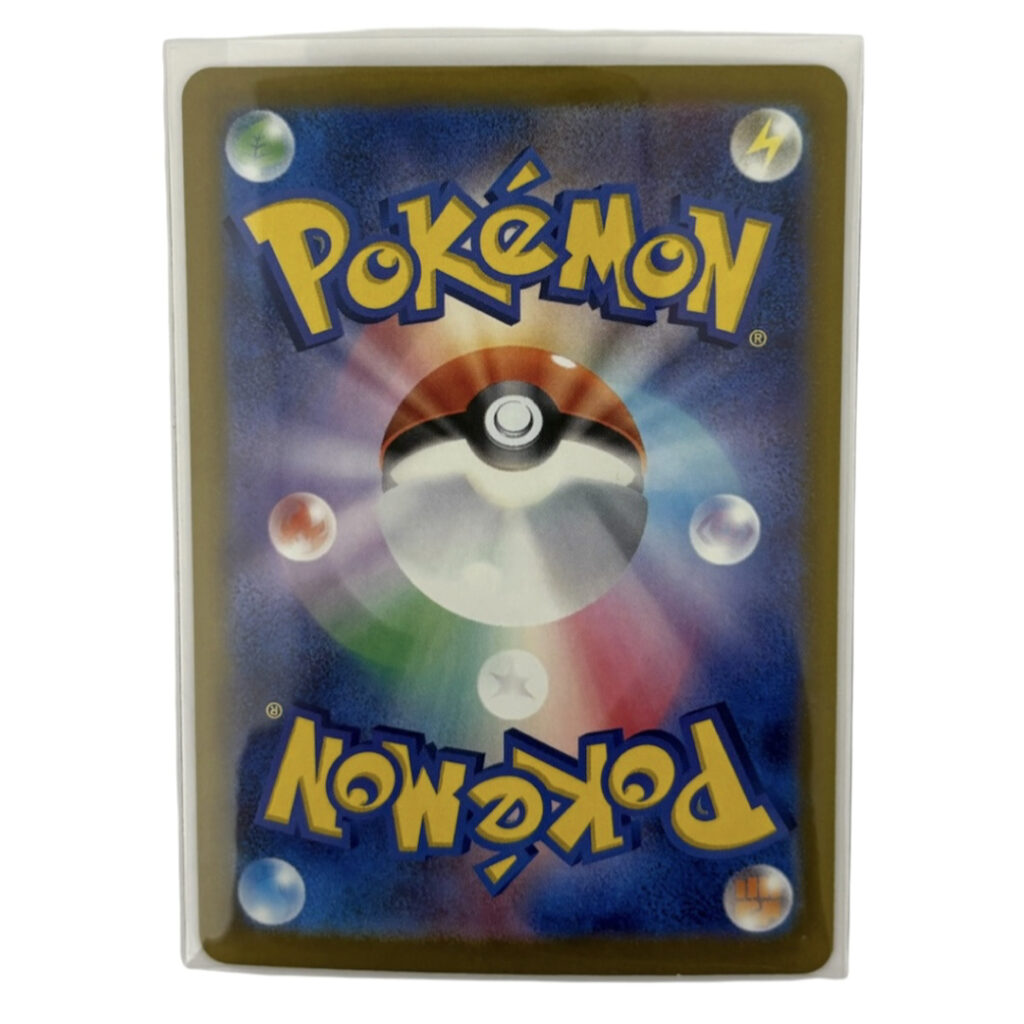
What the Back of a Japanese Pokémon Card Looks Like
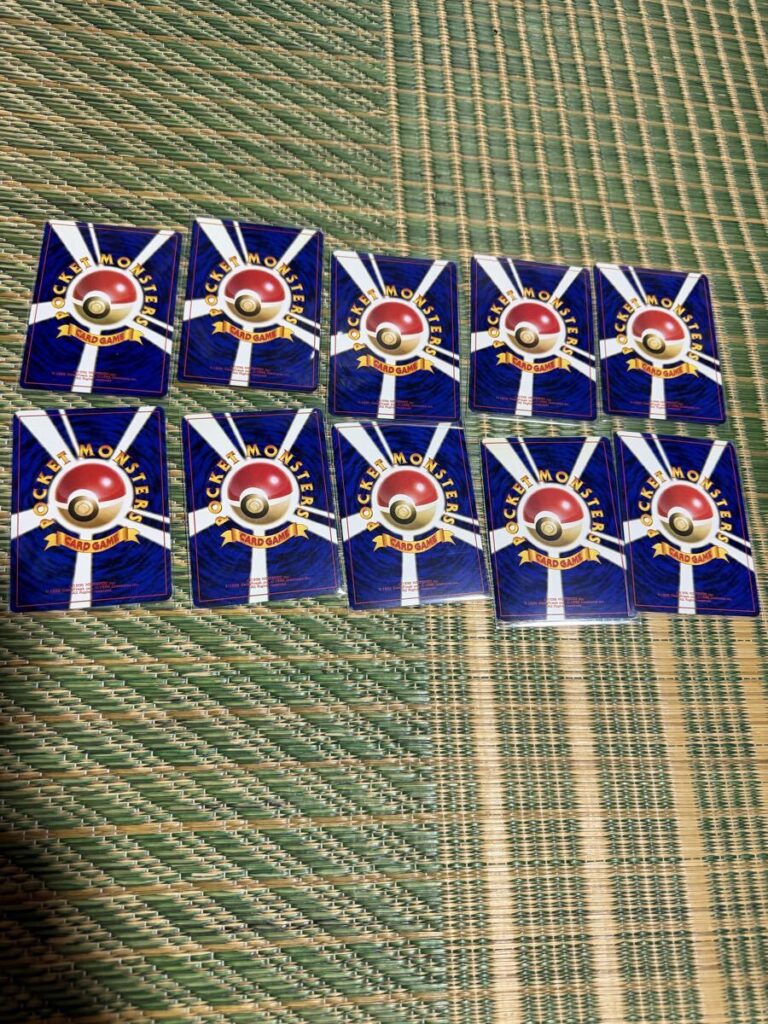
Three features on the back are worth checking, and each tells you something different about the card in your hand.
- The text on the back is in English, not Japanese
- The Poké Ball artwork on the back
- The blue color and border of the back
The Text on the Back Is in English, Not Japanese
Japanese Pokémon cards carry no Japanese characters on the back at all. Both designs use English lettering, and the wording helps you date the card.
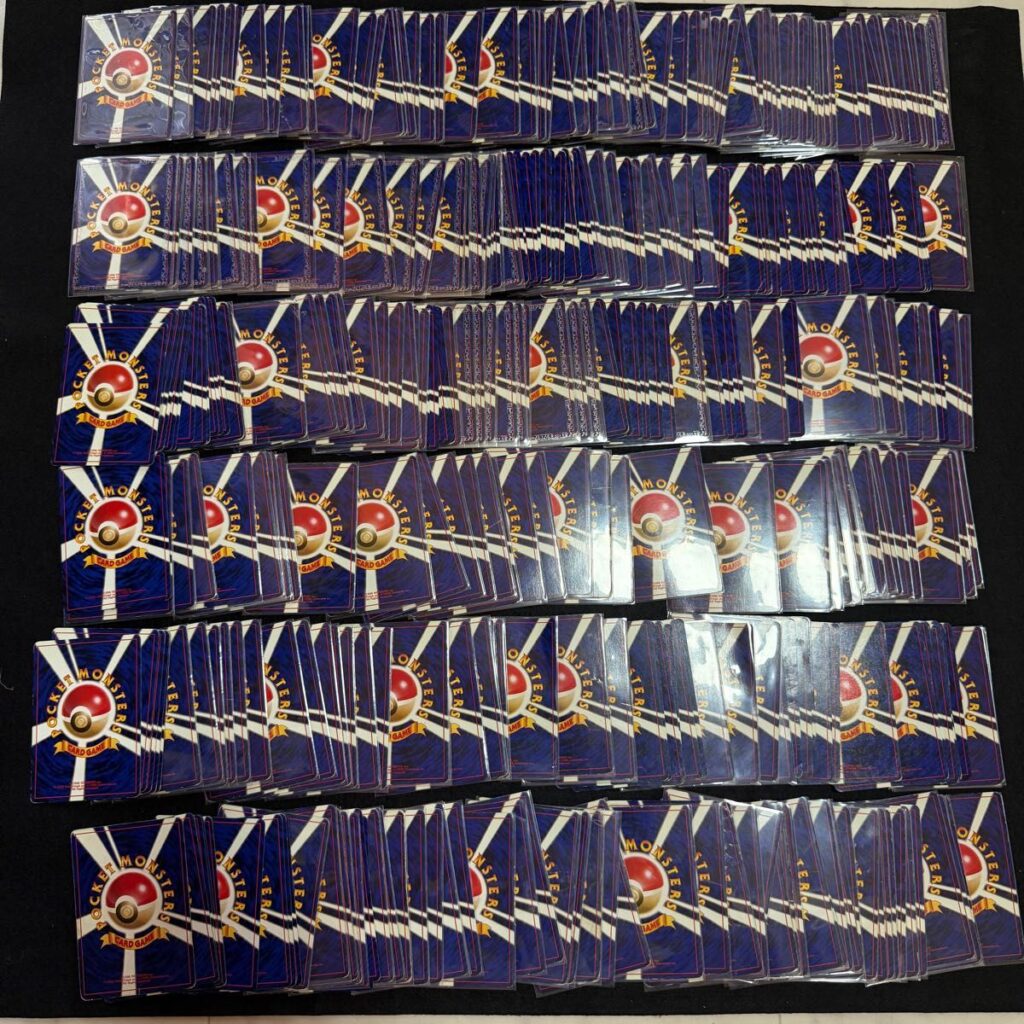
On the old back, the words POCKET MONSTERS curve across the top, with CARD GAME on a ribbon below the Poké Ball, as seen on graded 1996 Japanese Base Set cards held by CGC Cards. Three small red lines run along the bottom edge: “©1996 NINTENDO inc.”, “©1996 GameFreak inc. ©1996 Creatures inc.” and “All Rights reserved.”
The current back drops that wordmark. The Pokémon logo appears twice instead, at the top and at the bottom, with the lower one upside down — visible on recent graded cards and on the official Pokémon Card Game play guide. Since none of it is Japanese, you do not need to read Japanese to date the card.
Key points
The back of a Japanese Pokémon card has no Japanese text on it. An old back reads POCKET MONSTERS with CARD GAME on the ribbon. A current back carries the Pokémon logo. Checking which one appears is enough to tell the two eras apart.
The Poké Ball Artwork on the Back
The Poké Ball sits at the center of every Japanese back and is drawn the same way in both eras: red half on top, white half below. Its position does not distinguish the two eras, so focus on the background instead.
An old back places the ball against a navy swirl, with thick cream-colored rays running outward toward the edges. The current back replaces those rays with rainbow light radiating from the center against deep blue.
The Blue Color and Border of the Back
Blue is the base color in both eras, so yes — Japanese Pokémon cards do have a blue back. The border is where the eras separate cleanly.
An old back is deep navy with a thin red line just inside the outer edge. The current back has no red line. It carries a thick gold border, with translucent orbs around the artwork, each holding a faint energy symbol. One caveat: how dark the border appears can vary with lighting, so judge it under consistent lighting.
Japanese Pokémon Card Back vs the English Card Back
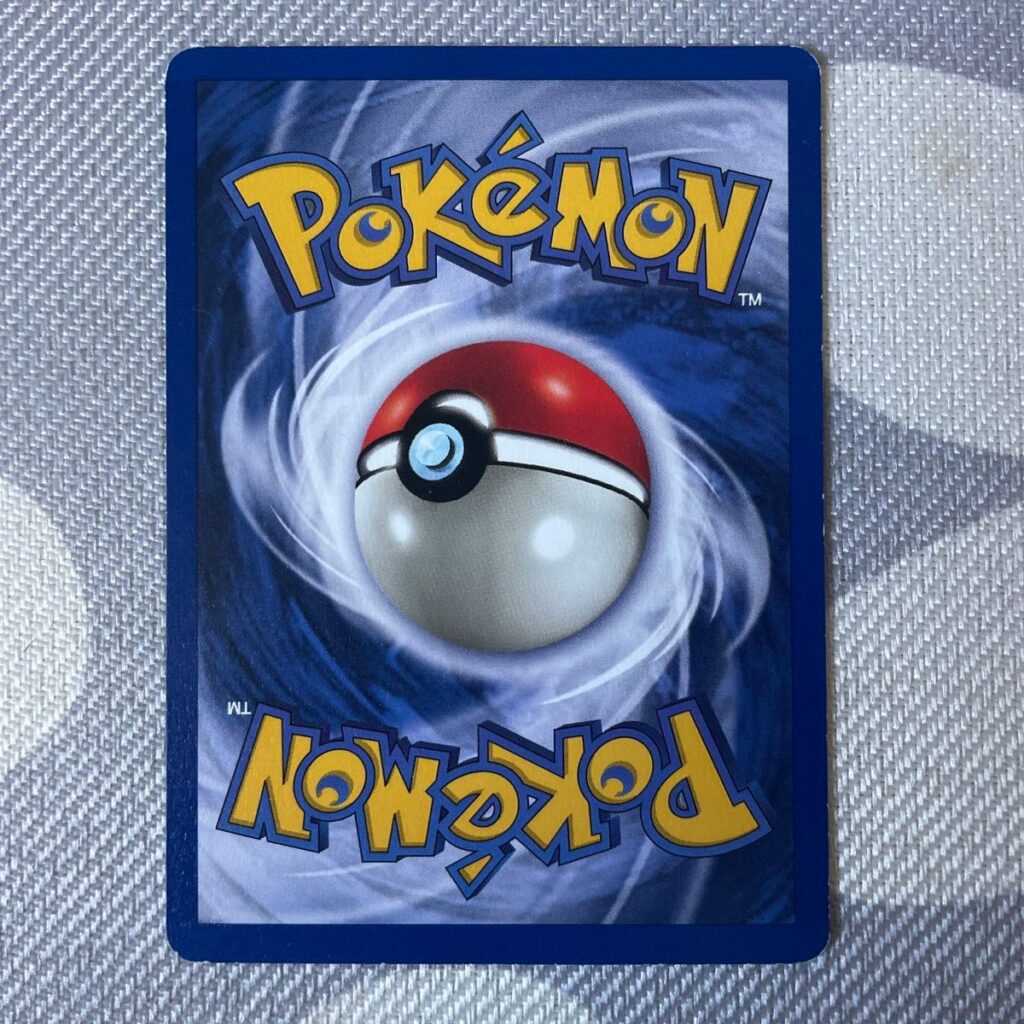
At a glance, the current Japanese back looks familiar if you collect English-language Pokémon cards. The table sets all three designs side by side.
| Element | Japanese old back (1996–2001) | Japanese current back (2001–) | English back (1999–) |
| Text, top and bottom | POCKET MONSTERS in an arc, CARD GAME on a ribbon | Pokémon logo twice, with ® | Pokémon logo twice, with TM |
| Background | Navy swirl, thick cream rays | Deep blue, rainbow light from center, translucent orbs | Blue with a white swirl |
| Border | Thin red line inside the edge | Thick gold border | Dark navy border |
| Poké Ball orientation | Red half on top | Red half on top | Red half on top |
| Copyright line | Three red lines at the bottom | Not visible | None |
Differences in the Text and Logo
The current Japanese back and the English back both use the same two-logo layout, with one Pokémon logo upside down, so the wordmark alone will not help you tell them apart. The difference is the small mark beside it.
Graded English Base Set cards show a TM; recent graded Japanese cards show an ®. That single character is the only text-based difference between the two current designs. English backs also carry no copyright line, as seen on graded Base Set examples, which makes them easy to tell from a Japanese old back.
Differences in the Background and Border
Look past the text, and the two current designs are easy to tell apart. The English back sets the ball against a blue background with a white swirl and a dark navy border, while the current Japanese back uses rainbow light and a gold border. Border color alone will tell you which you are holding.
The Poké Ball will not: its orientation is identical across all three designs, and at arm’s length the two current designs both look like blue cards with a Poké Ball. The Pokémon Trading Card Game debuted in North America and Europe in 1999, and this design appears to have been in place from that launch onward — no official record describes a change to it.
Can a Japanese Pokémon Card Have an English Card Back?
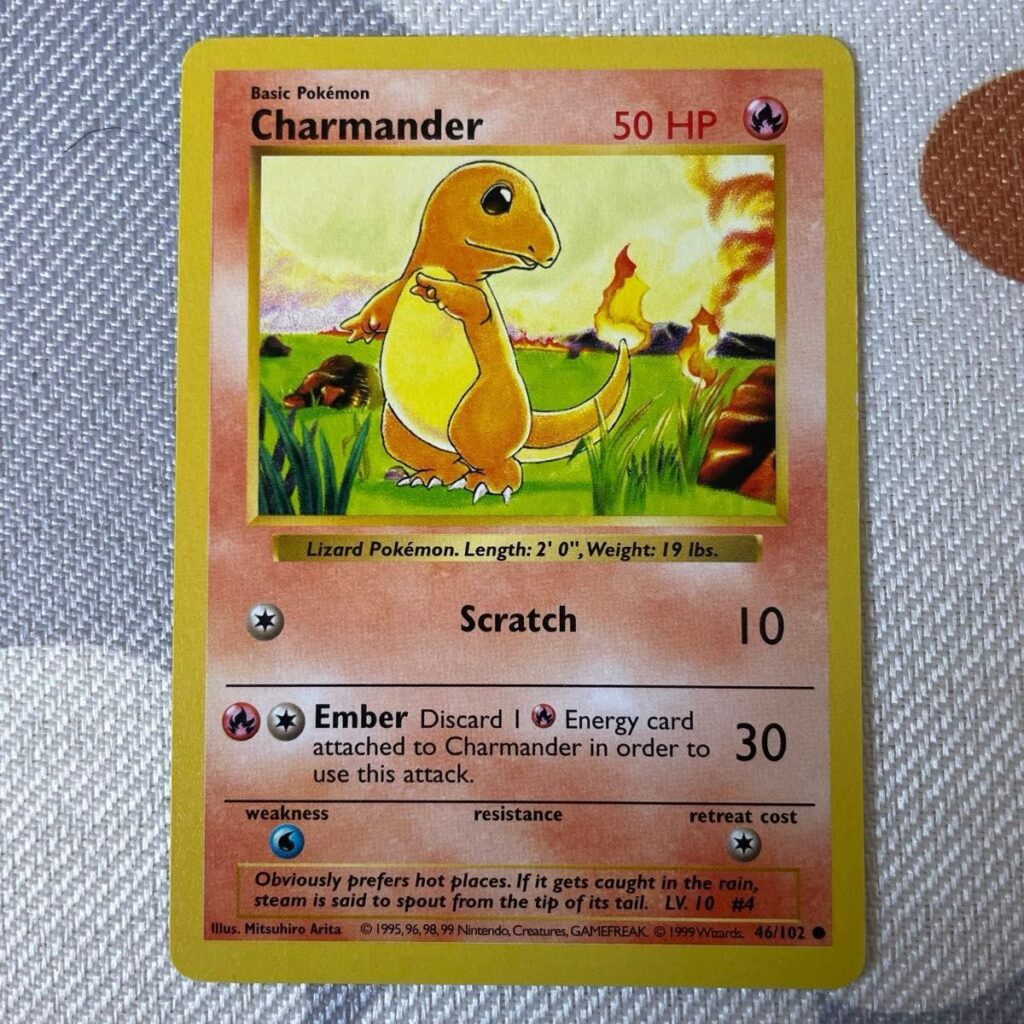
No official Japanese Pokémon card is known to have been printed with an English back, and the tournament rules help explain why. Play! Pokémon allows mixed-language decks only so long as the backs stay consistent, and the same document explicitly states that Japanese backs are not interchangeable with any other:
“
Japanese cards are considered “marked” for the purpose of this section as their card backs are different than the card backs of all other Pokémon trading cards.
— Play! Pokémon TCG Tournament Handbook, Section 2.1, Disallowed Cards
A Japanese front paired with an English back would contradict that description. If you come across one, avoid buying it unless the seller can clearly explain its origin.
When the Japanese Pokémon Card Back Changed
The design changed once, and the change is documented.
- Old back cards printed from 1996 to 2001
- The July 2001 switch to the current back
Old Back Cards Printed from 1996 to 2001
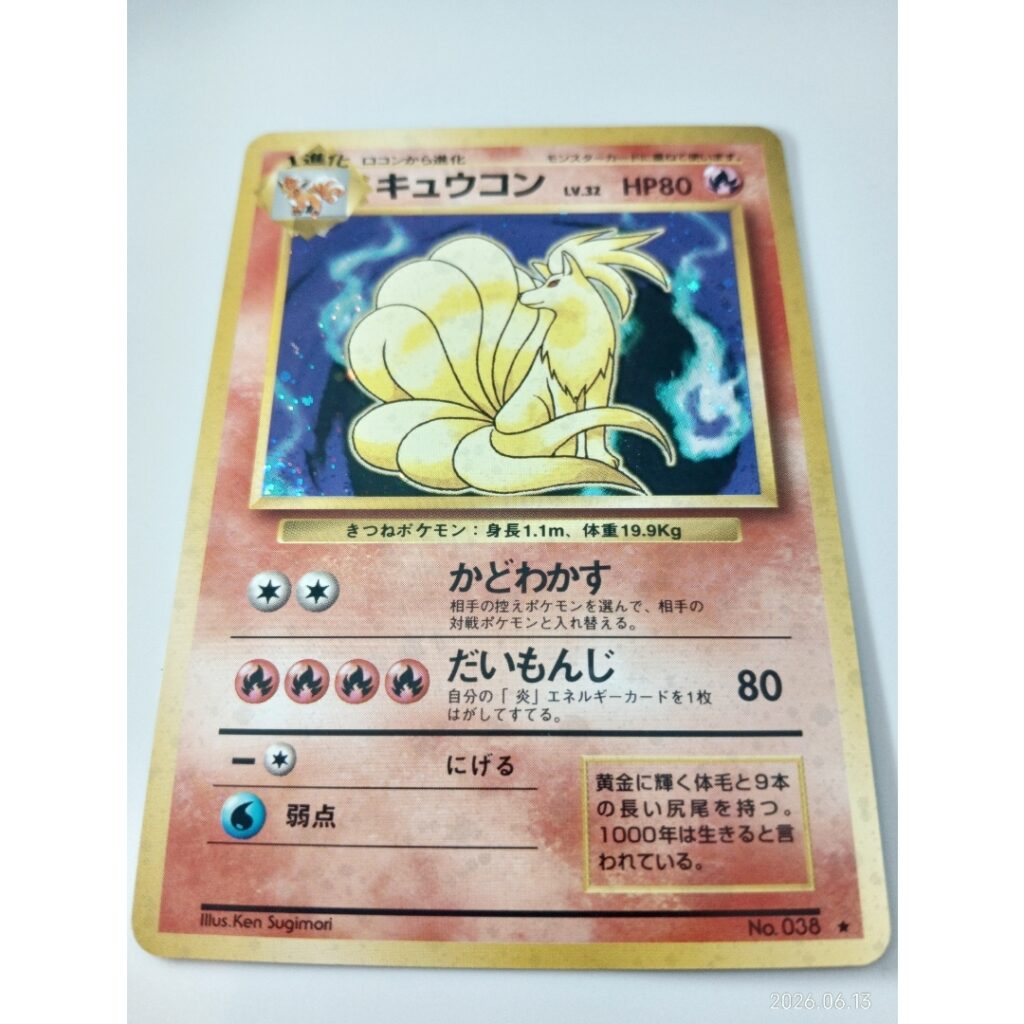
“Old back,” often called kyū-ura by Japanese collectors, refers to the design used from the launch of the Japanese TCG through 2001. The start date is well documented: the official 25th anniversary chronicle records that the first expansion and starter packs of the Pocket Monsters Card Game were released on October 20, 1996.
Those cards cannot be played in sanctioned events today: the official regulations cover Standard from the ADV series onward and Hall of Fame from DP onward, so all old-back series fall outside current sanctioned formats. A practical note: identify an old back by the design, not by the set name or year. The design is on the card; a set name may not be readable to you.
The July 2001 Switch to the Current Back
The switch happened in July 2001, and every Japanese set since has used the same back. The official chronicle records the redesign in July 2001, in the same timeline that dates the first Pokémon Card VS release to July 7 that year.
The official play guide also confirms that the card back design has remained the same since then, and graded cards from sets released between 2019 and 2025 bear that out. You will find English-language articles giving a different year — the official record says July 2001.
Key points
The Japanese card back changed once, in July 2001. Anything printed before that is an old back; everything since uses the current design. This is the date in the official chronicle, not an estimate.
How to Spot a Fake from the Japanese Pokémon Card Back
The checks below are signals, not a verdict — for an expensive card, they are no substitute for professional grading.
- Check the print quality and font on the back
- Check the copyright line and border on old backs
- What to check in a seller’s photo of the back
- Special card backs that are not fakes
Check the Print Quality and Font on the Back
Print quality works as a useful first check for cards from either era. On a genuine card, the printing on the back is typically sharp, with no visible bleeding, especially around the curves of the lettering. On counterfeits the logo outline is often soft, and the letter strokes can look thin by comparison. If you own a card you know is genuine, compare the two under the same light — differences that are hard to spot in isolation stand out side by side.
Check the Copyright Line and Border on Old Backs
An old back gives you two details a current back does not, and both are quick to verify. First, the copyright block along the bottom edge: three lines reading “©1996 NINTENDO inc.”, “©1996 GameFreak inc. ©1996 Creatures inc.” and “All Rights reserved.” Check the line count and the wording, not just the presence of red text. Second, check for the thin red line just inside the edge; the current design uses a thick gold border instead.
These checks can also reveal impossible combinations: English backs carry no copyright line, so a card showing one on an English background is not an official print. And if the letters are too compressed to read at all, treat the print quality itself as the warning.
What to Check in a Seller’s Photo of the Back
Most of these checks work without the card in your hands. Four things are visible in a photograph: the lettering, the background, the border color, and, on an old back, the three copyright lines.
First confirm the listing shows the back at all. A front-only listing gives you nothing to check. If the image is clear enough, look at the back’s centering and the condition of the edges too — both feed into grading, as the grading section below explains.
What a photo cannot reliably show is the cardstock. The official rules note that going without sleeves can expose imperfections on the back of the card, and wear and surface flaws can be especially easy to spot there — so for an expensive card, buying a graded copy gives you a third-party assessment of its condition.
These checks apply just as well to Japanese marketplace listings. If the back is photographed clearly and the details line up, you can evaluate the card using the same criteria you would use for any other listing. We buy from Japanese shops on your behalf through our Pokémon TCG page.
Browse Japanese Pokémon card listings with Neokyo
Special Card Backs That Are Not Fakes
A back matching neither design is not automatically counterfeit. Some were made that way deliberately.
World Championships decks are the clearest example. The Pokémon Company describes these replica decks as having a different card back than standard Pokémon TCG cards, with gray borders and a player’s signature, and notes that the cards are not legal for tournament play.
So an unfamiliar back can mean an official product. Check what the card is before writing it off.
Note
Do not assume a card is counterfeit just because the back looks unfamiliar. Official products including the World Championships decks were printed with their own backs. Those cards are genuine — they simply cannot be used in sanctioned play.
Run through this list before committing to a card. It works for either era.
☐ The text reads POCKET MONSTERS with CARD GAME on the ribbon (old back), or the Pokémon logo with a ® mark (current back)
☐ The printing is sharp, with no bleeding around the logo outline
☐ On an old back, the three copyright lines are present and legible
☐ The border matches the era: a thin red line, or a thick gold border
☐ The background matches the era: a navy swirl with cream rays, or deep blue with rainbow light
☐ The front and back match: a Japanese-language front with the Japanese back design, or an English-language front with the English back design
☐ The listing includes a photo of the back
How the Japanese Pokémon Card Back Affects Value and Grading
The back can affect a card’s value in two distinct ways, and it helps to consider them separately.
- Why old-back cards can be more valuable
- Back centering and edge wear in grading
Why Old-Back Cards Can Be More Valuable
Old backs were printed for roughly five years — October 1996 to the July 2001 redesign — and nothing since carries that design. That limited window is why old-back cards often attract more collector interest than comparable current-back cards, and since they cannot be played in sanctioned formats, the appeal comes from collecting rather than competition. That said, an old back is only one factor in a card’s value, not the whole story — what the card is, its condition, and whether it has been graded all matter.
Back Centering and Edge Wear in Grading
Graders assess the back of the card as well as the front, and published grading standards are most explicit about centering. For its top grade, PSA allows centering of approximately 55/45 on the front and 75/25 on the reverse. Tolerances differ by company and grade:
| Grading company | Grade | Front centering | Back centering |
| PSA | GEM-MT 10 | 55/45 | 75/25 |
| CGC Cards | Gem Mint 10 | 55/45 | 75/25 |
| CGC Cards | Mint 9 | 60/40 | 90/10 |
| BGS | Pristine 10 | 50/50 | 60/40 or better |
| BGS | Mint 9 | — | 70/30 or better |
Sources: CGC Cards grading scale, Beckett grading scale
Wear and chipping along the edges pull a grade down as well, though the published edge criteria do not distinguish between the front and back — centering is the only place the standards separate the two faces. The blue background can make whitening easier to see, which is one reason the back deserves a close look. Because centering and edge condition both factor into the final grade, check them in the seller’s photo before you commit.
Where to Buy Japanese Pokémon Cards, Including Old-Back Cards
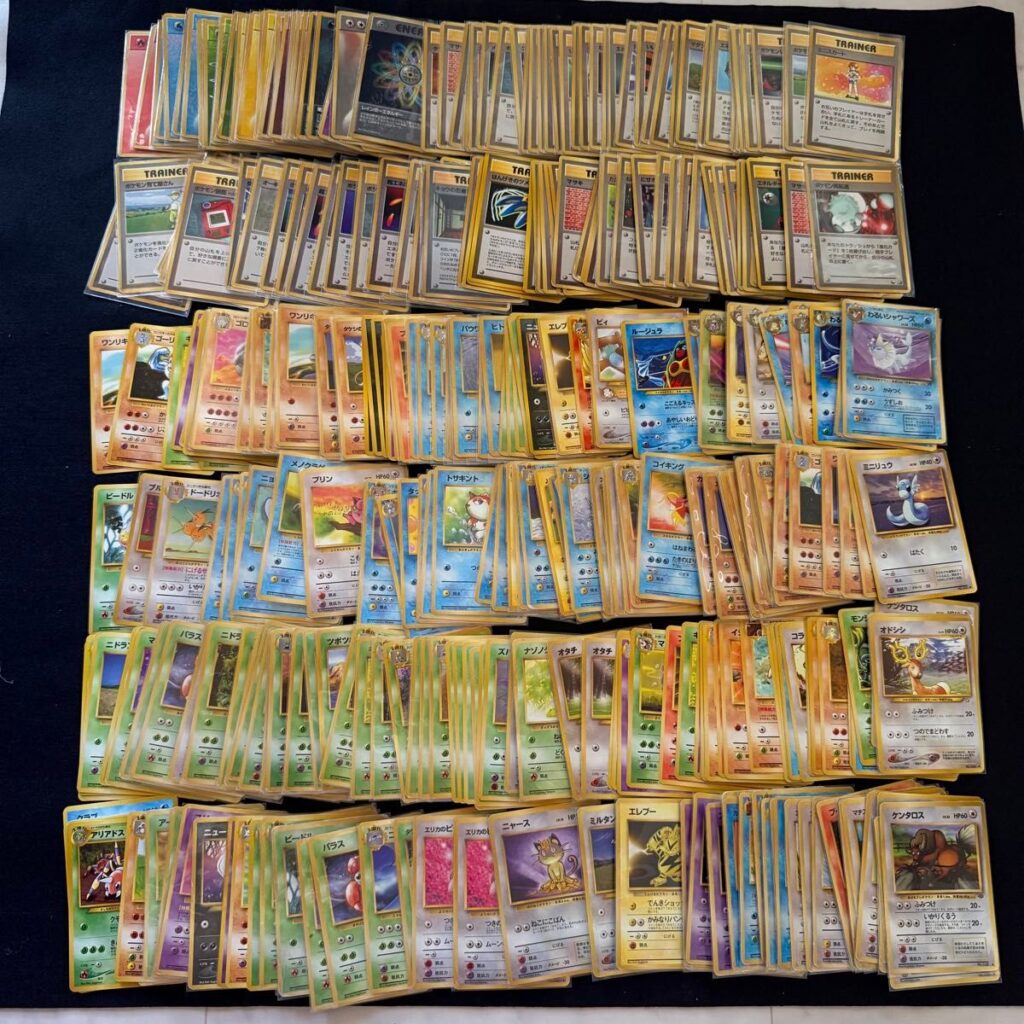
Japanese cards are sold through a wide range of Japanese shops and marketplaces, and some of that inventory is never listed for overseas buyers. A proxy buying service closes that gap: we purchase from Japanese shops on your behalf and forward the package to you. Through our Pokémon TCG page you can order from Rakuma, Mercari, Yahoo Auction, Rakuten, Amazon Japan, Surugaya and others in one place.
One thing to keep in mind: we buy the item you choose and ship it, so we are not the seller, and you are still responsible for evaluating the card’s condition and authenticity from the listing. That is what the checks above are for — apply them to the listing photos, starting with whether the back is shown.
Order Japanese Pokémon cards through Neokyo
Japanese Pokémon Card Back: What to Check Before You Buy
Reading a Japanese back comes down to three things. The lettering dates the card — POCKET MONSTERS for an old back, the Pokémon logo for a current one, and an ® rather than a TM if you are distinguishing a Japanese back from an English one. The background and border confirm the era: navy with cream rays and a thin red line, or deep blue with a gold border. Ignore the Poké Ball — it looks the same in every era.
Before buying, work from the listing photos. Is the back shown? Does the lettering match the era stated in the listing? On an old back, are the three copyright lines legible?
Is the printing sharp around the logo? How do the centering and edges look? A listing that answers those questions gives you enough information to evaluate the card. The same basic checks apply whether you are buying from Japan or elsewhere, while Japanese shops can give you access to inventory that never reaches overseas buyers.