
Jirai Kei Fashion: Meaning, Style, Makeup, and Where to Buy
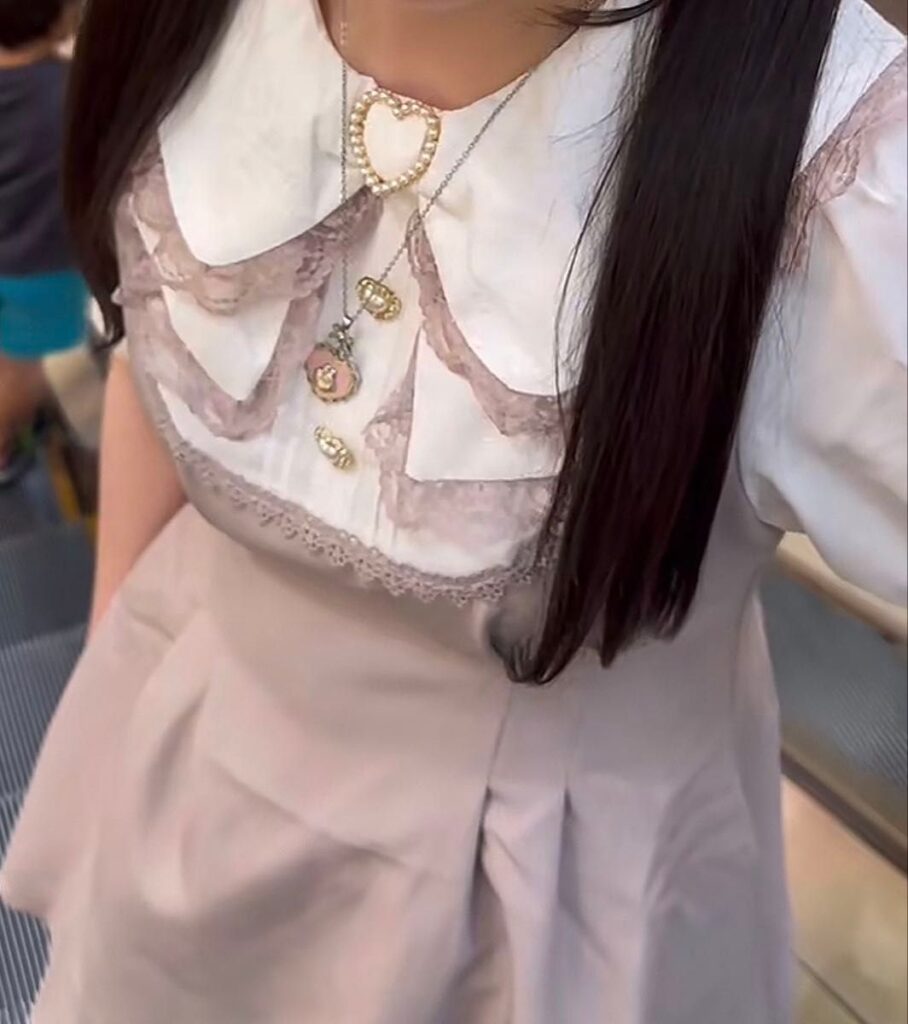
You’ve probably seen the look before you knew the name. Black and dusty pink, lace collars, oversized ribbons, chunky Mary Janes, and eye makeup that suggests the wearer has been crying.
On TikTok and Pinterest it gets tagged jirai kei, and the name translates to something far darker than the clothes suggest. That gap between the sweetness of the outfit and the sharpness of the word is what makes the style hard to research in English.
This guide covers what jirai kei means, how to say it, what goes into an outfit, and how the makeup works. It also sorts out the styles it keeps getting confused with, and ends with the part most guides skip: how to buy the Japanese brands from outside Japan.
What Jirai Kei Means and Where It Came From
Before you start buying, it helps to know what you’re actually naming. The word carries a history that the clothes don’t, and it still shapes how people react to the style in Japan. Three things are worth understanding first:
- The meaning and pronunciation of jirai kei
- Why jirai kei started in Kabukicho
- How the name is received today
Each one changes how comfortably you can use the term.
The Meaning and Pronunciation of Jirai Kei
Jirai kei is written 地雷系 in Japanese. Jirai (地雷) means “landmine” and kei (系) means “type” or “style,” so the name translates literally as landmine style.
The term did not begin as a compliment. It was originally used to mock women seen as emotionally volatile, and only later shifted into the name of an aesthetic and a way of dressing, according to The NUFS Times, a newspaper published by Nagoya University of Foreign Studies.
Saying it out loud is easier than the spelling suggests. Each beat is short and evenly weighted: jee-rye kay. English speakers tend to stress the first part, but Japanese doesn’t work that way, so keep the rhythm flat across all three beats.
Why Jirai Kei Started in Kabukicho
The style traces back to the streets of Kabukicho in Shinjuku, Tokyo. The same paper describes the district as one known for adult-oriented nightlife, live music venues, and host clubs, which is an unlikely birthplace for something this pastel.
That contrast between sweet clothing and a hard setting sits at the center of the look. Ribbons and lace read differently at two in the morning outside a host club than they do on a shopping street at noon, and jirai kei was built for the former.
Earlier Japanese street styles were built by magazines. Jirai kei blew up on social media instead, which is why it reached closets outside Japan faster than the subcultures before it.
How the Name Is Received Today
The word isn’t neutral in Japan, and some people who wear the clothes still avoid the label. A survey of students at Nagoya University of Foreign Studies, published in December 2022, found that 67% of respondents said they found people who wear jirai kei hard to approach or talk to (The NUFS Times). One interviewee described the impression as cold or distant.
That perception has been shifting. The same reporting concludes that jirai kei is starting to shed its negative associations and read instead as a way of showing individuality.
For readers outside Japan, the practical takeaway is simple. Don’t hang the word on other people, and treat calling yourself jirai kei as your own decision rather than something the style requires.
Using the term safely
・Calling an outfit or a style jirai kei is fine
・Calling another person a “landmine” is not
・In Japan, the word can still land as an insult
・Whether you use it for yourself is entirely your call
What a Jirai Kei Outfit Is Made Of
A jirai kei outfit is built from a small, fixed set of pieces, which is what makes it approachable for beginners. Four elements carry the look:
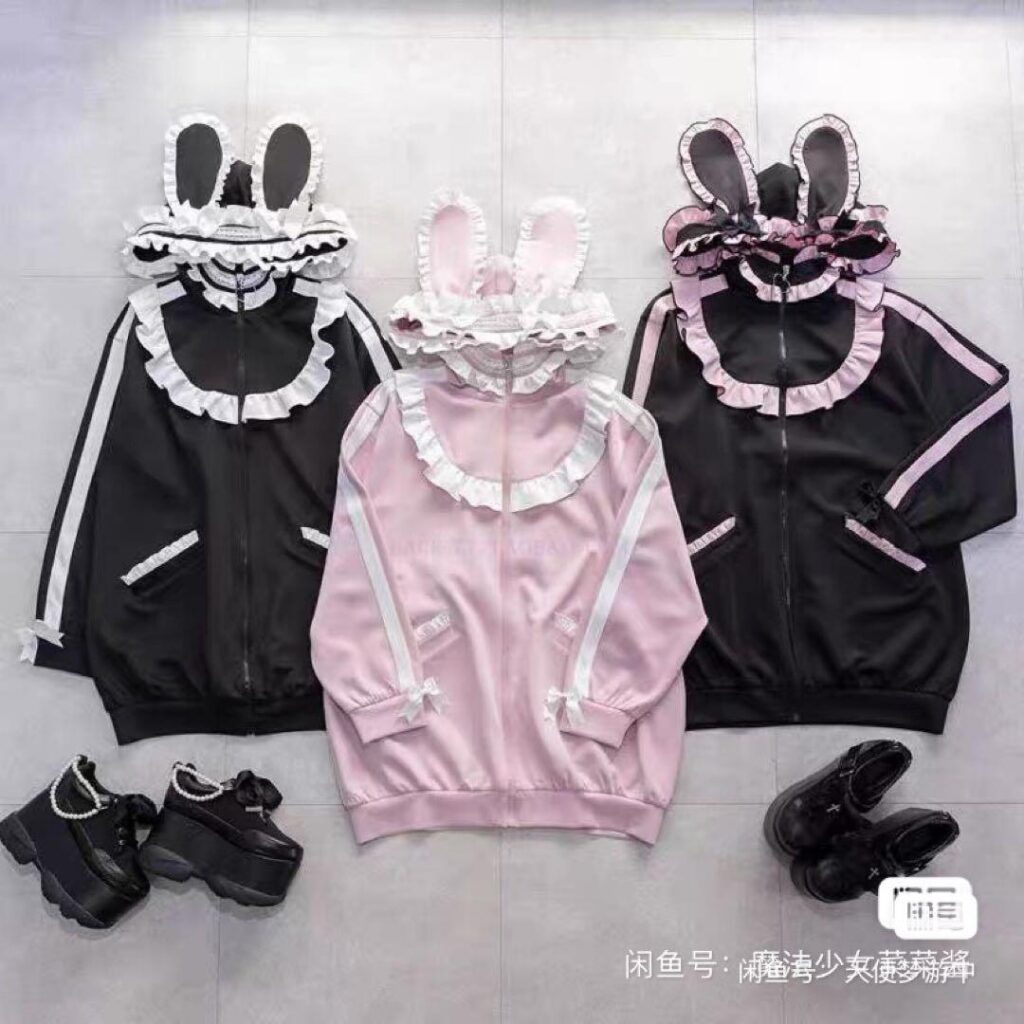
- The black, white, and dusty pink palette
- Lace blouses, frilled skirts, and dresses
- Platform Mary Janes and lace socks
- Ribbons, chokers, and Sanrio accessories
Get those right and the rest is personal taste.
The Black, White, and Dusty Pink Palette
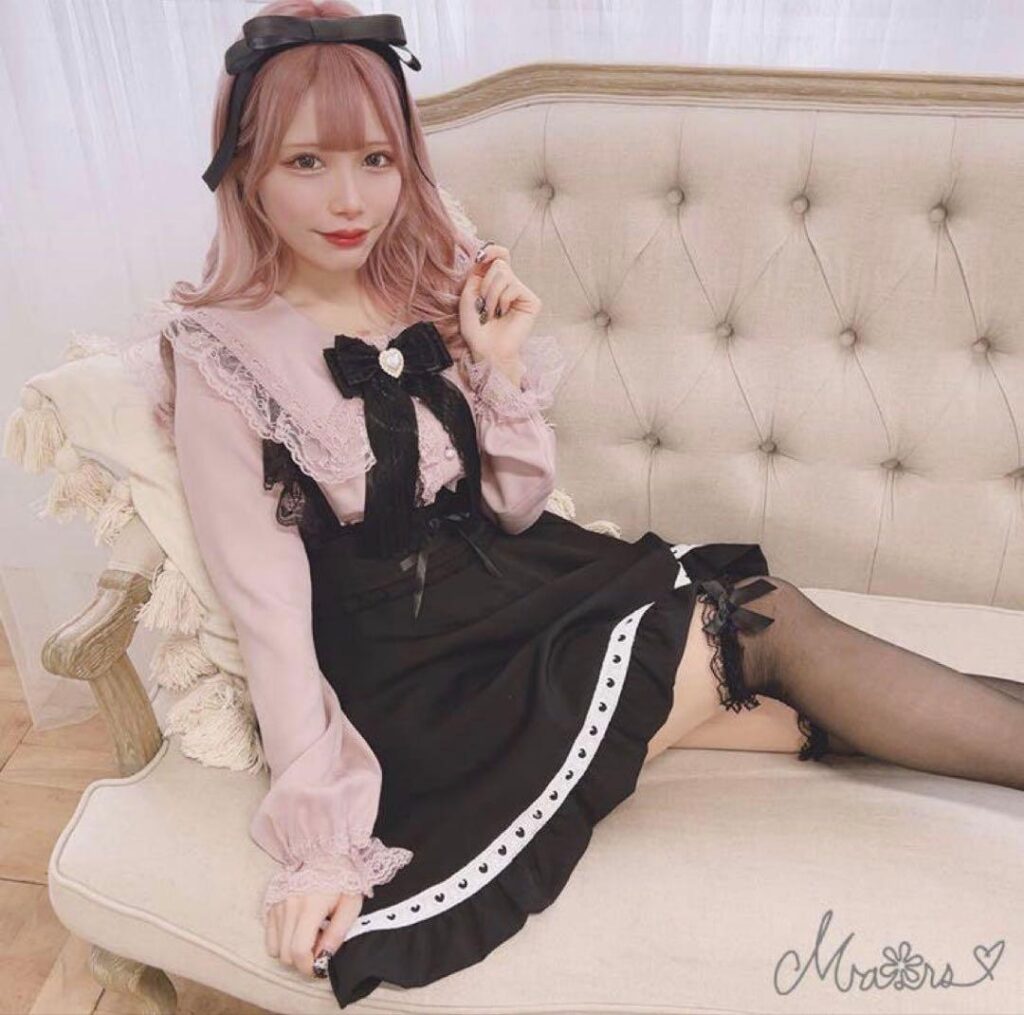
Nearly every jirai kei coord — short for “coordinate,” the Japanese fashion word for a full outfit — runs on three colors: black, white, and a muted, dusty pink. Black carries the structure, white sits in the collars and lace trim, and the pink softens everything around it.
Red and deep burgundy show up as accents. They work in a bow, on the lips, or on a bag, but they rarely take over as the main color.
The palette matters more than any single garment, because it’s what separates jirai kei from brighter kawaii styles. Swap the dusty pink for hot pink and the same outfit reads as something else entirely.
Lace Blouses, Frilled Skirts, and Dresses
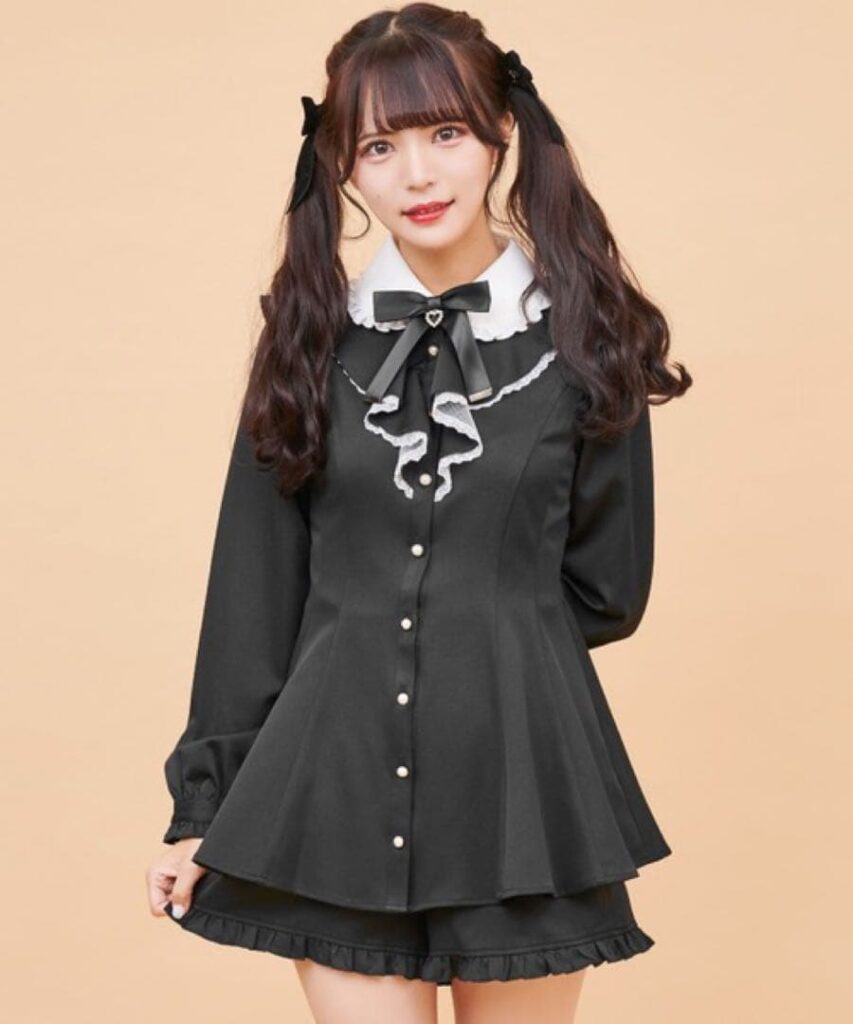
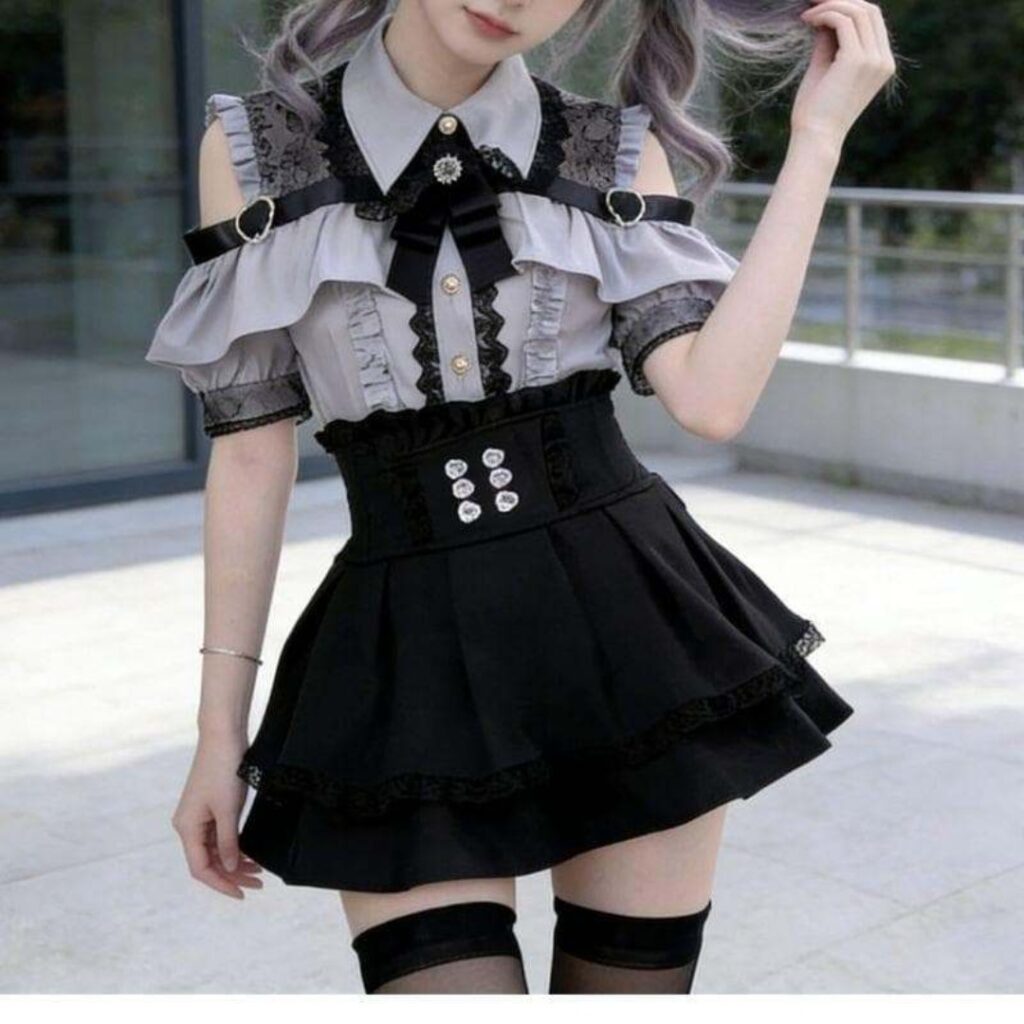
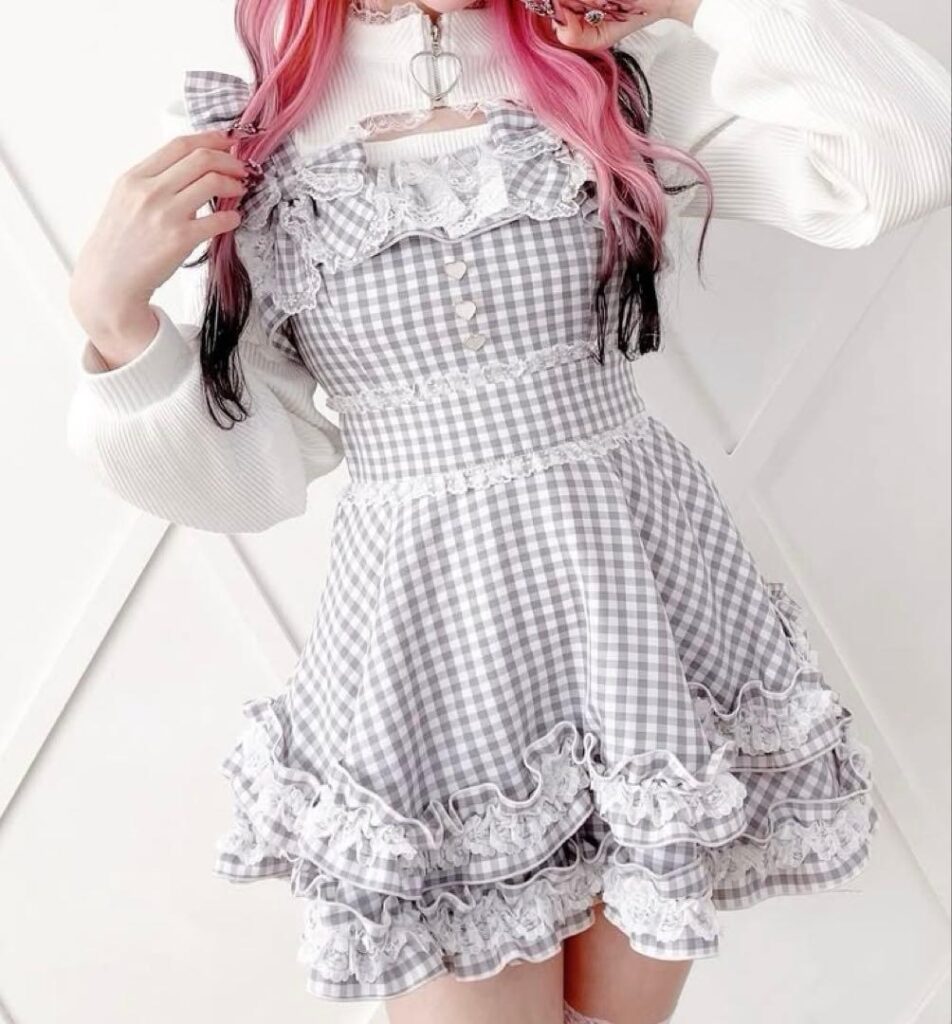
The core silhouette is a high-collared blouse with lace or ribbon detailing, worn with a high-waisted frilled skirt. A dress does the same job in one garment, which is why it’s the most common starting point.
Fabric details carry the style more than cut does. Look for lace trim at the collar and cuffs, ribbon ties at the chest, and layered frills at the hem. Sleeves are often puffed or sheer, and hems usually sit above the knee.
Winter versions swap the blouse for a lace-trimmed knit while keeping the collar and the color scheme intact. Most of these pieces come from Japanese labels rather than international ones, so the widest selection sits on Japanese marketplaces.
Platform Mary Janes and Lace Socks
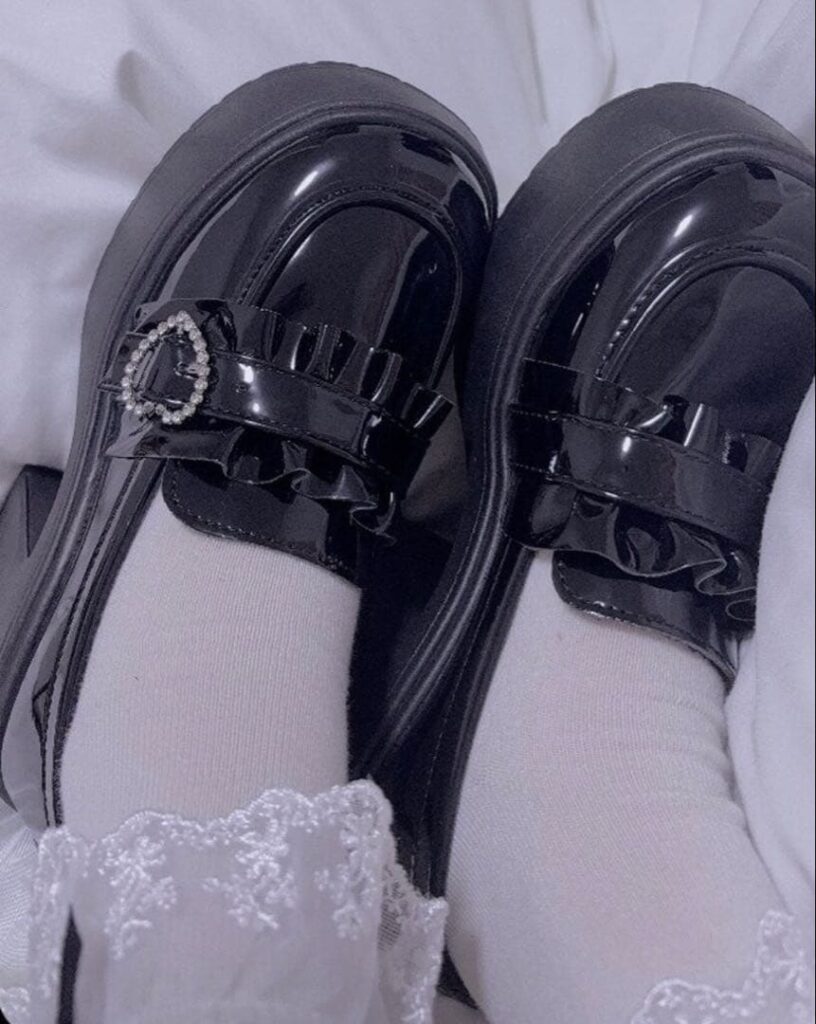
Footwear is where the outfit gains height and weight. Chunky-heeled Mary Janes and platform loafers are the standard, and the thick sole is deliberate, since it balances the volume of the skirt above it.
Socks matter almost as much as the shoes. Lace-trimmed ankle socks, loose socks, and dark tights each change the vibe of the outfit, so the same dress can read sweeter or harder depending on what sits below it.
Staff at Spinns, a Japanese alternative fashion store, told the same paper that lacy gothic collars, loose socks, and chains are an easy way to push a regular outfit toward jirai kei. That’s a useful entry point if you want to test the style before committing to a full coord.
Ribbons, Chokers, and Sanrio Accessories
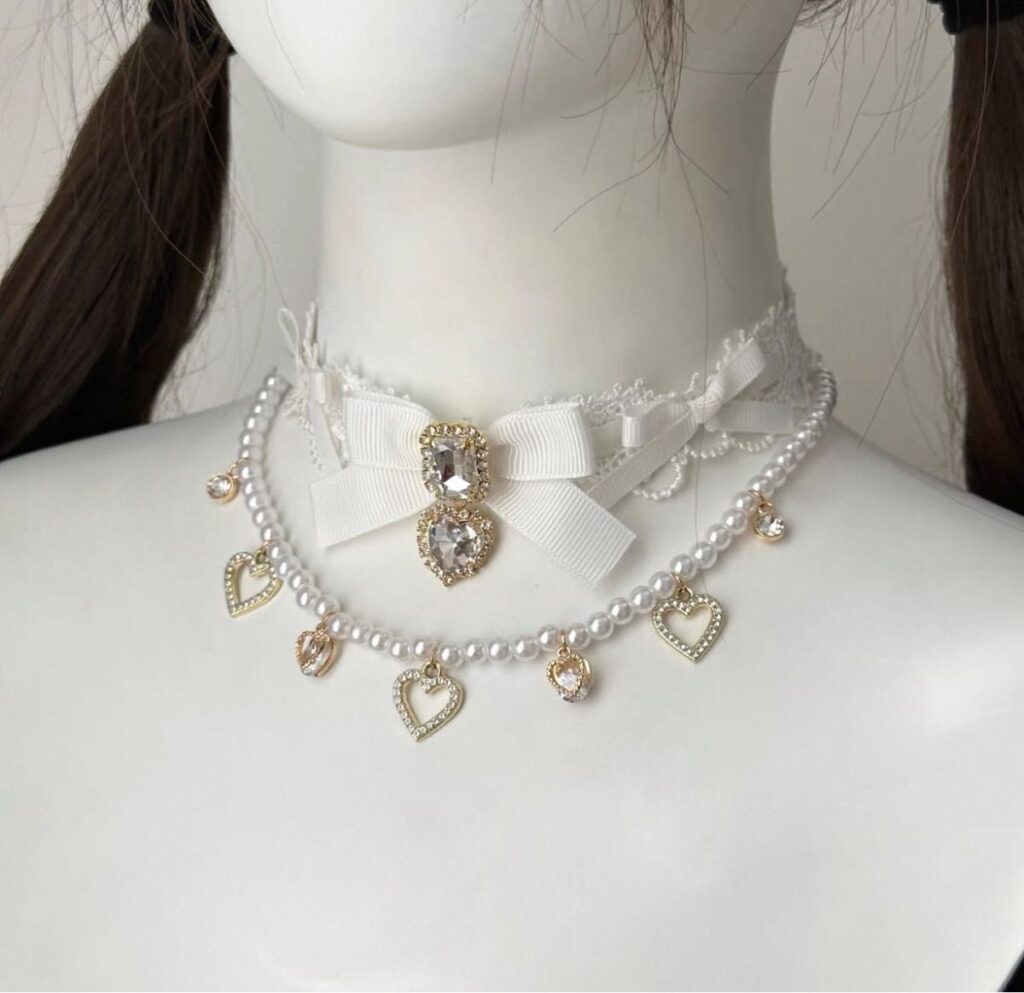
Accessories are where you get to show personality, and they stay inside the same three colors as the clothes. Common pieces include long satin hair ribbons, chokers, heart-shaped buckle belts, and small crossbody bags.
Hair is part of the same layer. Twintails are the signature, often tied with wide black lace ribbons, and blunt or hime-cut bangs frame the face to match the doll-like makeup.
Sanrio characters are strongly tied to the style. Kuromi is the one that comes up most, and Sanrio’s official profile describes her as My Melody’s self-proclaimed rival who acts tough but is girly underneath — which is exactly the contrast the whole style runs on.
The same Spinns staff named Kuromi and My Melody as the style’s popular mascots. A single character keychain is often the cheapest way into the look.
Use the list below as a shopping checklist against what you already own.
☐ Black, white, and dusty pink only
☐ A high-collared blouse with lace trim, or a dress
☐ A high-waisted frilled skirt
☐ Platform Mary Janes or platform loafers
☐ Lace-trimmed socks or dark tights
☐ A satin hair ribbon and a choker
☐ Twintails or blunt bangs
How Jirai Kei Differs from Lolita, Ryosangata, and Menhera
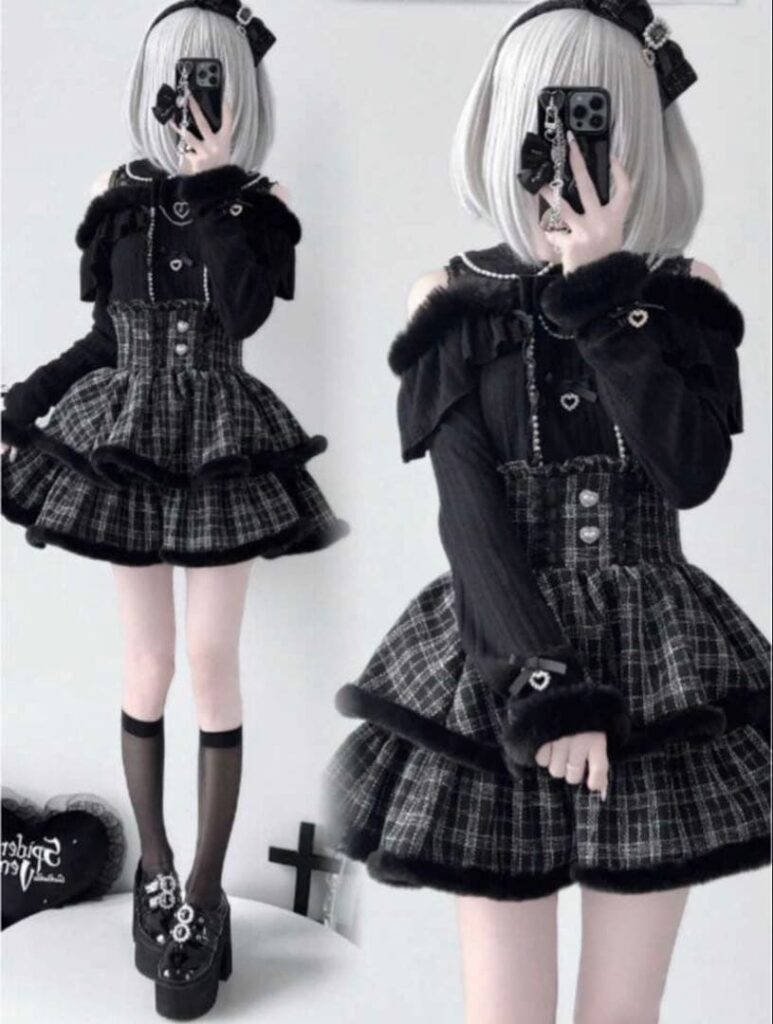
These terms get used interchangeably online, and one of them isn’t a fashion style at all. Sorting them out is worth a minute, because using the wrong one is the fastest way to get corrected in the comments. Here’s how each one differs:
- Jirai kei vs Lolita fashion
- Jirai kei vs ryosangata
- Jirai kei vs menhera and yami kawaii
Here’s the short version before the details.
| Style | Color palette | Signature items | Overall impression | Is it a fashion style? |
| Jirai kei | Black, white, dusty pink | Lace collars, frilled skirts, platform Mary Janes | Sweet with a dark edge | Yes |
| Lolita | Varies widely by brand | Petticoats, volume skirts | Structured and ornate | Yes |
| Ryosangata | Pink, beige, white | Bows, pearls, neat knits | Polished and uniform | Yes |
| Menhera | — | — | — | No — slang for a person |
| Yami kawaii | Black, pink, vivid accents | Medical motifs, bold prints | Bold and confrontational | Yes |
Jirai Kei vs Lolita Fashion
Lolita and jirai kei share materials but go for different shapes. Lolita is built around volume, with petticoats creating a bell or A-line silhouette, and it has pretty established rules about proportion and styling.
Jirai kei keeps the lace and the sweetness while dropping the structure. Skirts run shorter and less full, the palette narrows to black and dusty pink, and the overall styling leans darker.
Price moves people between the two, too. A Spinns staff member told the NUFS paper that Lolita was always just out of her price range, so she started looking for similar styles instead.
Jirai Kei vs Ryosangata
Ryosangata (量産型) translates as “mass-produced type,” and the name is descriptive rather than insulting. It refers to a softer, tidier look worn widely by fans of male idol groups, using pastel pinks, beiges, and whites, with bows and pearls as the recurring details.
The two sit close enough that Japanese retailers list them side by side. Dreamvs, a Japanese fashion retailer, treats 量産型 and 地雷系 as separate product categories on its own online store.
The working difference is tone. Ryosangata aims to look polished and consistent with everyone else at an idol concert, while jirai kei has a deliberate edge to it and is built to stand out.
Jirai Kei vs Menhera and Yami Kawaii
Menhera isn’t a fashion style. The NUFS Times defines it as Japanese slang for people dealing with mental health struggles, and notes that the word can be used as an insult. Treating it as a clothing category is the most common mistake English-speaking newcomers make.
Yami kawaii is the style people usually mean. The same report calls it a sister style of jirai kei, one that trades the signature ribbons and lace for something louder and more in-your-face.
The test is what the outfit leans on. Medical motifs and loud graphics point to yami kawaii, while lace collars and dusty pink point back to jirai kei.
How to Do Jirai Kei Makeup
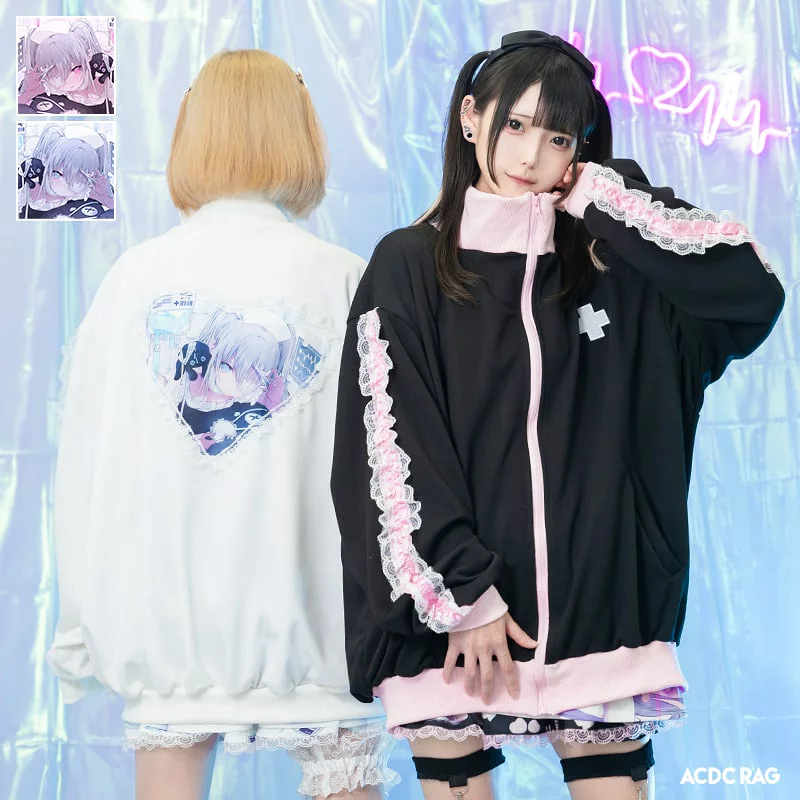
The makeup does as much work as the clothes, and it’s the part that shows up in photos. The goal is a pale face with a flushed, teary-looking eye area that looks soft at a glance and heavier the longer you look. Three stages get you there:
- Build a pale, even base
- Add red under-eye shadow and drooping liner
- Finish with circle lenses and gradient lips
The full sequence runs as follows.
- Set the base. Apply a matte foundation half a shade lighter than your skin tone.
- Add color under the eyes. Press red or pink shadow along the lower lash line and blend downward.
- Drop the liner. Extend the eyeliner downward at the outer corner instead of flicking it up.
- Enlarge the eyes. Add circle lenses in black, gray, or brown.
- Blur the lips. Press color into the center of the lip and blur it outward.
Build a Pale, Even Base
Start lighter than your usual match. A pale, matte base is what lets the eye color read as a flush rather than a smudge, so pick a foundation about half a shade above your skin tone and set it down properly.
Keep contouring minimal. Heavy sculpting fights the flat, doll-like surface the style is going for, so skip the bronzer and put the effort into evenness instead.
Add Red Under-Eye Shadow and Drooping Liner
This stage is the signature. Press red or pink shadow along the lower lash line and across the puff right underneath — namida bukuro in Japanese, or aegyo sal if you know it from K-beauty — blending downward so the color sits like a flush instead of a stripe.
Build it in thin layers. Loading the brush once and pressing hard turns the color muddy, while three light passes keep it clean.
Then extend the liner downward at the outer corner rather than flicking it upward. That single change creates the drooping, tearful expression the style is known for. A soft highlight along the under-eye puff adds roundness if you want more of that swollen look.
Finish with Circle Lenses and Gradient Lips
Circle lenses in black, gray, or brown enlarge the iris and complete the doll effect. Diameter matters more than color here, since anything too wide tips the whole face into costume territory.
Lips work the opposite way from Western lip technique. Press color into the center and blur it outward instead of lining the edges, using either a red or a dusty pink. The gradient keeps the mouth soft against the heavier eye makeup above it.
Jirai Danshi, the Male Side of Jirai Kei
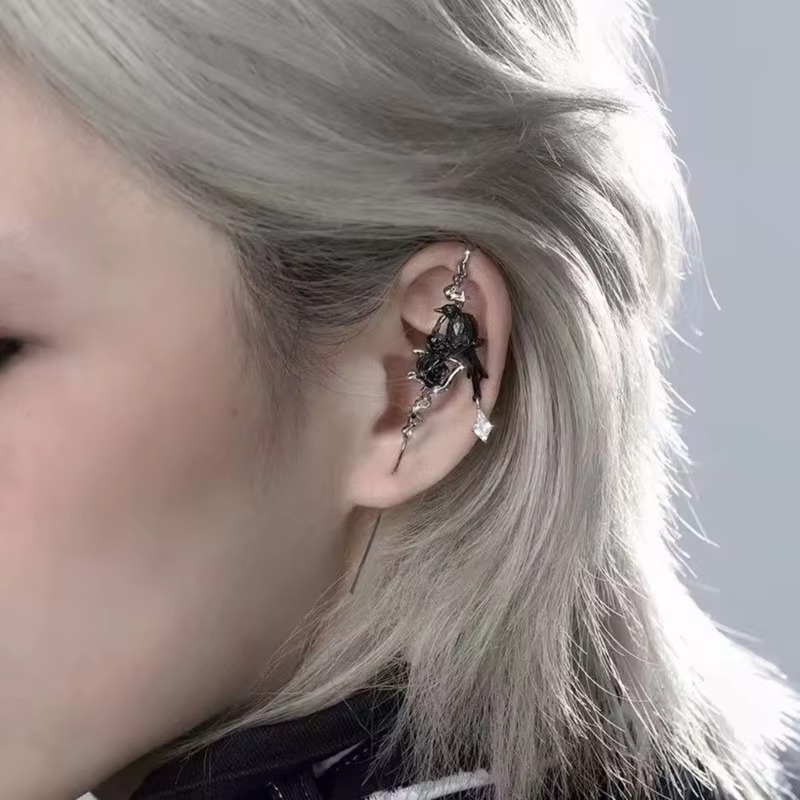
Jirai kei is worn overwhelmingly by women, but the male side has its own name and a recognizable set of pieces. Two things are worth knowing:
- What jirai danshi means
- What a male jirai kei look includes
Neither is documented as thoroughly as the women’s side, so treat the details below as the general shape rather than a fixed rulebook.
What Jirai Danshi Means
Men in the subculture are generally referred to as jirai danshi (地雷男子), or landmine boys, the counterpart to jirai joshi (地雷女子) for women.
The male term appears to be used far less often than the female one, and coverage of it is thin in both Japanese and English. It also tends to describe the person rather than name a separate fashion category, which is part of why it’s hard to pin down.
What a Male Jirai Kei Look Includes
Male coords tend to keep the palette and drop the frills. Black with muted pink or red accents stays, while lace and ribbons are commonly replaced with oversized tops, layered chains, and platform boots.
Because the style is defined more by styling than by garment cut, a lot of it crosses over. Oversized hoodies, chokers, and platform shoes are commonly listed without any gender split, so the same pieces can serve either direction.
Where to Buy Jirai Kei Clothes from Japan
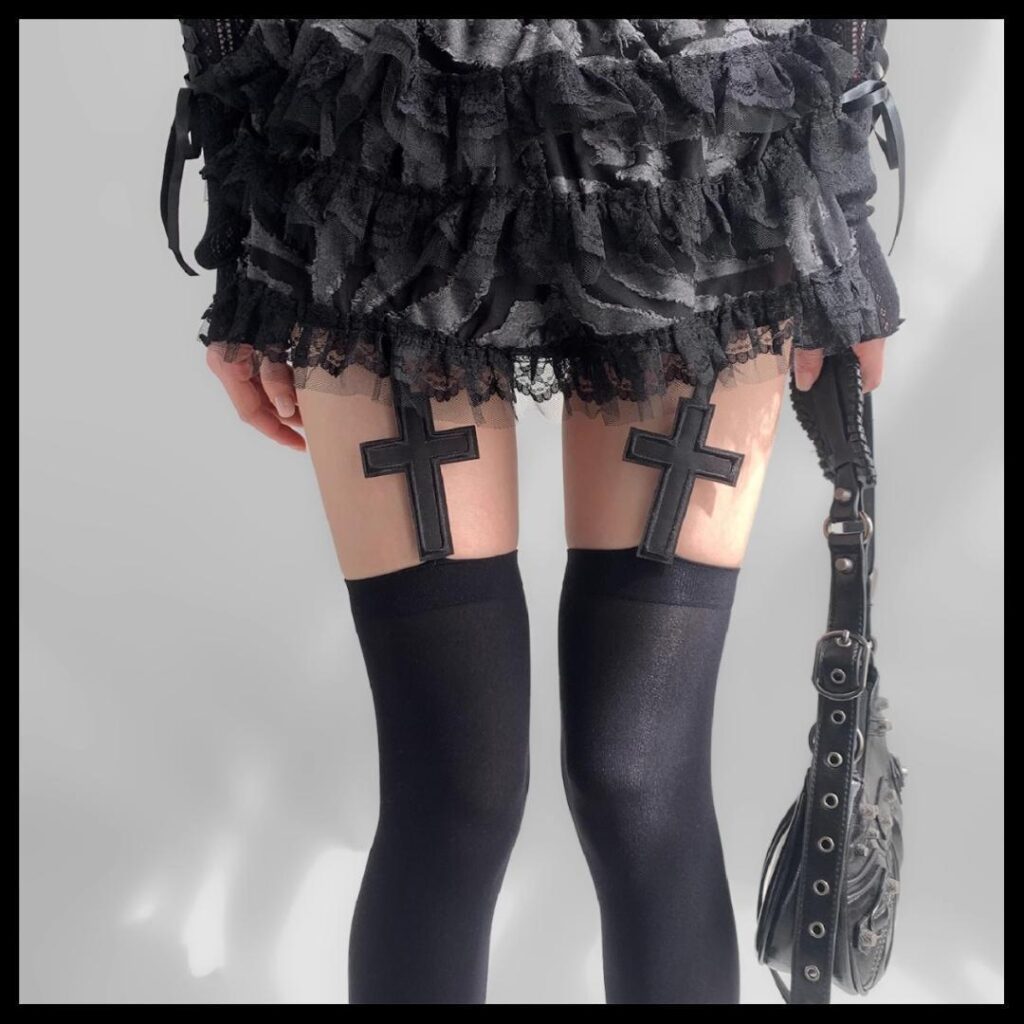
Most of what turns up under “jirai kei” on international marketplaces is a dupe of a Japanese brand. Buying the originals means buying from Japanese stores, and that takes one extra step. This section covers three things:
- Japanese brands that sell jirai kei
- What to buy first
- How to order from Japan with a proxy service
Together they take you from a brand name to a package at your door.
Japanese Brands That Sell Jirai Kei
A handful of Japanese brands sit at the center of the style, and it helps to separate the ones that market themselves this way from the ones that simply get worn this way.
Dreamvs is the clearest case. Its official online store lists 量産型 (ryosangata) and 地雷系 (jirai kei) as its own product categories, alongside in-house labels including DearMyLove.
Others are widely worn in jirai kei coords without claiming the label. LIZ LISA leans girly and lace-heavy, and sells through its own official site. Ank Rouge sells through the official Ailand store, which offers overseas shipping. REFLEM has an English site with a darker, visual kei (V-kei) punk leaning.
| Brand | What it’s known for | Where to buy |
| Dreamvs | Lists ryosangata and jirai kei as official categories | dreamvs.jp |
| DearMyLove | In-house Dreamvs label, girly and dark | dreamvs.jp |
| LIZ LISA | Girly staple, heavy on lace | lizlisa.com |
| Ank Rouge | Sweet girly pieces, ships overseas | ailand-store.jp |
| REFLEM | Visual kei punk leaning, English site available | reflem.jp |
Most of these ship inside Japan by default, so getting one abroad usually means routing it through a forwarding service. All four labels turn up regularly in Japanese marketplace listings tagged 地雷系.
What to Buy First
Buy the silhouette before the details. A single black or dusty pink dress does more for the look than three accessories, because it locks in the palette and the shape in one purchase.
From there, add in this order: platform Mary Janes, lace-trimmed socks, and a large satin hair ribbon. That order lines up with what the Spinns staff said earlier: collars, socks, and a few chains are the quickest way to shift an outfit you already own.
Leave the designer bags for last. They’re the most expensive part of the look and the least necessary for making it read correctly.
How to Order from Japan with a Proxy Service
Most Japanese fashion sites either don’t ship overseas or limit which countries they serve. A proxy shopping service closes that gap by buying the item inside Japan on your behalf, receiving it at a warehouse, and forwarding it to you.
Neokyo works this way. It describes itself as an intermediary service for your purchases in Japan, and it supports Japanese stores including ZOZOTOWN, Rakuten, and Amazon Japan. For a brand’s own site that isn’t on that list, you send the product URL through a purchase form instead.
Costs are worth checking before you commit. As of July 2026 the commission is ¥350 (US$2.13) per item, packing starts at ¥500 (US$3.05) for parcels up to 2kg, and international shipping is charged at the carrier’s own rate on top. Every purchase comes with 45 days of free storage, so several orders can travel together in one box.
Search in Japanese, not romaji. Typing 地雷系 instead of “jirai kei” is the single biggest difference in what you’ll find — on Neokyo’s Mercari search, the Japanese term returns around 15,000 listings while the romaji version returns 19. Copy and paste the characters; you don’t need to read them.
One more thing to check: Japanese sizing runs smaller than US or EU sizing, and the difference is large enough to matter on fitted blouses. Neokyo’s fashion page has size conversion charts for tops and jeans.
- Find the item. Search a Japanese store such as ZOZOTOWN, or a brand’s own site.
- Submit a buy request. Send the item URL through the purchase form.
- Let it arrive. Pay for the item and wait for it to reach the warehouse.
- Request packing. Combine everything in storage into one package.
- Ship it. Choose a shipping method and pay the international postage.
Starting Your Own Jirai Kei Wardrobe
Jirai kei is easier to get into than most Japanese subcultures. The palette is fixed, the silhouette is consistent, and one dress plus a pair of platform shoes gets you most of the way there.
The name is the part that deserves care. It began as an insult and it still carries weight in Japan, so keep it on the clothes rather than on other people.
What’s left is access. Japanese brands sell almost entirely to the domestic market, and a proxy service is what turns a Japanese product page into a package on your doorstep.