

What Is Visual Kei Fashion? | Introductory Guide Covering the History, Features, and Sub-styles
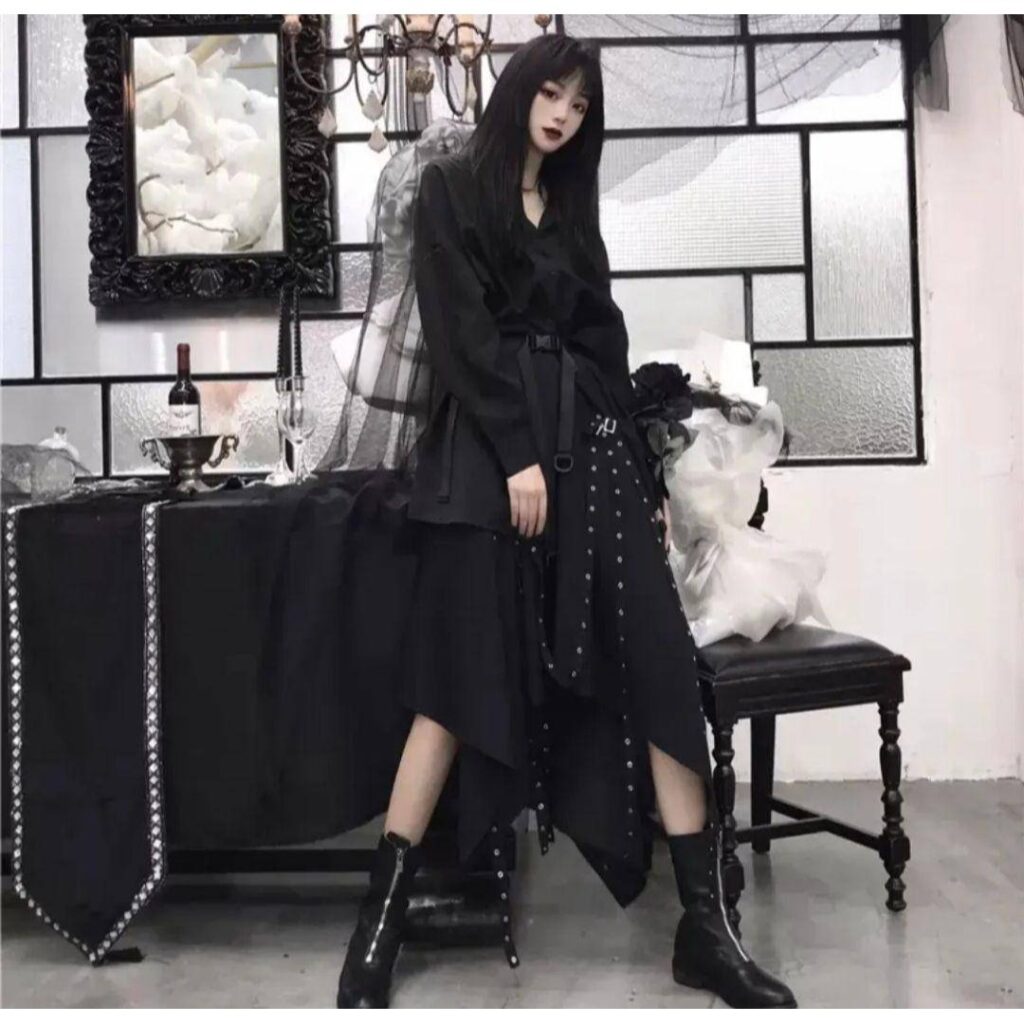
Visual Kei Fashion is a fashion culture that developed while being strongly tied to the Japanese rock scene. While it is sometimes explained solely by flashy hairstyles or heavy makeup, it is actually an expression that has been established including its use of color, silhouettes, materials, decorations, musicality, and magazine culture. This article organizes and introduces the meaning of Visual Kei Fashion, its history, basic elements, representative sub-styles, and the brand culture and used distribution remaining in Japan for beginners.
What is Visual Kei Fashion?
Visual Kei Fashion is a fashion culture centered on visual expression that developed in tandem with musical activities. The main characteristic lies in creating a worldview encompassing costumes, hairstyles, makeup, and photo presentation, and it has been discussed as a style where musical genres and aesthetic senses are tied together, rather than a mere “flashy clothing style.” In this culture, various visual elements have been combined, such as heavy decorations based on black, military-style silhouettes, gothic elements, vivid accent colors, slim-fit jackets, lace and frills, and chain and cross motifs. However, Visual Kei Fashion is not a single fixed form but possesses significantly different expressions depending on the era and the band.
How It Started and Spread
The foundation of Visual Kei Fashion took shape within the Japanese rock scene of the mid-1980s. Early bands such as X JAPAN and D’ERLANGER, while receiving influences from rock ‘n’ roll, glam metal, and gothic styles, hammered out strong stage costumes and visual presentations, and are discussed as existences that built the archetype of this culture. Entering the mid-1990s, with the increase in the number of bands, the scene expanded significantly. The activities of indie labels became active, and appearances on music programs and variety shows also increased, causing the appearance of Visual Kei to reach a broader audience rather than just a few core spaces. During this period, the range of visual expression also widened, from heavy styles layering black to more refined, mode-leaning presentations. In the mid-2000s, the expansion of the overseas fan base became a major movement. Through live footage, magazines, artist photographs, and exported CDs, the impression of Visual Kei Fashion came to be shared outside of Japan, making it a style that was easily received as a global phenomenon. On the other hand, between the late 2000s and the 2010s, there was a period where the momentum of the entire scene was viewed as somewhat settling down. Due to the suspension of paper music magazines and changes in the distribution environment, the combined spaces seen in the past decreased, but correspondingly, past magazines, costumes, photos, and merchandise remain in the used market as archives, serving as materials to track the styles of that time.
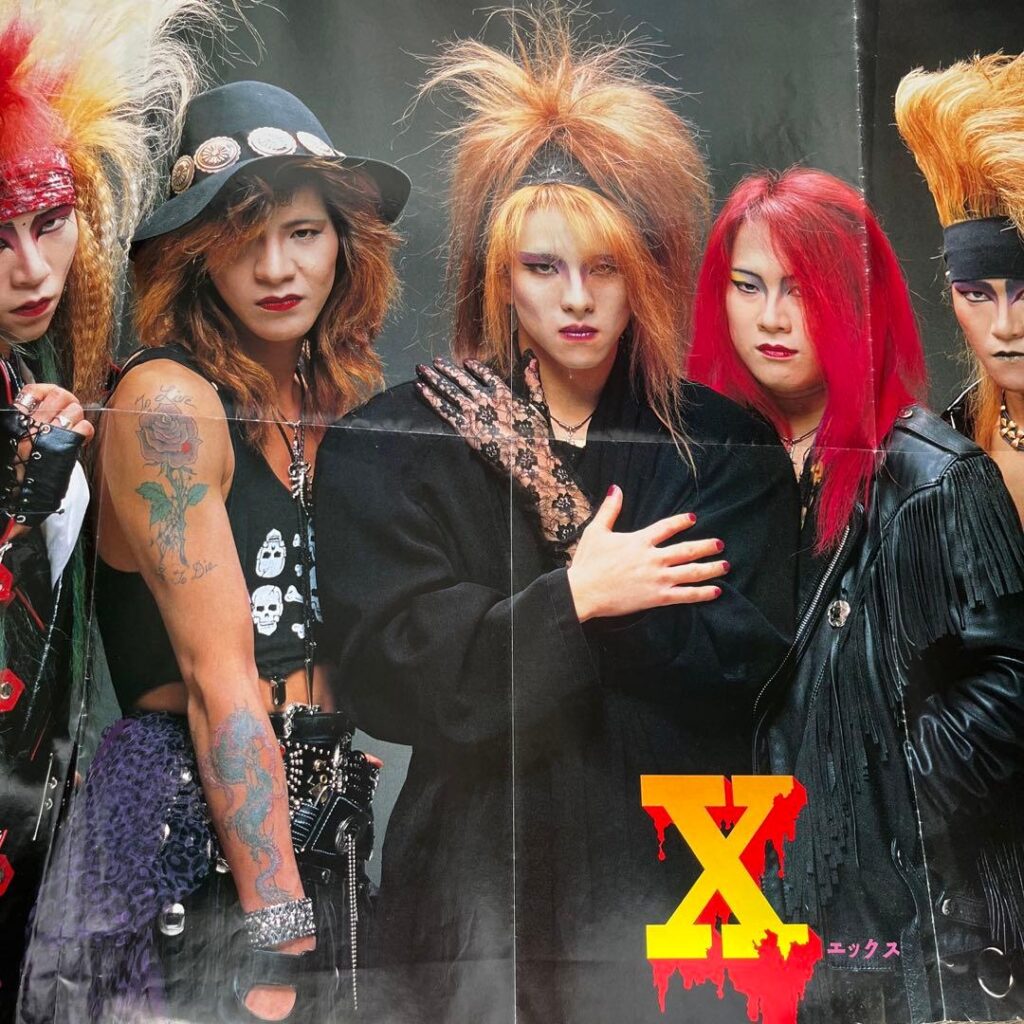
X JAPAN Poster
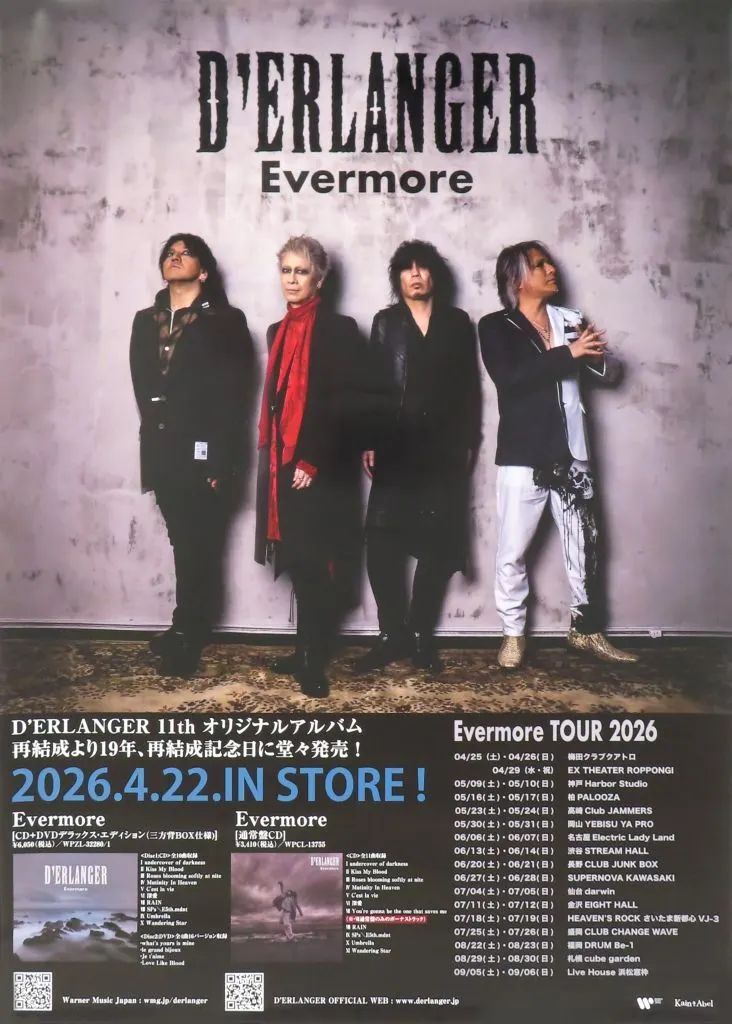
D’ERLANGER Poster
Basic Elements of Visual Kei Fashion
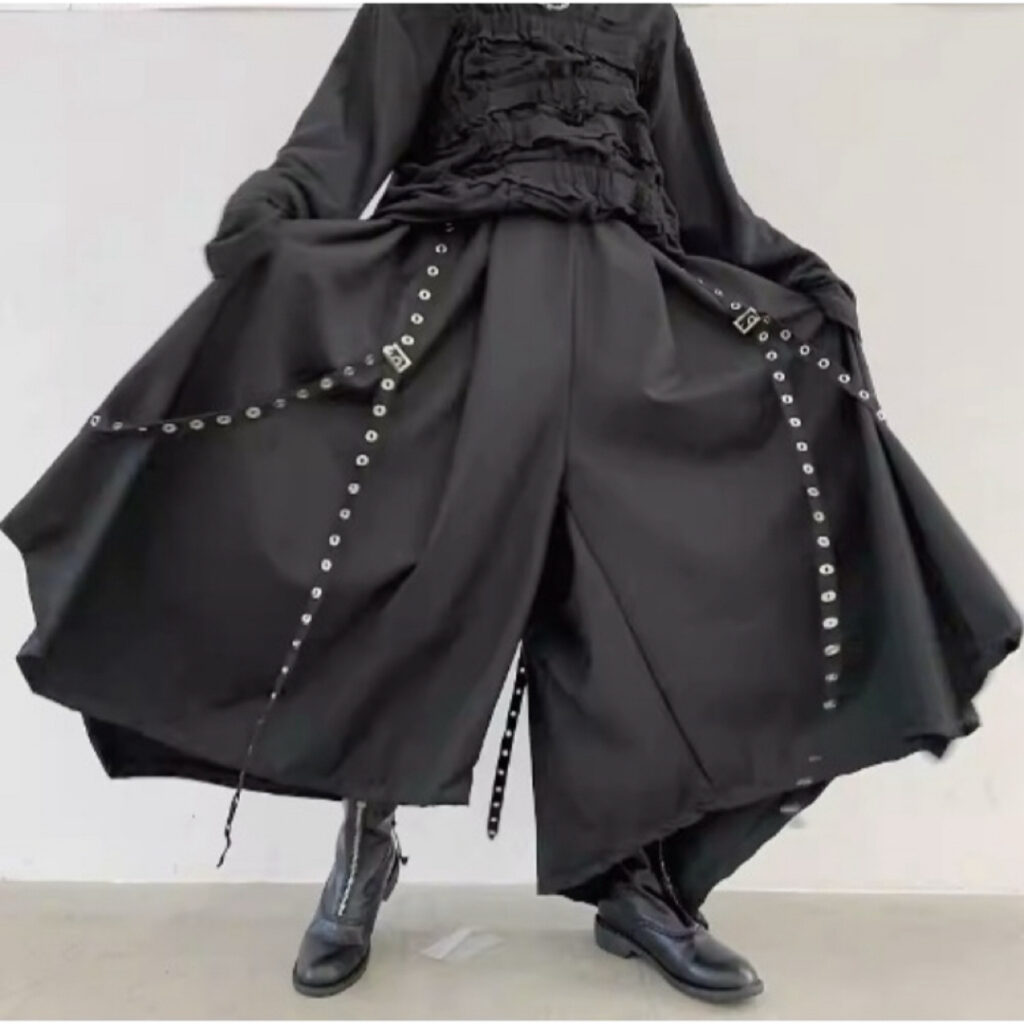
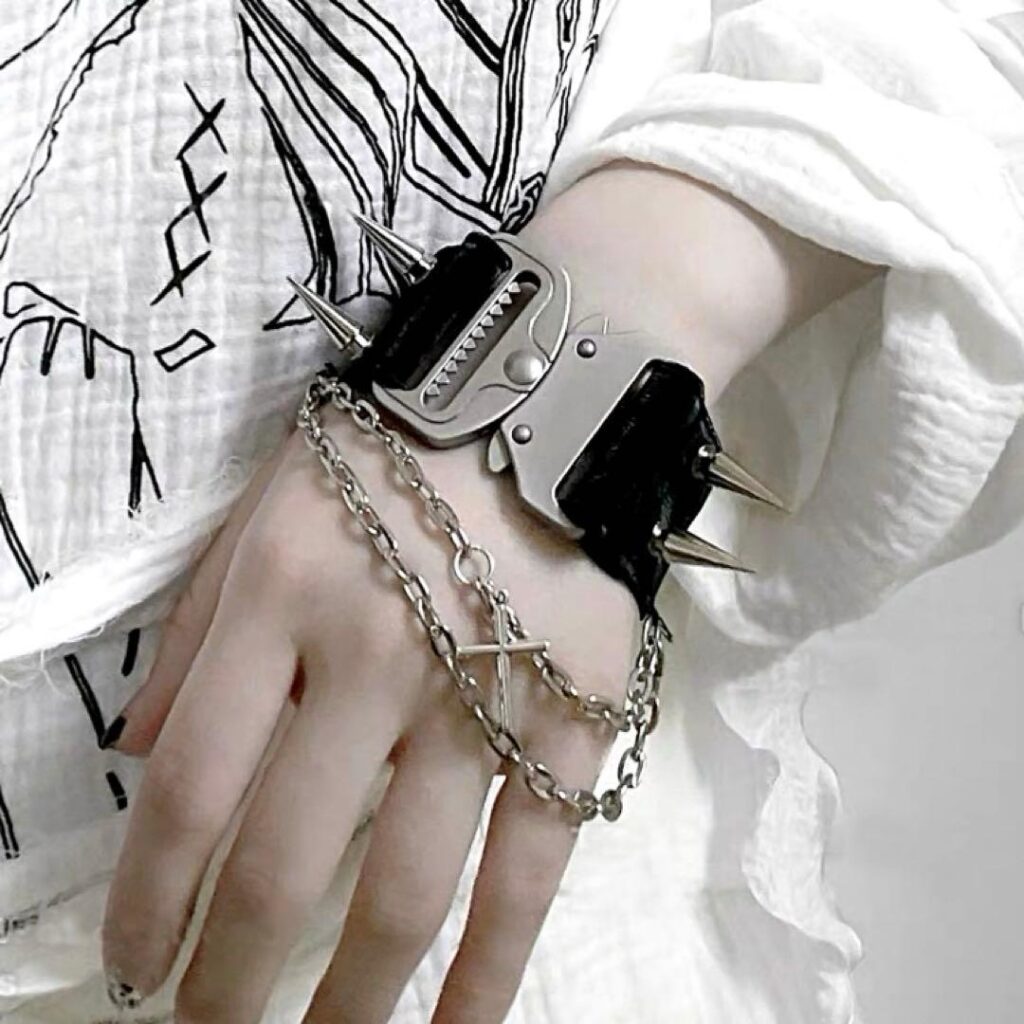
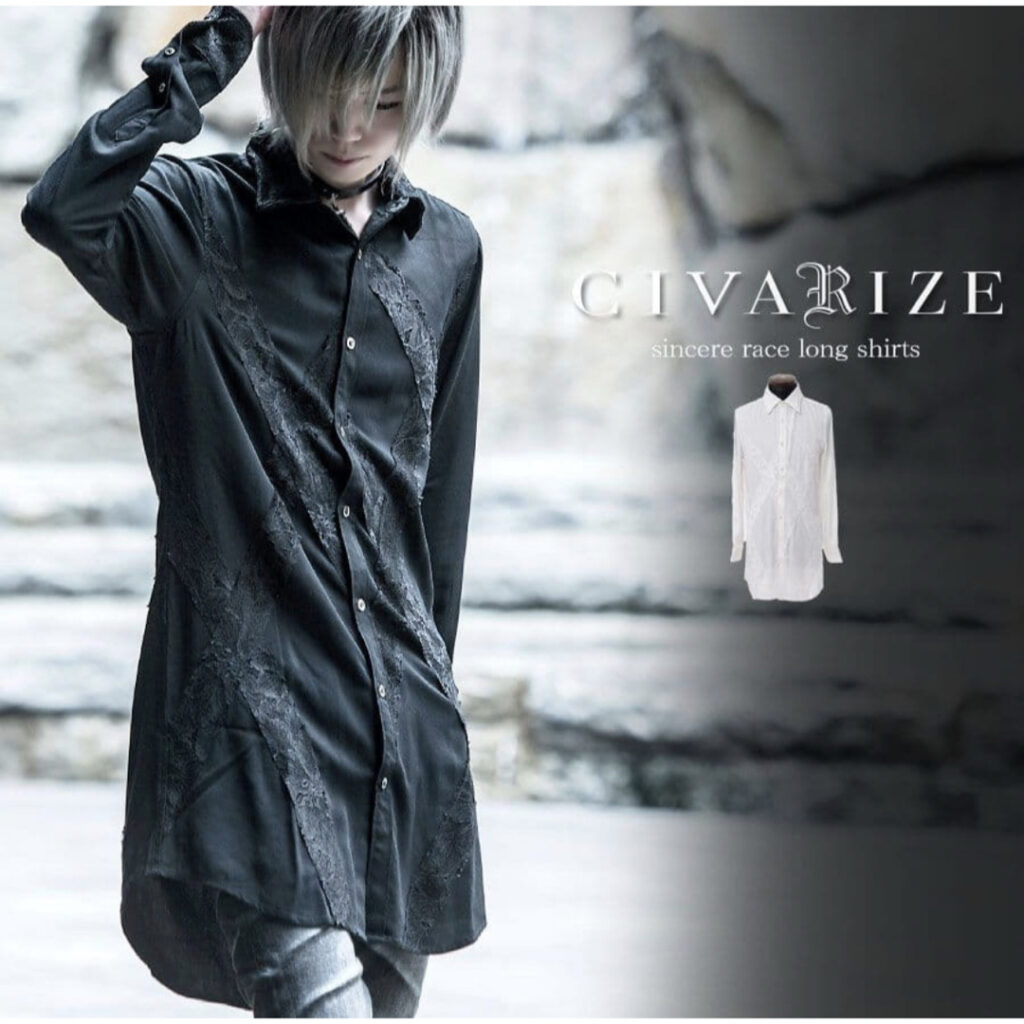
When looking at Visual Kei Fashion, it is easiest to understand if you first look at four elements: Color, Silhouette, Decoration, and Texture. In colors, strong contrasts such as black, white, red, deep purple, and silver are frequently used. Heavy weight may be expressed with black monochrome, or a dramatic atmosphere may be strengthened by inserting red or purple. As the era progressed, bright directions using pink, light blue, and yellow also became prominent. Silhouettes are represented by slim-fit jackets or pants that emphasize bodily lines, long coats, draped shirts, and layered shapes. There are cases where a structural and sharp impression is brought out, and cases where it is turned toward a light and pop appearance. In decorations, frills, lace, studs, chains, buckles, crosses, and corset-style details are frequently utilized. Materials also include a lot of enamel, velvet, leather-like textures, translucent fabrics, and glossy cloths, and the impression of the clothing changes significantly not only by color but by the texture of the surface.
Representative Sub-styles
Visual Kei Fashion is a broad umbrella name, within which several directions exist. Those whose names are easy to encounter upon entry are Kote Kei and Oshare Kei.
Kote Kei
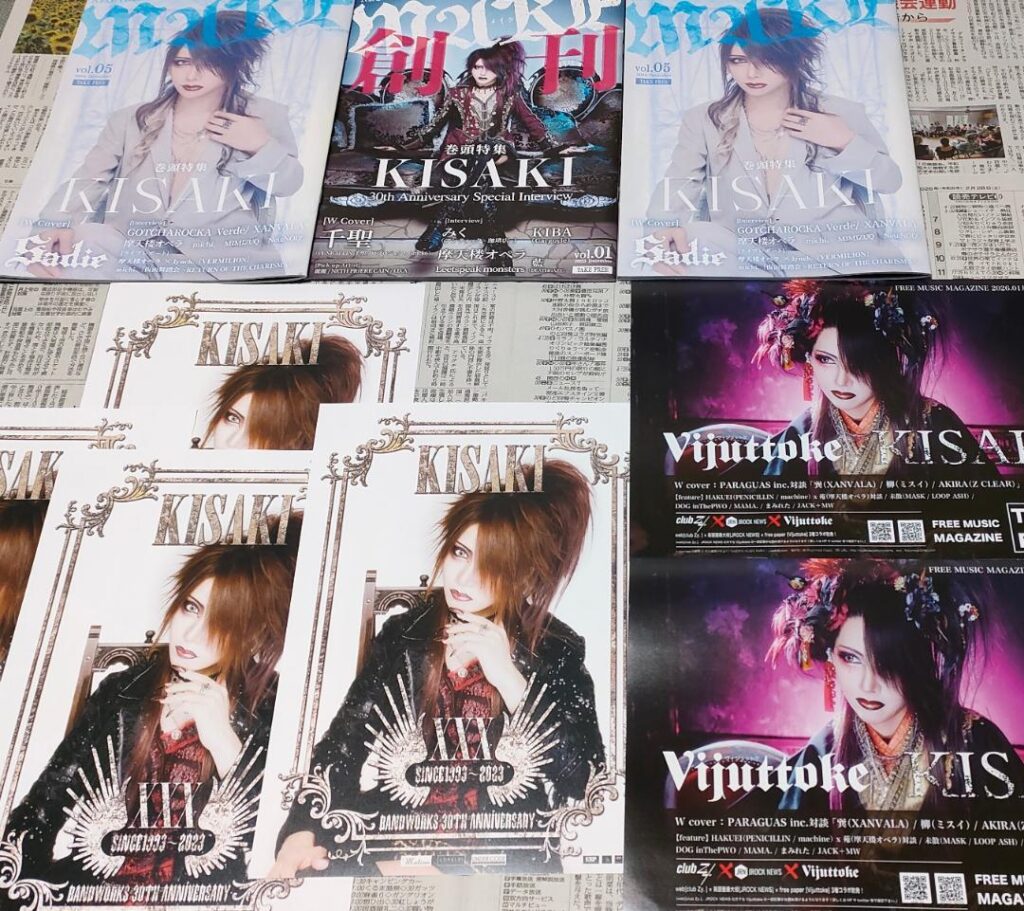
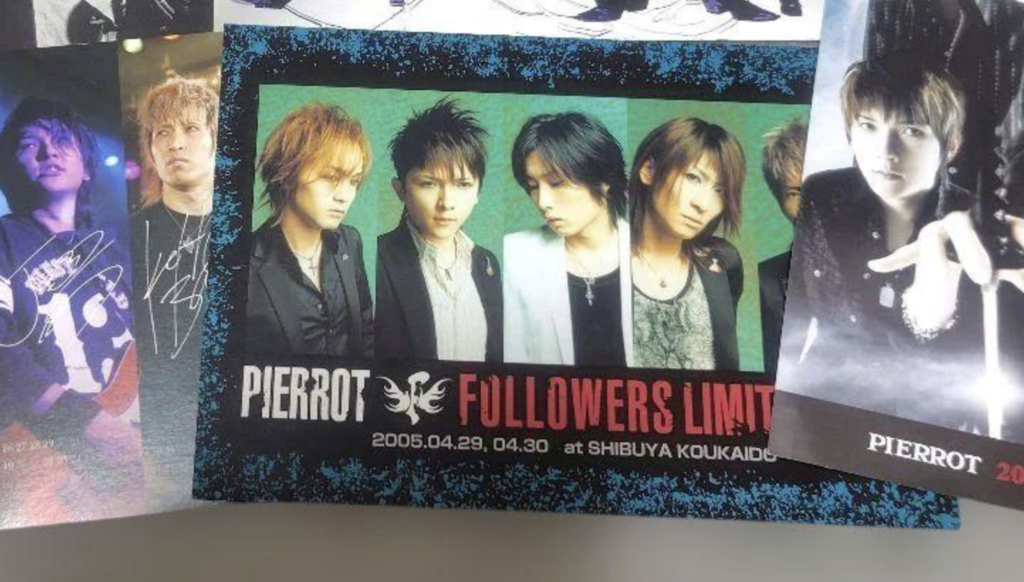
Kote Kei is a style that pushes a heavy, dark, and solemn atmosphere strongly. Centering on dark colors such as black, crimson, deep purple, and silver, leather, velvet, lace, gauze, blood-like makeup, crosses, and restraint-gear-style details are frequently combined, and the silhouette is linear and tense. Costumes lean toward the direction of “presenting/performing” rather than “wearing,” leaving a strong impact even in live photos. As representative clues, band groups of the La:Sadie’s and Matina lines are frequently cited. In terms of style, features include the weight of black, the density of decoration, aggressive hair and makeup, and a presentation that does not fear excess.
La:Sadie’s
PIERROT
Oshare Kei
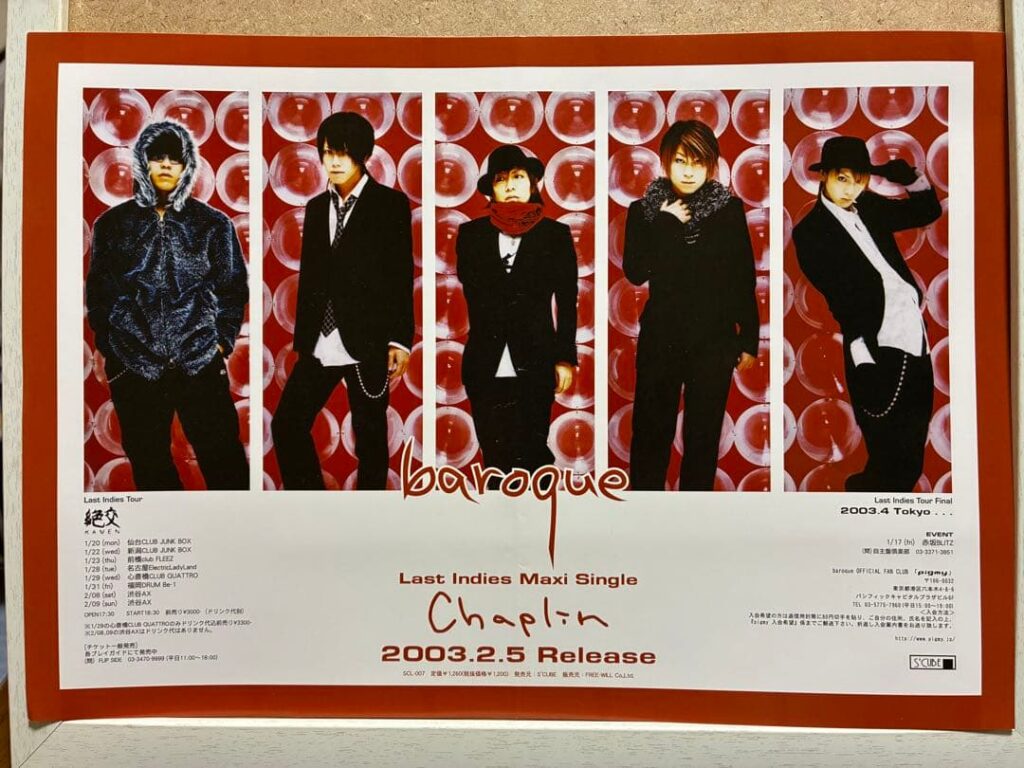
Oshare Kei is a style that incorporates a lighter, more pop feel closer to street clothing compared to Kote Kei. Bright and playful colors or prints such as pink, light blue, yellow, white, plaids, and borders easily enter, and jackets and shirts tilt toward the direction of “cuteness” or “approachability” rather than a heavy ritual feel. Accessories and hairstyles also possess lightness, and the visual impression changes considerably even within the same Visual Kei. As representative examples, early BAROQUE, Kra, and as a clear example of the later period, AN CAFE are well known. The brightness of colors, a street-fashion-leaning incorporation, the connection with pop rock, and the lightness of expressions in photos are characteristics of this lineage.
BAROQUE
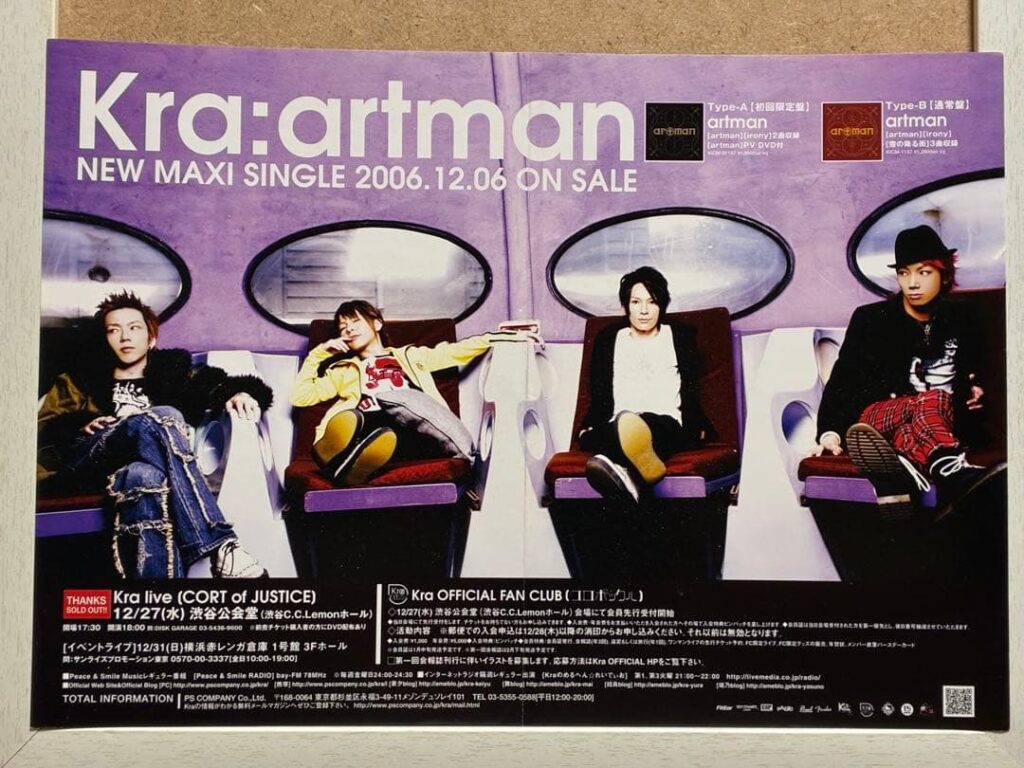
Kra
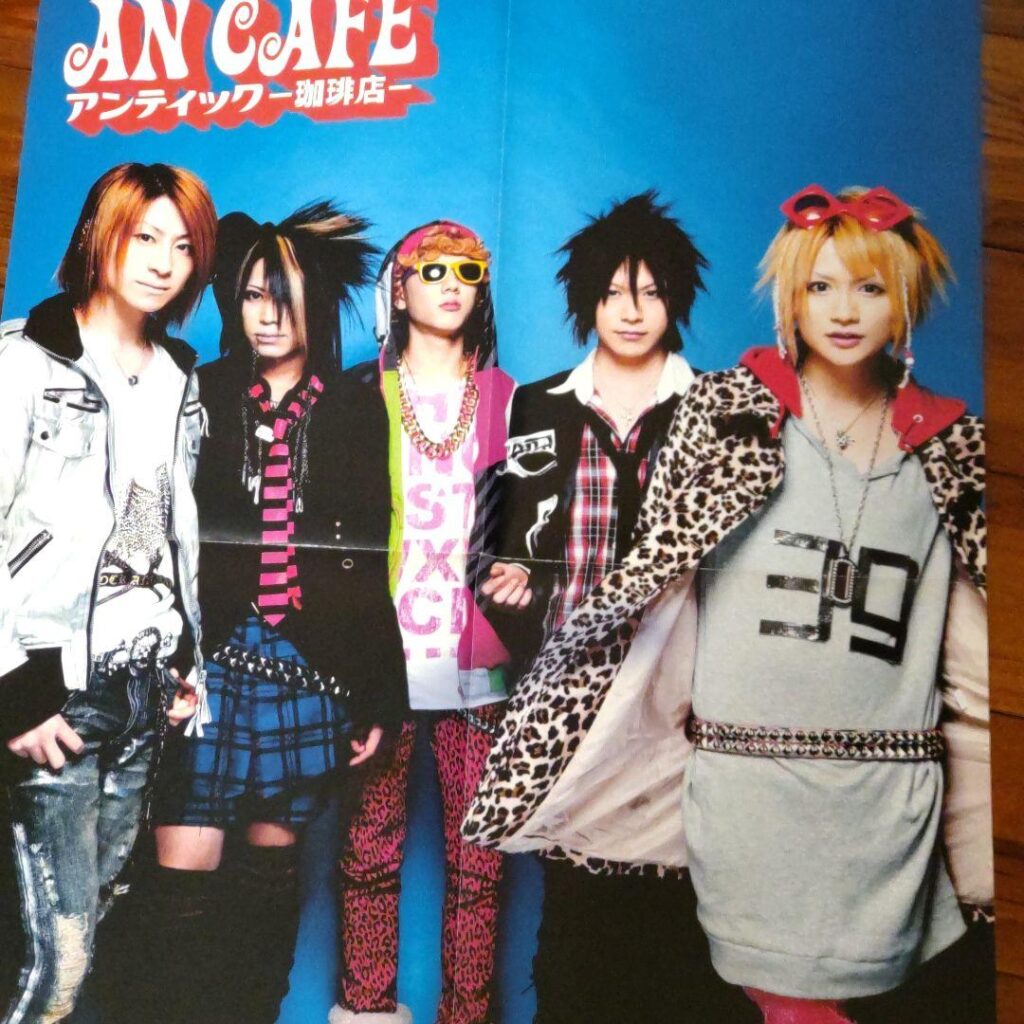
AN CAFE
Other Directions
Visual Kei Fashion has not just these two but even finer directions. For example, there are those that strengthen a gothic-leaning weight, those that bring forward a military-style structural feel, those that deepen a decadent and aesthetic atmosphere, and those refined toward mode fashion, allowing significantly different appearances to coexist within the same phrase “Visual Kei.”
Magazine Culture Has Also Supported Visual Kei Fashion
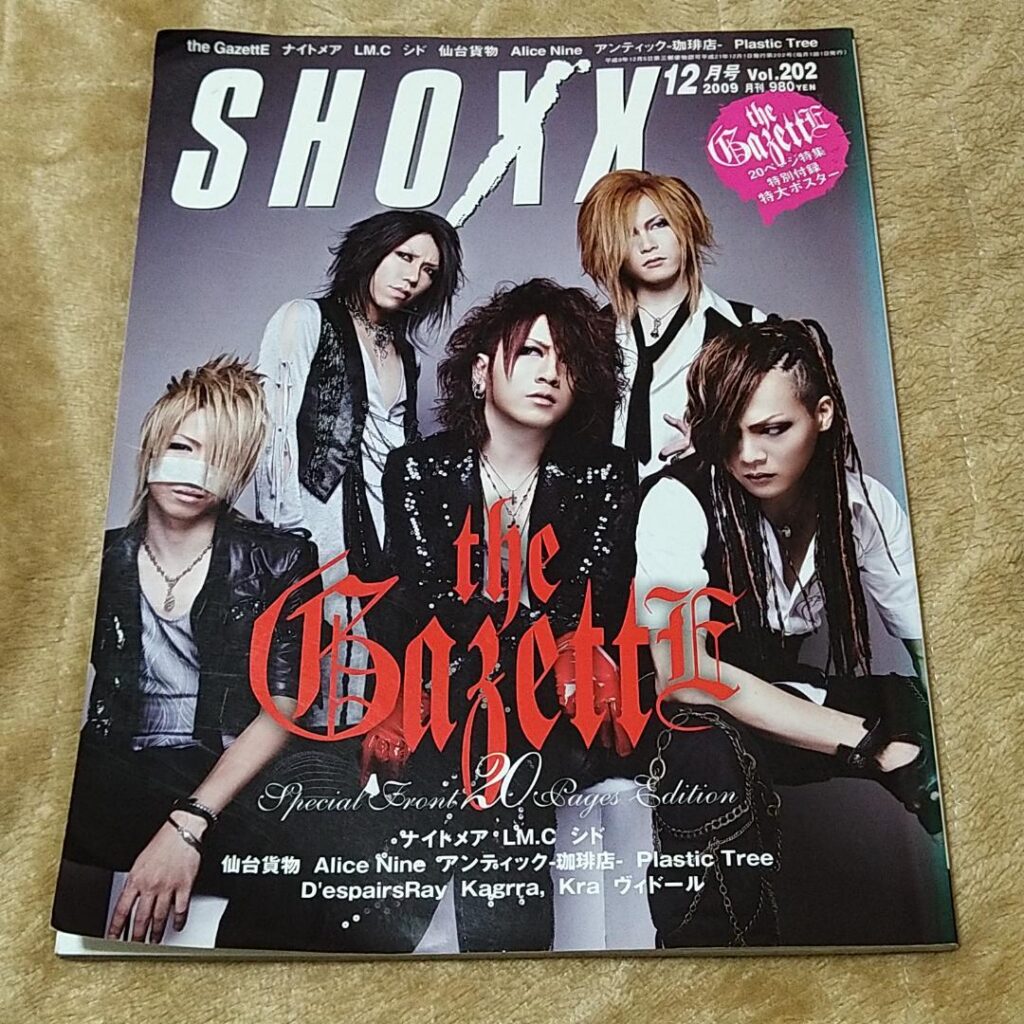
Visual Kei Fashion is not a culture that concluded solely with live costumes. Magazines such as SHOXX, Cure, and FOOL’S MATE have expanded the visibility of this culture through band photographs, features, interviews, and styling. In these magazines, live reports, artist photographs, features revealing how costumes look, interviews, discography introductions, and band-specific project pages line up, in addition to covers and opening pin-ups. In other words, magazines were record media for Visual Kei Fashion, not mere promotional media. Which hairstyle was used, which makeup trended, and which costume was recognized as “characteristic of that band” can be tracked quite concretely from these pages.
Brand Culture and Used Distribution Found in Japan
Visual Kei Fashion has spread as a culture encompassing not just the appearance of the music scene but brands, magazines, sound sources, merchandise, and used distribution. In Japan, there are brands discussed alongside the atmosphere of Visual Kei fashion, such as h.NAOTO, SEX POT ReVeNGe, PUTUMAYO, and ALGONQUINS, functioning as clues to know the atmosphere of each era and differences in sub-styles.
The direction of each brand also shows differences. For example, h.NAOTO is known for decadent layering and gothic feelings based on black, SEX POT ReVeNGe for punk-leaning prints and belt decorations, PUTUMAYO for items where cuteness and toxicity coexist, and ALGONQUINS for configurations bringing asymmetry and strong graphics forward. Quirks unique to each brand exist not only in the clothing pattern itself but also in color placement and the strength of decoration.
Also, the used market contains not only clothing and small items like jackets, frill shirts, long vests, corset-style items, accessories, and boots, but also magazines like SHOXX, Cure, and FOOL’S MATE, artist photographs, live pamphlets, CDs, and venue-limited merchandise. Because the pages and surrounding items circulate together with the clothes themselves, Visual Kei Fashion is in a state where it can be tracked as an entire past expression, rather than costumes alone.
Key Points When Viewing Visual Kei Fashion
When looking at Visual Kei Fashion, it becomes much easier to organize if you first compare what kind of atmosphere it is composed of, rather than memorizing fine terms first. For example, while there is a direction like Kote Kei that bases itself on black or crimson to display heavy decoration, Oshare Kei brings bright colors, light silhouettes, and pop impressions forward. Both are within the same Visual Kei fashion, but the received impression differs greatly depending on color usage, texture, silhouette, and decoration density.
Using this view, it becomes easy to capture which direction of aesthetic sense the magazine feature pages, band artist photographs, live costumes, and clothes or small items circulating at that time are close to. Is the solemnity layering black strong, is the lightness with many colors forward, or are military-style or gothic-leaning elements dominating the impression? Tracking those differences allows Visual Kei Fashion to be read not as a mere flashy costume style, but as a culture where multiple aesthetic senses have run parallel.
Tracking the Clothing, Magazines, and Sound Sources Remaining in Japan Makes Visual Kei Fashion Trackable on a Physical Basis
Visual Kei Fashion is a culture formed by the accumulation of magazines, clothing, small items, photos, sound sources, and live merchandise, not just music and visual impressions. Because those fragments remain in the Japanese market even today, this style is an object that can be concretely referenced through pages, clothes, photos, and merchandise, rather than a past image. Using Neokyo, you can collectively search for Visual Kei Fashion-related clothes, small items, magazines, CDs, and merchandise listed on Japanese shops and flea markets.