

Shiny Treasure ex Card List, Prices & Is the Japanese Set Worth It?
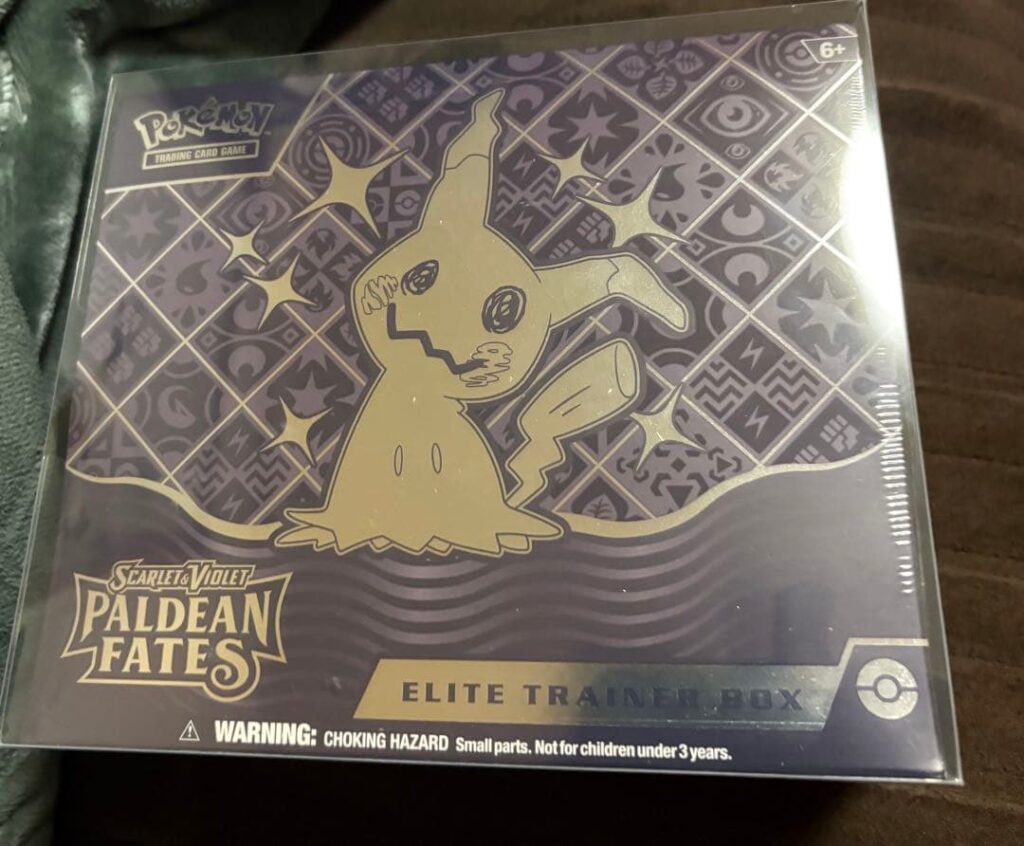
If you’re eyeing Shiny Treasure ex, you probably want three things fast: a clear card list, real prices, and a straight answer on whether the Japanese set is worth buying. This guide covers all three.
Shiny Treasure ex is the Japanese High Class Pack that became Paldean Fates in English, and its top cards command serious money—so before you spend, it pays to know exactly what’s valuable and where to buy safely.
Here’s a snapshot of the chase cards, with the full breakdown below.
| Card | No. | Rarity | Ungraded | PSA 10 |
| Mew ex | #347 | SAR | $360–$510 | $740–$970 |
| Charizard ex | #349 | SAR | $210–$270 | ~$500 |
| Gardevoir ex | #348 | SAR | $120–$160 | ~$230 |
| Pikachu | #236 | S | $38–$45 | ~$285 |
| Iono | #350 | SAR | $33–$42 | ~$139 |
| Mimikyu | #341 | AR | ~$19 | ~$87 |
Approximate values; prices as of June 2026, and values fluctuate.
What Is Shiny Treasure ex? A High Class Pack Overview
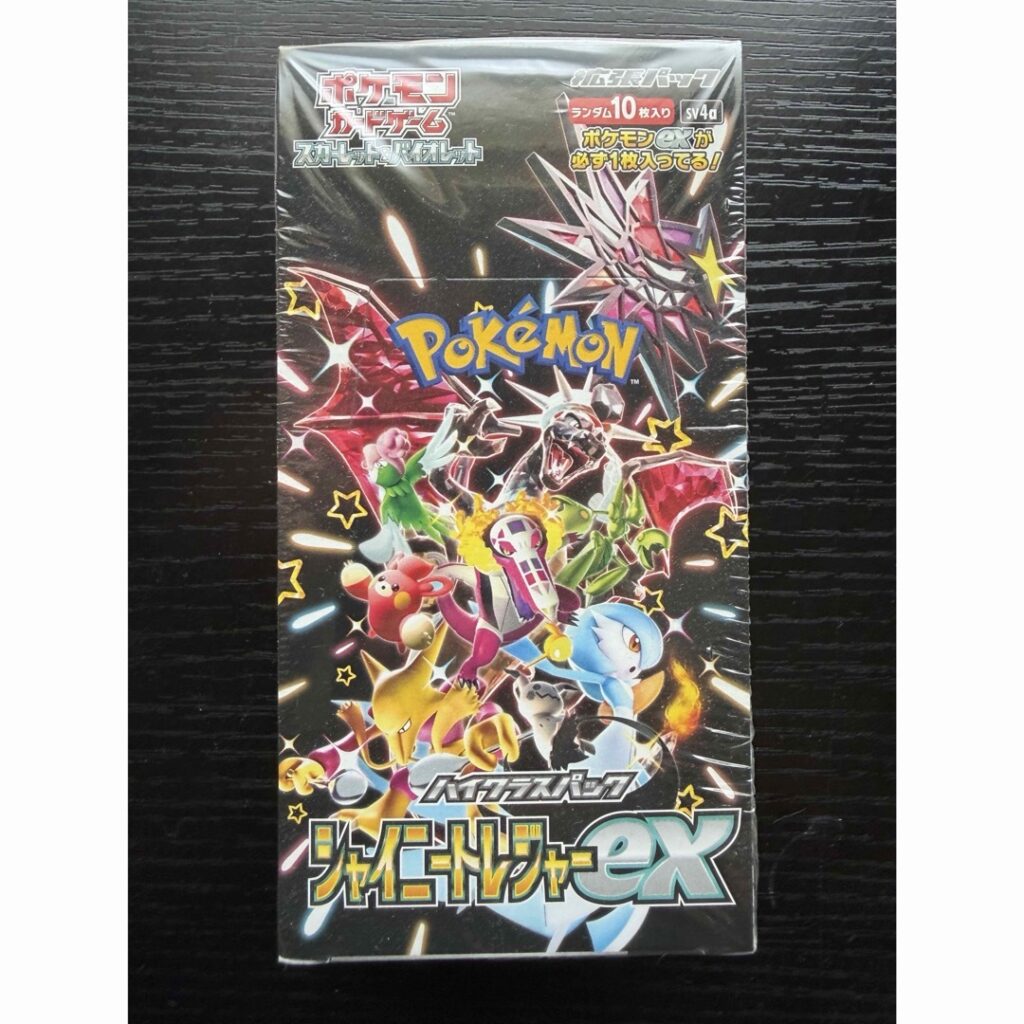
Before you compare versions or chase prices, it helps to know what Shiny Treasure ex actually is. The short version: it’s a Japanese High Class Pack built around shiny Pokémon, and that combination is exactly why collectors pay so much attention to it. Here’s what the rest of this section walks through:
- When the set released and how many cards it holds
- What the “High Class Pack” label means in practice
- Why shiny Pokémon define the set’s identity
Get these three things straight, and the version differences and chase-card values later on will click into place.
Release Date and Set Size
According to The Pokémon Company’s official set page, Shiny Treasure ex launched in Japan on December 1, 2023 as a High Class Pack in the Scarlet & Violet series. Each pack contains 10 cards and carries a suggested retail price of ¥550, tax included—an accessible entry point for a set with this much premium content.
The main set spans 190 cards, with a deep pool of secret rares sitting beyond that number. Counting those secrets, the full Japanese release reaches around 360 cards, so the set rewards you whether you hunt by rarity tier or by a specific Pokémon.
Set at a Glance:
・Release date: December 1, 2023 (Japan)
・Suggested retail price: ¥550 (tax included)
・Cards per pack: 10
・Main set: 190 cards, plus secret rares (around 360 total in Japanese)
What “High Class Pack” Means for Shiny Treasure ex
A High Class Pack is a special Japanese product line, and its defining promise is simple: every single pack guarantees at least one Pokémon ex. That alone separates it from standard expansions, where pulling an ex is never a sure thing.
These sets are built largely from recently popular cards given a fresh treatment rather than from brand-new card pools. For Shiny Treasure ex, that treatment is the shiny finish applied across its lineup. High Class Packs also tend to arrive around the end of the year, which often makes them more anticipated than a typical release.
What Makes Shiny Treasure ex Special: Shiny Pokémon
What sets this release apart is right there in the name: the whole set centers on shiny Pokémon, the alternate-colored versions of familiar creatures. That focus runs from small “baby shiny” cards all the way up to elaborate full-art chase cards.
The set also continues a well-loved tradition. According to The Pokémon Company’s official press release, it draws inspiration from the earlier Hidden Fates and Shining Fates expansions—two releases that built their appeal around shiny Pokémon and earned a strong following among collectors.
Shiny Treasure ex vs. Paldean Fates: How the Japanese and English Sets Differ
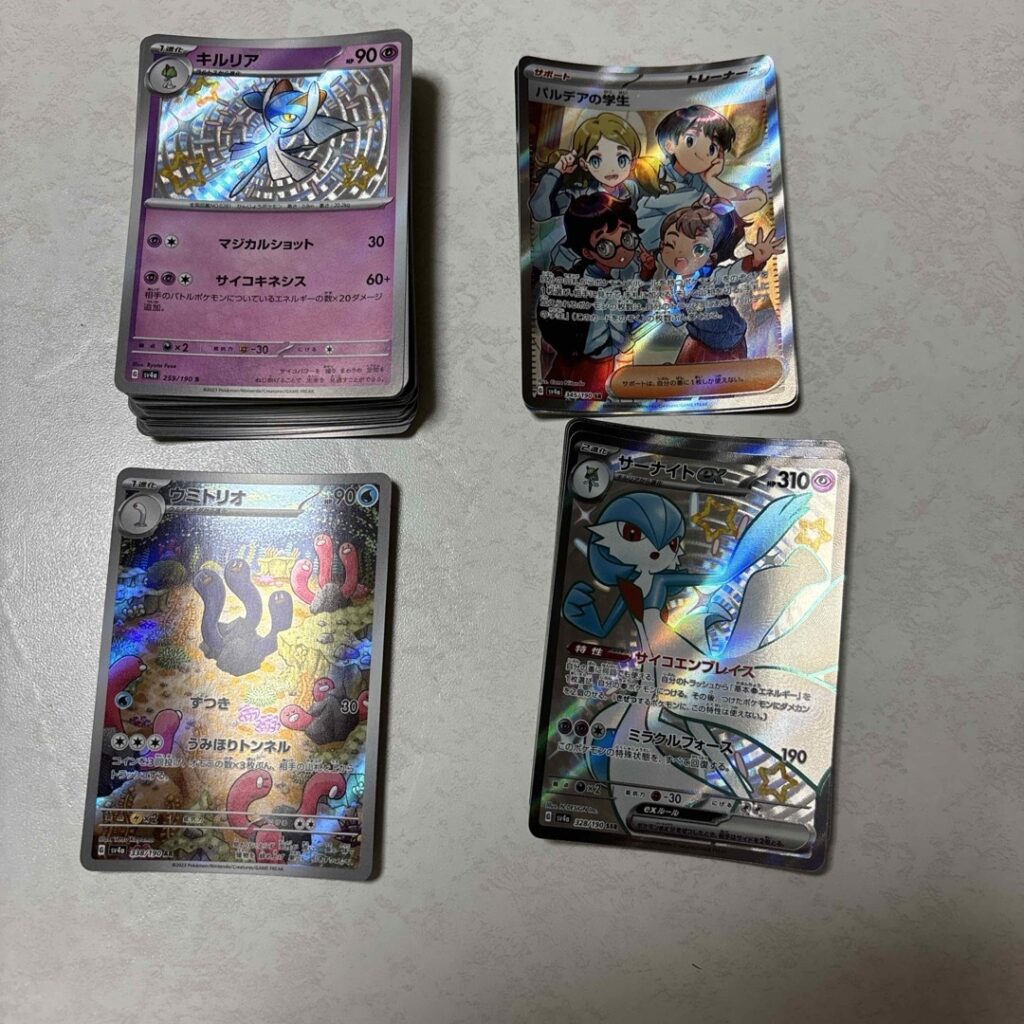
“Shiny Treasure ex” and “Paldean Fates” describe nearly the same cards in different languages—but the differences matter when you’re deciding what to buy. This section breaks down each one:
- The Japanese original and how to get it overseas
- The English Paldean Fates release and how it differs
- Korean and other-language printings
Knowing which version you’re actually buying is the first step to spending wisely.
The Japanese Version: The Original Shiny Treasure ex
The Japanese Shiny Treasure ex is the original—the version that started it all. According to The Pokémon Company’s official set page, it released in Japan on December 1, 2023, months ahead of any other language. Every later printing traces back to this set.
That includes the English release. Paldean Fates is built on the Japanese set, not the other way around, so if you want the original printing collectors point to as the source, the Japanese cards are it.
Getting them outside Japan is more straightforward than it looks. A proxy service like Neokyo can buy Japanese-market listings on your behalf and ship them worldwide, which is how overseas collectors pick up the original set (full walkthrough in the buying section below).
Disclosure: this article contains affiliate links, and we may earn a commission from purchases made through them.
Browse Shiny Treasure ex cards on Neokyo
The English Version: Paldean Fates
In English, the set is called Scarlet & Violet—Paldean Fates. According to The Pokémon Company’s official announcement, it launched at retailers worldwide on January 26, 2024, about two months after the Japanese release.
Paldean Fates isn’t a one-to-one copy. It combines cards from the Japanese Shiny Treasure ex subset with leftover cards from other expansions, so the English checklist doesn’t line up exactly with the Japanese one.
There’s also a key difference in how you buy it. Paldean Fates booster packs aren’t sold on their own—they come bundled inside products like Elite Trainer Boxes and other set collections, which shapes how the English version circulates on the secondary market.
The Korean and Other-Language Versions
Beyond Japanese and English, the set appears to have been released in other languages too. Korean and Traditional Chinese printings are generally reported to have arrived around early 2024, though the exact details aren’t always confirmed by official sources.
These versions can differ from the Japanese cards in small finishing touches, such as holo borders or framing. Print runs and demand also tend to vary by region, so circulation and prices for non-Japanese versions may not match what you see for the original.
| Version | Set Name | Release | Notes |
| Japanese | Shiny Treasure ex | Dec 1, 2023 | The original printing |
| English | Paldean Fates | Jan 26, 2024 | No standalone packs; sold in ETBs and other products |
| Korean / other | Varies by region | Around early 2024 | Some finishing and distribution differences |
Shiny Treasure ex Card List: Rarities and How to Read the Set
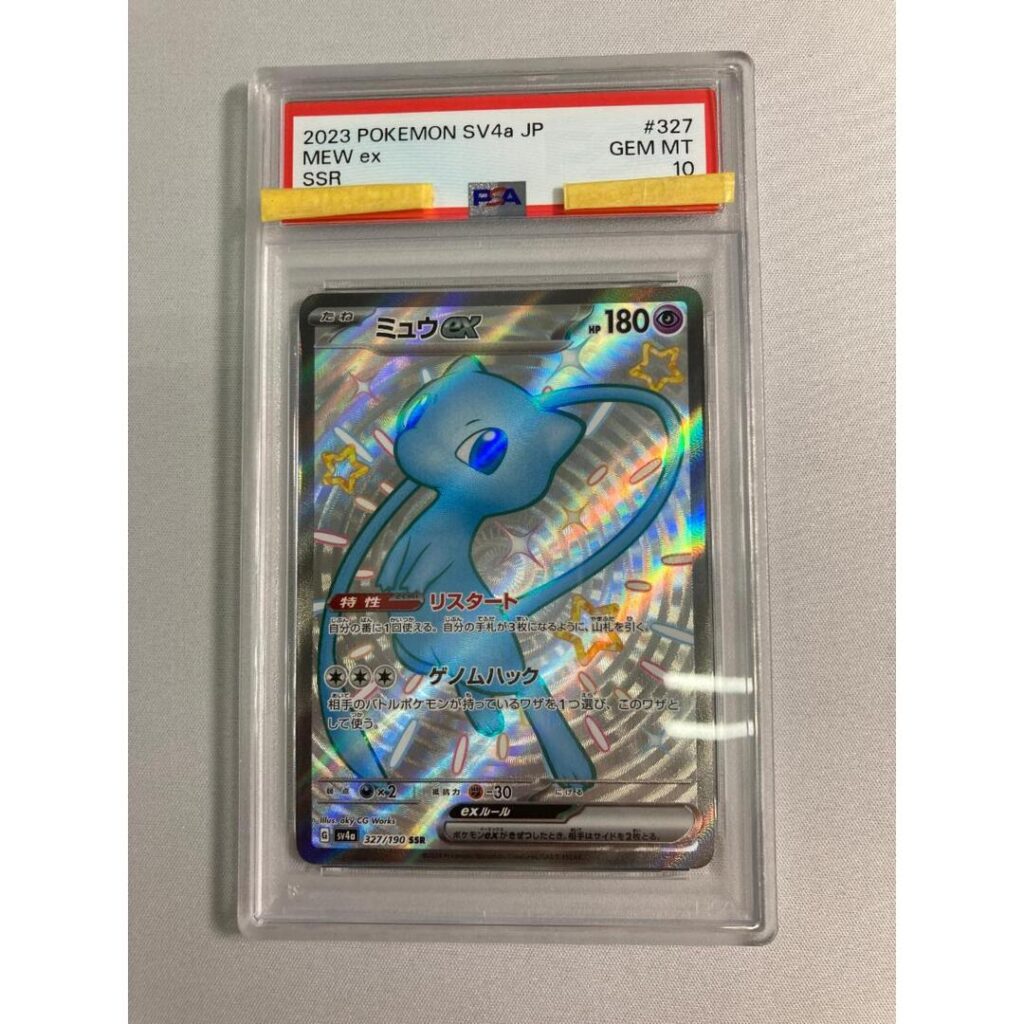
If you’ve been searching for a Shiny Treasure ex card list, this is where the set comes together. Rather than dump every card on you at once, this section explains how the rarities work, then gives you a usable list of the rest of the set:
- Baby shinies (S)
- Art rares (AR)
- Super rares and super art rares (SR / SAR / SSR)
- Ultra rares and gold cards (UR)
The biggest chase cards get their own section next, so the tables here focus on everything else.
| Rarity | What It Is |
| S | Baby shiny—a non-full-art shiny card |
| AR | Art Rare—illustration-focused special card |
| SR | Super Rare |
| SAR | Super Art Rare—full-art shiny ex and more |
| SSR | Super Special Rare—full-art shiny ex |
| UR | Ultra Rare—gold-bordered top tier |
The biggest chase cards are covered in the summary above and in the next section. This table lists the rest of the set by rarity. Note: some Trainers appear at more than one rarity under different card numbers (e.g., Nemona, Clive), so the same character can show up as both SR and SAR.
| Card | No. | Rarity | Ungraded | PSA 10 |
| Mew ex | #327 | SSR | $24.35 | $123.00 |
| Charizard ex | #331 | SSR | $18.47 | $92.00 |
| Gardevoir ex | #328 | SSR | $5.49 | $46.50 |
| Alakazam ex | #326 | SSR | $3.98 | $58.44 |
| Skeledirge ex | #324 | SSR | $2.45 | $35.00 |
| Chi-Yu ex | #356 | UR | $7.01 | $61.24 |
| Miraidon ex | #358 | UR | $7.84 | $40.00 |
| Koraidon ex | #360 | UR | $7.28 | $46.38 |
| Chien-Pao ex | #357 | UR | $6.00 | $27.75 |
| Nemona | #343 | SR | $2.09 | $29.78 |
| Clive | #344 | SR | $2.05 | $29.99 |
| Judge | #342 | SR | $1.86 | $24.55 |
| Pawmi | #340 | AR | $4.50 | $39.69 |
| Wugtrio | #338 | AR | $3.74 | $36.57 |
| Palafin | #339 | AR | $3.32 | $42.29 |
| Snorlax | #310 | S | $15.13 | $115.01 |
| Ditto | #309 | S | $14.48 | $148.32 |
| Charmander | #210 | S | $13.00 | $82.23 |
| Entei | #213 | S | $6.72 | $59.99 |
| Lucario | #281 | S | $6.62 | $50.04 |
| Sprigatito | #201 | S | $5.99 | $73.00 |
| Riolu | #280 | S | $5.06 | $38.34 |
Note on labels: Japanese listings tag the full-art shiny ex cards as SSR, while some English sources call the same cards SR (for example, Charizard #331). This list uses SSR throughout. Prices as of June 2026; values fluctuate.
For the complete card list, see TCG Collector.
Baby Shinies (S)
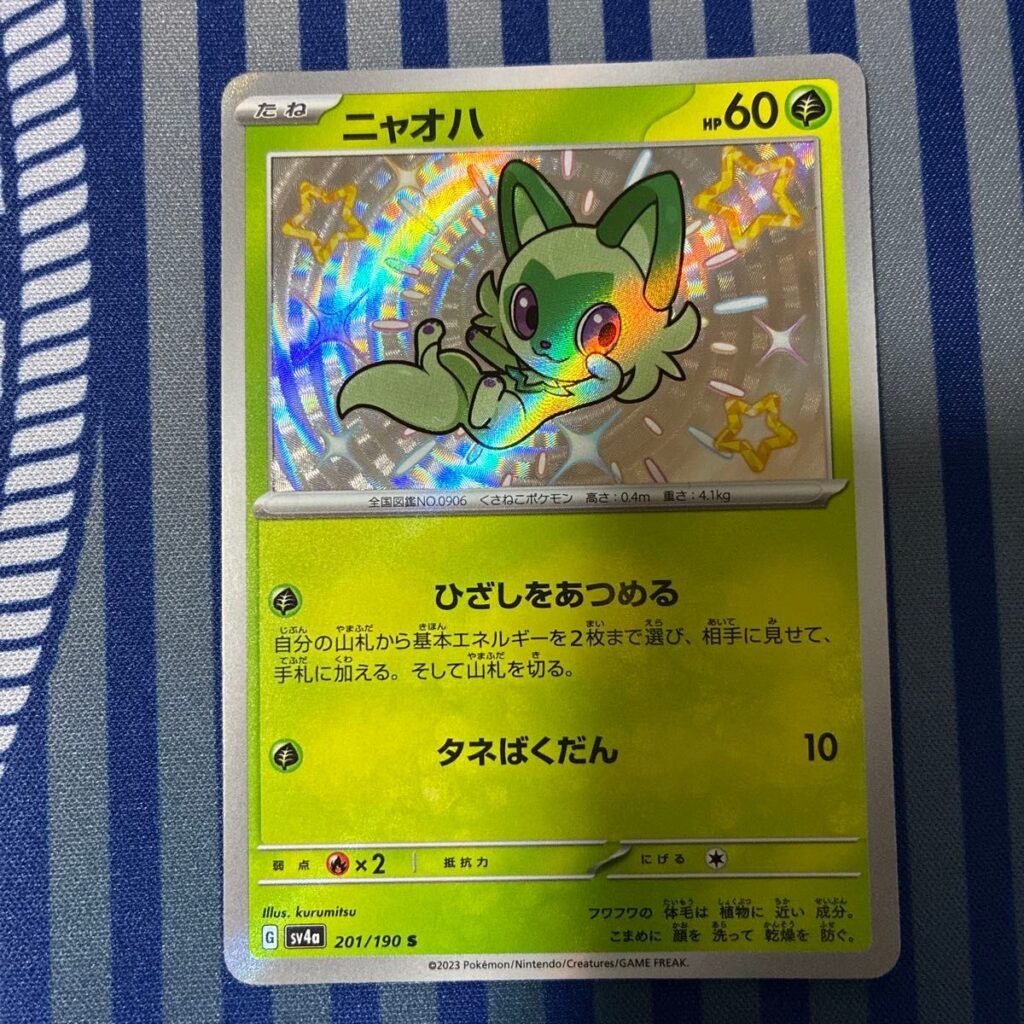
The S rarity marks the set’s baby shinies: shiny Pokémon printed without full-art treatment. They show the alternate coloring on an otherwise standard card layout, which makes them the most approachable way into the set’s shiny theme. Familiar faces like Ditto and Sprigatito turn up here.
This tier holds the largest share of the set’s shiny cards, so it tends to be the easiest group to complete. Values still vary within it, but these are generally the more available shinies.
Art Rares (AR)
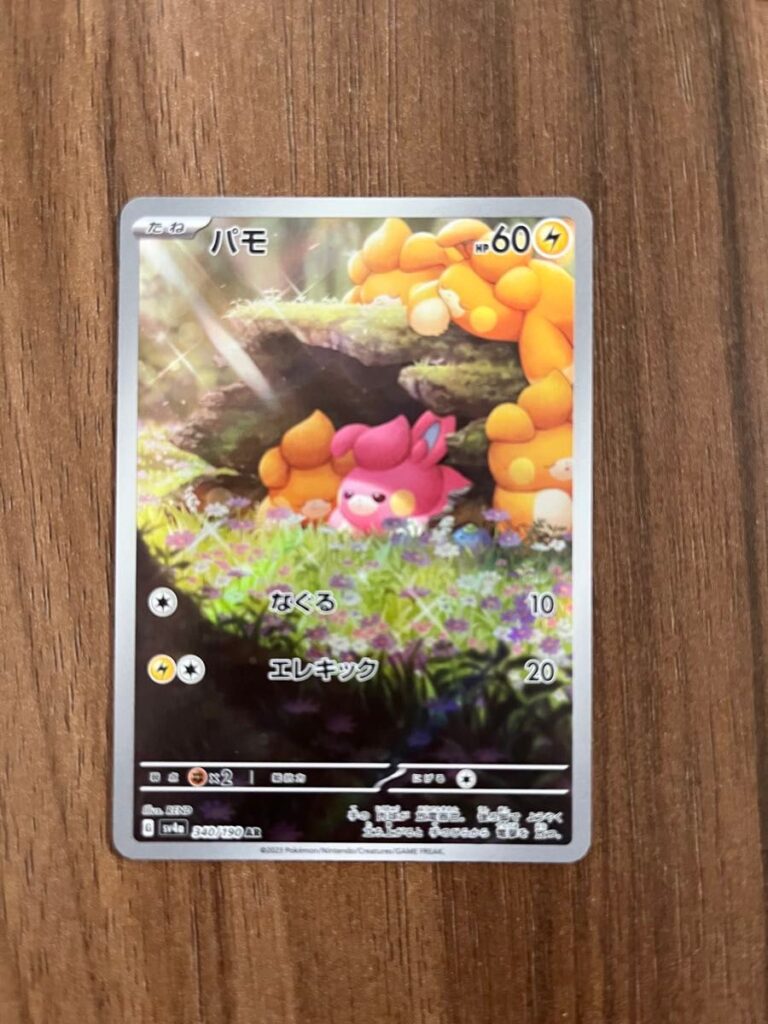
Art Rares (AR) put the artwork front and center, featuring detailed, illustration-driven scenes rather than the standard card frame. Cards like Wugtrio and Palafin sit in this group.
Prices within the AR tier can swing a lot. A few standout cards pull far ahead of the rest, so two cards sharing the same rarity won’t necessarily share the same value (the section ahead covers the specific standouts).
Super Art Rares and Super Rares (SAR / SR / SSR)
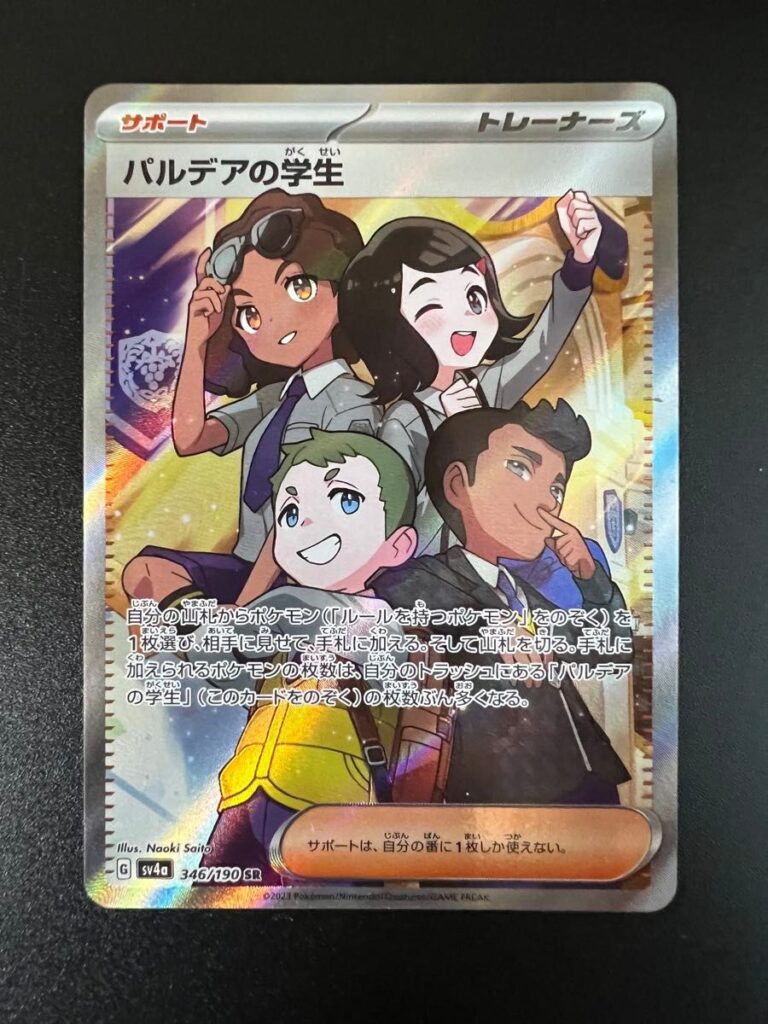
SAR, SR, and SSR are the set’s upper rarity tiers, and this is where the showpieces live—including the full-art shiny ex cards that drive most of the demand. Individual standouts get their own breakdown in the next section.
One quirk to watch: the same character can appear at more than one rarity under different card numbers. Nemona and Clive, for example, each exist as both an SR and an SAR with separate numbers, so the name alone won’t tell you which card you’re looking at. As a rule, the higher the rarity tier, the higher the typical price.
Ultra Rares and Gold Cards (UR)
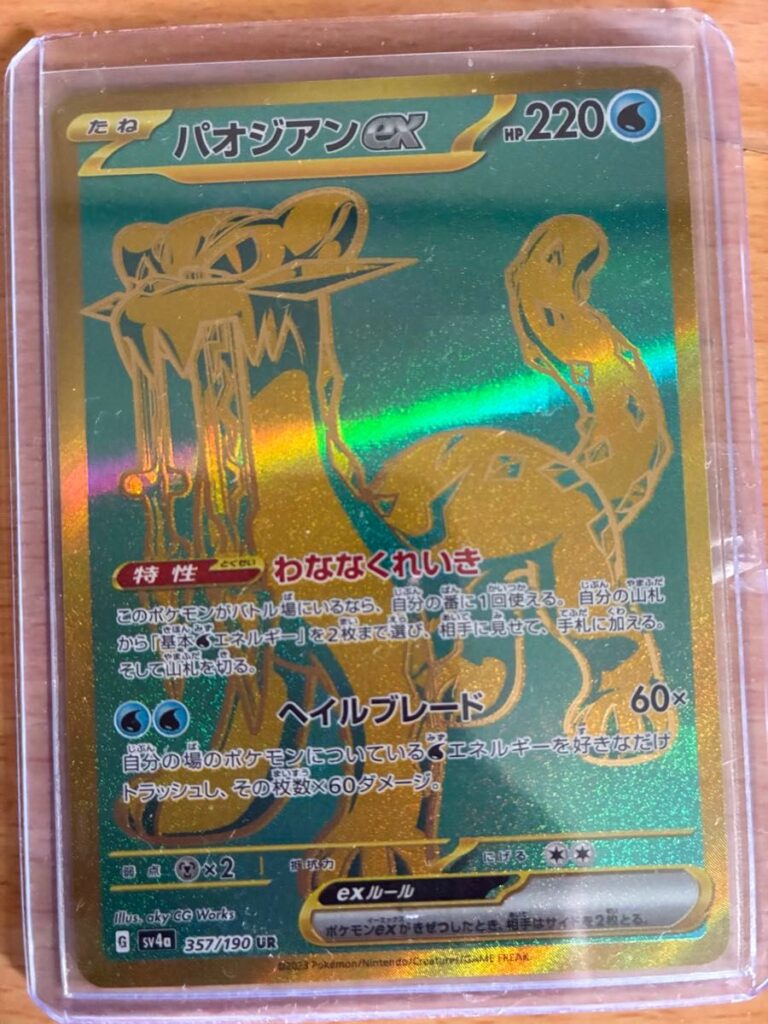
Ultra Rares (UR) are the gold-bordered cards at the top of the rarity chart, with Miraidon ex and Koraidon ex among the headliners. Their metallic gold treatment makes them stand out instantly in a binder.
Despite that premium look, URs don’t always command premium prices. Several of them can sit below the top SAR cards in value, so the most eye-catching card in a pack isn’t automatically the most expensive one.
The Most Valuable Shiny Treasure ex Chase Cards and Their Prices
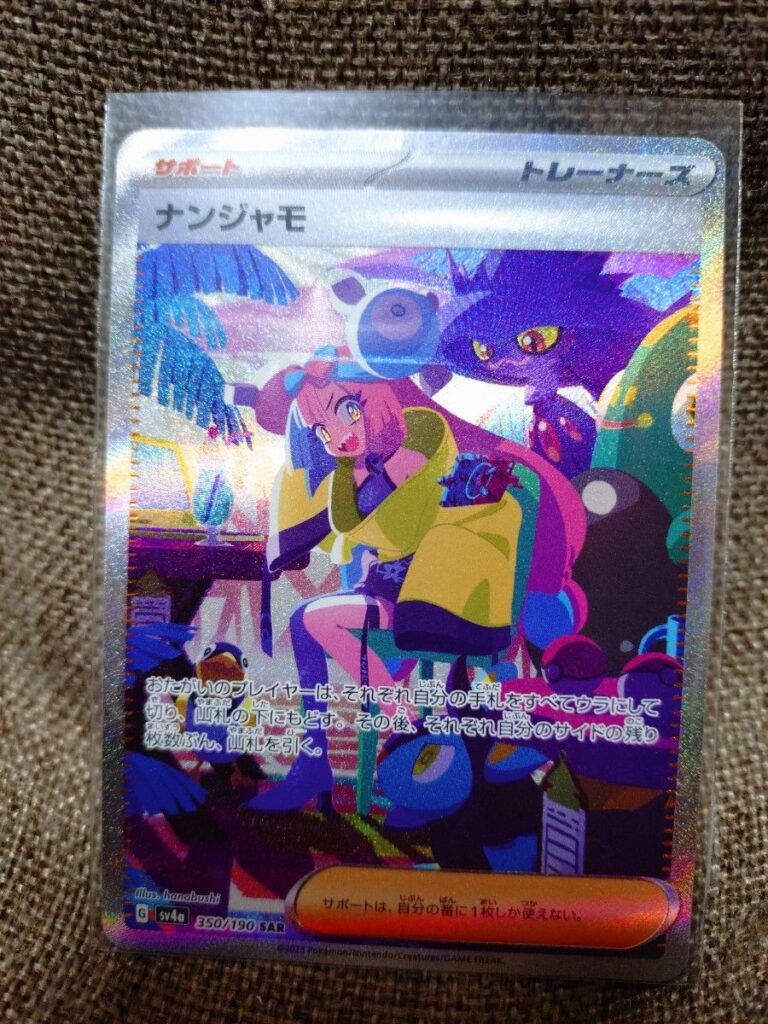
Now for the cards everyone actually chases. Value in Shiny Treasure ex is heavily concentrated at the top, and three cards do most of the heavy lifting:
- Mew ex #347, the clear number one
- Charizard ex #349
- Gardevoir ex #348
After those three, prices drop off quickly—and that pattern itself is worth understanding before you buy.
Mew ex #347 (SAR): The Clear #1, “Bubble Mew”
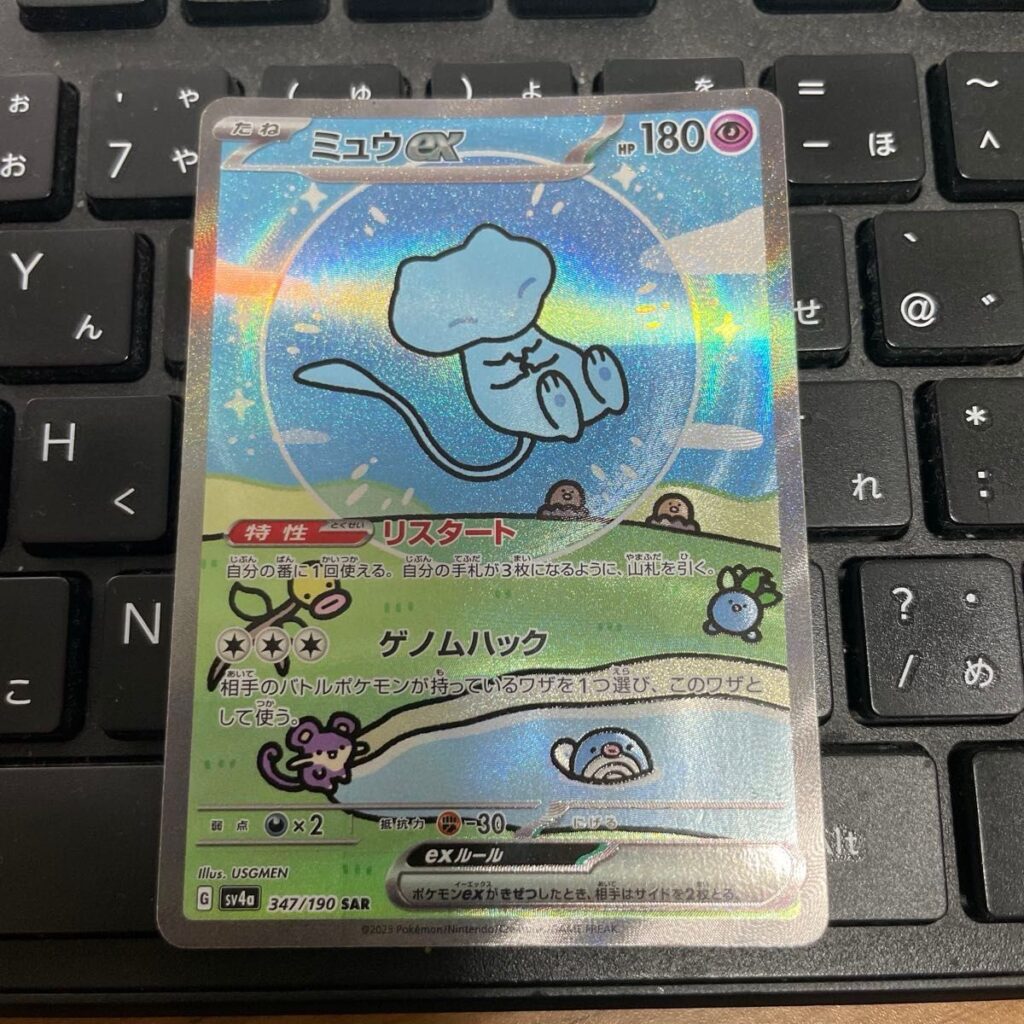
Mew ex #347 (SAR), nicknamed “Bubble Mew,” is the undisputed top card of the set. At about $360–$510 ungraded, it sits in a tier of its own—no other card in Shiny Treasure ex comes close (prices as of June 2026, and values fluctuate).
Its appeal comes largely from the artwork, a soft, bubble-filled illustration that stands out even among full-art cards. The piece is widely credited to the illustrator USGMEN, which appears to have added to its following.
One thing to watch when shopping: there’s a second Mew ex in the set, #327, that sells for only about $24. The two are easy to mix up by name, so always check the card number before you buy.
Charizard ex #349 (SAR)
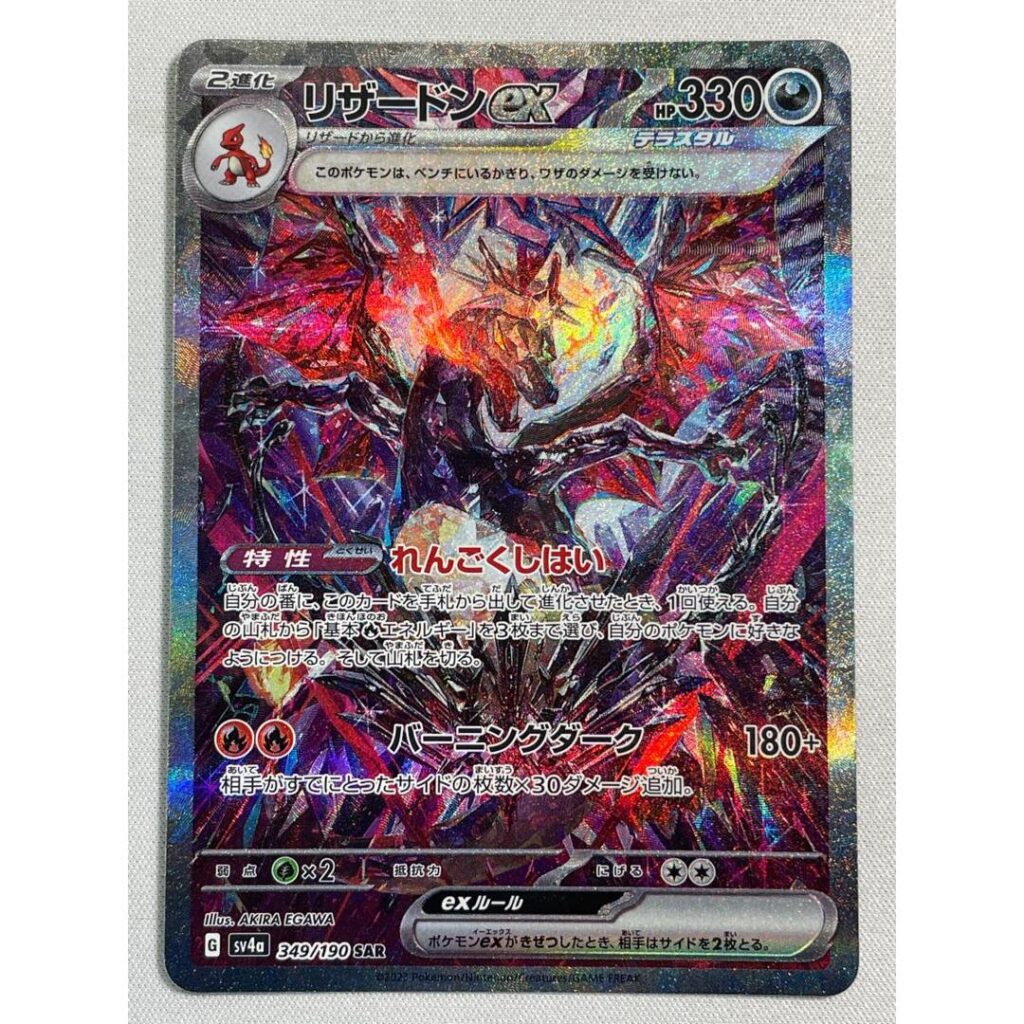
Charizard ex #349 (SAR) is the set’s second-most valuable card, typically running about $210–$270 ungraded. It trails Mew but stays well ahead of everything below it.
Charizard’s enduring popularity does a lot of the work here, and the card has seen competitive play on top of its collector demand—a combination that tends to keep prices firm. As with Mew, there’s a cheaper lookalike: the alternate shiny Charizard #331 sells for roughly $18, a fraction of the #349 price.
Gardevoir ex #348 (SAR)
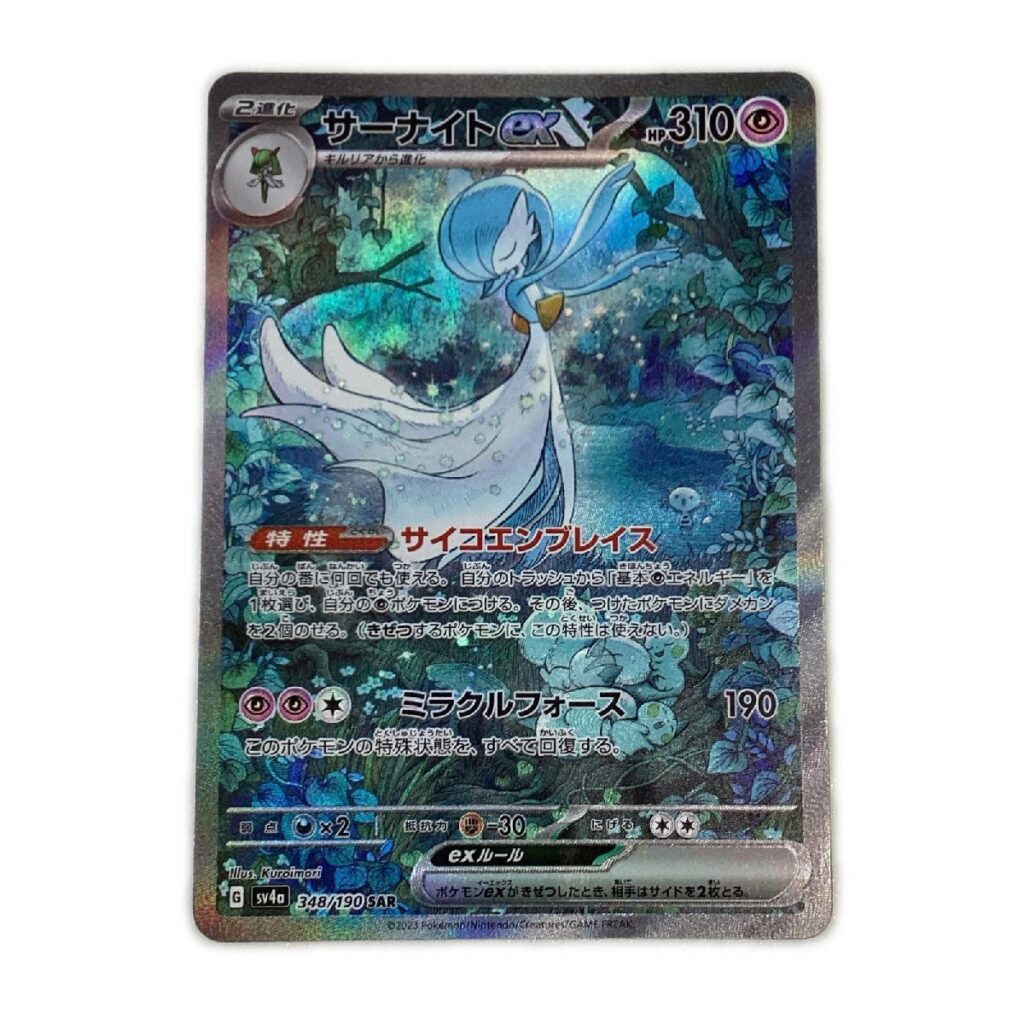
Gardevoir ex #348 (SAR) rounds out the top three, generally selling for about $120–$160 ungraded. It’s a clear step down from Charizard, but still comfortably above the rest of the set.
The card’s artwork earns a lot of praise, which appears to support its standing among collectors. And once again, watch the number: the SSR Gardevoir ex #328 is a different card that goes for around $5, so the name shared between them can be misleading.
Other Notable Cards (and Why the Tier Drops Off Fast)
Below the top three, the market cools off fast. Most of the next-tier cards land in roughly the $30–$45 range ungraded, so there’s a real gap between the headline cards and the rest.
Iono #350 is the clearest example of how prices shift over time. At about $33–$42 today, it was the set’s most expensive card at launch before settling down—a useful reminder that early prices don’t predict where a card lands later.
Pikachu #236 is the oddball of the group. It’s a baby shiny (S rarity), yet it punches far above its tier at about $38–$45 ungraded, and it jumps sharply in PSA 10. Mimikyu #341 plays a similar role among Art Rares, sitting around $19 while most ARs trade for less.
A handful of Trainer SARs fill out the next rung of chase cards:
| Card | No. | Rarity | Ungraded |
| Clive | #352 | SAR | $18.93 |
| Penny | #354 | SAR | $17.46 |
| Arven | #353 | SAR | $9.67 |
| Nemona | #351 | SAR | $7.03 |
These can be worth targeting if you want recognizable Trainer cards without paying top-three prices.
Prices as of June 2026; values fluctuate.
Is Shiny Treasure ex Worth Buying? Pull Rates and What a Box Gets You
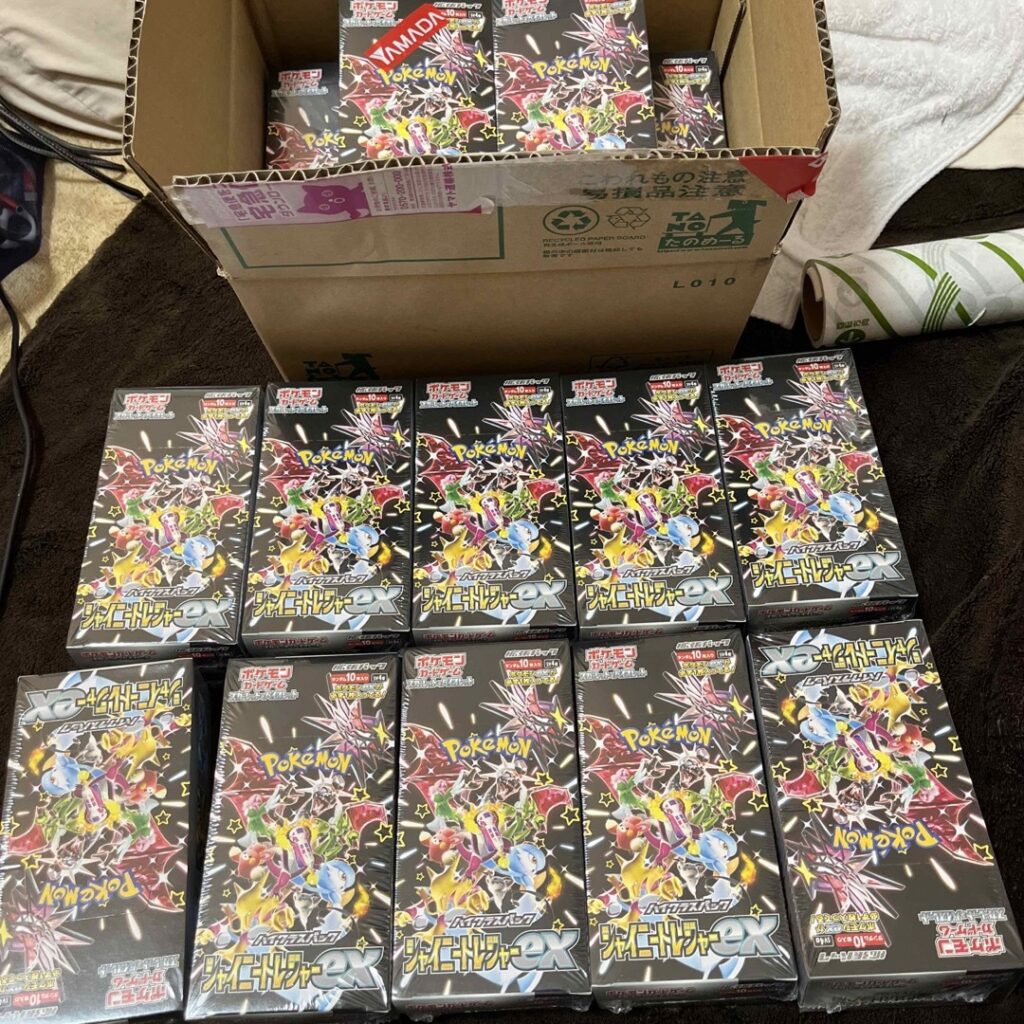
So is a box actually worth opening? That depends on what you’re after, and on what a box reliably gets you versus what it leaves to chance. This section lays out the math:
- What every booster box guarantees
- How pull rates work by rarity
- Whether opening a box or buying singles makes more sense
None of it requires guesswork about luck—only a clear look at what you’re paying for.
What’s Guaranteed in a Shiny Treasure ex Booster Box
Every Shiny Treasure ex booster box holds 10 packs of 10 cards each, and because this is a High Class Pack, every one of those packs guarantees a Pokémon ex. That’s the floor you’re paying for: at minimum, 10 ex cards per box.
Beyond that, a box is widely understood to include at least some shiny or SSR-tier cards, though that isn’t an official promise. The Pokémon Company doesn’t publish exact pull rates; its only stated rule is that cards are inserted at random.
You may also run into the so-called “pack trick” or “card trick”—the idea that weighing packs or feeling for certain cards reveals the hits. Its reliability is limited at best, and you’re better off understanding the guaranteed contents than chasing that kind of shortcut.
What a box guarantees:
・One box = 10 packs; one pack = 10 cards
・Every pack includes one Pokémon ex
・At least some shiny/SSR-tier cards are generally expected (not officially confirmed)
・Official pull rates aren’t published, and the “card trick” has limited reliability
Shiny Treasure ex Pull Rates by Rarity
Pull rates climb steeply as rarity goes up. The top tiers—SAR cards in particular—appear only rarely, which is exactly why a single box won’t reliably deliver a specific chase card.
That scarcity is the main reason the most valuable cards cost what they do: the harder a card is to pull, the higher its price tends to climb on the secondary market. Supply and demand do the rest.
Keep in mind these are observed patterns, not published odds. Since official pull rates aren’t released, any rarity-by-rarity estimate you see is a community approximation rather than a guaranteed rate.
Opening a Box vs. Buying Single Cards
Here’s the practical trade-off. A Japanese Shiny Treasure ex box generally runs about $90–$150, while a single chase card like Mew ex #347 can cost about $360–$510 on its own.
That math points to a simple rule. If you’re after one specific high-value card, buying it as a single is usually the surer route—you pay a known price and get exactly what you want, instead of gambling a box on long odds. If you want several cards, enjoy the experience of opening packs, or are happy with a spread of the set, a box delivers more variety for the money.
| Buy a box if… | Buy singles if… |
| You want a spread of cards from across the set | You want one specific high-value card |
| The fun of opening packs is part of the appeal | You’d rather pay a known price up front |
| You’re happy leaving the contents to chance | You can’t risk missing the chase card you want |
One caveat worth stating plainly: cards aren’t a guaranteed investment, and prices can fall as easily as they rise. This is not investment advice—buy what you’ll be glad to own regardless of where the market goes.
Where to Buy Shiny Treasure ex Japanese Cards Safely
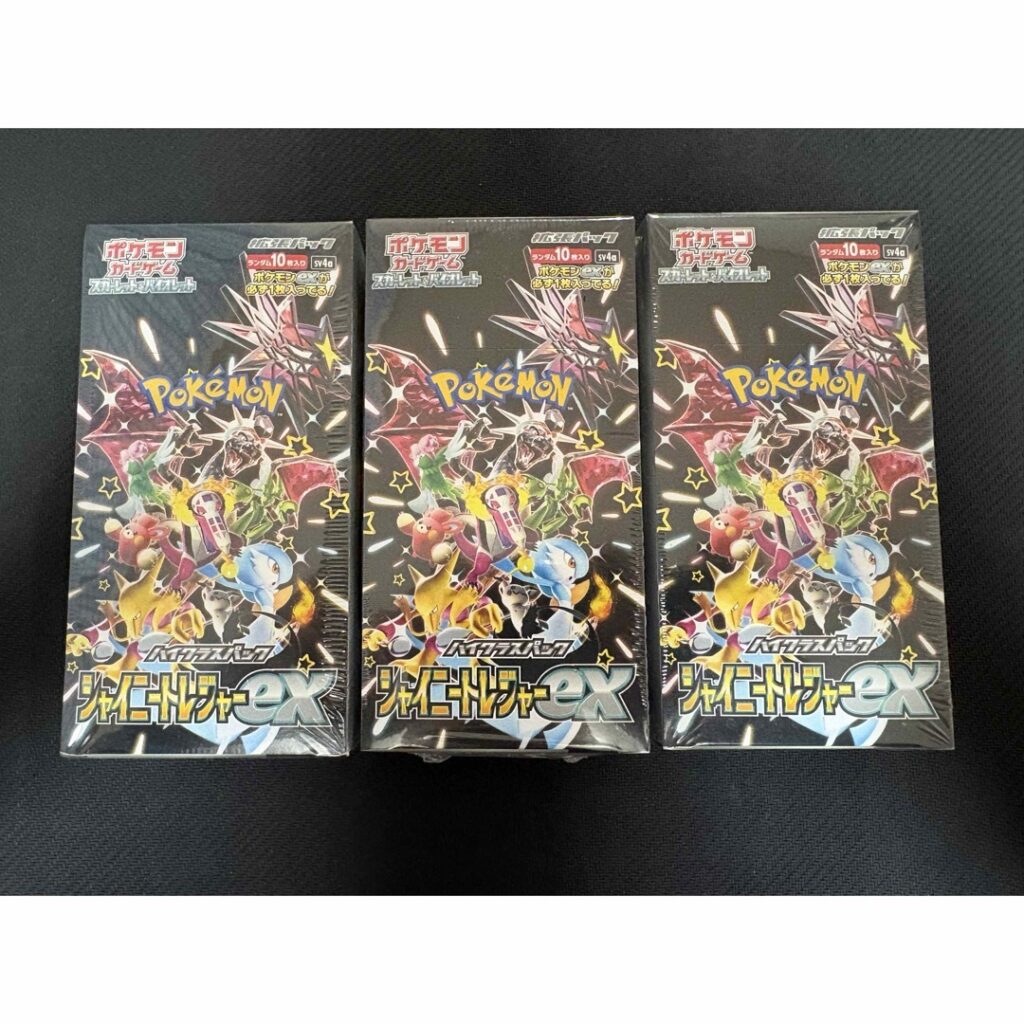
Once you’ve decided the Japanese set is the one you want, the question becomes how to buy it safely from outside Japan. This section covers the full path:
- Why collectors lean toward the Japanese version
- How to avoid fakes and reprints
- How to buy from Japan using a proxy service
- What to expect on price for singles and boxes
The goal is simple: get the original cards you want without overpaying or getting burned.
Which Version to Buy and Why Collectors Choose Japanese
For many collectors, the Japanese version wins on one point: it’s the original. As the first printing of the set, it tends to be the choice for people who care about owning the source release rather than a later localization.
Price differences between versions also factor in, and they can push you one way or the other depending on your goal. There’s no single correct answer here—a player chasing specific cards might weigh things differently than a collector.
If owning the original matters most to you, the Japanese set is the straightforward pick. That’s the lens the rest of this section is written through.
How to Avoid Fakes and Reprints
High-value cards attract counterfeits and tampering, so where you buy matters as much as what you buy. With pricier singles especially, sticking to sellers and services with a track record is the best protection you have.
A few habits go a long way. Check the seller’s ratings and history, confirm the card number and rarity markings match the real card, and inspect the packaging or shrink wrap when buying sealed product. None of these is foolproof on its own, but together they catch most problems.
If you’d rather not assess authenticity yourself, graded cards are an option. A card slabbed by PSA, CGC, or BGS has already been checked and authenticated, which removes much of the guesswork at the cost of a higher price.
How to avoid fakes:
☐ Check the seller’s ratings and history
☐ Confirm the card number and rarity markings are correct
☐ Inspect the packaging and shrink wrap
☐ Choose a graded card (PSA / CGC / BGS) if you’re unsure
☐ Use a reliable proxy buying service
Buying Japanese Shiny Treasure ex from Japan with a Proxy Service
A proxy service bridges the gap between Japanese marketplaces and overseas buyers. Neokyo, for example, purchases items from Japanese platforms like Rakuma and Mercari on your behalf, holds them, and forwards them to you internationally.
The terms are straightforward. Neokyo’s commission is 350 yen per item plus packaging fees, with up to 45 days of free storage and international shipping through carriers such as Japan Post, FedEx, and DHL (fees and terms as of June 2026; check Neokyo for current details).
One practical tip makes a real difference. You can search in English—type “Shiny Treasure ex” and the service matches it against Japanese listings for you, so there’s no need to paste in Japanese text. That surfaces the original singles and boxes sold on Japanese marketplaces.
Here’s the basic flow:
- Search “Shiny Treasure ex” on Neokyo
- Place your buy request for the listing you want
- Store items free for up to 45 days and consolidate multiple buys
- Choose a carrier and ship worldwide
Disclosure: this article contains affiliate links, and we may earn a commission from qualifying purchases.
Browse Shiny Treasure ex cards on Neokyo
What to Expect on Price for Singles and Boxes
For budgeting, here’s the lay of the land. A sealed Japanese box typically sits around $90–$150, which makes it one of the more accessible parts of the set to buy.
Singles are where the spread widens. The top chase cards run about $360–$510 for Mew ex #347, about $210–$270 for Charizard ex #349, and about $120–$160 for Gardevoir ex #348, all ungraded. Most other cards cost far less.
These figures move with time, version, and grade, so treat them as a snapshot rather than a fixed price. Checking the latest market before you buy is always the safer play.
Prices as of June 2026; values fluctuate.
Final Thoughts: Is Shiny Treasure ex Worth It for You?
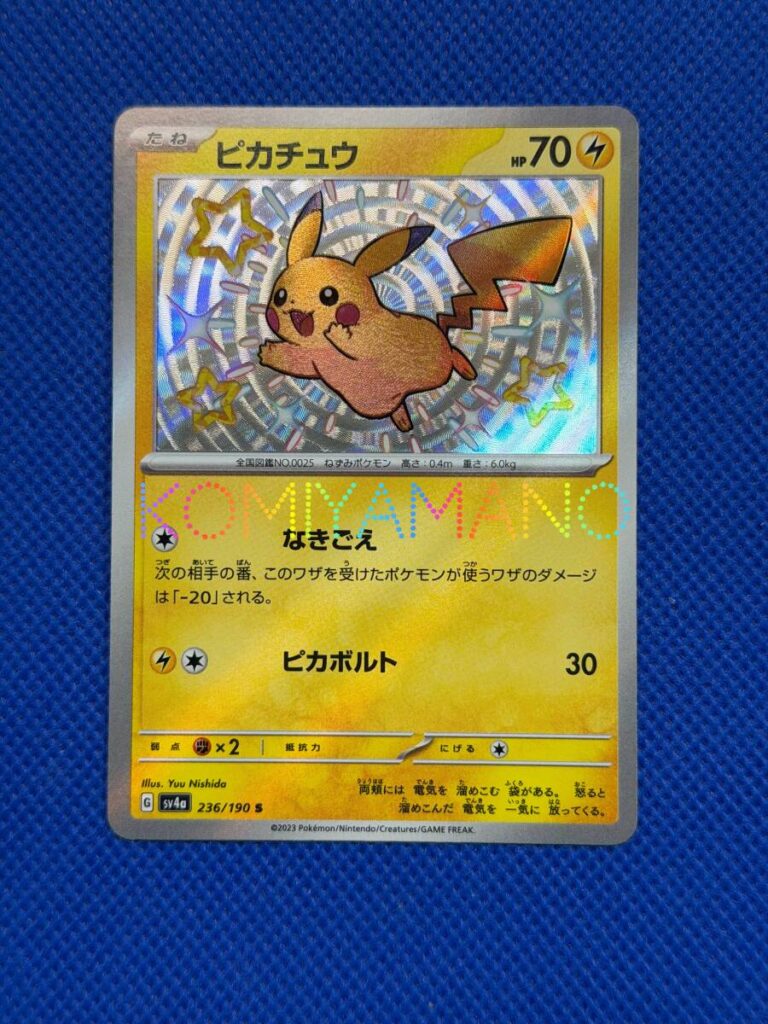
Shiny Treasure ex earns its reputation, but “worth it” depends entirely on what you want from it. If you’re chasing the headline cards, the value is concentrated at the very top—Mew ex #347, Charizard ex #349, and Gardevoir ex #348—and buying those as singles is usually more reliable than opening boxes. If you love the ritual of opening packs and want a broad slice of the set, a box delivers more variety for around $90–$150.
On version, the Japanese set is the original, which makes it the natural choice for collectors who want the source printing. The English Paldean Fates and other-language versions each have their place, but they all trace back to this set.
Whichever route you take, buy carefully: stick to reputable sellers or a proxy service, check card numbers against the real thing, and remember that prices move—cards are not a guaranteed investment. When you’re ready to pick up the Japanese version from overseas, a proxy service like Neokyo lets you search in English and buy the original singles and boxes from Japanese marketplaces.
Browse Shiny Treasure ex cards on Neokyo
Disclosure: this article contains affiliate links, and we may earn a commission from qualifying purchases. This article is for general information only and is not investment advice.
Not affiliated with, sponsored, or endorsed by The Pokémon Company. All card names and images are the property of their respective owners.