

What Are Shadowless Pokémon Cards? How to Tell and What They’re Worth
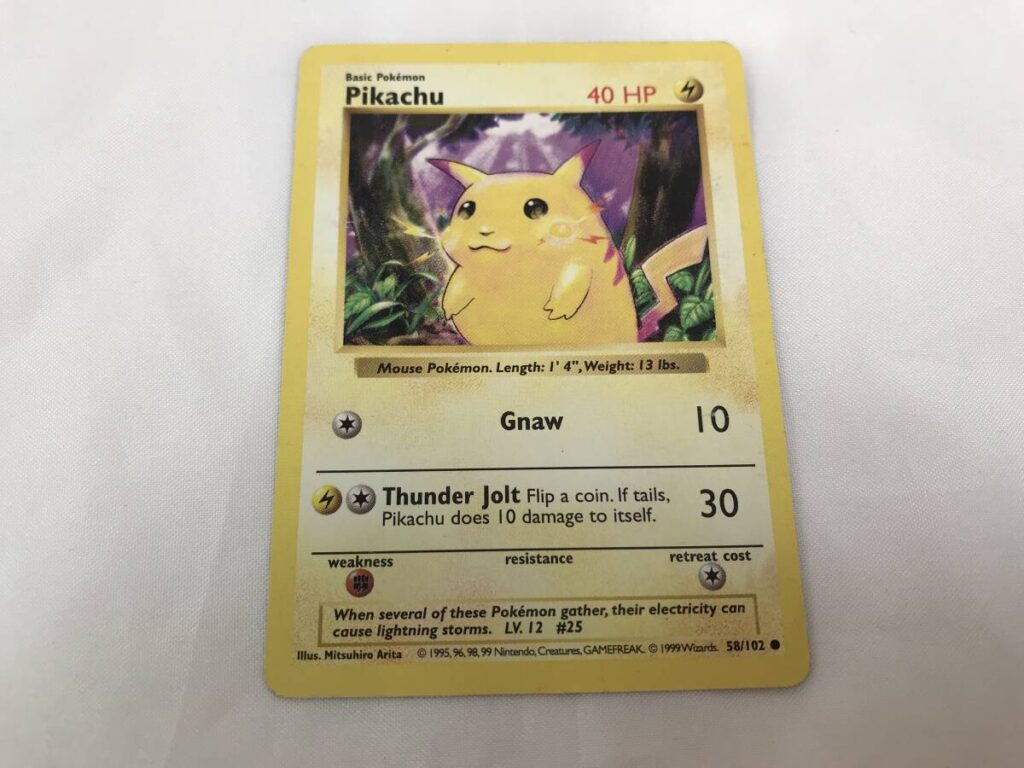
You found a stack of old English Pokémon cards, and one of them looks slightly different from the ones you remember. No gray band down the right side of the art. Thinner red numbers in the corner.
If that sounds familiar, you may be holding a Shadowless card from the 1999 Base Set — a printing that sits between the famous 1st Edition run and the ordinary Unlimited cards that went on to flood the market.
This guide shows you how to confirm it in about a minute, and what the graded market actually pays for one.
What Are Shadowless Pokémon Cards?
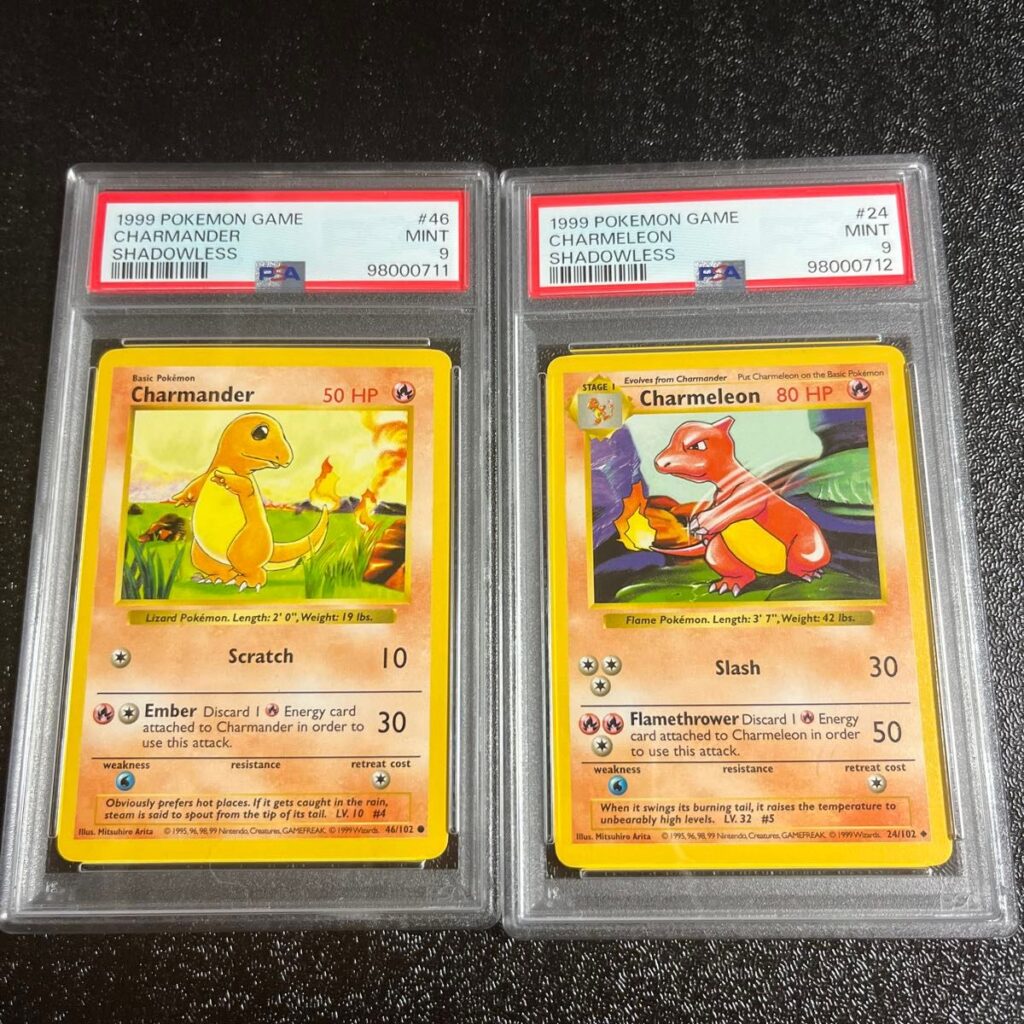
Shadowless cards are Base Set cards printed without the gray drop shadow that normally falls along the right and bottom edges of the art box. The picture sits flat against the yellow border instead of looking framed and slightly raised.
They come from the 1999 English Base Set. PSA catalogs them as a distinct variant of that set, listing Charizard #4 as “Charizard-Holo (Shadowless)” separately from both the 1st Edition and the standard version (PSA CardFacts).
It’s the second of three printings. Wizards of the Coast stamped the earliest cards 1st Edition, dropped the stamp for the next run, and only added the drop shadow on the third printing, along the right side of the art box (CGC Cards). PSA’s graded populations follow the same order, with 1st Edition the scarcest and Unlimited by far the most common.
Shadowless applies only to the English Base Set. Later English sets and Japanese cards aren’t described this way.
How to Tell If Your Pokémon Card Is Shadowless
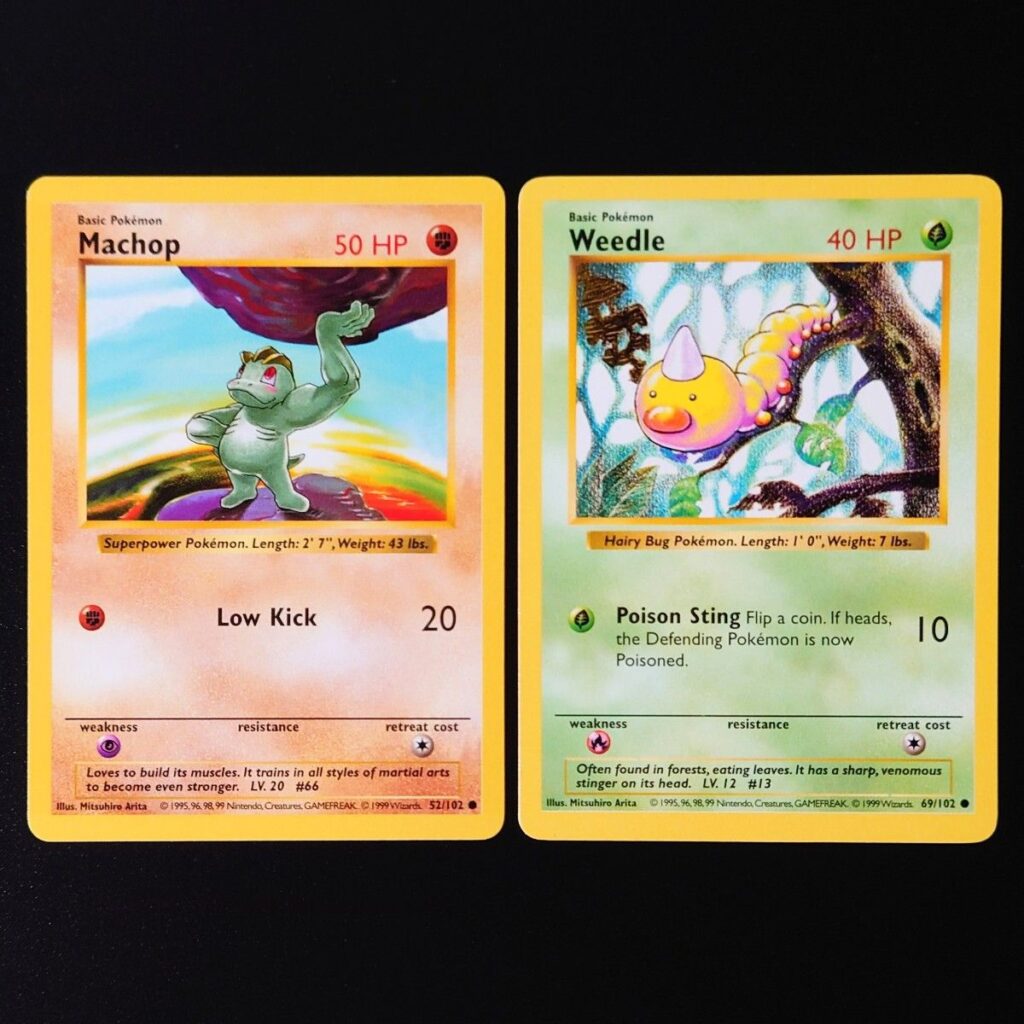
Four checks will settle it, and you don’t need any tools for them. Work through them in this order:
- [ ] No gray shadow along the right and bottom edges of the art box
- [ ] Thin, light red HP text in the top right corner
- [ ] Copyright line includes 99
- [ ] No 1st Edition stamp below the left side of the art
The first check handles most cards on its own. The other three matter when the photo is poor, when the card has no art box, or when you need to separate a Shadowless card from a 1st Edition one.
Check the Right Edge of the Art Box for a Drop Shadow
Look along the right edge of the art box, then the bottom edge. On a Shadowless card there’s nothing there — the illustration meets the yellow border directly.
Hold an Unlimited card next to it and you’ll see it immediately. A soft gray band runs down the right side and along the base of the window, which makes the art look set inside a frame.
This is the fastest check and the one most collectors reach for first, but it fails on low-resolution photos. Compression blurs exactly the area you need to inspect, and a shadow one or two pixels wide simply disappears. When you’re working from a listing photo rather than holding the card, treat the shadow test as a first pass and confirm with one of the checks below.
Compare the Thickness of the Red HP Text
Check the red HP value in the top right corner. Shadowless cards use a thinner, lighter typeface; Unlimited cards use a heavier one that sits more solidly on the card.
The difference is small in isolation and obvious in comparison. If you own any Unlimited Base Set card, put the two side by side and you’ll see it right away. Stroke weight also survives compression, where a faint gray band doesn’t.
Read the Copyright Line for the Year 99
Read the fine print along the bottom edge of the card. 1st Edition and Shadowless cards both carry the year 99, and Unlimited cards don’t.
| Printing | Copyright line |
| 1st Edition and Shadowless | © 1995, 96, 98, 99 Nintendo, Creatures, GAMEFREAK. © 1999 Wizards. |
| Unlimited | © 1995, 96, 98 Nintendo, Creatures, GAMEFREAK. © 1999 Wizards. |
| 2000 UK release | © 1999-2000 for Wizards |
That last row is worth knowing before you draw conclusions. The 2000 UK release changed the copyright date to 1999-2000 (CGC Cards), so a card missing the 99 isn’t automatically a standard Unlimited copy.
This line matters most on cards that have no art box at all. For Trainers and Energy, the copyright text is the only way to pin down which printing you have.
Look for the 1st Edition Stamp Below the Art
Check the lower left of the art box for the 1st Edition stamp. Its presence is the only visual difference between a 1st Edition card and a Shadowless one — everything else about the two printings looks the same.
From there, the two checks do all the work. No shadow and no stamp puts you in the Shadowless run; no shadow with a stamp puts you in 1st Edition.
One card breaks the pattern. Every Base Set Machamp carries a 1st Edition stamp, and no unstamped version was legitimately produced, because the card shipped in a widely available starter deck (PSA Set Registry). A stamped Machamp is therefore not the find it looks like.
Shadowless vs. 1st Edition vs. Unlimited Base Set Cards
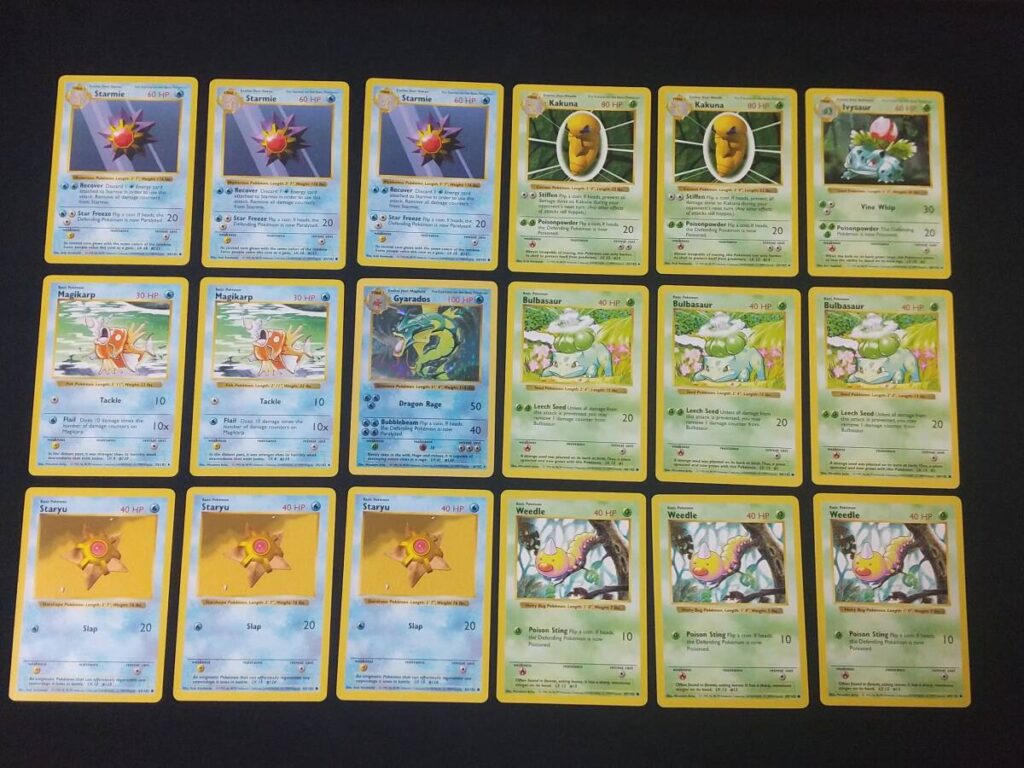
Base Set went back to press more than once, and the three printings collectors trade are easy to keep straight once you know what separates them:
- 1st Edition, the stamped earliest run
- Shadowless, the middle printing
- Unlimited, the common version
Two features do all the work of telling them apart.
| Version | 1st Edition stamp | Drop shadow |
| 1st Edition | Yes | No |
| Shadowless | No | No |
| Unlimited | No | Yes |
Scarcity and price run in that same order, which is why the printing matters more than the card itself once you’re dealing with anything valuable.
1st Edition: Shadowless with the Stamp
1st Edition cards carry the stamp and have no drop shadow, and they sit at the top of the Base Set market.
PSA’s price guide puts a PSA 10 1st Edition Charizard at $181,900 (PSA CardFacts), and scarcity explains the gap. PSA grades it far less often than either the Shadowless or the Unlimited version, which makes it the scarcest of the three printings.
Shadowless: No Stamp and No Drop Shadow
Shadowless cards have neither the stamp nor the shadow, which puts them in the middle of the three printings on both scarcity and price. A PSA 10 Shadowless Charizard carries a $67,700 guide value, well under 1st Edition and several times what the common version brings.
The relationship between the two earlier printings trips people up constantly. Every 1st Edition card is Shadowless, but the reverse doesn’t hold. A Shadowless card without a stamp is its own printing, not a 1st Edition that lost its mark.
Unlimited: The Version with the Drop Shadow
Unlimited cards have the drop shadow and no stamp, and they’re the printing almost everyone actually owns. PSA has graded roughly 99,000 copies of the Unlimited Charizard, against about 13,900 Shadowless copies (PSA CardFacts).
Price tracks that supply closely. The guide value for a PSA 10 Unlimited Charizard is $10,000, roughly a seventh of the Shadowless figure at the same grade.
Which Cards and Sets Have Shadowless Versions
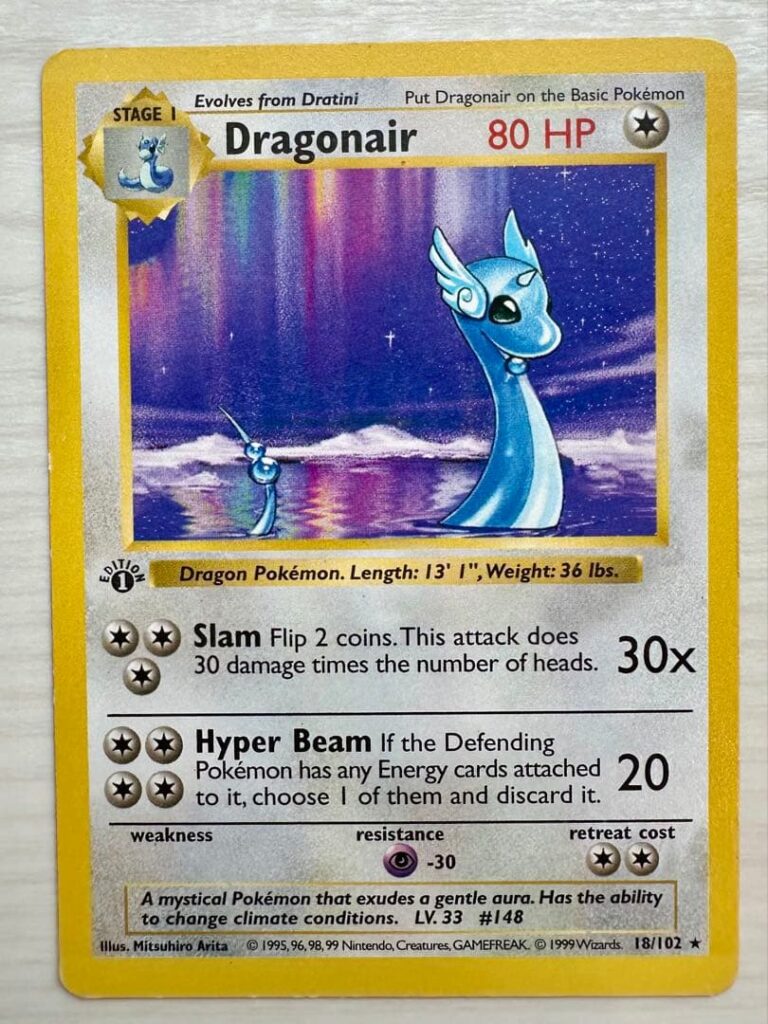
The Shadowless run covers less ground than most people assume. Three questions settle whether a given card can be Shadowless at all:
- Which Base Set cards have a Shadowless version
- How Trainer and Energy cards fit in
- Which sets and languages fall outside the term
The short answer: everything inside the 1999 English Base Set qualifies, and nothing outside it does.
All 102 Base Set Cards, Including the 16 Holos
All of Base Set exists in Shadowless form, holos included. The set runs to 102 cards, 16 of them holographic, with the rest split across rare, uncommon, common, and basic Energy (PSA Set Registry).
That covers the cards people care about. PSA treats Shadowless Charizard as its own graded category, and lists Blastoise and Venusaur in Shadowless form as well (PSA Price Guide).
Trainer and Energy Cards Without an Art Box
Trainer and Energy cards have no art box, so the shadow test doesn’t apply to them at all. There’s no frame for a shadow to fall against, which means its absence tells you nothing.
Use the copyright line instead. The year 99 is the working test for these cards, exactly as it is for a Pokémon card whose photo is too poor to judge. A Shadowless Energy card looks identical to an Unlimited one until you read the fine print.
The collector number tells you which group a card falls into before you even see it. Base Set runs #1 to #69 for Pokémon, #70 to #95 for Trainers, and #96 to #102 for Energy (PSA Set Registry), so a listing described only as 72/102 is a Trainer and can’t be settled on its shadow.
Why Jungle, Fossil, and Japanese Cards Are Never Shadowless
No set after Base Set has a Shadowless version. Collectors generally accept that Jungle and Fossil carried the drop shadow from their first printing, which leaves them with 1st Edition and Unlimited variants only.
Japanese cards sit outside the term entirely. Japanese Base Set has no Shadowless category; PSA instead separates its no-rarity-symbol cards into a registry set of their own (PSA Set Registry).
That distinction is useful rather than academic. The instinct behind chasing Shadowless cards — owning the earliest run of a set — has its own equivalent on the Japanese side, and English-language guides rarely mention it. We’ll come back to it at the end of this guide.
What Shadowless Pokémon Cards Are Worth
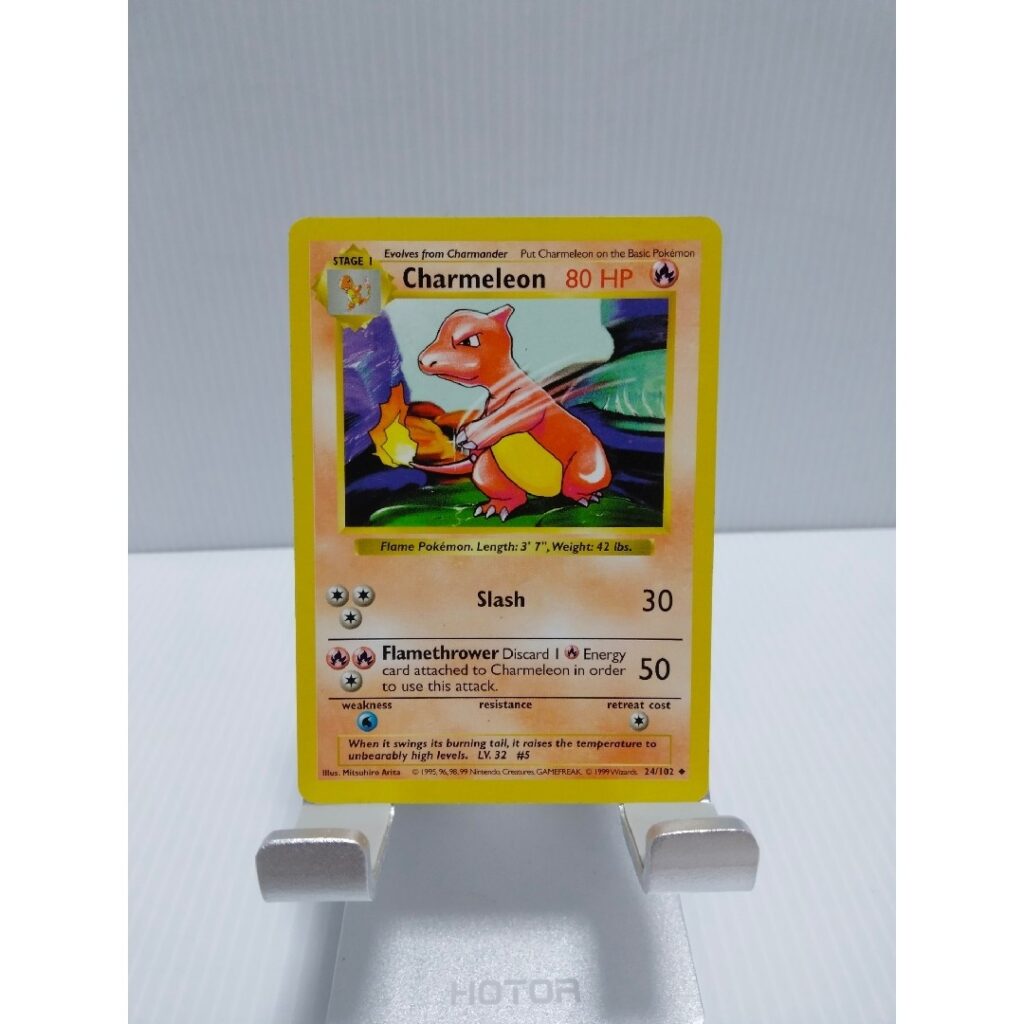
Published figures for Shadowless cards vary wildly, which makes most of them hard to use. Everything below comes from PSA’s own price guide and population report as of July 2026, so the three printings can be compared on the same basis:
- What a Shadowless Charizard brings at each grade
- How that compares with 1st Edition and Unlimited
- Whether your own card is worth submitting
One distinction runs through all of it: a guide value isn’t a sale price, and the gap between the two moves in both directions.
Shadowless Charizard Prices by PSA Grade
Grade drives almost everything about a Shadowless Charizard’s value. The spread between a PSA 8 and a PSA 10 runs to roughly 37 times (PSA CardFacts).
| PSA grade | PSA Price Guide value | Average auction price | PSA population |
| PSA 10 | $67,700 | $54,655 | 58 |
| PSA 9 | $4,900 | $6,263 | 847 |
| PSA 8 | $1,800 | $2,814 | 1,483 |
| PSA 7 | $1,600 | $1,780 | 1,691 |
PSA CardFacts, as of July 2026. The middle column is PSA’s average recorded auction price at that grade. Guide values are reference figures rather than guaranteed sale prices.
Two things stand out in that table. Only 58 copies have ever reached PSA 10, and at the lower grades the market has been paying above the guide, with PSA 9s averaging about $6,260 against a $4,900 guide value.
How Shadowless Prices and Populations Compare with 1st Edition and Unlimited
Set the three printings side by side and the Shadowless run’s position gets concrete.
| Version | PSA 10 | PSA 9 | PSA 8 |
| 1st Edition | $181,900 | $17,700 | $10,600 |
| Shadowless | $67,700 | $4,900 | $1,800 |
| Unlimited | $10,000 | $800 | $500 |
PSA Price Guide values for Charizard #4, as of July 2026. Guide values are reference figures rather than guaranteed sale prices.
Population is the part most write-ups leave out. PSA has graded roughly 99,000 Unlimited Charizards against roughly 13,900 Shadowless ones, about seven times as many. That is the measurable version of the “significantly scarcer” line you see repeated everywhere.
Price follows scarcity, though not proportionally. At PSA 10 the Shadowless card carries close to seven times the Unlimited guide value; at PSA 8 the multiple is closer to four. Scarcity and grade compound, and they compound hardest at the top of the scale.
Whether Your Shadowless Card Is Worth Grading
Grading pays for itself when the spread between grades is wide, which describes Shadowless holos and not much else in the set. A card that might come back PSA 9 or PSA 10 is worth running the numbers on for that reason alone.
Commons and uncommons are a different calculation. A Shadowless common with rounded corners or surface wear may not justify the fee, since the grade it’s likely to come back with sits at the flat end of the price curve.
Key takeaways
- A Shadowless holo in clean condition is worth considering for submission
- A worn common or uncommon may not cover the grading fee
- For expensive cards, buying an already-graded copy removes the authentication risk
- No grade is guaranteed, no matter how clean the card looks to you
How to Spot a Fake Shadowless Pokémon Card
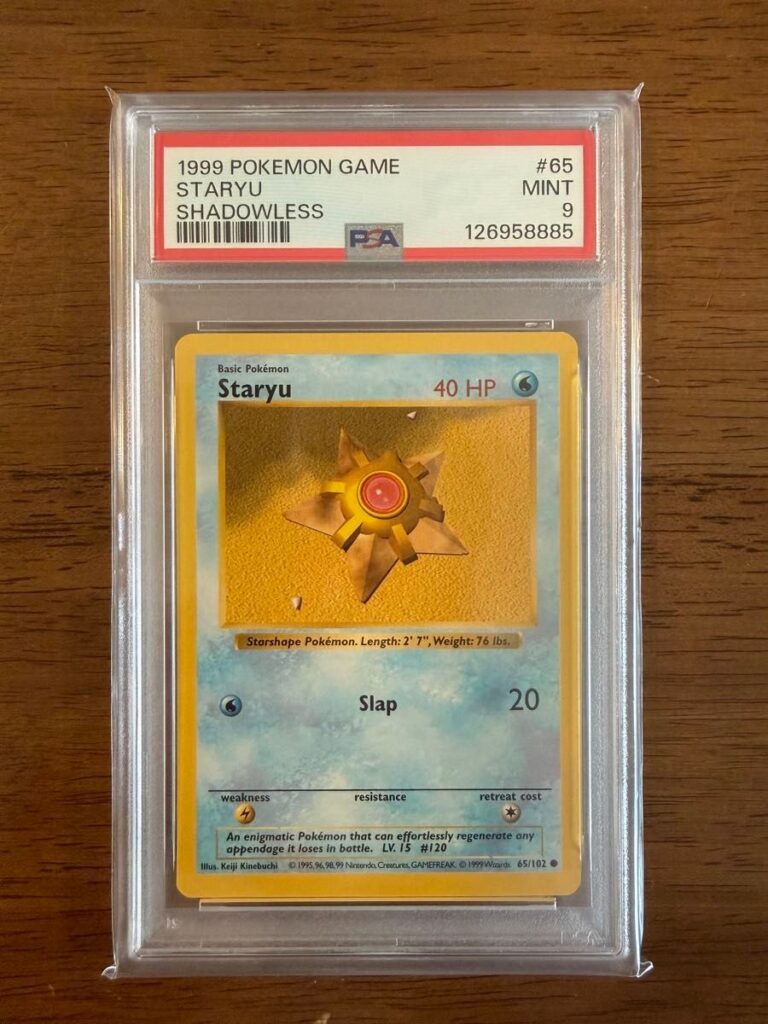
The price gap between printings creates an incentive, and two kinds of problem listings follow from it. Both are manageable once you know their shape:
- Altered cards and mislabeled Unlimited copies
- Sealed packs, where nothing can be inspected
Vintage listings on resale apps and online marketplaces come with a real risk of counterfeits, condition problems, and bad-faith sellers. A couple of minutes of checking pays for itself.
Altered Cards and Unlimited Cards Sold as Shadowless
Two things go wrong here, and only one of them is deliberate.
Altered cards do circulate. Where a shadow has been removed, or a card has been reprinted from a doctored scan, the edge of the art box can show blurring or a border that doesn’t sit flush against the yellow frame.
The more common problem is more mundane than fraud. Unlimited cards get listed as Shadowless through carelessness rather than intent, and the listing photo is often too compressed to contradict the description.
Check the copyright line and the HP text rather than the shadow. Both hold up better in a mediocre photo, and a listing that can’t show you either at readable resolution is a listing to walk away from.
What to Check Before Buying a Sealed Shadowless Pack
Sealed product is the highest-risk purchase in this corner of the hobby. Nothing inside can be verified before you open it, and opening it destroys the premium you paid.
Work from the wrapper instead. Collectors generally place the red “Trading Card Game” bar near the bottom of the wrapper on early Base Set packs, with later printings moving it directly beneath the logo. Treat that as a supporting signal rather than proof.
Weight is the other thing to ask about before you buy. Holographic cards make a pack measurably heavier, so packs get weighed and the lighter ones — the packs without a holo — are the ones that end up for sale (PSA Set Registry). A pack described as weighed or sorted may no longer hold what makes it worth buying.
Where to Find Early-Print Pokémon Cards Beyond Shadowless
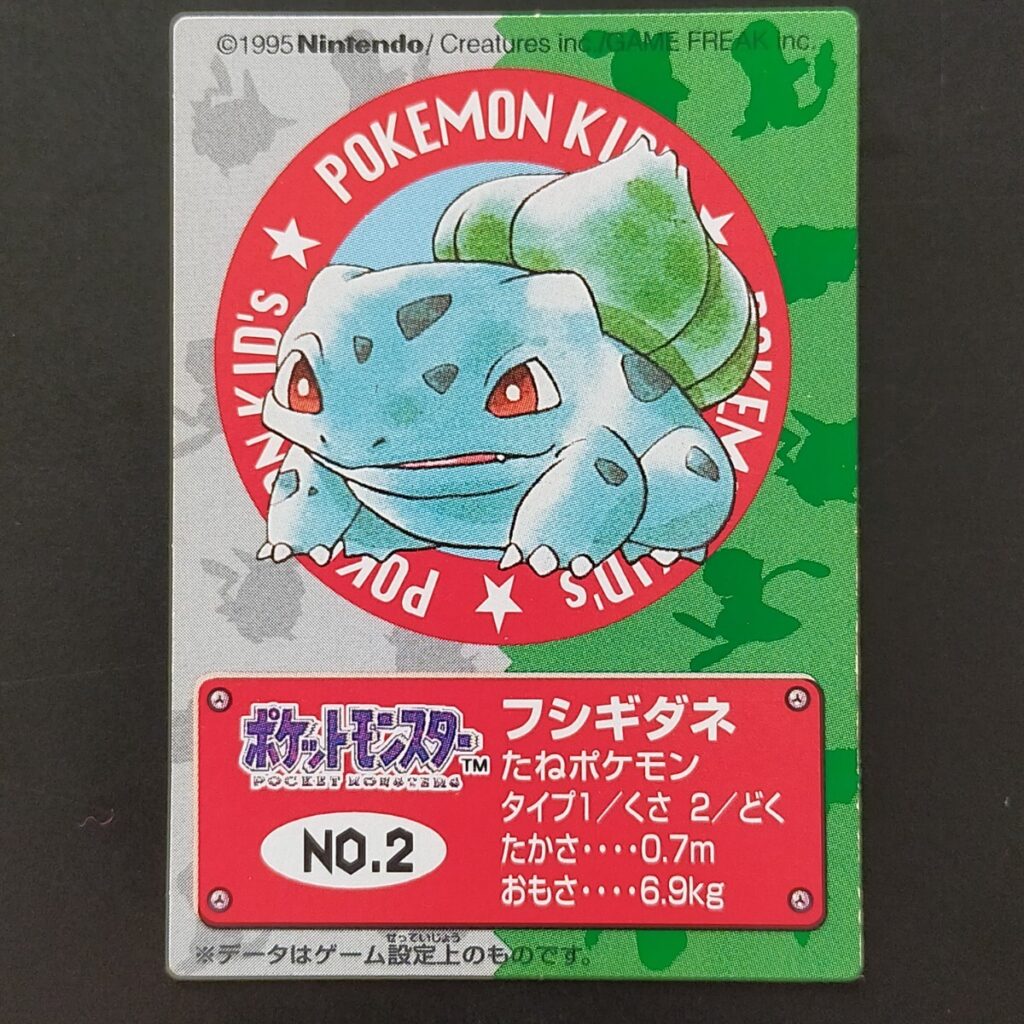
Once you’ve identified your Base Set cards, the natural next question is what else counts as an earliest printing. The Japanese side of the hobby answers it differently, and reaching that market takes one extra step:
- What the first Japanese Base Set printing looks like
- How to buy from Japanese marketplaces from outside Japan
Neither part is complicated, but the terminology doesn’t carry across.
Japanese Base Set Cards from the First Print Run
The Japanese Base Set dates to 1996, three years before the 1999 English Base Set that Shadowless cards come from. Its no-rarity-symbol run is the Japanese equivalent of the Shadowless story, and it’s the earliest printing of that set.
Those cards are called No Rarity because they carry no rarity symbol in the corner where later printings show a circle, diamond, or star. PSA treats them as a set of their own, listing “1996 Pokemon Japanese Basic No Rarity Symbol” separately from the standard Japanese Basic set rather than as a variant of it (PSA Set Registry).
Before you buy
- Shadowless is a term for the English Base Set only
- The earliest Japanese printing is identified by the missing rarity symbol, not by a shadow
- A Japanese card advertised as Shadowless is a labeling error worth questioning before you buy
How to Buy from Japanese Marketplaces with a Proxy Service
Old Japanese cards mostly stay in Japan, listed on domestic sites that don’t ship abroad. Mercari, Rakuma, JDirectItems Auction, Suruga-ya, and magi are the ones that turn up most often. A proxy service closes that gap, and the process is the same no matter which site the card is listed on:
- Find the listing on a Japanese marketplace, or search from the proxy service’s own interface. Neokyo takes English search terms and translates them into Japanese for you, so you don’t need to read the language to find a card.
- Submit a buy request. The service pays the seller on your behalf and handles any contact with them.
- Leave the card in the warehouse while you look for others. Neokyo includes 45 days of free storage, which lets you group several finds into one shipment.
- Request packing and pick a carrier, choosing from four international shipping options.
The commission is ¥350 per item, roughly a couple of dollars at recent exchange rates, plus packaging fees. International shipping and any import duties in your own country aren’t included in that figure.
You can start from the Pokémon TCG page, or send a purchase request for a specific listing you’ve already found.
Shadowless Pokémon Cards: What to Do Next
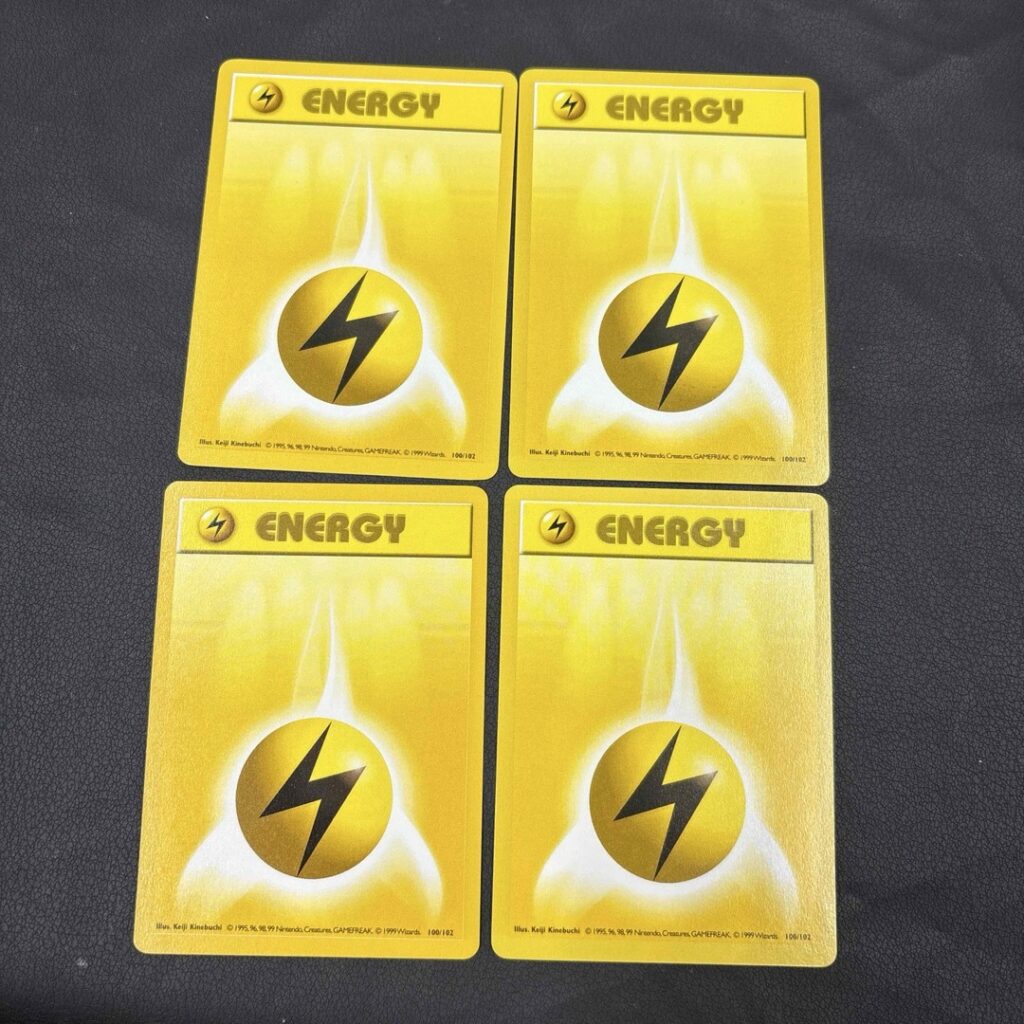
You can settle the question on your own card in under a minute. No shadow beside the art, thin red HP text, the year 99 in the copyright line, and no 1st Edition stamp puts you in the Shadowless run — behind 1st Edition, and comfortably ahead of the Unlimited cards that make up most of what’s out there today.
What that’s worth depends almost entirely on grade, and the PSA figures give you a basis to work from rather than a rumor to repeat. If the card is a holo in clean condition, price out a submission before you do anything else with it.
And if what drew you in was the earliest-printing chase rather than Charizard specifically, the 1996 Japanese cards are the other half of that story.