

Yu-Gi-Oh! Full Art Cards: Over-Frame Guide & How to Buy
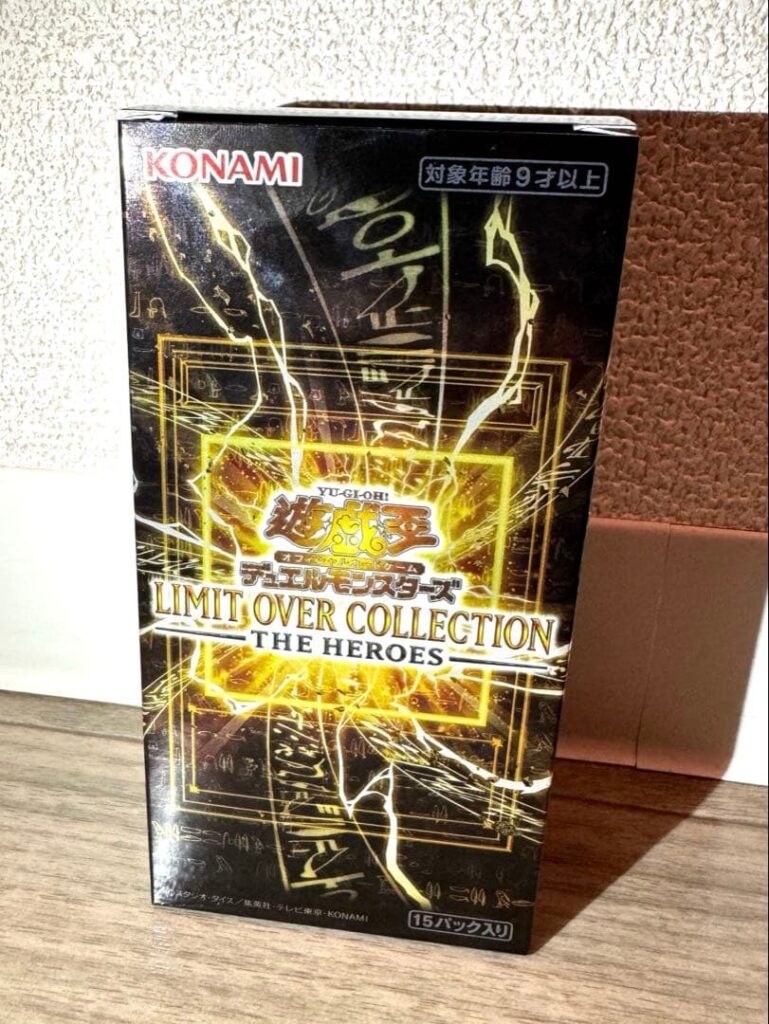
A sealed LIMIT OVER COLLECTION -THE HEROES- box.
Yu-Gi-Oh! has the cards collectors call “full art” too. But “Full Art” is not an official rarity name. In Japan, this new design is called “Over-Frame” (オーバーフレーム), and Konami’s official Asian-English site label it “Extended Art”.
Because “full art” is the established term in Pokémon and MTG, plenty of people search Yu-Gi-Oh! the same way — but in Yu-Gi-Oh!, the frame-breaking illustration design arrived in earnest in 2026 under the official name “Over-Frame”. That’s why three names now coexist. Let’s sort the terminology first.
| Term | What it means |
| Full Art | Collector/searcher slang. Not an official term |
| Over-Frame (オーバーフレーム) | The Japanese name for the new design — the illustration extends beyond the card frame |
| Extended Art | Konami’s Asian-English official name for the same design |
| Grand Master Rare (グランドマスターレア) | A rarity with a printed serial number |
The key point: Over-Frame (Extended Art) is a design treatment, not a rarity. The same Over-Frame design comes in Ultra Rare on some cards and Prismatic Secret Rare on others. This article walks through how to identify the design, which products contain it, and how to search and buy in Japan.
Where Over-Frame Cards Came From
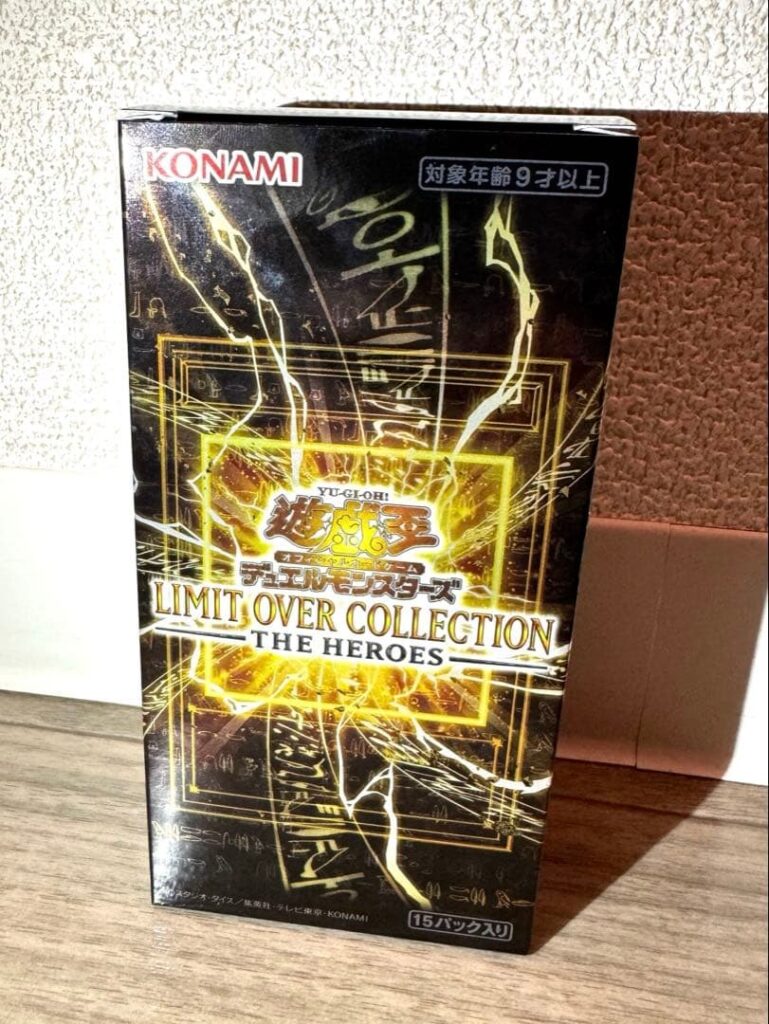
A sealed LIMIT OVER COLLECTION -THE HEROES- box.
The Over-Frame design made its full debut in the 2026 special-set series “LIMIT OVER COLLECTION”. Two products were released.
- LIMIT OVER COLLECTION -THE HEROES- (released February 28, 2026): built around the ace cards of the protagonists across the anime eras — Dark Magician–related cards, Gagaga Girl, and other cards evoking famous scenes
- LIMIT OVER COLLECTION -THE RIVALS- (released March 20, 2026): the paired set collecting the rivals’ cards
THE HEROES runs 80 cards (38 Ultra Rares + 42 Super Rares), with higher-tier versions on top: 18 Prismatic Secret Rares, 21 Ultimate Rares, and 21 Collector’s Rares. At 4 cards per pack and 15 packs per box (60 cards), one box will not complete the set. The product also includes reprints of classic fan-favorite monsters redrawn in a cute, super-deformed style — an intentionally collection-driven design.
And Over-Frame didn’t stop at these two products. Through 2026 it has spread across multiple OCG releases: CHAOS ORIGINS (April 25), REVOLUTION BOOSTER (May 30), BEYOND THE BRAVE (July 18), UTILITY SELECTION (August 8), and ORIGINAL ARTWORK COLLECTION (September 26). As of September 2026, “Over-Frame = LIMIT OVER COLLECTION only” is no longer true.
How to Identify an Over-Frame Card
An Over-Frame card: the artwork extends beyond the card frame.
Three things to look for, on the card itself or in a marketplace listing’s photos.
1. The illustration breaks the frame. On a normal Yu-Gi-Oh! card, the artwork stays inside its frame; on an Over-Frame card, the monster’s body or effects extend past the frame and across the card. The degree varies — from artwork slightly overlapping the frame’s edges to illustrations that wrap behind the text box. There is no official threshold for “how far it must extend to count”. If you’re picturing Pokémon’s SARs — a single full-bleed painting — some cards will look more restrained than expected. That variability is itself a feature of this design; keep it in mind.
Tip: The product tells you too. Over-Frame debuted in LIMIT OVER COLLECTION but, as noted, spread to multiple OCG products through 2026. When listing photos alone don’t settle it, checking the official set list for the product name + card name combination is the reliable way.
2. Check the rarity separately. As above, Over-Frame is a design treatment — the same card can exist in an Ultra Rare version and a Prismatic Secret Rare version. The market sometimes abbreviates “Over-Frame + Prismatic Secret Rare” to “OFPSE”. Confirm both the design and the rarity before buying.
3. Grand Master Rares announce themselves with a serial number. The headline of LIMIT OVER COLLECTION, the Grand Master Rare (GMR), carries an individually printed serial number like “001/100A” in the card’s lower left. Each card is limited to 100 copies, every one uniquely numbered — the first serial-numbered rarity in the OCG. Serial number printed = GMR; none = regular version.
Price Reality: GMRs Are Another World, Over-Frame Versions Are Attainable
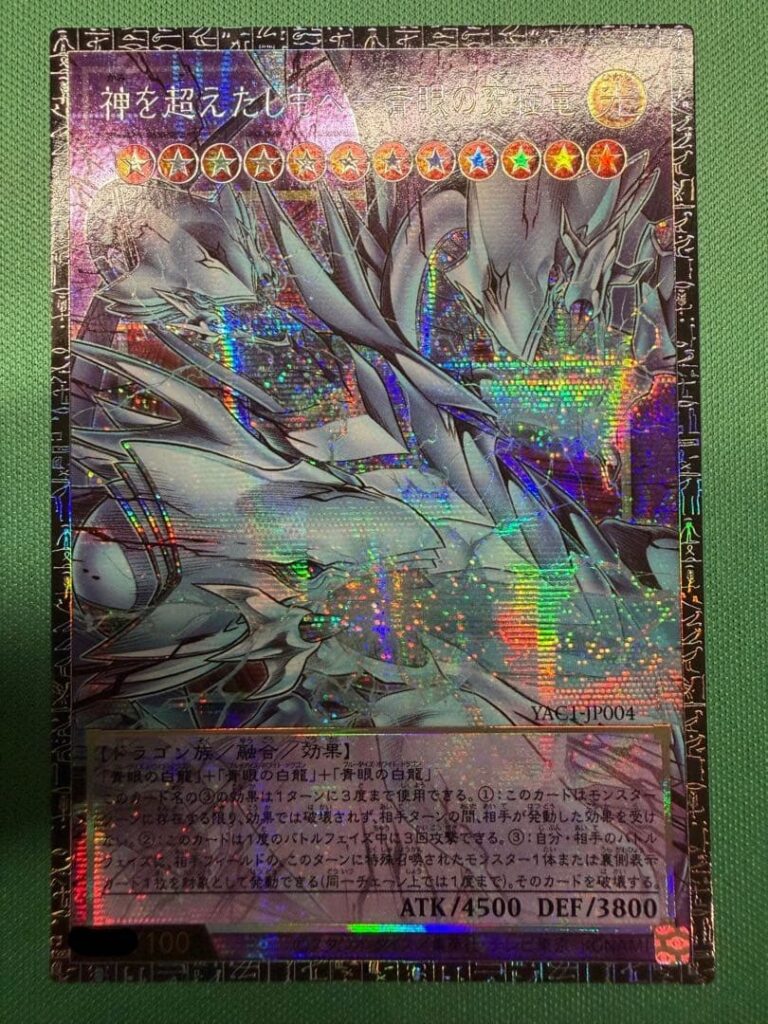
A Grand Master Rare listing — the “/100” serial is printed at the lower left (sellers typically mask the number itself).
The price bands differ completely by treatment.
Grand Master Rares, being serial-numbered and limited to 100 copies per card, trade in a different league — with buylist and selling prices in the hundreds of thousands to millions of yen on record, the very top of the Yu-Gi-Oh! market.
Meanwhile, the same card’s Over-Frame version without a serial circulates far lower. Take Dark Magic Curtain: the Over-Frame Prismatic Secret Rare version sits in the ¥80,000s (as of May 28, 2026) — less than a fiftieth of the GMR. And the Ultra Rare versions of most cards go for a few hundred to a few thousand yen.
So if what you want is simply “a full-art Yu-Gi-Oh! card”, the realistic target is the regular Over-Frame version, not the GMR. Also worth knowing before you buy: GMR listing prices can differ for the same card depending on the serial number.
Standout Cards — the Faces of THE HEROES
For concrete examples: the flagship of THE HEROES is “Dark Magic Curtain” (黒魔導のカーテン). From the original series’ Dark Magician lineup to 5D’s Stardust Dragon and ZEXAL’s Gagaga Girl, the set’s signature move is rebuilding the protagonists’ aces and famous scenes as cards, name and all. THE RIVALS applies the same idea to the rivals’ iconic cards.
One price marker: Dark Magic Curtain’s GMR has a recorded buylist price of ¥4,500,000 (as of May 28, 2026), while the same card’s upper-tier Over-Frame version (Prismatic Secret Rare) sits in the ¥80,000s, and the regular Over-Frame version in the hundreds-to-thousands of yen. This market is highly volatile — treat every figure as a snapshot from its reference date and always check current prices.
“Full-Art-Looking” Cards from Before 2026
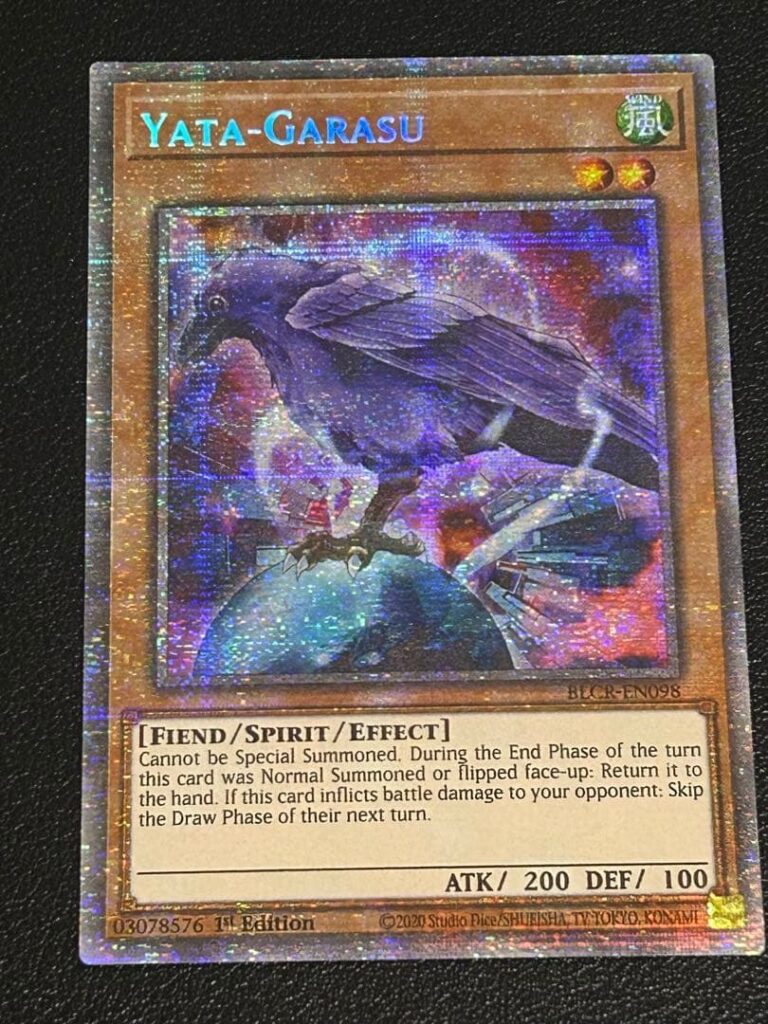
A legacy premium treatment: a Starlight Rare (English print) — the finishing covers the card, but the artwork stays inside the frame.
“Didn’t Yu-Gi-Oh! always have full-art-ish cards?” — a fair question. Premium treatments where the whole card shines have existed for years, though the artwork stayed inside the frame. The notable ones:
- Starlight Rare: a low-pull-rate premium treatment with horizontal holographic finishing across the whole card (excluding the text box and similar areas)
- Prismatic Secret Rare: polarized finishing on the artwork, with full-surface variants existing as well
- Ghost Rare: a desaturated, ethereal treatment whose appearance shifts with the viewing angle
Search “full art Yu-Gi-Oh! cards” in English and these older treatments get mixed into the results. But calling them “the old full arts” isn’t accurate: in every case it’s the finishing (holo or polarization) that covers a wide area — the illustration itself doesn’t extend past the frame.
In 2026, the OCG introduced the frame-breaking design under the official name “Over-Frame”. “Cards whose finishing covers the surface” and “cards whose artwork covers the surface” are different things — that’s the dividing line between the legacy treatments and the new design. In summary:
| Legacy premium treatments (Starlight etc.) | Over-Frame | |
| Artwork range | Inside the frame | Extends beyond the frame |
| What is “full-surface” | The finishing (holo/polarization) | The illustration itself |
| First appeared | 2000s onward (varies by treatment) | 2026 (LIMIT OVER COLLECTION) |
| Rarity or treatment? | Rarity | Design treatment (rarity is a separate axis) |
What About the English Game? — GMRs Have Arrived There Too
The English TCG carries the same frame-breaking design as Extended Art. It debuted in the TCG with “Rarity Collection V” (released April 17, 2026), then spread through “Battles of Legend: Glorious Gallery” (June) and “Chaos Origins” (July).
And with “Magnificent Monsters” in September 2026, the serial-numbered Grand Master Rare officially arrived in the English TCG as well. Per Konami, GMRs are assigned to cards with newly drawn artwork and numbered 001–100 — with separate runs of 100 prepared for the Americas and for Europe.
So “serial-numbered GMRs only exist in Japan” stopped being true in September 2026. Even so, if you want the Japanese OCG Over-Frame cards or GMRs, you’ll need to understand the Japanese product names, card names, and rarity labels and search the Japanese market. The next section is the practical guide.
Search Keywords for the Japanese Market
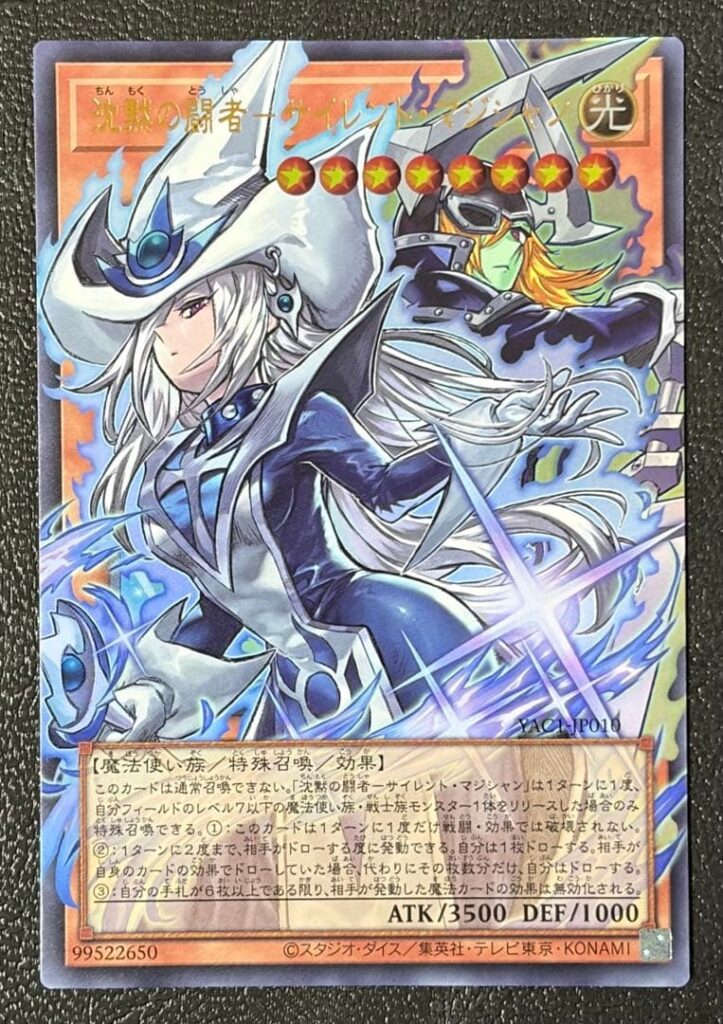
A listing surfaced by a “card name + オーバーフレーム” search.
On Japanese marketplaces (Mercari and others) and card shop online stores, these keywords work:
- Product names: 「リミットオーバーコレクション」, 「LIMIT OVER COLLECTION」, 「ヒーローズ」 (Heroes), 「ライバルズ」 (Rivals)
- The design: 「オーバーフレーム」 (Over-Frame)
- Rarities: 「グランドマスターレア」 (Grand Master Rare), 「GMR」; for upper tiers, 「プリズマティックシークレットレア」 (Prismatic Secret Rare)
- Single cards: card name + design, e.g. 「黒魔導のカーテン オーバーフレーム」 (Dark Magic Curtain + Over-Frame)
Searching “full art” in English surfaces almost no Japanese listings. Conversely, when hunting Japanese versions on eBay and similar, sellers use spellings like “Yu-Gi-Oh OCG over-frame” and “Limit Over Collection”.
How to Get Them from Japan
Open boxes, or buy singles? LIMIT OVER COLLECTION runs 4 cards per pack, 15 packs per box (60 cards) — one box won’t complete the 80-card set. Regular Over-Frame versions and Super/Ultra Rares are realistic pack pulls, but for Prismatic Secret Rare and up, combining with singles purchases is the practical route. As for GMRs — 100 copies per card — hunting a specific one means watching the secondary singles market.
Where to gauge box and singles prices. More than half a year after release, singles circulate steadily at Japanese card shops and on marketplace apps. Sealed boxes trade on the secondary market too, though as popular products they can run above MSRP. Compare box prices against singles and decide what the fun of opening is worth to you.
Condition and authenticity. For expensive cards — GMR and OFPSE class above all — managing the risk of fakes and swaps is mandatory. Check for photos of the actual card showing the serial number, the seller’s ratings, and any gap from market price. Listings far below market have a reason. We cover how to spot fake cards and scams in a separate article.
Buy the Japanese listings as-is through Neokyo. Japanese OCG boxes and singles circulate at Japanese card shops and on marketplace apps — most of which don’t ship internationally. Neokyo’s proxy purchasing service buys domestic Japanese listings on your behalf and forwards them overseas. Boxes or singles, multiple purchases can be combined into one parcel — a good fit for building an Over-Frame collection out of the Japanese market.
Pre-Purchase Checklist
Before buying an Over-Frame card from the Japanese market, run these five checks:
- Design: does the artwork break the frame in the listing photos (Over-Frame, or a legacy inside-the-frame treatment)?
- Rarity: Ultra Rare version, or Prismatic Secret Rare version of the same card? (The prices differ hugely)
- Serial number: a number in the lower left means GMR — and the number itself affects the price
- Source product: which product is the card from — LIMIT OVER COLLECTION, CHAOS ORIGINS, etc.?
- Gap from market price: extreme bargains warrant suspicion. At GMR level, prefer graded copies or trusted shops
FAQ
Q. Is there a “Full Art” rarity in Yu-Gi-Oh?
A. No. Full art is slang; the official name for the design is “Over-Frame” on the Japanese side and “Extended Art” on Konami’s Asian-English pages. The design is applied to cards whose rarity is Ultra Rare, Prismatic Secret Rare, and so on.
Q. What is a Grand Master Rare?
A. A serial-numbered rarity (001–100/100A) introduced with LIMIT OVER COLLECTION. Each card is limited to 100 copies, each with its own printed number.
Q. Which products contain Over-Frame cards?
A. They debuted in 2026’s “LIMIT OVER COLLECTION -THE HEROES-” (February 28) and “-THE RIVALS-” (March 20), and inclusion has since spread to CHAOS ORIGINS, ORIGINAL ARTWORK COLLECTION, and other OCG products. Regular Over-Frame versions are realistic box pulls; for GMRs, singles are the practical route.
Q. What’s the GMR pull rate?
A. No official pull rate has been published. Given the 100-copy serial-numbered format, the singles market is the standard route.
Q. What’s the difference between THE HEROES and THE RIVALS?
A. THE HEROES (released February 28, 2026) collects the protagonists’ cards across the series; THE RIVALS (released March 20, 2026) is its counterpart for the rivals. Both include Over-Frame versions and Grand Master Rares.
Q. Can I get the same cards in English?
A. Yes. Extended Art has appeared in multiple English products since Rarity Collection V (April 2026), and the serial-numbered Grand Master Rare reached the English game with Magnificent Monsters in September 2026. But if you want the Japanese (OCG) prints, the Japanese market is where to look.
Summary
- The cards Yu-Gi-Oh! collectors call “full art” are the Over-Frame design introduced in 2026 (official English label: Extended Art). It’s a design treatment, not a rarity — check the rarity (UR, Prismatic Secret Rare, etc.) separately
- It debuted in the two LIMIT OVER COLLECTION products (THE HEROES on February 28, 2026, THE RIVALS on March 20, 2026), which also introduced the serial-numbered Grand Master Rare
- GMRs — 100 copies per card, hundreds of thousands to millions of yen — are another world. If it’s the full-art design you want, the serial-less Over-Frame versions are the realistic target
- Search the Japanese market with Japanese keywords: 「オーバーフレーム」, 「リミットオーバーコレクション」, 「グランドマスターレア」
There’s more distance than you’d expect between the search term “full art” and the words actually used in Japanese listings. Keep the terminology table at hand and go hunting in the Japanese market.