

What Is the Difference Between Yukata and Kimono? 8 Key Points by Material, Layers, Season, and Formality
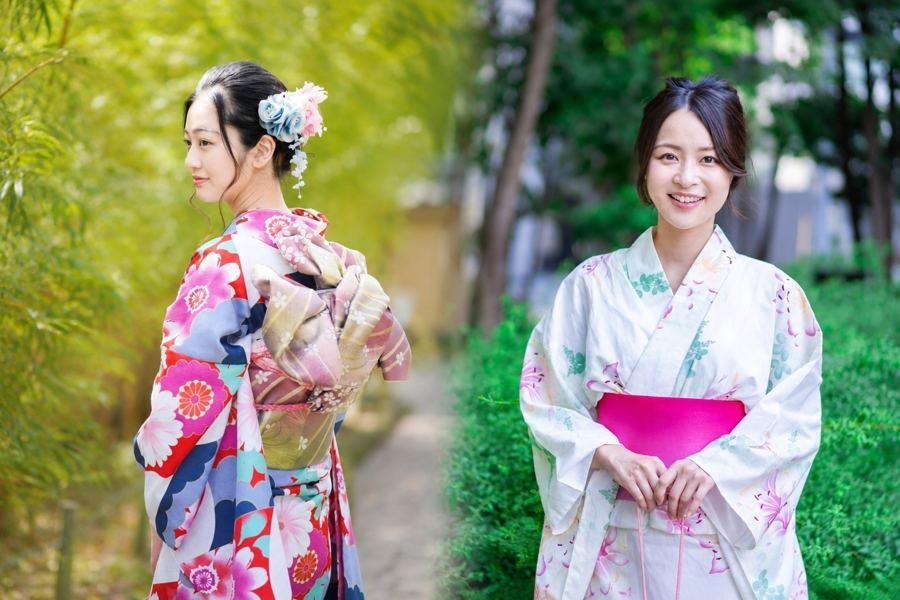
Yukata at a summer festival
“What is the difference between yukata and kimono?” is the first question encountered by anyone interested in traditional Japanese clothing. To state the conclusion upfront, a yukata is broadly a type of kimono. The Japanese word “kimono” originally refers to “things to wear” in general, and yukata is included in that broad definition. However, in everyday conversation and retail contexts, a clear distinction has become established: “kimono” refers to formal or semi-formal Japanese attire worn layered over a nagajuban (under-kimono), while “yukata” refers to casual summer attire worn as a single layer directly over undergarments.
This article summarizes the differences in materials, layers, seasonality, and formality based on this common usage, explaining visual identification methods, differences in men’s wear, price ranges, and the second-hand market.
Quick Comparison Table: Yukata vs. Kimono (8 Key Points)
| Item | Yukata (Typical Example) | Kimono (Typical Example) |
|---|---|---|
| Material | Highly breathable fabrics like cotton, linen, cotton-poly blends | Wide range: pure silk (shoken), polyester, cotton, wool, etc. |
| Lining / Layers | Unlined single layer (hitoe) | Both lined (awase) and unlined (hitoe) exist |
| Juban (Under-kimono) | Not worn (worn directly over skin or basic undergarments) | Layered over a nagajuban (long under-kimono) |
| Season | Primarily summer (around June to September) | Year-round: lined (awase) for autumn to spring, unlined (hitoe) for early summer/early autumn, sheer (usumono) for peak summer |
| Occasions / Formality | Casual: festivals, fireworks, evening strolls, ryokan inns | Ranges from casual daily wear to formal ceremonies and weddings depending on the type |
| Footwear | Bare feet with geta (wooden clogs) | Tabi (split-toe socks) with zori (sandals) |
| Obi (Sash) | Lightweight sashes like hanhaba obi or heko obi | Wide, formal sashes like Nagoya obi or fukuro obi |
| Price Range | New: from a few thousand yen; Second-hand: mostly hundreds to a few thousand yen | New: tens of thousands to hundreds of thousands of yen; Second-hand: mostly a few thousand to tens of thousands of yen |
What Is a Yukata?
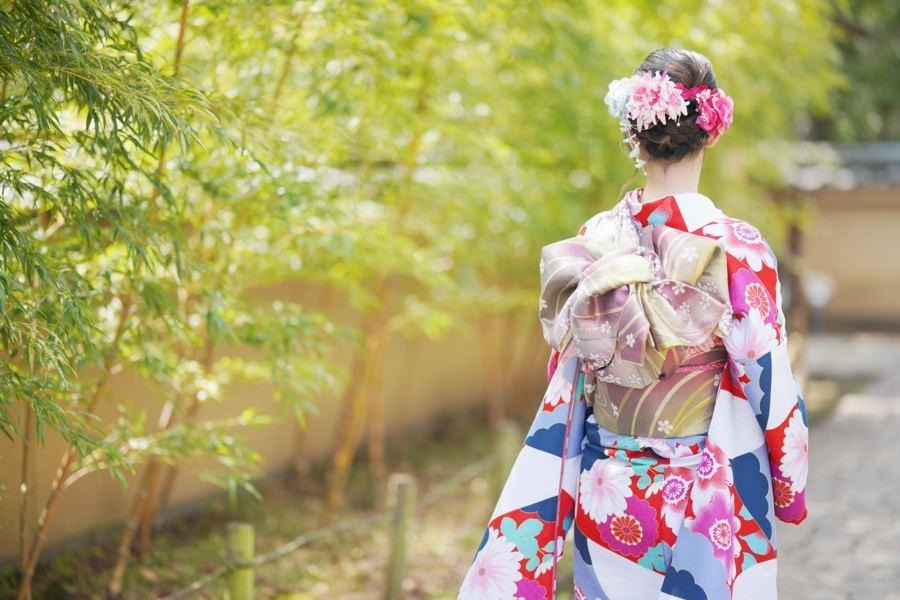
Back view of a yukata with a simply tied hanhaba obi
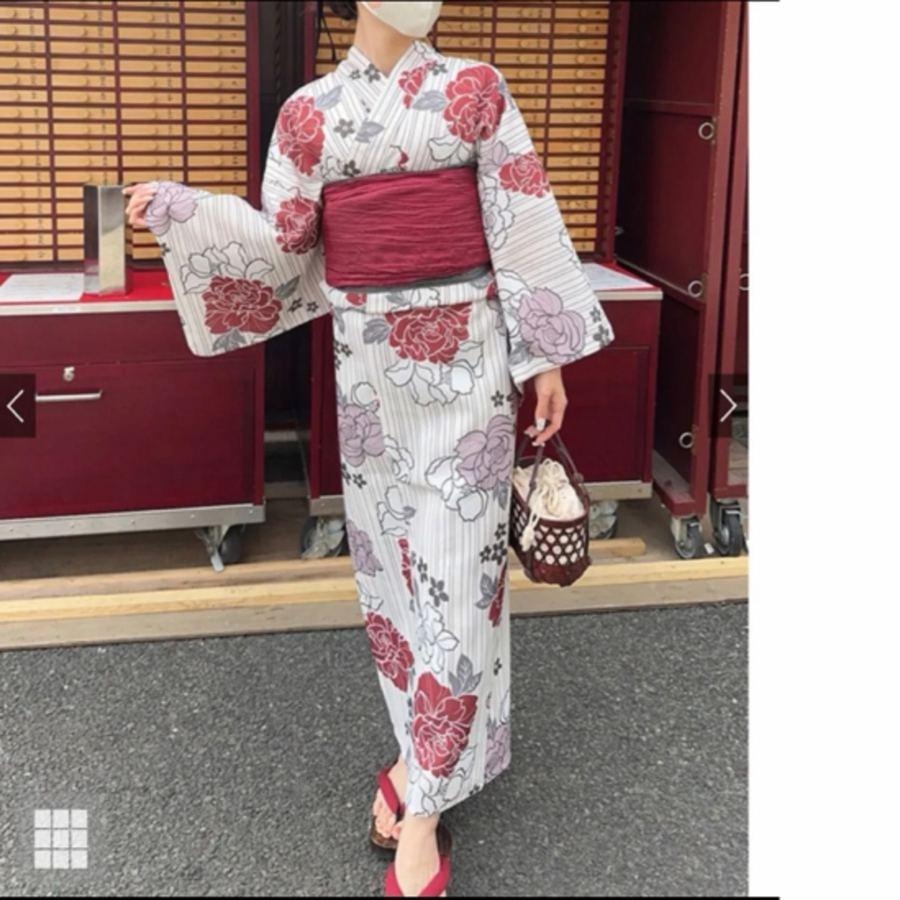
Yukata for a stroll — bare feet in geta and a kinchaku bag are the classic pairing
The word “yukata” originates from “yukatabira” (bath tub clothing), which was originally a single-layer linen garment worn when bathing or after taking a bath. As cotton became widespread during the Edo period, its use expanded from post-bath wear to summer outing attire. Today, it has become the standard outfit for summer festivals and fireworks displays.
Structural characteristics include an unlined, single-layer construction worn without layering an under-kimono (juban). Because it is worn directly over skin or simple undergarments, it offers high breathability, with machine-washable cotton materials being the mainstream. It is paired with lightweight sashes such as hanhaba obi (half-width sash) or heko obi (soft sash), and the standard footwear consists of bare feet in geta clogs.
On the other hand, yukatas provided as sleepwear in ryokan inns and hot spring facilities are used year-round. The reason why yukata cannot be defined strictly as “summer-only” is that this utility remains active.
What Is a Kimono?
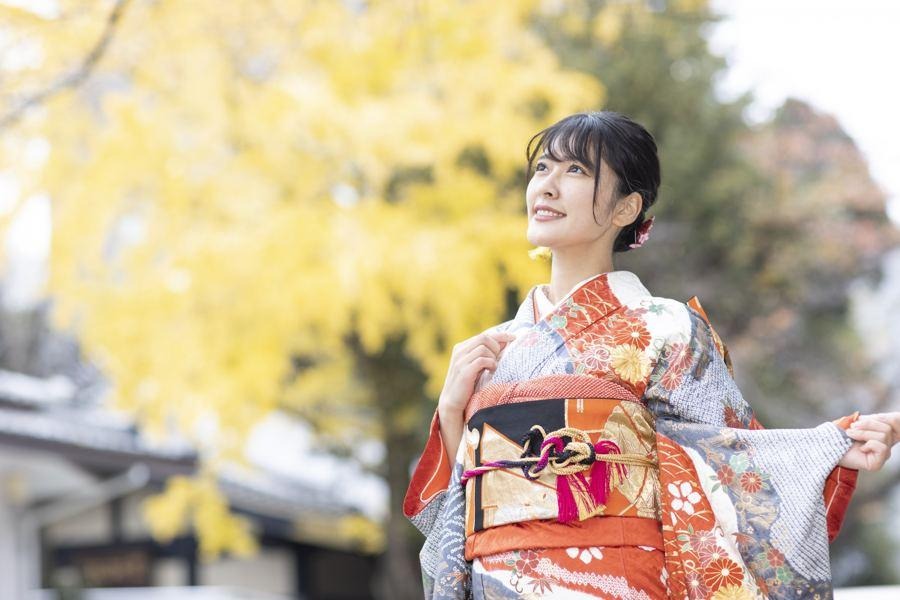
Kimono styling with a wide fukuro obi and an obijime cord
In common usage, “kimono” refers to traditional Japanese clothing excluding yukata. Typical outing and formal kimonos are worn layered over a nagajuban (long under-kimono), accompanied by tabi socks and zori sandals. While pure silk (shoken) is traditional for the fabric, easy-to-care polyester as well as cotton and wool for daily wear are widely used today.
Kimonos vary greatly in formality (kaku) depending on the type. The essential difference separating the two is that even under the single term “kimono,” the range of uses and formality is far wider than that of a yukata. The main types are organized below:
| Type | Formality Rank | Primary Occasions |
|---|---|---|
| Furisode | Formal (Most formal attire for unmarried women) | Coming-of-Age ceremonies, attending weddings |
| Tomesode | Formal | Relatives at weddings |
| Houmongi | Semi-formal | Ceremonies, parties, tea ceremonies |
| Komon | Casual street wear | Theater, dining out, everyday outings |
| Tsumugi | Everyday wear | Daily life, casual outings |
Tailoring also follows the seasons. Lined kimonos (awase) are worn from autumn to spring, unlined kimonos (hitoe) in early summer and early autumn, and during peak summer, sheer garments (usumono) made of breathable fabrics like ro or sha are worn. In other words, “kimono worn in summer” is not limited to yukata; a separate category of summer kimono called usumono exists. While usumono shares the same summer seasonal timing as yukata, it belongs to the kimono category because it is worn over a nagajuban with tabi socks and zori sandals.
Differences in Obi and Accessories
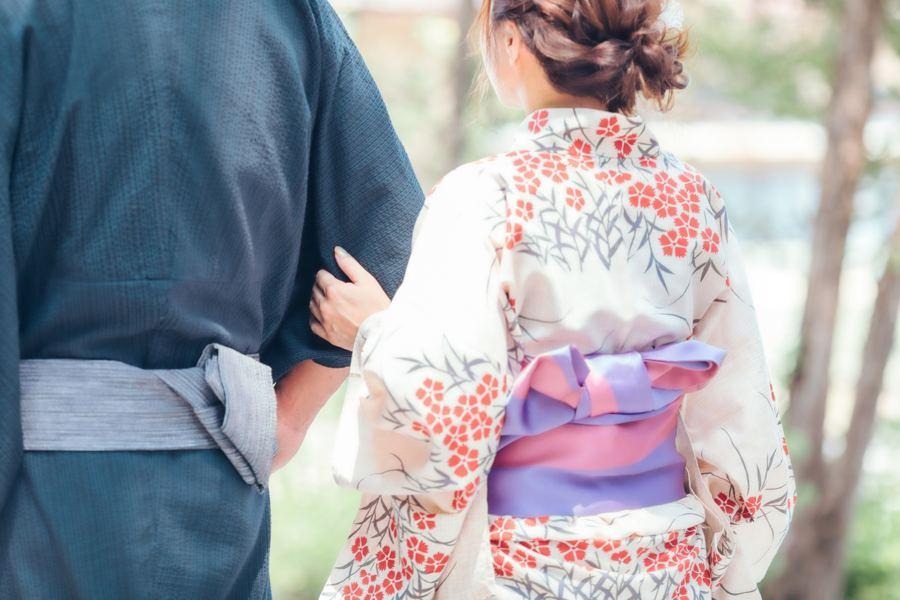
Yukata obi: hanhaba or heko obi — the outfit is complete without extra accessories
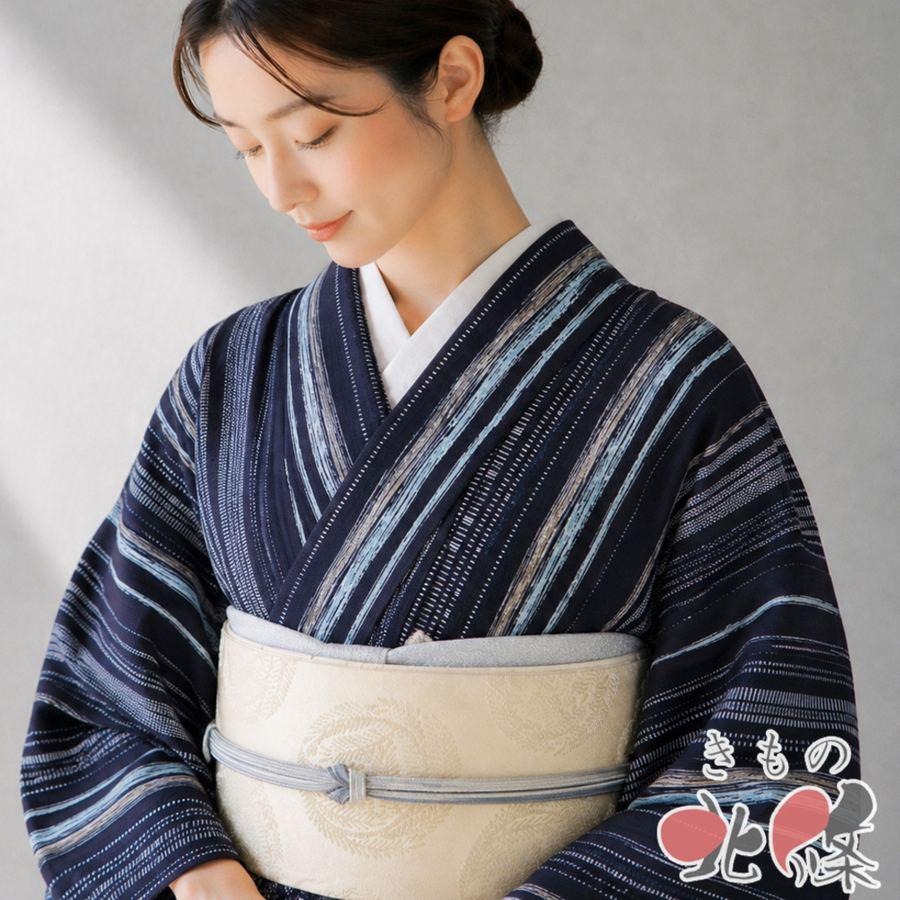
Kimono obi area — the cord across the middle is the obijime, the fabric peeking from the top is the obiage
The obi (sash) is the element that most drastically alters the visual impression between a yukata and a kimono. Yukatas are paired with narrow hanhaba obi or soft cloth heko obi, completing the outfit with just the sash itself. Kimonos use wide sashes like Nagoya obi or fukuro obi. For formal kimonos, accessories such as an obijime (cord to secure the obi), obiage (bust cloth to neatly tuck the top of the obi), obita (stiffener board), and obimakura (pillow cushion to maintain shape) are frequently combined.
The presence or absence of these accessories directly impacts the budget when buying second-hand. A yukata can be worn with just the main garment and a hanhaba obi, whereas formal kimonos often require a combination of nagajuban, obi, obijime, obiage, tabi, and zori, significantly changing the initial total cost. If an obijime or obiage is visible in a photo, it suggests a kimono-style outfit, though they are occasionally used in modern yukata styling as well.
How to Tell Them Apart Visually (In Order of Reliability)
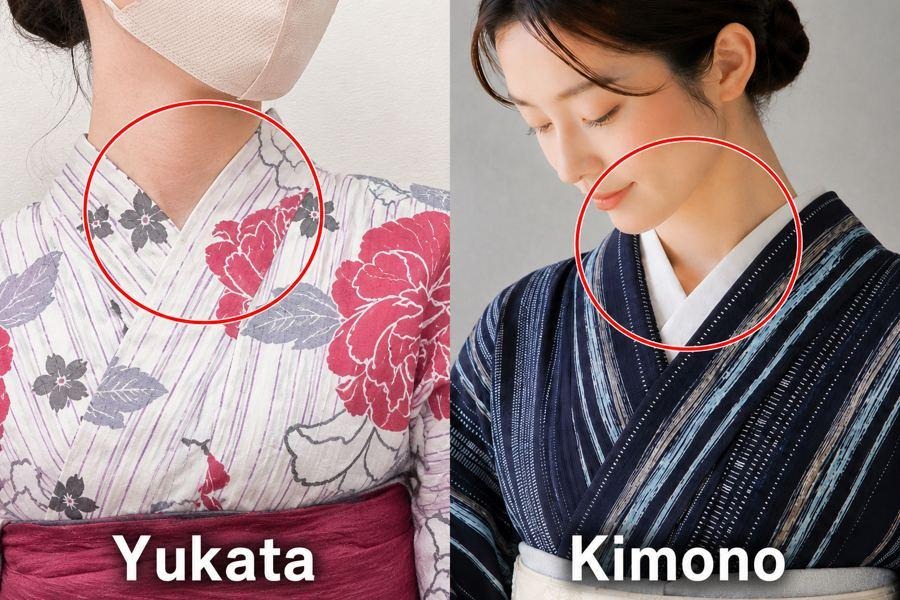
Collar comparison — a single collar on the yukata (left), the juban collar showing under the kimono (right)
When distinguishing between a yukata and a kimono from photos or in store displays, check the following points in order of precision:
- Is a nagajuban collar visible at the neckline? If a second white collar (or decorative layer) is visible inside the main collar, it is a kimono. If there is only one layer of fabric at the neck, it is highly likely a yukata. This is the single most reliable point of identification.
- Footwear: Tabi socks with zori sandals indicate a kimono, while bare feet with geta clogs indicate a yukata. However, because some people wear tabi with yukata, use this in combination with point 1.
- Lining / Layers: If a lining is visible at the sleeve openings or hem, it is a lined (awase) kimono. If it is a single unlined layer, it is either a yukata or an unlined (hitoe) kimono.
- Fabric Texture: Glossy pure silk indicates a high probability of a kimono. However, because cotton kimonos and polyester yukatas also exist, material alone is not decisive.
- Obi (Sash): Wide Nagoya obi or fukuro obi indicate a kimono, while narrow hanhaba obi or soft heko obi typically indicate a yukata.
- Wearing Context: Summer festivals or ryokan inns point to yukata, while formal ceremonies or tea gatherings point to kimono. Use contextual information as a final supporting indicator.
Points 1 and 2 provide the strongest clues. Use points 3 onward as supporting information when photo details are limited or when evaluating a second-hand item in isolation.
Men’s Yukata and Kimono
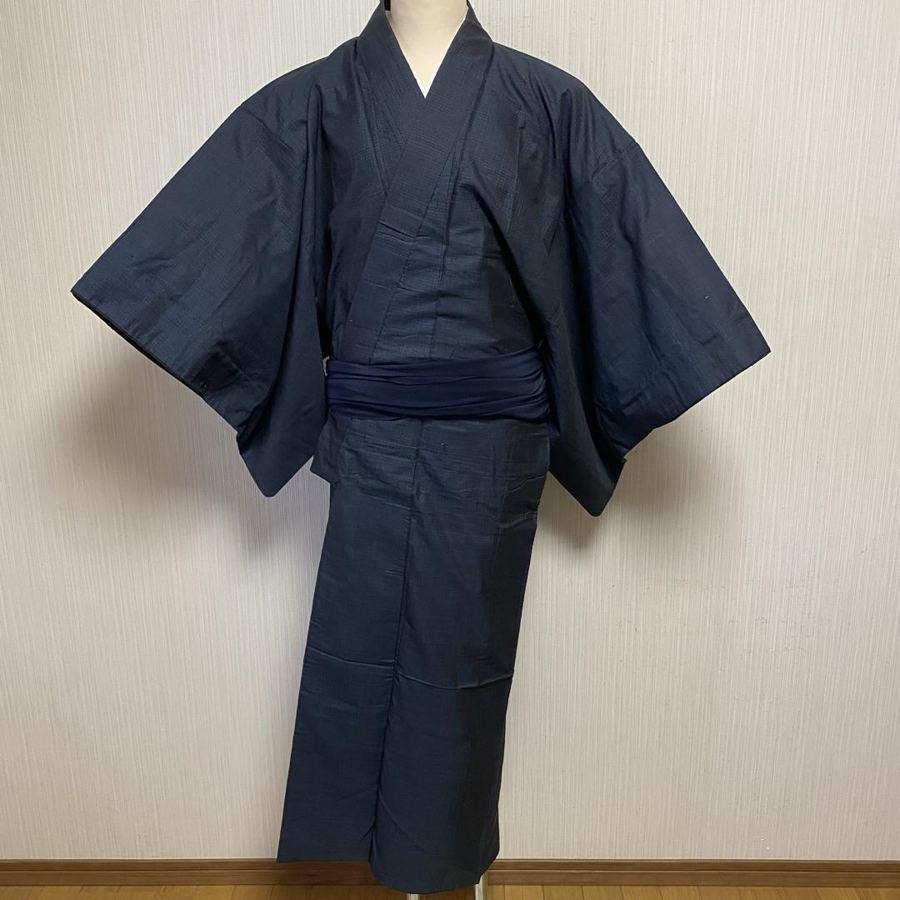
Men’s wafuku — the kaku obi is tied at hip level
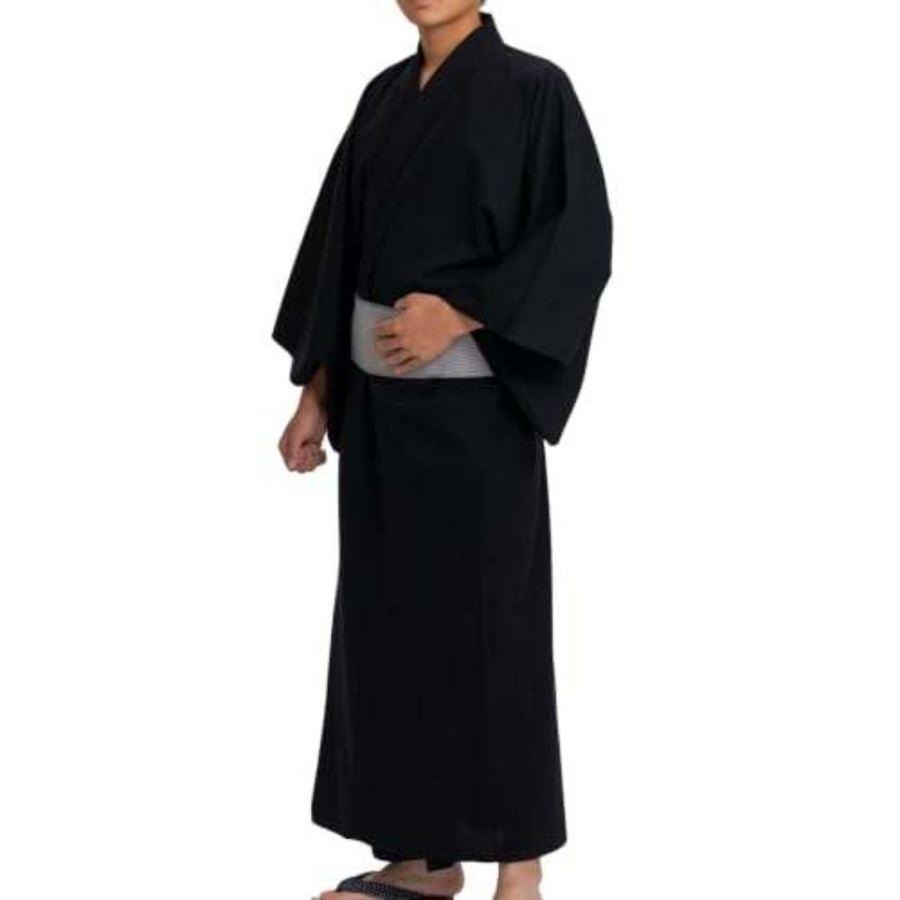
Men’s kimono
For men, the basic structure remains the same. A men’s yukata is a single-layer garment worn without a juban, whereas a men’s kimono is layered over a nagajuban. However, the obi differs by gender: men tie a kaku-obi (stiff narrow belt) or a heko obi (for casual yukata) low on the hips for both yukata and kimono.
In men’s kimono attire, a haori (jacket) is layered on top to adjust seasonality and formality. While haori can be worn casually, it is not customary to pair a haori with a yukata. Furthermore, the ohashori (waist tuck) found in women’s kimono does not exist in men’s wear; the total garment length (mitake) equals the final worn length (kitake). Therefore, when purchasing second-hand men’s items, sizing offers less flexibility than women’s items.
Wearing Contexts and Etiquette
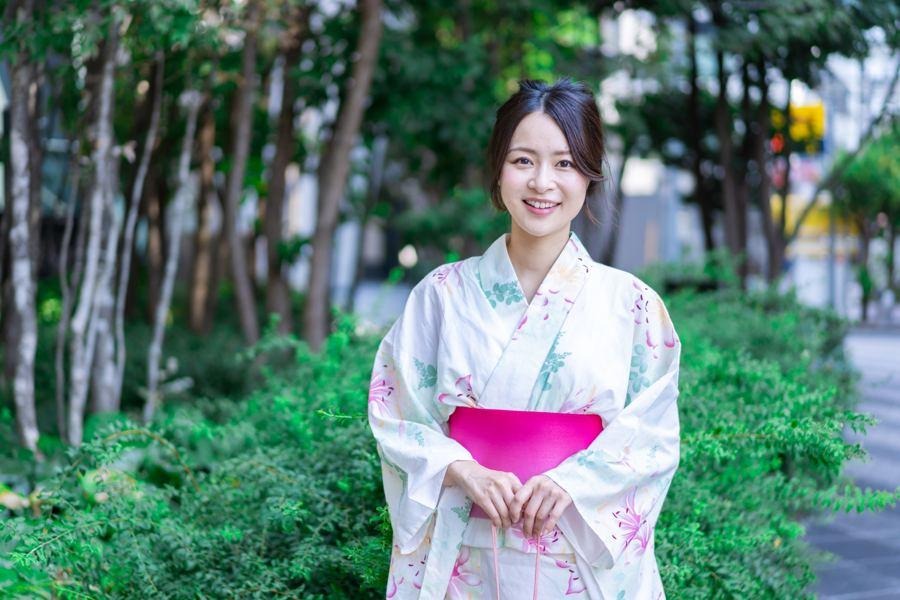
A summer outing in yukata
Yukata is suitable for casual summer occasions: summer festivals, fireworks displays, bon odori dances, evening strolls, or relaxing inside a ryokan or hotel. While more people wear yukata for daytime town walking, it may be considered underdressed depending on the formality of certain restaurants.
Kimono, when chosen in the appropriate type, covers everything from everyday outings to weddings, Coming-of-Age ceremonies, and funerals. However, wearing the wrong formality rank can be disrespectful in formal settings, so always verify whether the type is appropriate for the occasion beforehand.
Dressing complexity also differs. Because a yukata requires no juban and uses a simple hanhaba obi, many people can put it on by themselves while watching instructional videos. In contrast, kimono dressing involves numerous steps—aligning the nagajuban collar, managing the waist tuck (ohashori), and tying a Nagoya obi or fukuro obi—making it standard for beginners to take dressing lessons or seek assistance. For international readers buying for the first time, starting with casual komon or tsumugi kimonos, or an easily self-donned yukata, is the most practical choice.
Price Ranges and the Second-Hand Market
Prices vary in meaning depending on whether they represent “New Retail Price,” “Second-Hand Listing Price,” or “Buyback Price.” For international buyers, the relevant figures are the actual New Retail Prices and Second-Hand Listing Prices.
| Category | Yukata (Approximate) | Kimono (Approximate) |
|---|---|---|
| New Retail Price | Mass-market from a few thousand yen; Specialty shops / brand items from tens of thousands of yen | Polyester casual wear from tens of thousands of yen; Silk formal wear often exceeds hundreds of thousands of yen |
| Second-Hand Listing Price (Mercari, Observed Aug 31, 2026) | Mostly hundreds to a few thousand yen. Many set listings with obi included | Pure silk komon or tsumugi mostly range from a few thousand to tens of thousands of yen |
| Buyback Price (Dealer Published Averages) | Standard yukata is low; unused synthetic fibers mostly around a few thousand yen | Varies greatly by type, condition, and artisan (e.g., up to ~200,000 yen for high-end houmongi) |
The Japanese second-hand market drastically reduces the price gap compared to brand-new items. Yukata in particular offers an accessible entry point for international buyers, with numerous second-hand listings available on Mercari ranging from a few hundred to a few thousand yen.
When purchasing second-hand Japanese traditional clothing from overseas, always verify the following two points:
- Size Notations: Japanese listings record dimensions in centimeters using “Mitake” (身丈) and “Yuki” (裄). Mitake is the length from shoulder to hem; for women, a garment length roughly equal to their height is recommended to allow for the waist tuck (ohashori), whereas for men, mitake equals the final worn length. Yuki is the sleeve length from the center spine to the cuff, serving as the most critical size metric directly tied to arm length.
- Condition Descriptions: Check for descriptions such as “Unused” (未使用), “Mint Condition” (美品), “Stained” (シミあり), “Sun-faded” (ヤケあり), or “Recycled” (リサイクル). Pure silk is prone to yellowing and staining over time, so inspect the collar, cuffs, and hem carefully via listing photos.
Search Terms When Looking for Yukata and Kimono in Japan
- 浴衣 レトロ (Yukata Retro)
- 浴衣 帯セット (Yukata Obi Set)
- 浴衣 男性 綿麻 (Yukata Men Cotton-Linen)
- 着物 正絹 中古 (Kimono Pure Silk Used)
- 小紋 正絹 (Komon Pure Silk)
- 紬 中古 (Tsumugi Used)
- リサイクル着物 (Recycled Kimono)
- アンティーク着物 (Antique Kimono)
- 着物 身丈160 / 裄68 (Kimono Mitake 160 / Yuki 68 – for narrowing down by size)
Note: Searching with English words like “yukata” or “kimono” will yield very few listings on Japanese domestic platforms. Always search using Japanese characters.
Frequently Asked Questions (FAQ)
Q. Can I wear a yukata as a “kimono”?
Because a yukata is broadly a type of kimono, the phrasing is not technically wrong. However, wearing a yukata to formal occasions should generally be avoided. It is entirely acceptable as long as it is confined to casual settings.
Q. Is it wrong to wear tabi socks or a juban undergarment with a yukata?
It is not wrong at all. Wearing a han-juban (half under-kimono) beneath a yukata and pairing it with tabi socks allows it to be worn as a kimono-style outfit suitable for daytime outings. Because this styling exists, footwear and undergarments alone cannot definitively separate a yukata from a kimono.
Q. Which should I wear in summer: a yukata or a summer kimono (usumono)?
For casual events like festivals or fireworks, choose a yukata. For occasions requiring a touch of formality, such as dining at fine restaurants or attending tea gatherings, choose a summer kimono (usumono). Ushumono requires a nagajuban and tabi socks, increasing the total cost, but sheer fabrics like ro or sha offer an elegant coolness distinct from yukata.
Q. Can a yukata be worn in winter?
Outdoor wearing in winter is not intended. However, yukatas provided as indoor sleepwear in ryokan inns are used regardless of the season.
Q. Which is less prone to mistakes for international buyers: yukata or kimono?
Yukata is far less prone to mistakes. It requires no complex accessories like juban or tabi, offers greater sizing flexibility, and carries a much lower price point. Kimonos require coordinating nagajuban, obi, tabi, and zori, which increases both initial budget and dressing effort.
Search for Yukata and Kimono on Neokyo
Second-hand Japanese yukatas and kimonos circulate most abundantly on Japanese domestic marketplaces such as Mercari, Yahoo! Auctions, and Rakuma. Using Neokyo, you can search Japanese listings from overseas and proxy everything from purchase to international shipping. Input the Japanese search terms listed above, verify the mitake, yuki, and condition descriptions, and proceed with your purchase. For specific buying guides and new retail sources, check our dedicated article on how to buy yukata in Japan.