

What Is Super Dragon Ball Heroes? | Introductory Guide Covering the History, Card Identification, and Reasons for Popularity
Super Dragon Ball Heroes (SDBH) is an arcade card game based on the Dragon Ball franchise that has been developed in Japan. Known for its format of using cards directly on arcade machines, thick textures, intense holograms, and flashy illustrations, it has gathered high popularity not only as a game but also as a target for collection. This article organizes the beginning of SDBH, how to read card numbers, the concept of rarities, trends in popular cards, and the secondary distribution remaining in the Japanese market for beginners.
What is SDBH?
SDBH is a digital card game where players move Dragon Ball character cards on top of an arcade machine to play. The original Dragon Ball Heroes started in 2010 and later evolved into Super Dragon Ball Heroes. Unlike typical table-top TCGs, a major characteristic lies in the culture where cards are “dispensed directly from the arcade machine.”
How It Spread
Through long-term serialization, SDBH has increased its card count, and currently, an immense number of cards exist. As of 2022, it is said that over 7,000 types exist. Furthermore, because older sets, limited distributions, specification variants, and unopened products circulate together, a culture has been established in the used market to examine cards based not just on “which character it is,” but including “which series and which specific variant it belongs to.”
Why It Is Popular
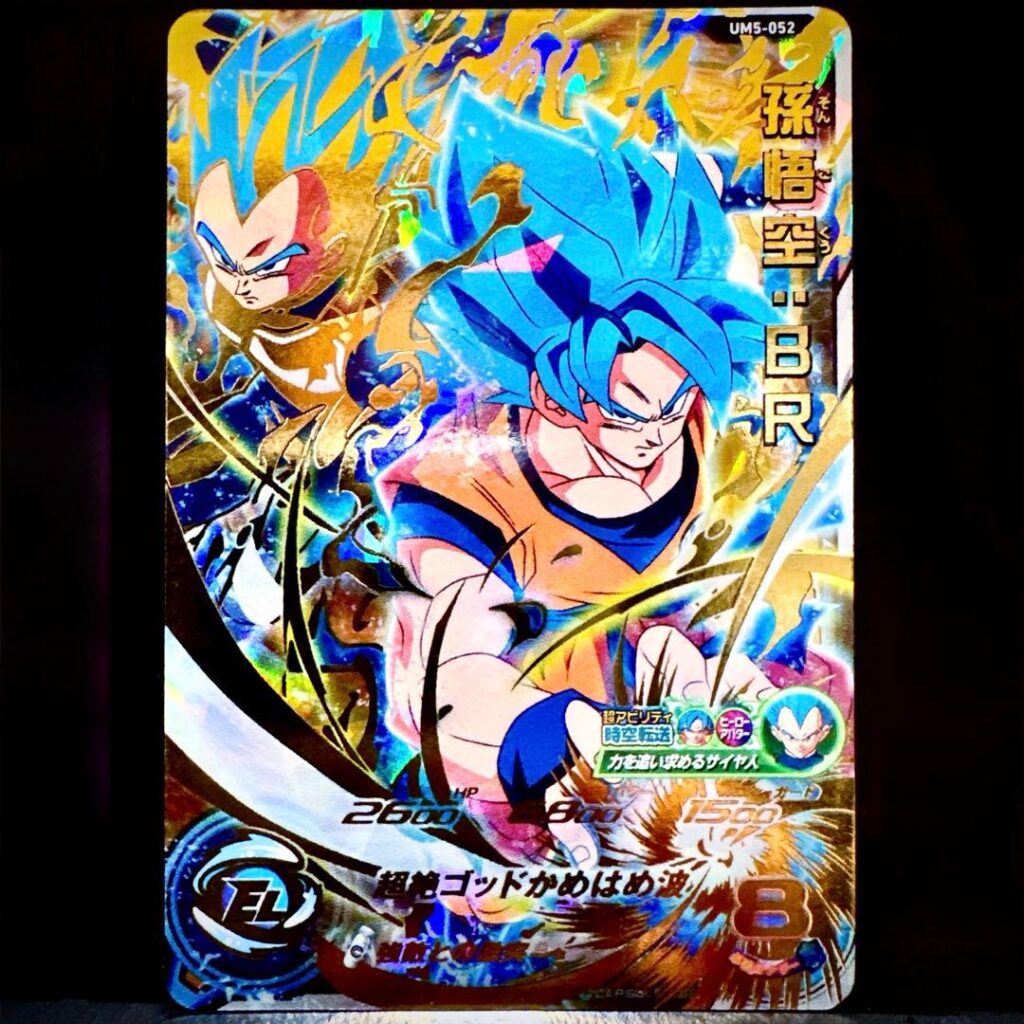
The popularity of SDBH stems from the sheer character power of Dragon Ball, combined with the stunning visual appeal of the cards themselves. Popular characters such as Son Goku, Vegito, Gogeta, Broly, and Cell are expressed with multi-layered holograms, foil-stamping, and powerful compositions, making each individual card highly collectible.
In addition, since the same character can have different series, different specifications, and different distribution formats, there is a distinct joy in comparing variants, such as “which Goku is this” or “which Vegito is this.”
How to Read Card Numbers and Set Names
In SDBH, looking at the card code makes it easy to grasp the series and its inclusion slot. Each card has a set number where the first half indicates the series and the second half shows its position within that specific set.
| Notation Example | Meaning / How to Read |
| MM6-001 | “MM” is the series name, “6” is the set/expansion, and “001” is the individual number |
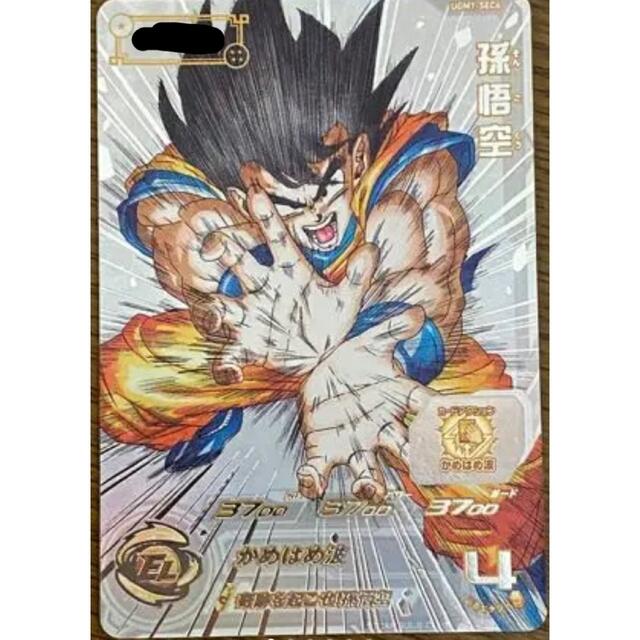
| UGM1-SEC4 | “UGM” is the series name, “1” is the set/expansion, and “SEC4” is the individual code including a special number |
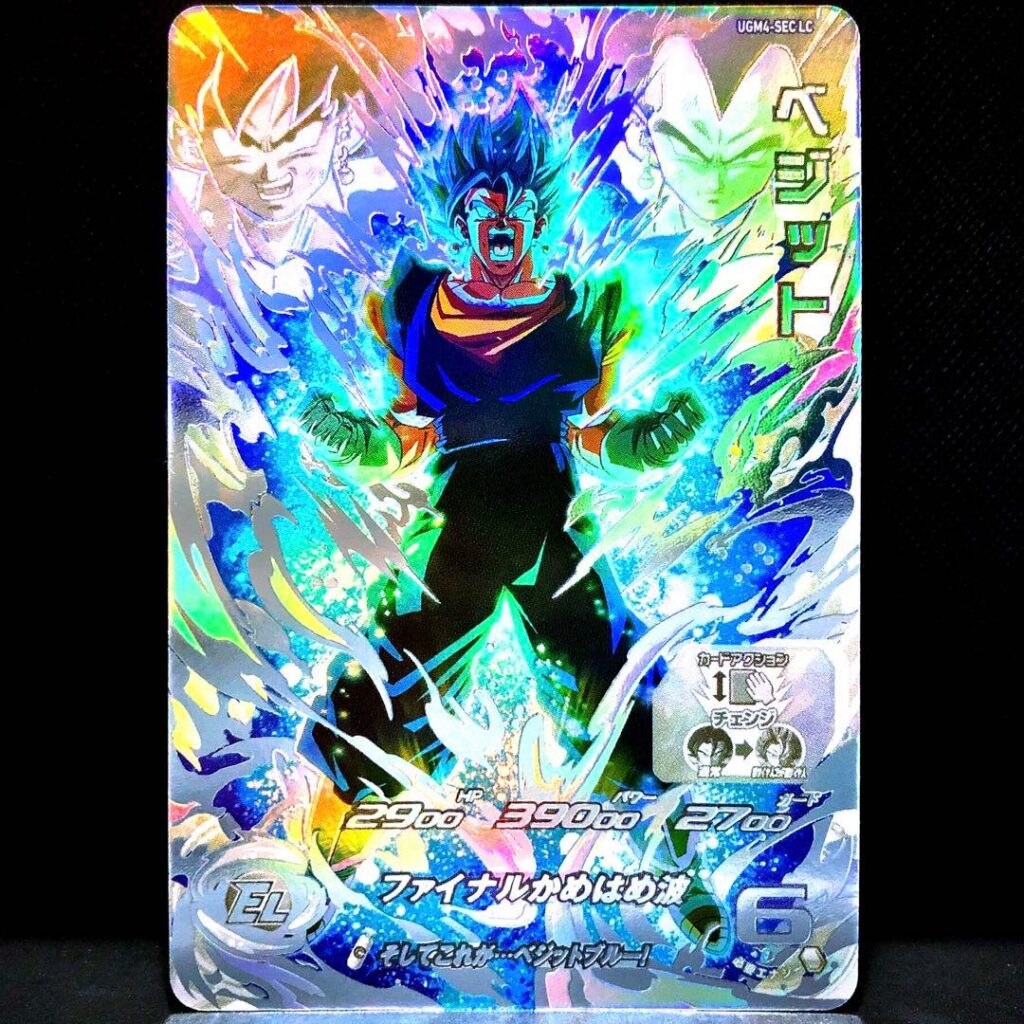
| UGM4-SEC LC | A format where a variant notation called “LC” is attached to UGM4-SEC |
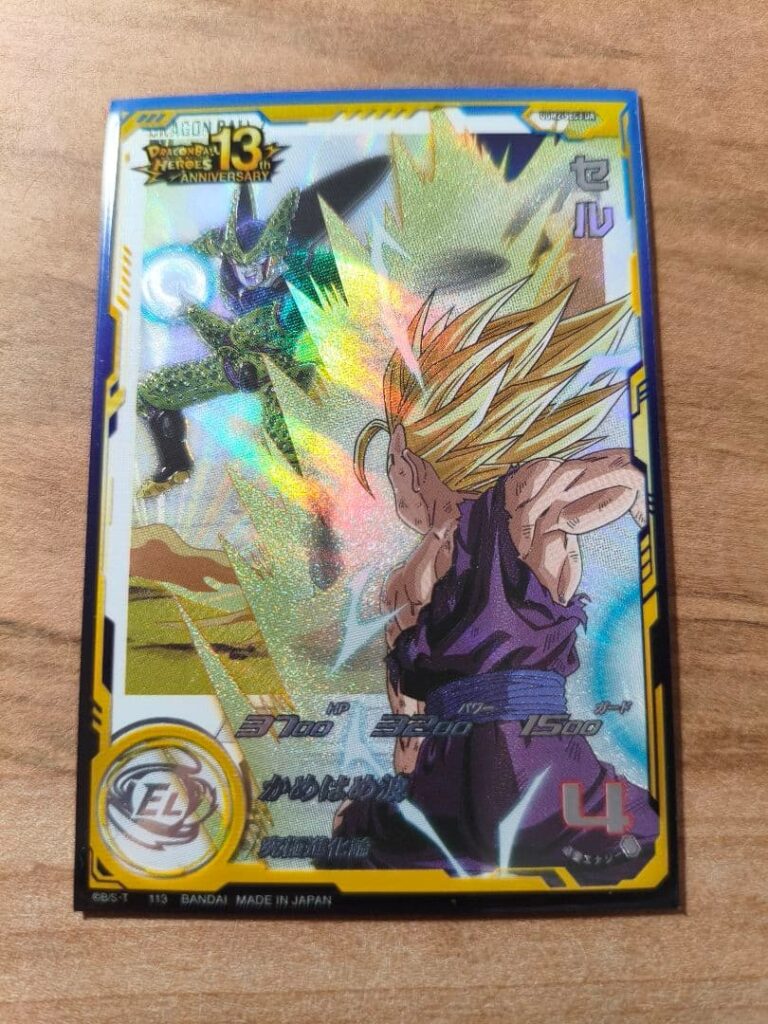
On the official card list, actual codes such as MM6-001 Son Goku, UGM1-SEC4 Son Goku, UGM4-SEC Vegito, and UGM2-SEC3 Cell can be verified. When searching, checking the codes alongside the character name will greatly improve accuracy.
How to View Rarities
In SDBH, “SEC” is not a rarity name but part of the set number. The basic rarities consist of five systems: Common, Rare, Super Rare, Ultimate Rare, and Campaign Promo. The actual rarity tier is determined by the symbols or the number of stars on the back of the card. Therefore, even if a card has a SEC code, if the back has four stars (★★★★), it is officially classified as an Ultimate Rare. While it is sometimes called “Secret Rare” in English-speaking regions, this is a nickname arising from the SEC notation rather than an official rarity name.
Cards That Easily Attract Popularity
UGM1-SEC4 Son Goku
Known as a specification containing a serial number limited to 5,900 copies, gathering strong attention as a highly exclusive collector’s item.
UGM4-SEC / UGM4-SEC LC Vegito
An excellent example showing that even for the same Vegito, there is a regular notation version and an LC-attached variant version, allowing collectors to compare both code and visual differences.
UGM2-SEC3 / UGM2-SEC3 DA Cell
In addition to the regular version, a DA (Dramatic Art) variant exists. This is a highly collectible example that allows fans to track different artistic directions for the exact same character.
Extra Booster Box
Not only individual cards but also unopened boxes themselves circulate widely as targets for collection.
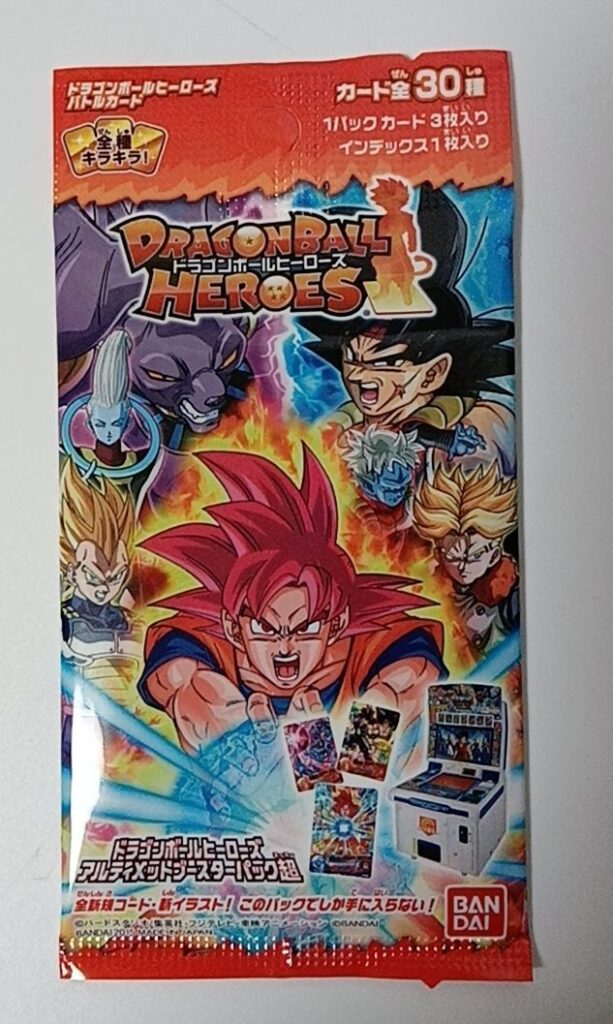
What Kind of Distribution Exists in the Japanese Market?
In the Japanese used market, SDBH can be found across a wide range, including not only single cards but also bulk lots, older sets, promos, specification variants, and unopened products. Since it was originally an arcade-dispensed card game, older sets and popular specifications naturally have to be tracked down via secondary distribution, leaving a thick market archive that cannot be seen through current products alone.
Codes, Stars, and Variant Specs Make SDBH Collecting Easy to Organize
SDBH is a series whose charm becomes much easier to organize when viewed by combining card codes, the stars on the back, and variant specifications like LC or DA, rather than looking at character popularity alone. Popularity easily concentrates on main-class characters, serial-numbered specifications, variant cards, and unopened products—all features strongly tied to visual appeal or exclusivity.
By using Neokyo, you can collectively search for SDBH single cards, variant cards, promos, and unopened products listed on Japanese shops and flea markets.