

Sailor Moon Card Complete Guide | Carddass, Prism Cards, and How to Buy from Overseas
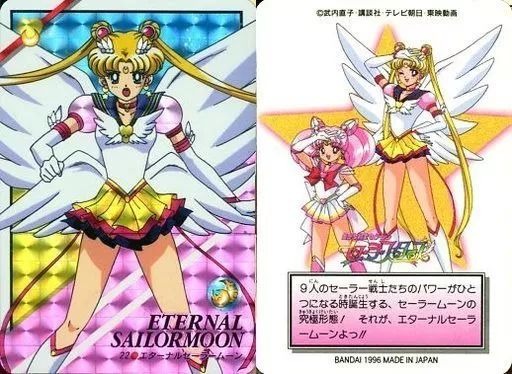
Sailor Moon cards are essentially viewed as vintage collections from the 90s to the 2000s, rather than the “playable TCGs” that are mainstream today. There are multiple systems such as Carddass, Prism cards, and PP cards. Even for the same Sailor Moon card, the appearance and market price change significantly depending on the series.
Therefore, it is easier to organize if you think by dividing them into categories like “Carddass-type,” “Prism-type,” or “Reprint-type,” rather than looking at them collectively just by the title.
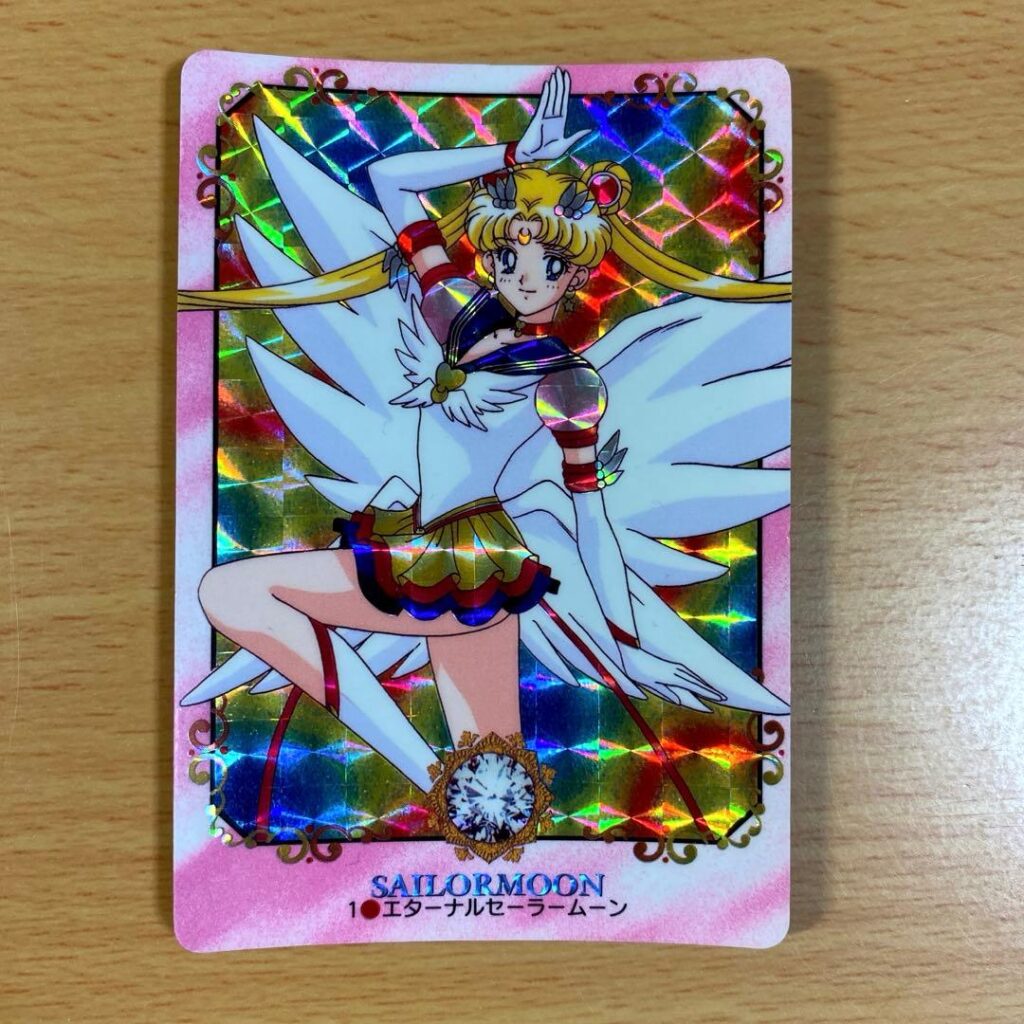
Prism Card
What types of Sailor Moon cards are there?
Carddass Series
The Carddass series is the easiest to use as a standard. Because there is an official context, it is easy for beginners to understand “what they are looking at as an official series.” It is also characterized by having reprint design products, making it easy to compare the differences between the original items and reprints.
Prism / PP Series
On the other hand, holo-type cards with Prism notation and PP-type cards are highly popular among collectors. Prisms featuring main characters such as Sailor Moon, Sailor Mars, Sailor Venus, and Sailor Jupiter are easy to search for as single items.
This market is closer to searching based on individual listings rather than a full list, and price differences easily occur based on condition and illustration.
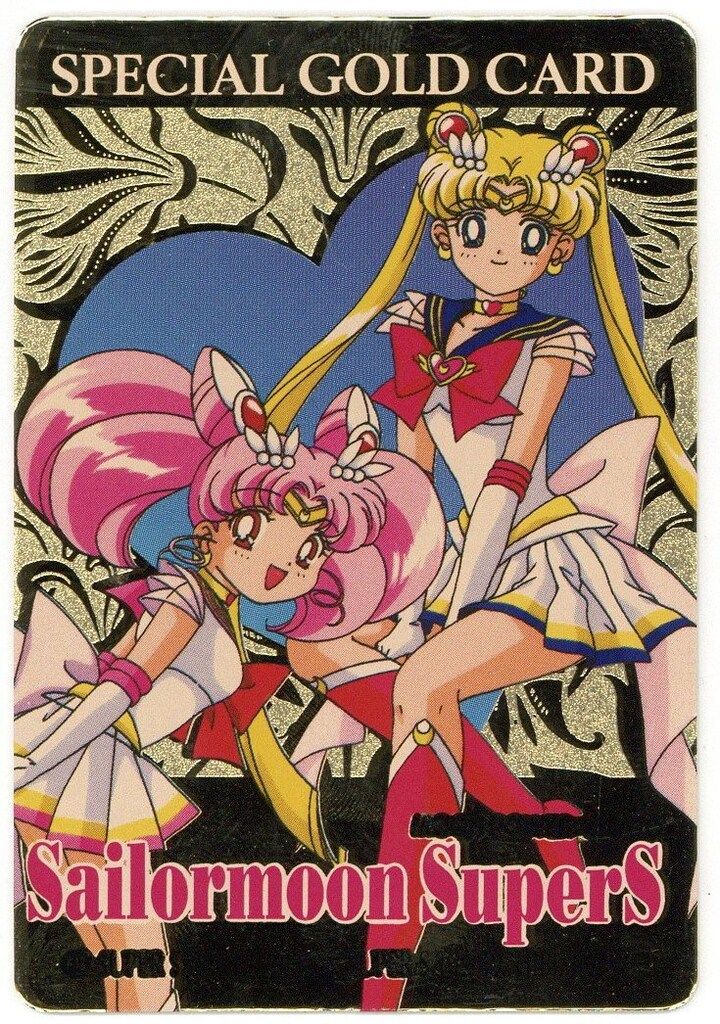
PP Card
It is better to think of the Japanese version and overseas versions separately
Sailor Moon cards may include overseas distributed items in addition to the Japanese version. However, it is safer to view the Japanese Carddass/Prism series and overseas distributed items as separate collections.
Since the series names, printing, holo appearance, back design, and popularity trends differ, it is less confusing for beginners to first look at the market prices based only on the Japanese version.
Cards that easily attract attention
Sailor Moon cards are valued based on the early series, prism processing, character popularity, and preservation condition, rather than gameplay performance.
In particular, Prism types of the main Guardians, early Carddass, and single items or lots in good condition easily attract attention.
Estimated Guide for High-Value Cards (Mainly based on overseas transactions)
| Card Name / System | Specification | Estimated Price | Notes |
| Carddass Part 4 #117 | Prism / Holo-type | Around $10–$40 | Large difference in condition |
| Amada Prism-type | Single Prism | Around $20–$80 | Prices rise easily based on character and condition |
| 90s Japan PP / Prism Single | Vintage Single | Around $10–$60 | Changes significantly based on character and scratches |
| Sailor Moon Prism lot | Lot / Bulk sale | Around $30–$120 | Fluctuates more than singles depending on content |
| Graded Prism-type | PSA / SGC, etc. | May move at over $100 | Large differences based on condition evaluation |
※ The above are estimated guides by the editorial department based on transaction history. They fluctuate depending on condition, specification, and timing. Please check each marketplace for the latest market prices.
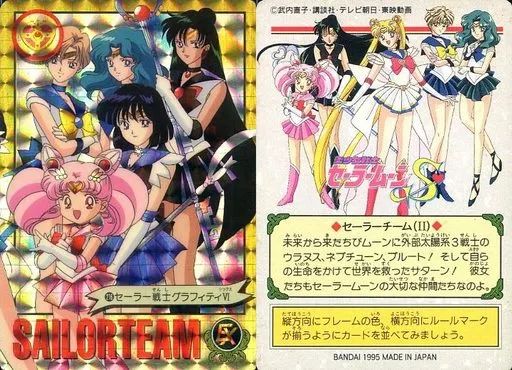
Prism Card
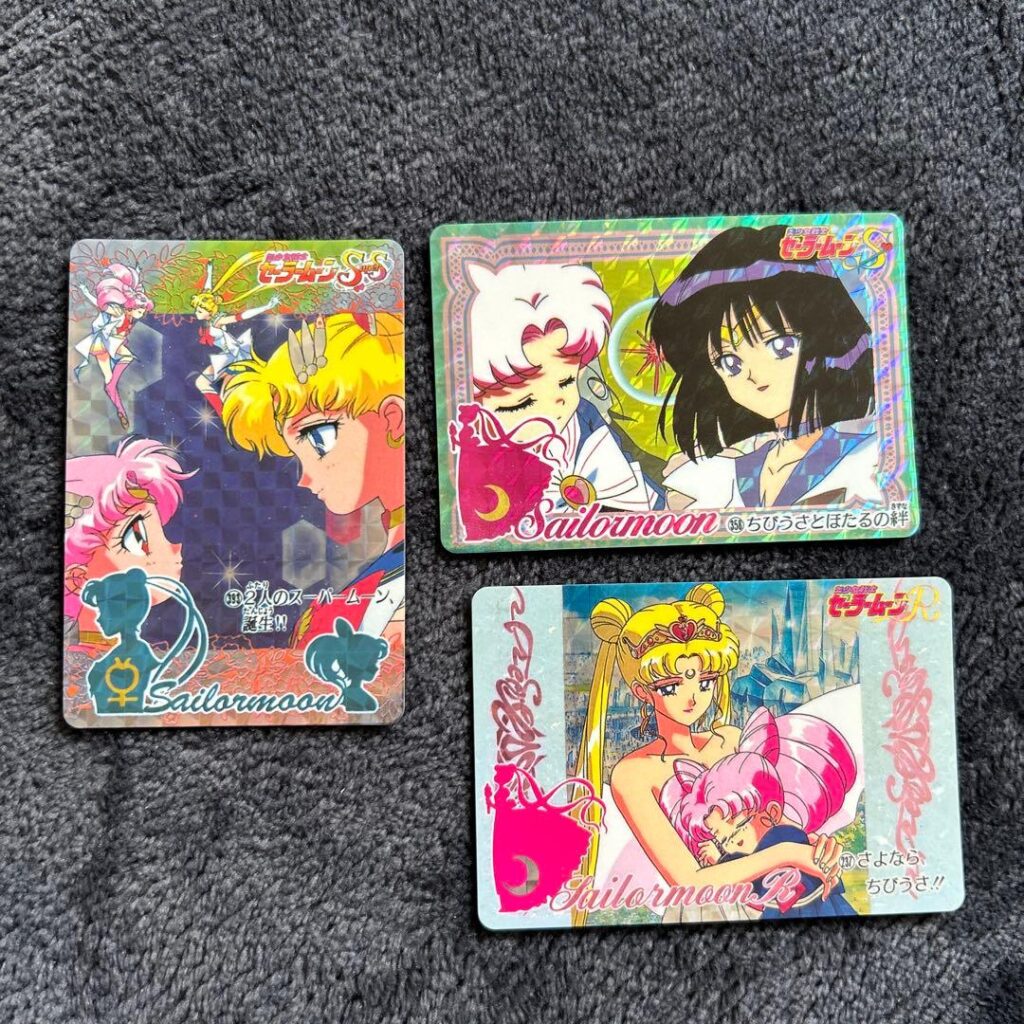
Carddass Reprint Design
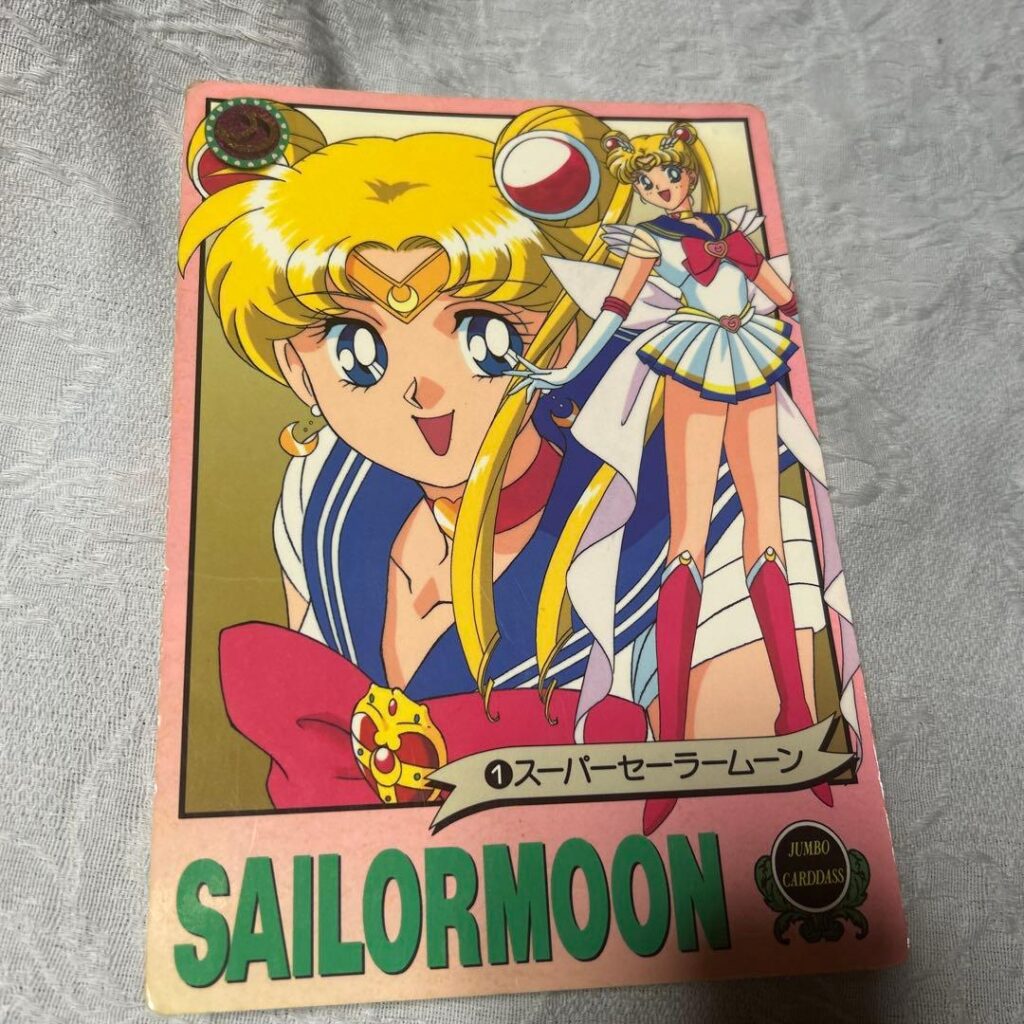
Early Carddass Design
How to tell if it’s authentic?
Since vintage Sailor Moon cards are popular, it is important not to make an immediate decision based only on an image.
It is easier to understand if you divide the checkpoints into “Physical Confirmation” and “Listing Information Confirmation.”
Physical Confirmation
| Checkpoint | Reason for Checking | Caution Points |
| Back Design | Easy to distinguish versions and series differences | Even if the front is beautiful, the back may differ |
| Holo / Prism Shine | Processing differences unique to old cards occur easily | Difficult to judge with only one photo |
| Corners / Edges / Surface Scratches | Condition makes a huge price difference in vintage | Often has scuffs even with “Excellent” notation |
| Series Name / Number | Easy to identify what card it is | Beware of listings where the number is not visible |
Listing Information Confirmation
| Checkpoint | Reason for Checking | Caution Points |
| Product Title | Important for determining what is being sold | Beware of vague terms like “vintage style” |
| Product Description | Easier to avoid reprints, reproductions, and mixed overseas versions | Be cautious of listings with thin condition descriptions |
| Seller Rating | Helps avoid trouble | The more expensive the card, the more you want to check |
| Presence of extra photos | Necessary for checking the back and corners | Request them if you can |
If you are buying from overseas, it is faster to look at the Japanese secondary market
For Sailor Moon cards, Japanese vintage singles and lots are often listed on Mercari, Yahoo! Auctions, and Rakuma-type sites, and you may not be able to find everything in overseas stores alone.
With Neokyo, it is easy to search across Japanese flea markets and shops, and you can proceed with proxy purchase, storage, combined packing, and international shipping all together. It is also compatible with cards you want to collect little by little.
If you want to see vintage cards, including the Japanese version, please try searching on Neokyo.