

What Are K-Pop Photocards? A Complete Guide to Types, Value, and Buying
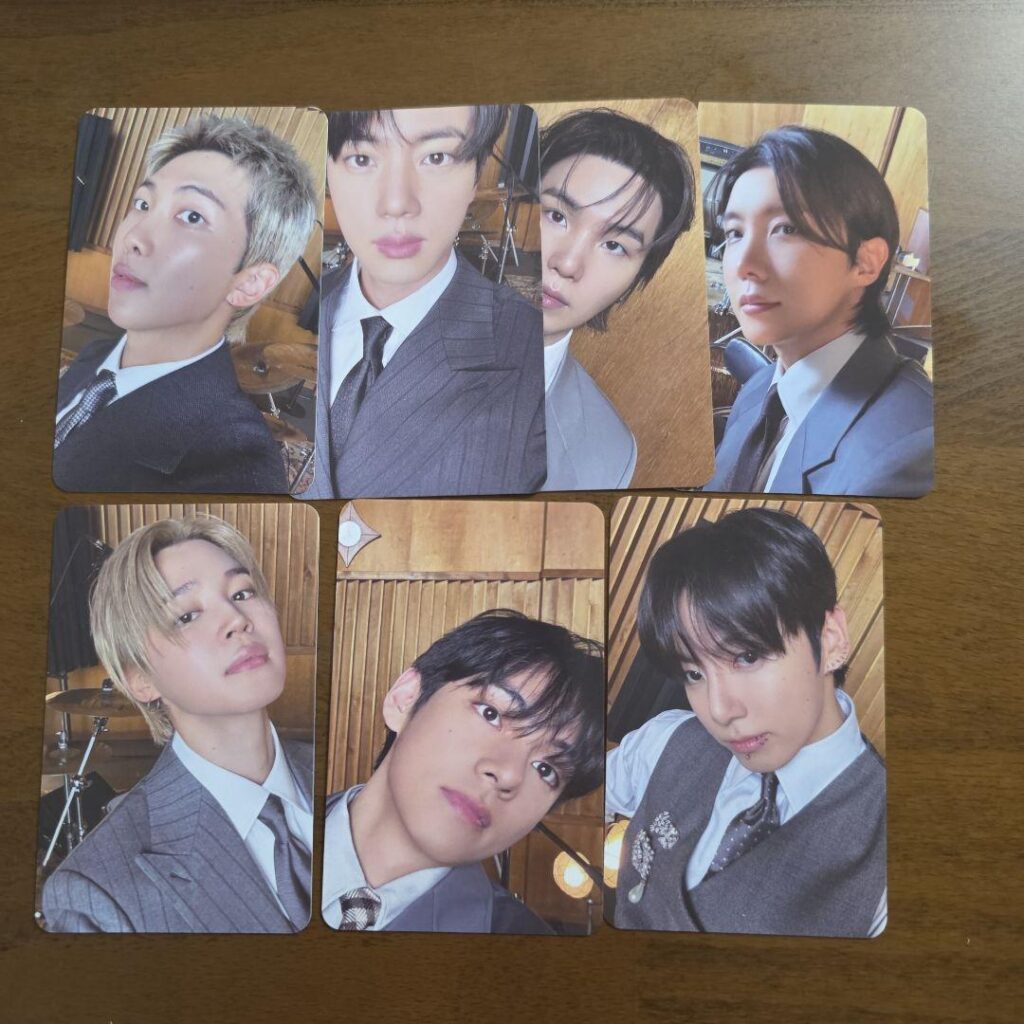
K-pop photocards have become one of the most collected items in fan culture, with rare cards selling for hundreds — and sometimes thousands — of dollars. But if you’re new to collecting, the sheer variety of card types, price ranges, and purchasing platforms can feel overwhelming.
This guide breaks it all down. You’ll learn what K-pop photocards are and how they sparked a global trading culture, the different types — from album pulls to lucky draws — and what each one typically costs on the secondary market. You’ll also find out what makes certain cards rare and valuable, where to buy them safely across official stores and international marketplaces, and how to spot counterfeits before you spend your money. The guide also covers options you might not have considered, like accessing Japan-exclusive cards through proxy buying services and creating your own custom photocards at home or through a print service.
Whether you’re chasing your first bias card or expanding an existing collection, this is your starting point.
What Are K-Pop Photocards?
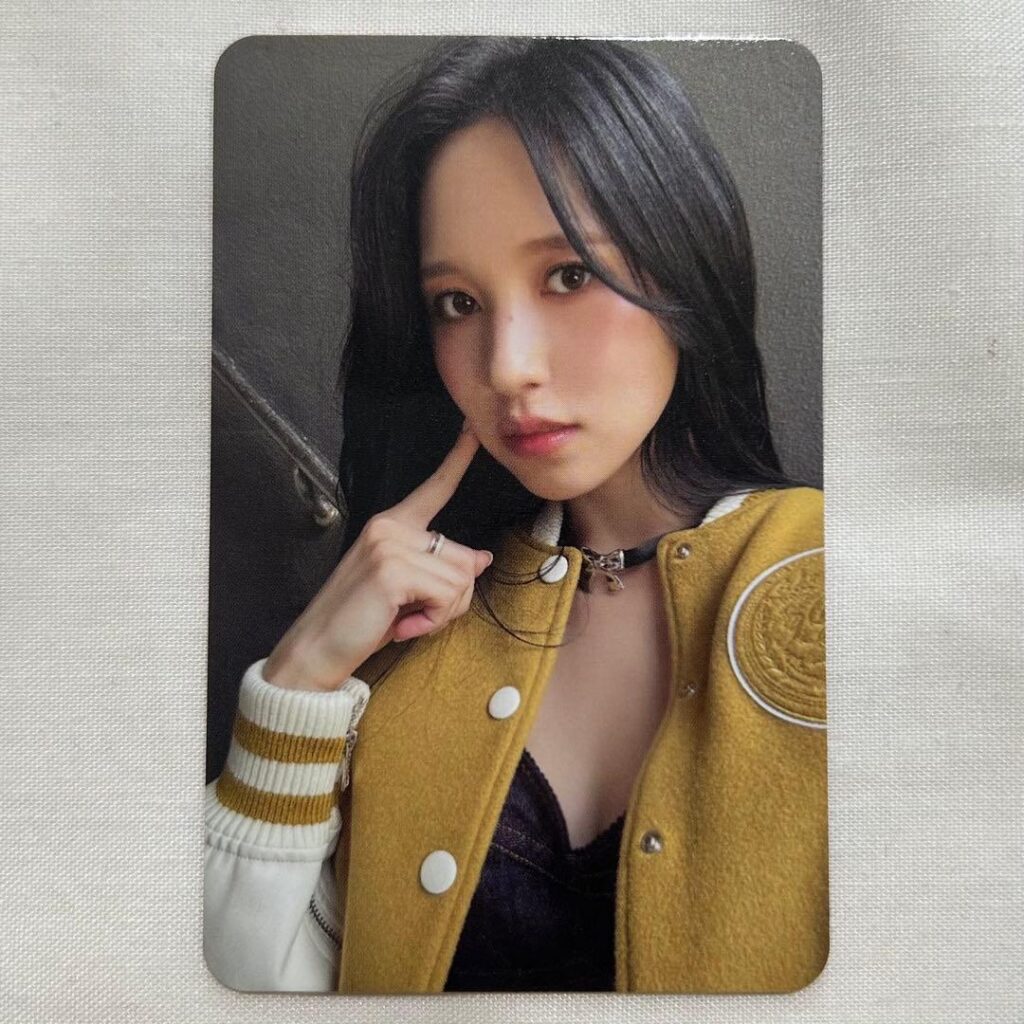
K-pop photocards are small collectible cards printed with photographs of K-pop idol members. Roughly the size of a credit card, these cards come tucked inside albums, merchandise packages, and promotional kits. What started as a simple bonus item has grown into a global collecting phenomenon that drives a significant portion of K-pop fan culture.
The appeal starts with the element of surprise. Each album typically includes one or more photocards, but which member’s card you receive is entirely random. You might pull your favorite member — known as your “bias” — on the first try, or you might need several albums before landing the card you want. This randomness is exactly what sparked a thriving trading culture among fans worldwide. Collectors buy, sell, and swap photocards through online communities, marketplace apps, and in-person meetups, all in pursuit of completing their collections.
One key distinction every collector should know is the difference between official and unofficial photocards. Official photocards are produced and distributed by the artist’s management agency or record label. They feature licensed photographs, professional-grade printing, and proper copyright markings on the back. Unofficial cards — often called fan-made cards or “lomo cards” — are created by fans or third-party sellers outside the official supply chain. While fan-made cards can be enjoyable keepsakes, they hold little resale value and are not considered part of an official collection.
Whether you’re just starting out or looking to expand your collection, understanding these basics helps you shop with confidence. If you’re ready to start browsing, you can explore K-pop photocards listed on Japanese marketplaces through Neokyo.
Browse K-pop photocards on Neokyo
K-Pop Photocard Sizes
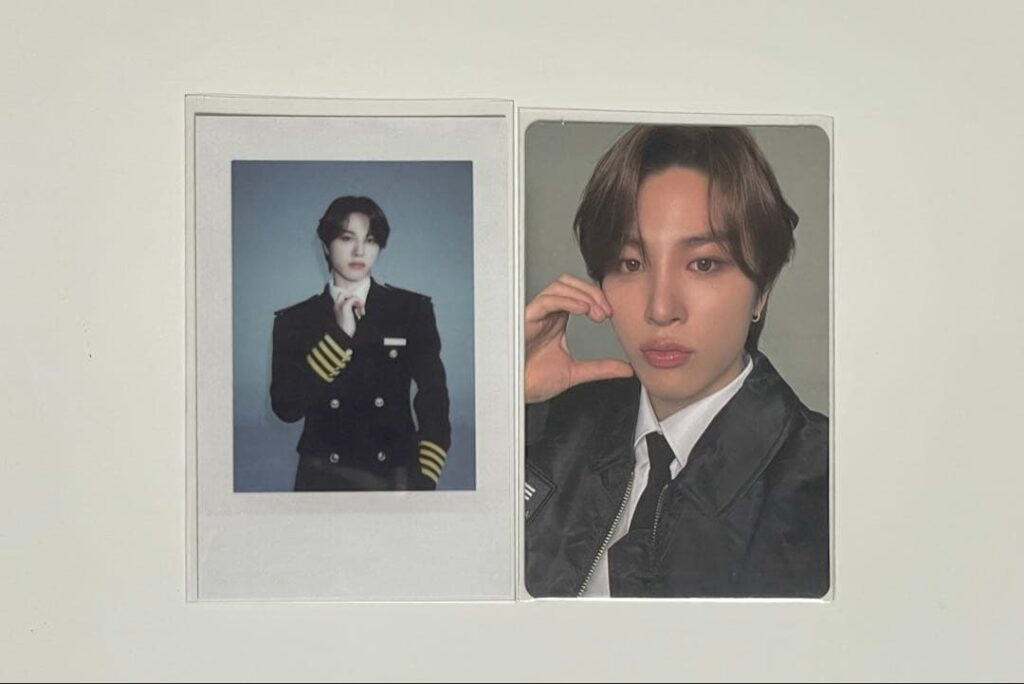
Knowing the exact dimensions of your photocards matters more than you might expect — the measurements determine which sleeves, top loaders, and binders you need to keep your collection protected. K-pop photocards come in several sizes, and not all of them fit standard trading card accessories.
This section breaks down the two main categories:
- Standard Size
- Oversized and Mini Photocards
Understanding these measurements before you buy storage supplies saves you from ending up with accessories that don’t fit.
Standard Size
The most common K-pop photocard measures approximately 55 × 85 mm (2.2 × 3.5 in) — nearly identical to a standard credit card at 85.6 × 54 mm. If you’ve ever held a bank card, you already have a good sense of the size and shape.
These cards are typically printed on sturdy 16pt card stock (350 gsm) and come in either a glossy or matte finish. The thickness gives them a solid, premium feel that distinguishes them from ordinary printed photos. Because they follow this standardized size, most photocards fit neatly into trading card sleeves and top loaders, making storage and display straightforward for collectors.
| Type | Size (mm) | Size (in) | Familiar Comparison |
| Standard | 55 × 85 | 2.2 × 3.5 | Credit card |
| Mini (Wide) | 90 × 60 | 3.5 × 2.4 | — |
| Mini (Tall) | 70 × 100 | 2.8 × 3.9 | — |
| Polaroid | Varies | Varies | Instant photo print |
| Credit Card (ref.) | 85.6 × 54 | 3.4 × 2.1 | — |
Oversized and Mini Photocards
Despite the name, “mini photocards” are often larger than the standard size. These cards come in varying dimensions — 90 × 60 mm, 70 × 100 mm, and other measurements — with no single universal standard among them.
Beyond size variations, some releases feature unconventional shapes and formats. Polaroid-style cards mimic the look of instant film prints, while film strip cards and octagonal cards appear as limited-edition releases tied to specific events or collaborations. These novelty formats add visual variety to a collection but can be trickier to store.
Because these cards don’t conform to standard trading card dimensions, you’ll need to select sleeves and binders specifically sized for each type. Checking the measurements before purchasing storage accessories prevents damage from ill-fitting holders that could bend or scratch your cards.
Types of K-Pop Photocards
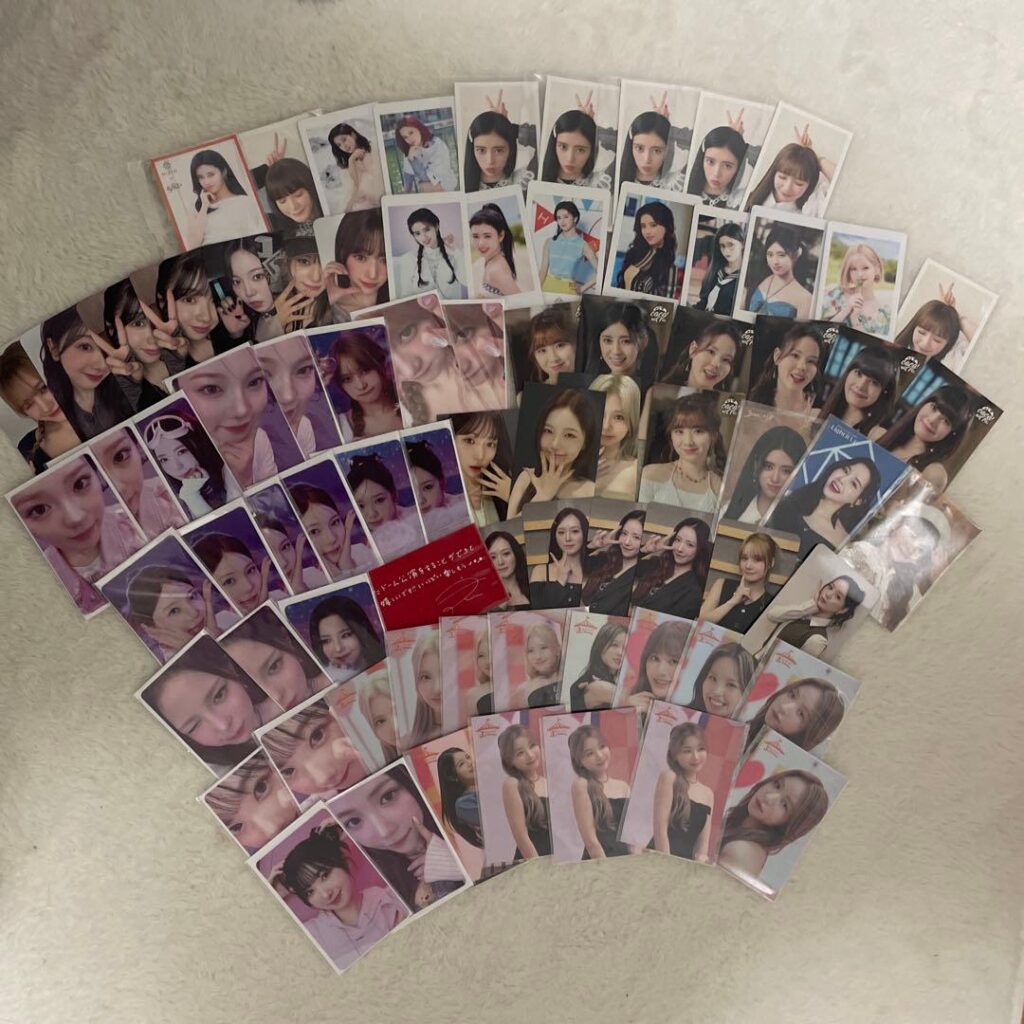
K-pop photocards fall into several distinct categories, each with different levels of availability, rarity, and resale value. Understanding these types helps you identify what you’re collecting and set realistic expectations for pricing.
Here are the main categories:
- Album Photocards
- Pre-Order Benefits (POBs)
- Lucky Draw Photocards
- Fan Sign and Broadcast Photocards
- Merchandise and Lenticular Photocards
The sections below break down each type, including how they’re distributed and their typical price ranges on the secondary market.
Album Photocards
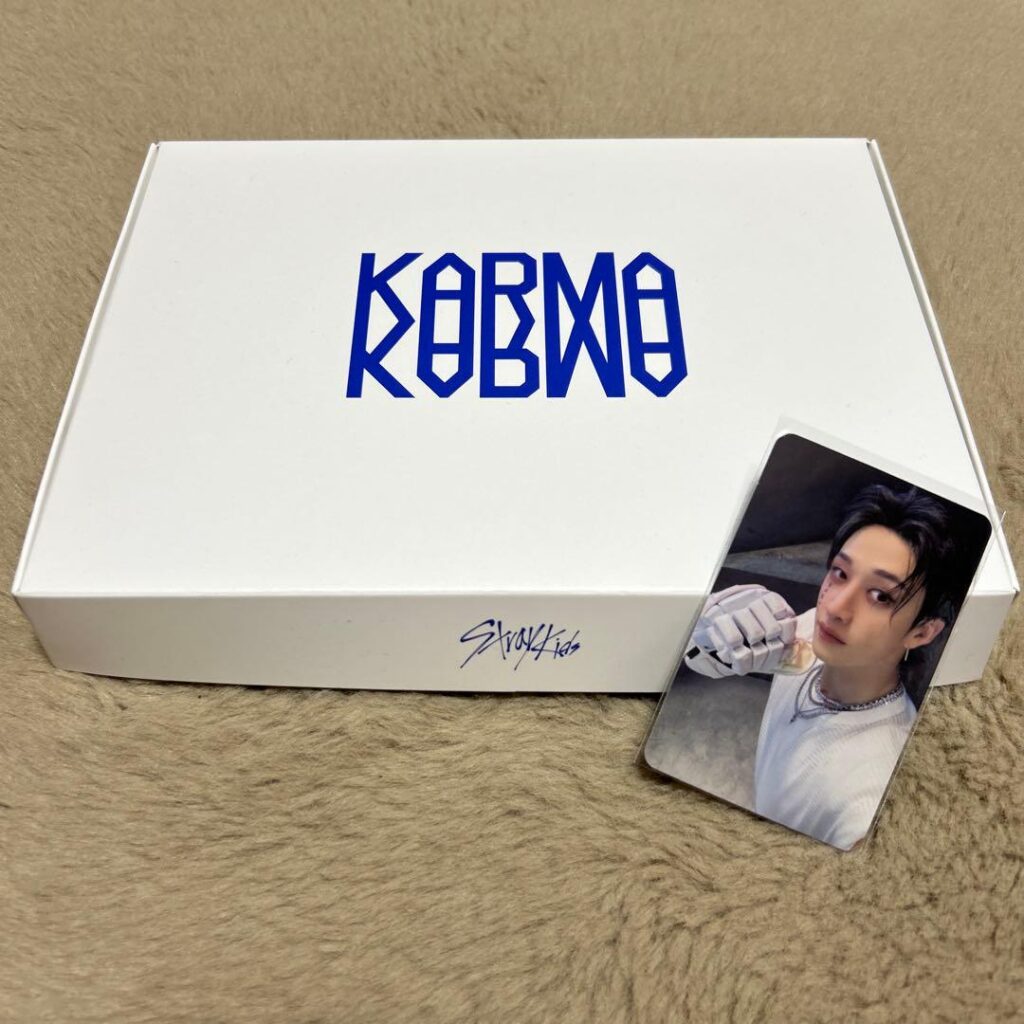
Album photocards are the most common and accessible type in any collection. These cards come randomly included with album purchases — one or more per copy — making them the first photocards most fans encounter.
Different versions of the same album contain different photocard sets. If a group releases an album with three versions, each version features its own set of member cards. This encourages fans to purchase multiple versions or trade with others to collect the full range.
On the resale market, album photocards are among the most affordable, typically selling for $5–$12 USD. Their wide availability keeps prices relatively stable, making them an ideal starting point for new collectors.
Pre-Order Benefits (POBs)
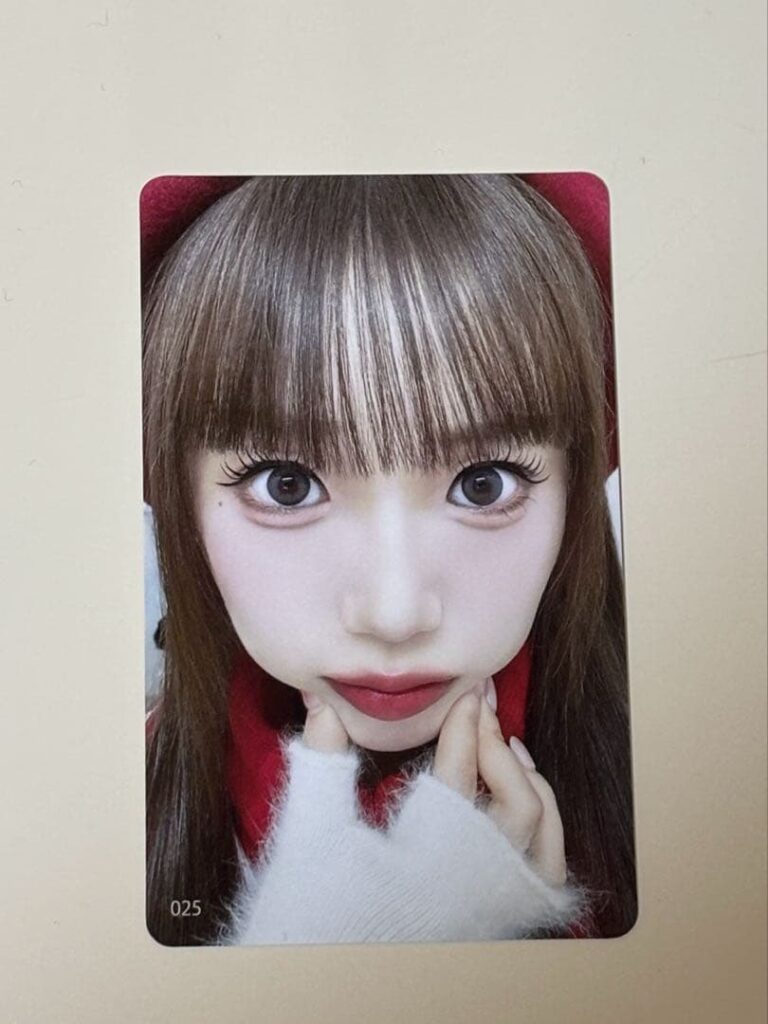
Pre-order benefit photocards — commonly called POBs — are exclusive cards bundled with album pre-orders from specific retailers. Each participating store offers its own unique POB design, so the card you receive depends on where you place your order.
This store-exclusive model means collectors who want every version need to pre-order from multiple retailers. Because POBs are tied to a limited pre-order window and specific shops, they become harder to obtain after release.
That scarcity is reflected in resale prices. POBs typically trade for $5–$80 USD on the secondary market, with the wide range depending on the group’s popularity, the member featured, and how many cards were distributed.
Lucky Draw Photocards
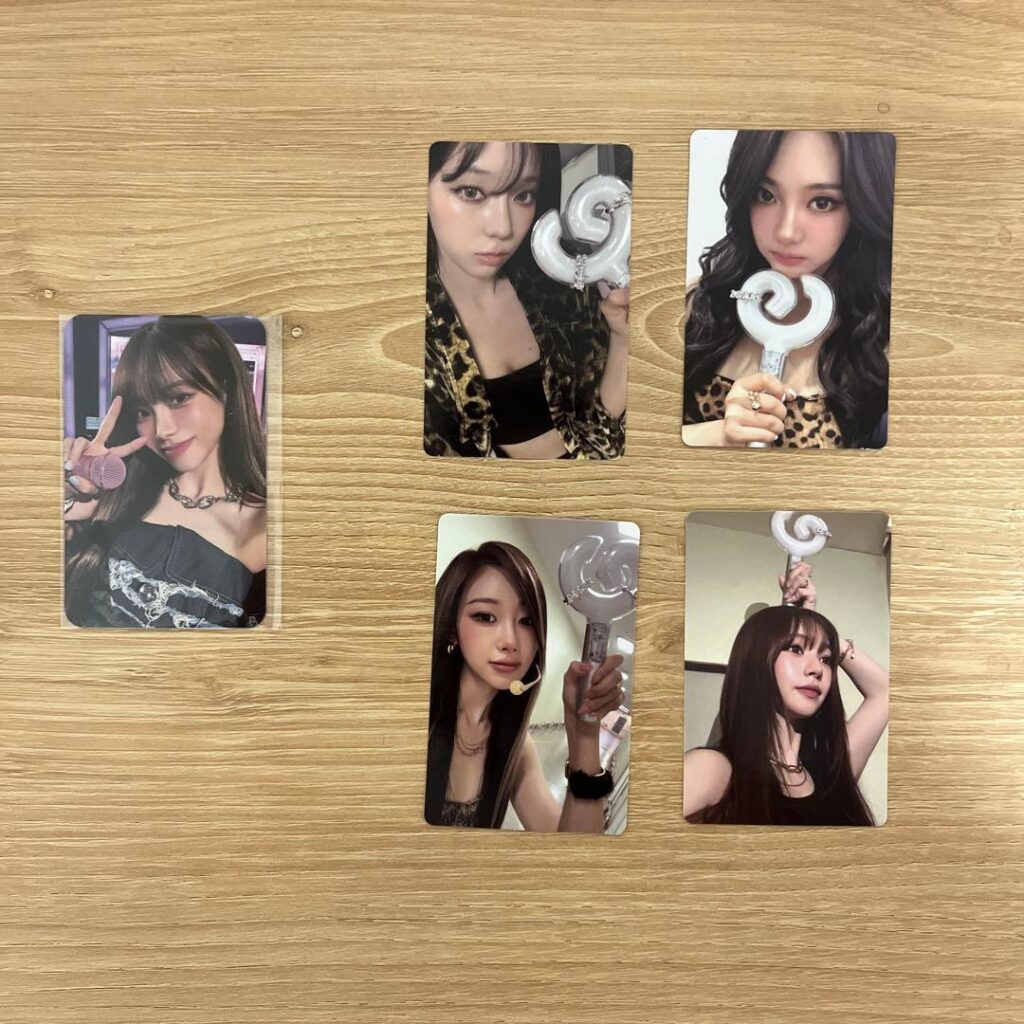
Lucky draw photocards are among the rarest and most valuable cards in the K-pop collecting world. These cards are distributed randomly to fans who purchase albums at specific events — concert venues, pop-up shops, or promotional campaigns.
Production numbers are extremely limited compared to album or POB cards. That scarcity drives resale prices significantly higher, with lucky draw cards trading for $20–$400 USD or more on the secondary market. High-demand members from top-tier groups command prices at the upper end of that range.
The materials used for lucky draw cards also vary. Some are printed on standard coated card stock, while others feature a thick, plastic construction similar to a credit card. This material variety adds another layer of distinction for collectors.
Fan Sign and Broadcast Photocards
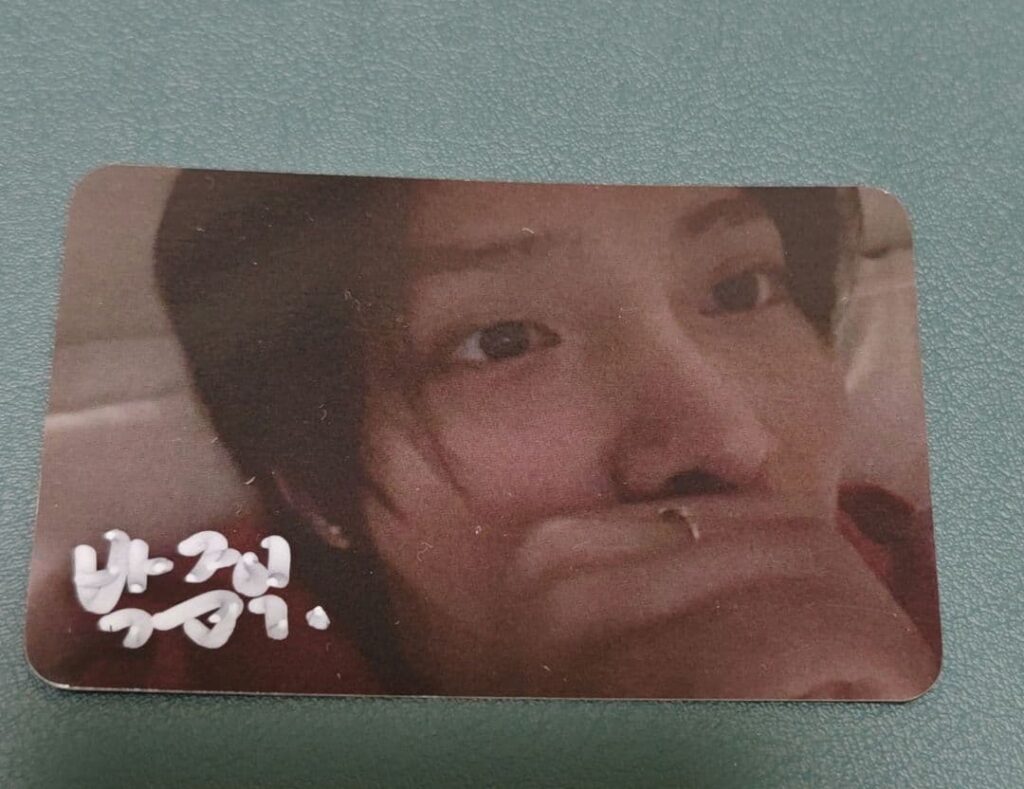
Fan sign photocards are distributed to attendees of fan signing events, where selected fans meet their favorite artists in person. These cards are handed out randomly at the venue, and they generally trade for $5–$25 USD on the resale market.
Broadcast photocards follow a similar model. These cards are given to fans who attend live music show recordings, and they typically resell for $10–$40 USD. Both types share a common trait: in-person attendance is required to receive them, which limits the supply entering circulation.
Because fewer cards are available compared to album releases, fan sign and broadcast photocards tend to carry higher resale values. These figures are approximate values based on 2022 trading data and vary by group, member, and condition.
Merchandise and Lenticular Photocards
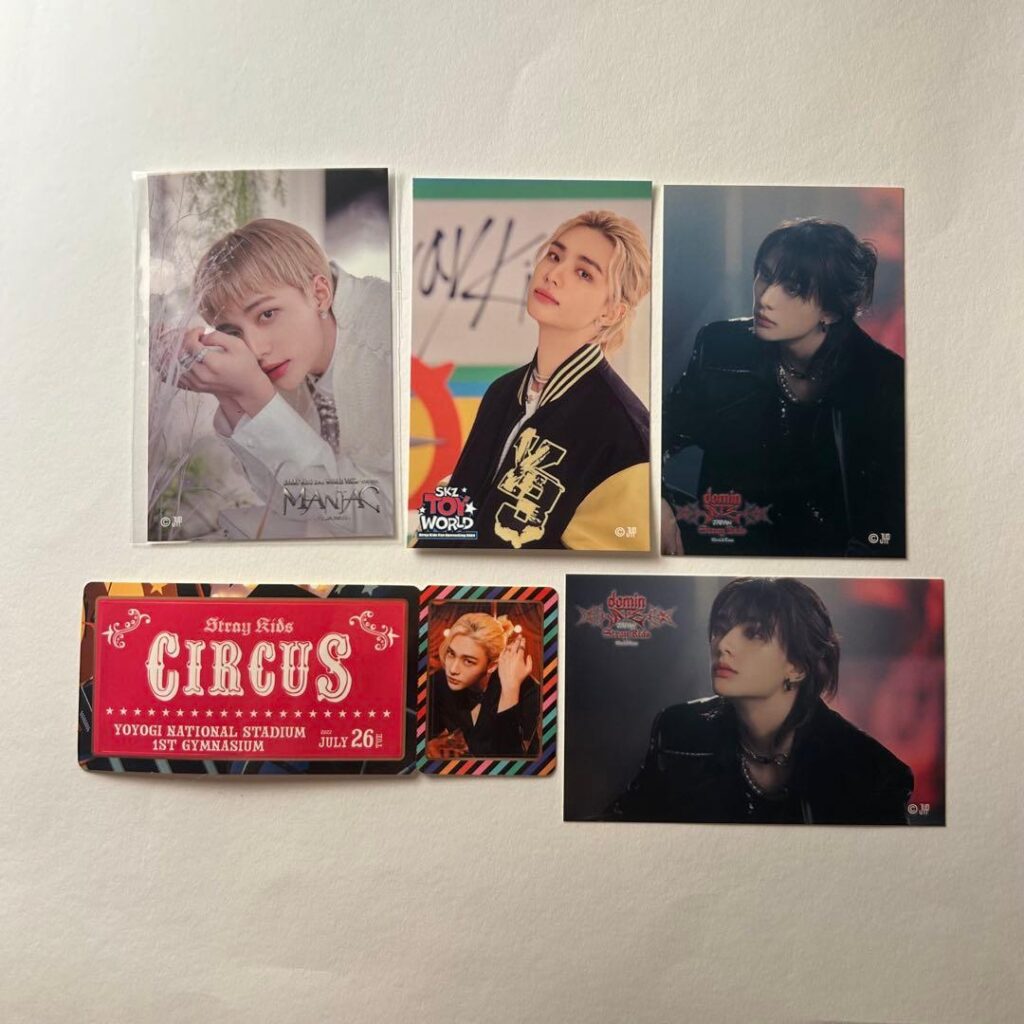
Merchandise photocards come bundled with official goods such as concert merchandise and fan club–exclusive packages. Rather than being purchased on their own, they arrive as bonus items alongside other products.
Lenticular photocards stand out for their special printing technique — the image shifts or changes depending on the angle you hold the card. This effect gives them a noticeable thickness compared to standard cards, making them a distinctive addition to any collection.
On the resale market, merchandise photocards generally trade for $3–$30 USD. Pricing depends on the type of merchandise they were bundled with, the group, and the specific member featured on the card.
K-Pop Photocard Prices and Value
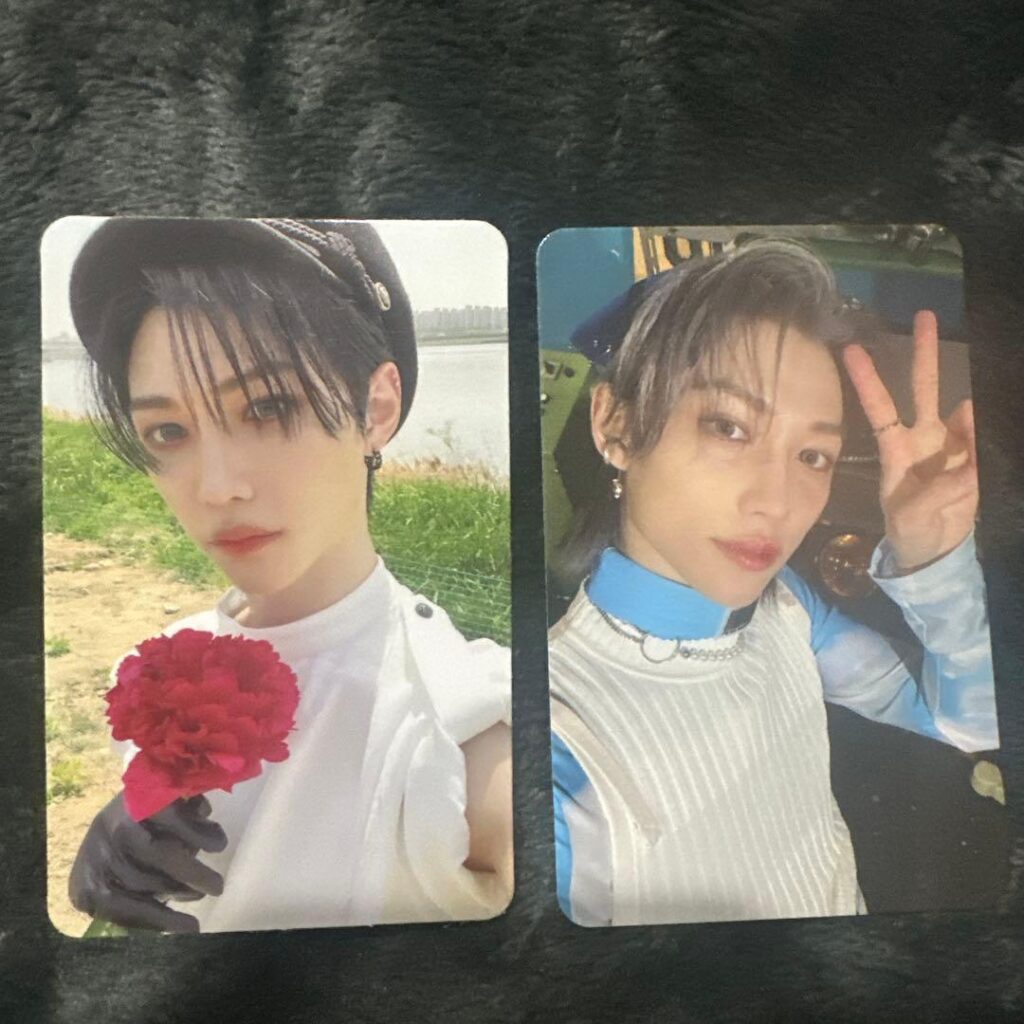
Photocard prices range from a few dollars to several thousand, depending on the type, rarity, and demand. Whether you’re budgeting for your first purchase or evaluating a card’s worth before a trade, understanding what drives pricing helps you make informed decisions.
This section covers the key areas:
- Typical Price Ranges by Type
- What Makes a Photocard Rare and Expensive
- Most Expensive K-Pop Photocards Ever Sold
From everyday album pulls to record-breaking auction sales, here’s what you need to know about photocard value.
Typical Price Ranges by Type
Photocard prices vary widely depending on the category. The table below summarizes the general price ranges and acquisition methods for each type, giving you a quick reference for what to expect on the secondary market.
| Type | Price Range (USD) | How to Get |
| Album PC | $5–$12 | Randomly included in album purchases |
| POB | $5–$80 | Pre-order from specific retailers |
| Lucky Draw | $20–$400+ | Purchase albums at designated events |
| Fan Sign | $5–$25 | Attend fan signing events |
| Broadcast | $10–$40 | Attend live music show recordings |
| Merchandise | $3–$30 | Bundled with official concert/fan club goods |
| Lenticular | $3–$30 | Bundled with official goods or special releases |
Keep in mind that these figures are reference values based on individual trading experiences as of 2022 and may not reflect current market prices. Actual resale values fluctuate based on the group’s popularity, the specific member, and the card’s condition. A card from a top-tier group’s most popular member in mint condition will consistently command higher prices than the same type of card from a less sought-after artist.
What Makes a Photocard Rare and Expensive
The single biggest factor driving photocard value is limited availability. Cards distributed at exclusive events, offered as rare pre-order benefits, or produced in small batches are the ones that see the sharpest price increases over time. The fewer cards in circulation, the higher collectors are willing to pay.
Member popularity plays an equally significant role. Within the same photocard set, prices can vary dramatically from one member to another. Cards featuring the most in-demand members of a group attract more buyers and higher bids on the resale market.
Card condition is another critical factor. Photocards in mint condition — free of scratches, creases, and wear — hold the highest value. Even minor damage like a bent corner or surface scuff can reduce a card’s resale price noticeably.
Finally, authenticity matters. Official photocards produced by the artist’s agency or label retain their value over time, while unofficial reprints and fan-made cards carry little to no resale worth.
Most Expensive K-Pop Photocards Ever Sold
Some photocards have sold for prices that rival limited-edition artwork. The highest recorded sales demonstrate just how far collectors will go for the rarest cards.
| Rank | Artist / Member | Card Type | Sale Price |
| 1 | BTS / Jungkook | Butterful Night Lucky Draw | approximately $3,213 |
| 2 | BTS / Jimin | Butterful Night Lucky Draw | approximately $1,432 |
| 3 | TWICE | 2016 Superstar JYP Nation (100 produced) | High-value sale (exact price undisclosed) |
BTS Jungkook’s Butterful Night lucky draw photocard holds one of the highest documented sale prices, selling for approximately $3,213 after attracting 120 competing bids at auction. Jimin’s card from the same event reached approximately $1,432, confirming the Butterful Night series as one of the most sought-after sets in photocard collecting.
TWICE’s 2016 Superstar JYP Nation photocard stands out for a different reason — only 100 cards were produced, making it one of the most limited official photocards ever released. Its extreme scarcity has made it a high-value item among collectors.
The pattern across these record sales is consistent: a limited-event release featuring a popular member in mint condition. When all three factors align, prices can reach levels far beyond typical market ranges.
Where to Buy K-Pop Photocards
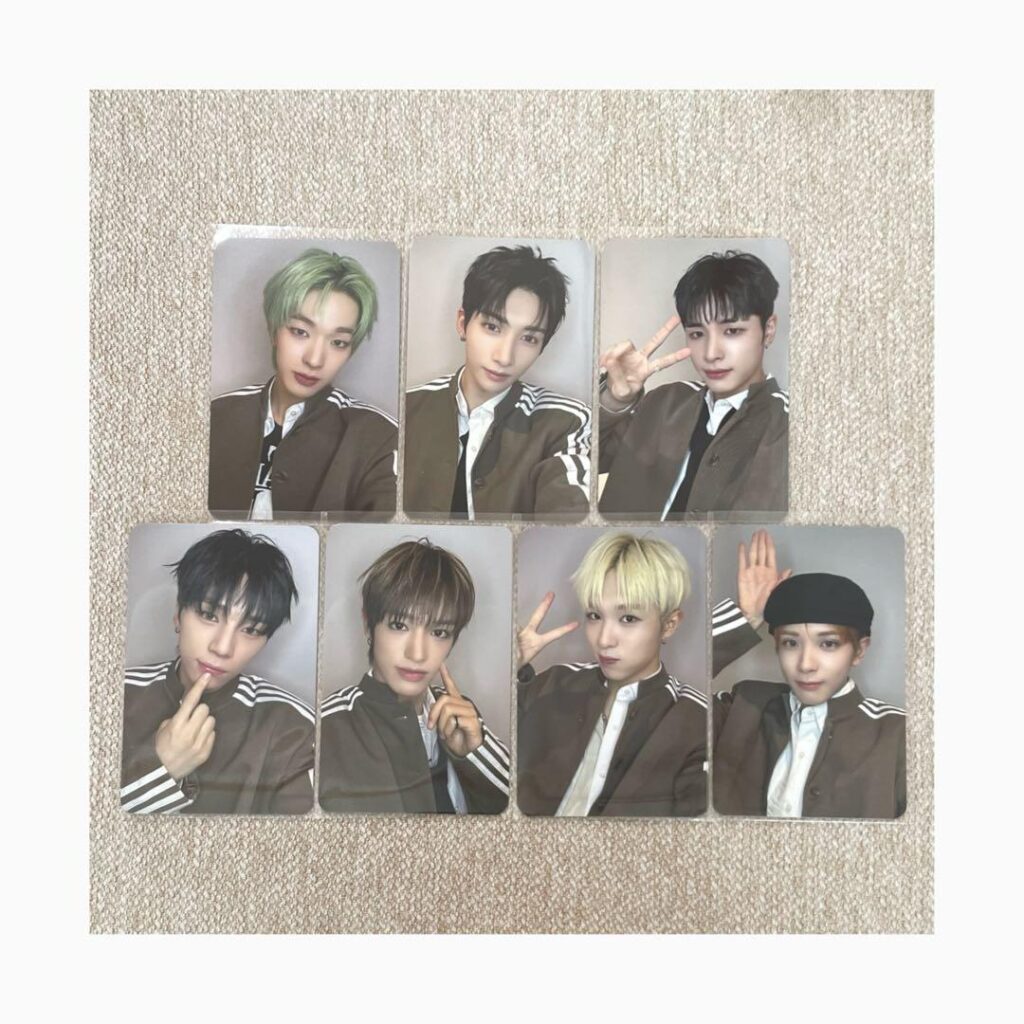
Once you know what types of photocards exist and what they’re worth, the next step is finding a reliable place to buy them. The right platform depends on whether you’re looking for brand-new official releases or hunting for specific cards on the secondary market.
This section walks you through the main options:
- Official Stores and Pre-Order Platforms
- Online Marketplaces and Resale Sites
- How to Avoid Fake Photocards
Each channel offers different advantages, so knowing where to look — and what to watch out for — helps you buy with confidence.
Official Stores and Pre-Order Platforms
The most straightforward way to get photocards is by purchasing albums and merchandise directly from official stores and authorized retailers. Buying through these channels guarantees that every card you receive is an authentic, officially produced product.
Weverse Shop is the official store for HYBE-affiliated groups, offering albums, photo books, key rings, apparel, and other merchandise. When you buy an album from Weverse Shop, the photocards included are always genuine. Ktown4u is another widely used Korean online retailer that stocks albums from various agencies and labels, often with pre-order benefit (POB) deals tied to specific purchase windows.
The key advantage of shopping through official channels is simple: you never have to question whether a card is real. For collectors who prioritize authenticity over chasing a specific member’s card, official stores are the safest starting point.
Online Marketplaces and Resale Sites
If you’re searching for a specific member’s photocard or a card that’s no longer available through official stores, the secondary market is where most collectors turn. Several platforms cater to photocard buyers and sellers worldwide.
eBay is one of the most established platforms for photocard resale, with a large network of individual sellers listing cards from virtually every group. Mercari offers a similar peer-to-peer model, connecting buyers and sellers in a streamlined mobile marketplace. For a more specialized option, Pocamarket is a photocard-dedicated platform featuring over 240,000 verified cards with worldwide shipping from South Korea.
Regardless of which platform you use, always check a seller’s ratings and transaction history before completing a purchase. Established sellers with consistent positive reviews are far less likely to send counterfeit or damaged cards.
| Platform | Type | Key Feature | What You’ll Find |
| Weverse Shop | Official store | HYBE artists’ official shop | Albums, POBs, official merchandise |
| Ktown4u | Official retailer | Korean shop with POB deals | Albums and pre-order benefits |
| eBay | Resale marketplace | Large global seller network | Individual photocard listings |
| Mercari | Resale marketplace | Peer-to-peer selling | Photocards and bundles |
| Pocamarket | Specialized marketplace | 240,000+ verified photocards | Verified cards shipped from Korea |
| Neokyo | Proxy buying service | Access to Japanese marketplaces | Japan-exclusive cards from Rakuma and others |
How to Avoid Fake Photocards
Counterfeit photocards circulate on resale platforms, and spotting them before you buy protects both your collection and your wallet. The differences between genuine and fake cards are subtle but identifiable once you know what to look for.
Size is the quickest giveaway. Official photocards measure 55 × 85 mm, while counterfeits are typically 58 × 89 mm — three to four millimeters larger in both dimensions. Placing a suspect card next to a confirmed authentic one makes the difference visible immediately.
Paper quality is another reliable indicator. Genuine cards are printed on thick stock at 300 gsm or above, giving them a solid weight when held. Fakes typically use standard photo paper in the 200–260 gsm range, making them feel noticeably lighter and flimsier by comparison.
The back of the card also tells a story. On authentic cards, copyright text and label logos are printed sharply and clearly. Counterfeit cards often show blurry or pixelated printing on these elements, especially in the fine text along the bottom edge.
Before purchasing, run through this checklist to reduce your risk:
☐ Confirm the card measures 55 × 85 mm — oversized cards are a common sign of counterfeits
☐ Check the paper thickness and weight — genuine cards feel heavier than standard photo prints
☐ Inspect the back for sharp, legible copyright text and label logos
☐ Examine the overall print quality — colors should be vivid and consistent, not faded or oversaturated
☐ Verify the seller’s ratings and transaction history before purchasing
☐ Be cautious of listings priced significantly below market value — unusually cheap cards are often counterfeits
Buy K-Pop Photocards from Japan with Neokyo
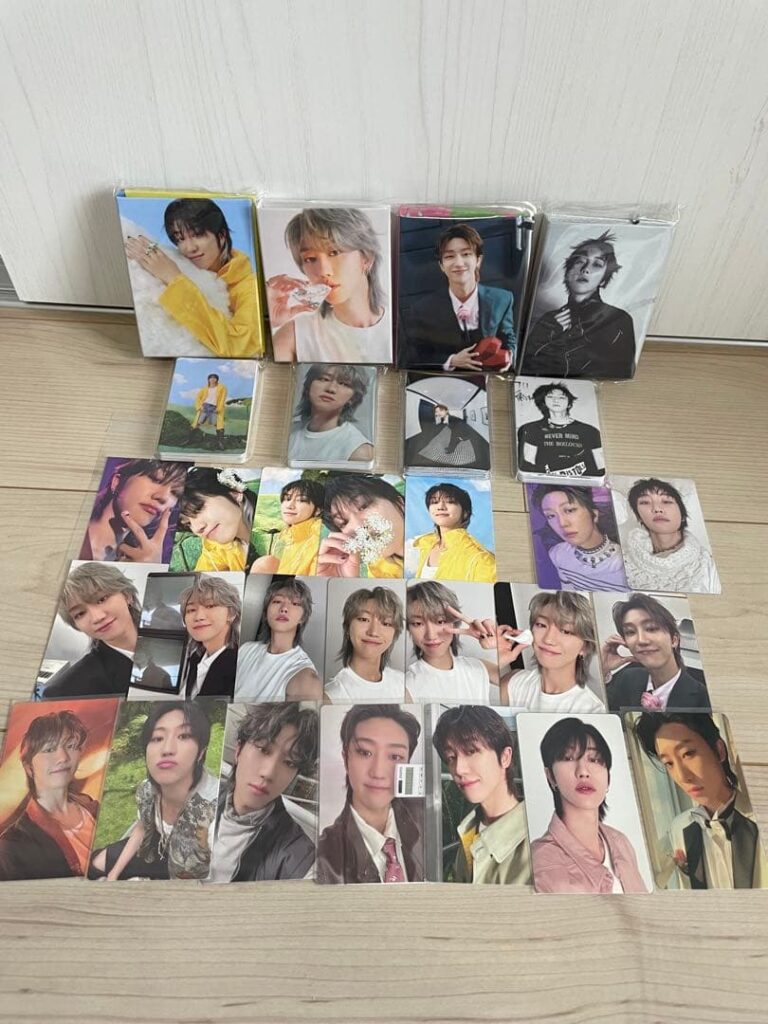
Japan’s secondary marketplaces — including Rakuten Rakuma and Mercari Japan — are home to photocards that can be difficult to find on international platforms. Japanese sellers regularly list cards from Japan-only fan events, domestic store-exclusive POBs, and limited concert merchandise that rarely surface on overseas marketplaces. For international collectors, the challenge is that most of these Japanese platforms do not offer shipping outside the country.
Neokyo is a proxy buying service that bridges that gap. The service purchases items from Japanese online shops and flea market apps on your behalf, handles payment with the Japanese seller, stores the items at its warehouse in Japan, and ships them to your address worldwide. Instead of navigating Japanese-language platforms or arranging a separate forwarding service, you can search and order through Neokyo’s interface in English.
How to Use Neokyo
Step 1: Search for photocards on the Neokyo website
Step 2: Select the item you want to purchase
Step 3: Neokyo handles the purchase and payment with the Japanese seller
Step 4: Your item is stored in Neokyo’s Japan warehouse and shipped to your address
This purchasing channel gives international collectors access to inventory that doesn’t typically appear on global platforms like eBay or Pocamarket. Cards from Japan-exclusive fan meetings, region-limited POBs, and domestic pop-up event releases are regularly available on Rakuma and Mercari Japan, and a proxy buying service lets you purchase them from overseas without needing a Japanese address.
The advantage for K-pop collectors is straightforward: Japanese secondary markets carry photocards that are harder to access through Western platforms alone. Whether you’re looking for a specific Japan-limited POB or browsing for cards you haven’t seen listed elsewhere, these marketplaces expand your options beyond the usual international channels. For the latest details on shipping options and service fees, check the Neokyo website directly.
If you’re ready to explore what’s available, you can start browsing K-pop photocards listed on Japanese marketplaces.
Browse K-pop photocards on Neokyo
How to Make Custom K-Pop Photocards
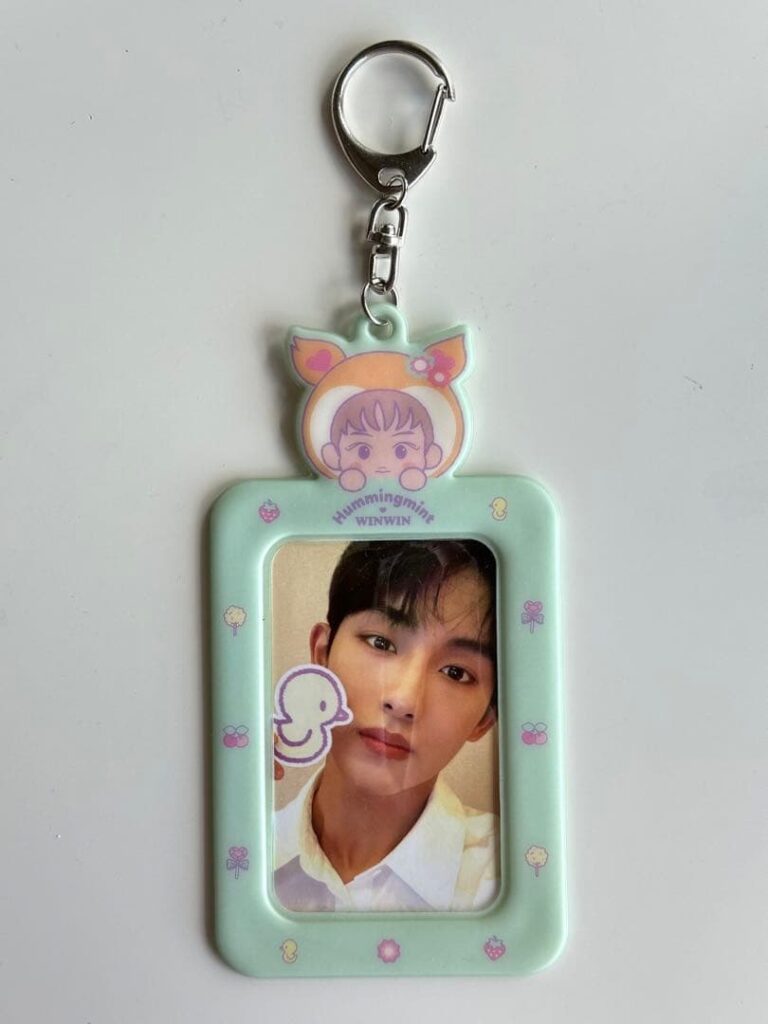
Not every photocard has to come from an album or an event — you can create your own. Whether you’re designing cards with original artwork, printing fan-made tributes, or putting together gifts for friends in your fandom, custom photocards are a popular creative outlet in the K-pop community.
This section covers two approaches:
- DIY Photocards at Home
- Ordering from a Print Service
Both methods let you produce cards that match the look and feel of official releases, as long as you choose the right materials and specifications.
DIY Photocards at Home
Making photocards at home requires just a few basic supplies: thick card stock (glossy or matte), a printer, and a paper cutter or trimmer. With these materials, you can produce cards that closely resemble the weight and finish of official releases.
Start by using a template sized to the standard photocard dimensions of 55 × 85 mm. A pre-measured template ensures each card is cut to a consistent size and eliminates the guesswork of manual measuring. Most image editing programs or free online tools allow you to set up a print sheet with multiple cards arranged on a single page.
After printing, applying a laminate layer adds durability and a polished finish. Glossy laminate gives the card a shine similar to official photocards, while matte laminate creates a softer, fingerprint-resistant surface. Either option protects the printed image from scratches and moisture over time.
Keep in mind that custom photocards should remain for personal use only. Using official images, photographs, or artwork owned by an artist’s agency without authorization to reproduce or sell cards may constitute a copyright violation.
Ordering from a Print Service
For a more polished result, custom trading card print services can produce photocards with professional-grade quality. Services such as PremiumCards.net accept orders at the standard K-pop photocard size of 2.17 × 3.35 in (55 × 85 mm), matching the dimensions of official cards.
When placing an order, you’ll typically choose from several options: paper thickness (16pt / 350 gsm), finish (glossy or matte), and whether to add rounded corners. These specifications mirror the materials used in official production, so the finished product looks and feels comparable to cards pulled from an album.
For file preparation, most print services require artwork in CMYK color mode at 300 dpi, saved as a PDF, JPG, or PNG. Minimum order quantities vary by provider — PremiumCards.net, for example, requires a minimum of 25 cards per design. Ordering in bulk is generally more cost-effective if you’re producing cards for a fan project or group order.
Find Your Next K-Pop Photocard

K-pop photocards span a wide range of types, rarities, and price points — from affordable album pulls at $5–$12 to rare lucky draw cards that can reach hundreds or thousands of dollars. Knowing the difference between each category, understanding what drives value, and choosing reliable purchasing platforms are the foundations of a smart collecting strategy.
You now have the information to identify the types of cards you want, evaluate fair pricing, and shop with confidence across official stores, secondary marketplaces, and Japanese flea market apps through proxy buying services. If you’re drawn to the creative side, you also have the tools to design and produce your own custom cards.
The next step is to start browsing. Japanese secondary marketplaces like Rakuma and Mercari Japan carry photocards that can be harder to find on global platforms, and Neokyo makes them accessible to international buyers.