

The Complete Guide to Pokémon Card Rarities | Types, Identification, and High-Value Cards

Since its inception in 1996, the Pokémon Trading Card Game (Pokémon TCG) has been supported by fans worldwide. In Japan, the boom continues, with high-value transactions for popular characters and limited-edition promo cards attracting significant attention. This article provides an easy-to-understand explanation of Pokémon card rarity types and how to identify them.
What is the Pokémon TCG?
The Pokémon Trading Card Game is an official TCG co-developed by Nintendo, Creatures, and Game Freak. Players build decks using Pokémon, Energy, and Trainer cards to battle against each other. Over a history spanning from the 1990s, card processing technology, designs, and rare slots have evolved. Today, their value has increased not only for gameplay but also as highly sought-after collector’s items.
Rarity Types and Features
Pokémon cards have different rarities depending on the era and series. Here, we introduce the main rarities focusing on the latest series currently on sale (Scarlet & Violet).
Rarity List (Based on the Latest Series)
| Rarity | Abbr. | Features |
| Common | C | The most general cards. Marked with ●. |
| Uncommon | U | Slightly scarce. Marked with ◆. Mostly Trainers. |
| Rare | R | Silver ★ mark. Holographic (foil) finish. |
| Double Rare | RR | “Pokémon ex” and others. Main attackers for decks. |
| Art Rare | AR | Artistic cards with full-card illustrations. Highly popular for collections. |
| Super Rare | SR | Foil embossing on character/Pokémon outlines. Low pull rate. |
| Special Art Rare | SAR | Currently the most popular rarity. Special full art with storytelling elements. |
| Ultra Rare | UR | The most gorgeous rarity, with the entire card shining in gold. |
Note: Rarities from Past Series and High-Class Packs
The following rarities are found in older series (Sword & Shield, etc.) or year-end special sets.
- RRR (Triple Rare): VMAX / VSTAR Pokémon, etc.
- HR (Hyper Rare): Rainbow foil finish. Currently discontinued.
- K (Radiant): Special holographic finish.
- CHR / CSR: The predecessors to AR / SAR in previous series.
Points for Identification
You can identify the rarity by the alphabet and symbol on the bottom left of the card.
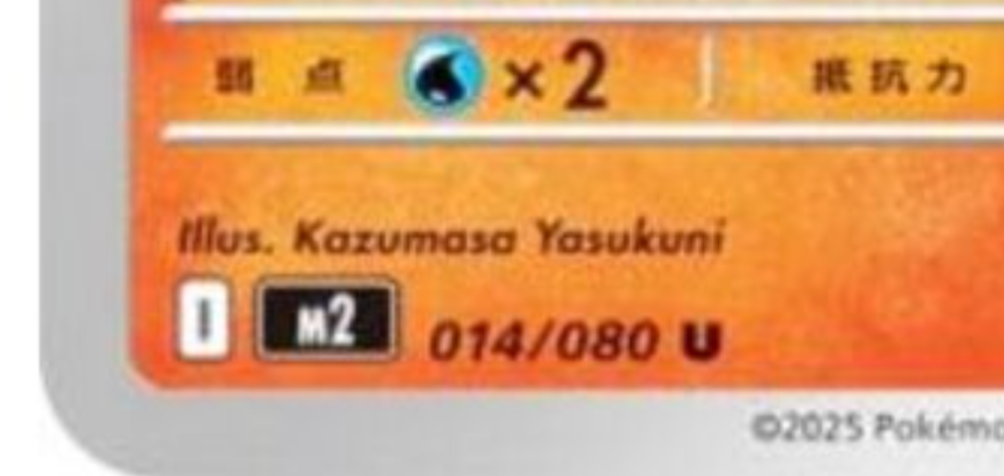
This card is U = Uncommon
In recent series, “AR (Art Rare)” and “SAR (Special Art Rare)” are the center of attention for collectors.
- AR: Often features unevolved Pokémon with cute or beautiful illustrations that include detailed backgrounds.
- SAR: Features evolved Pokémon or popular Trainers. These are traded at very high prices.
- SR: Simple backgrounds, but the character is depicted large with textured (relief) processing.
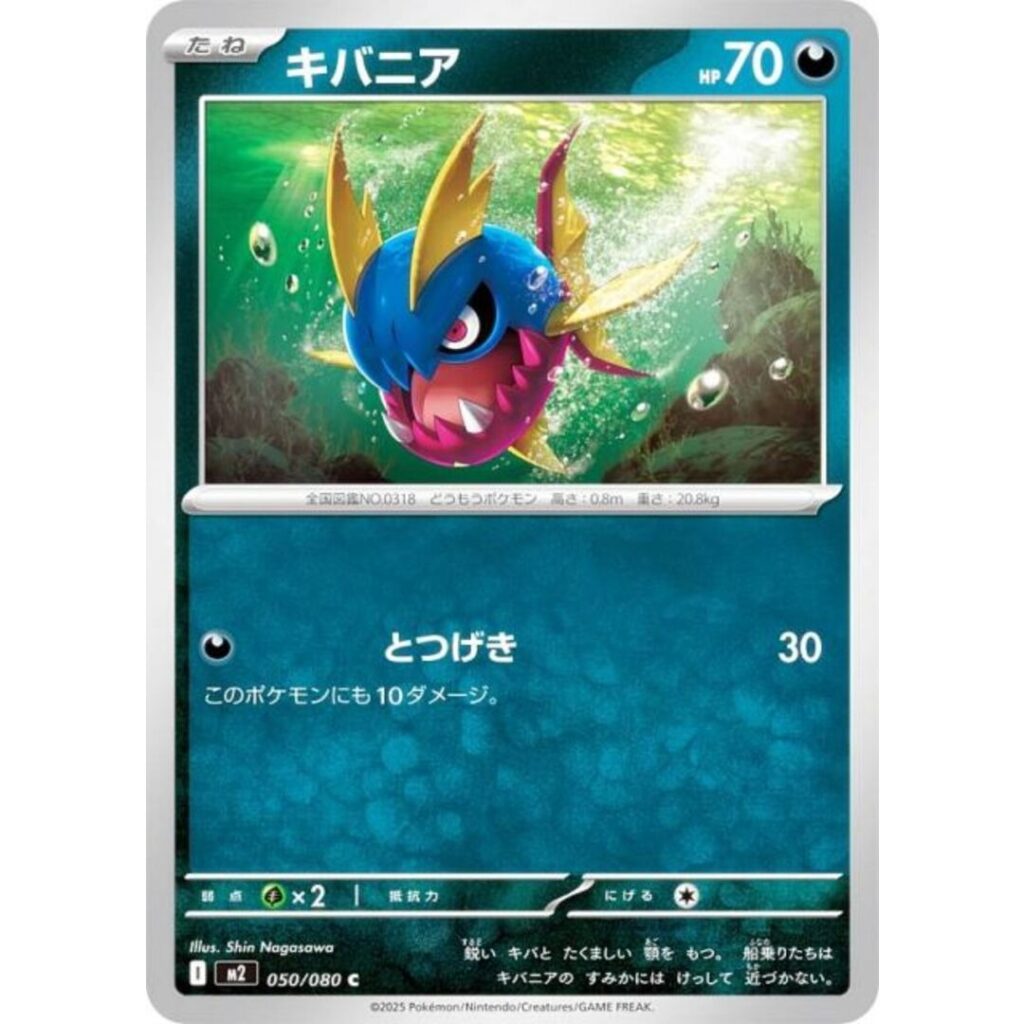
Common
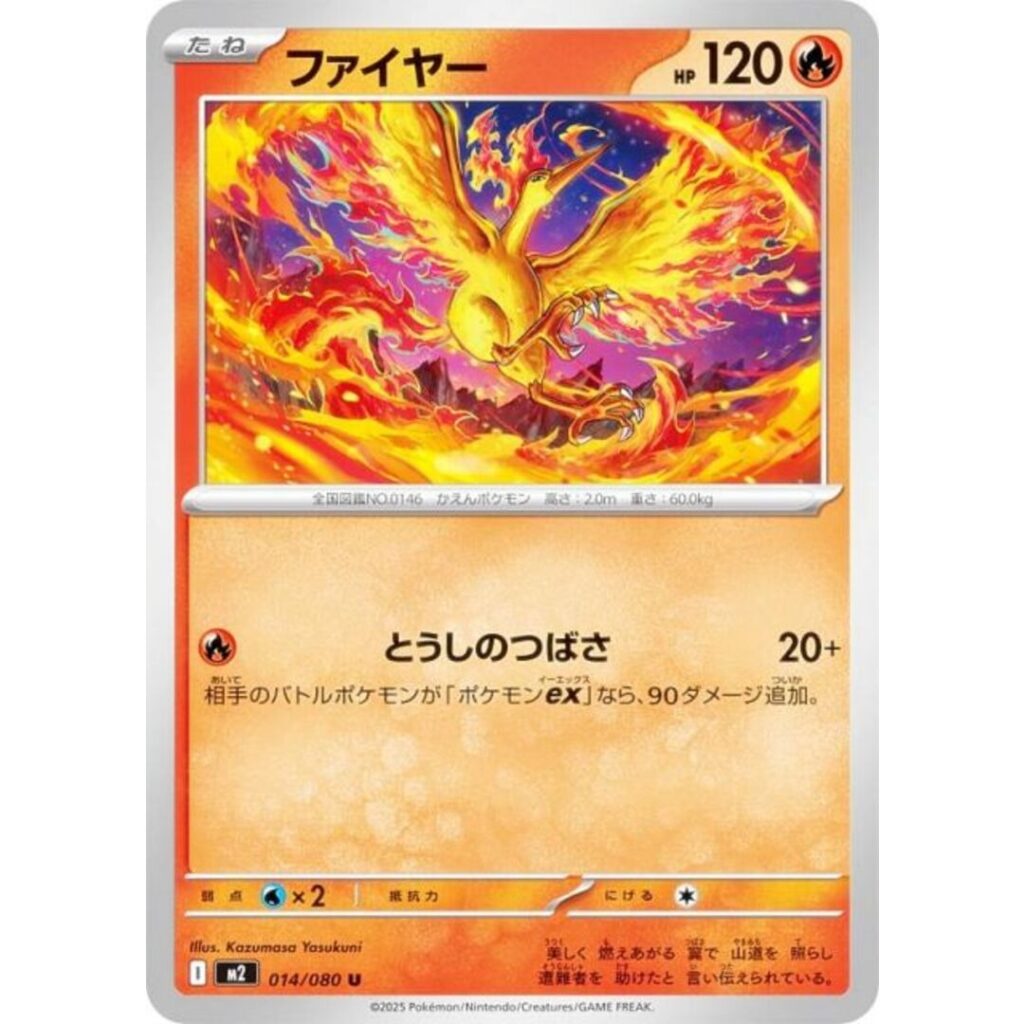
Uncommon
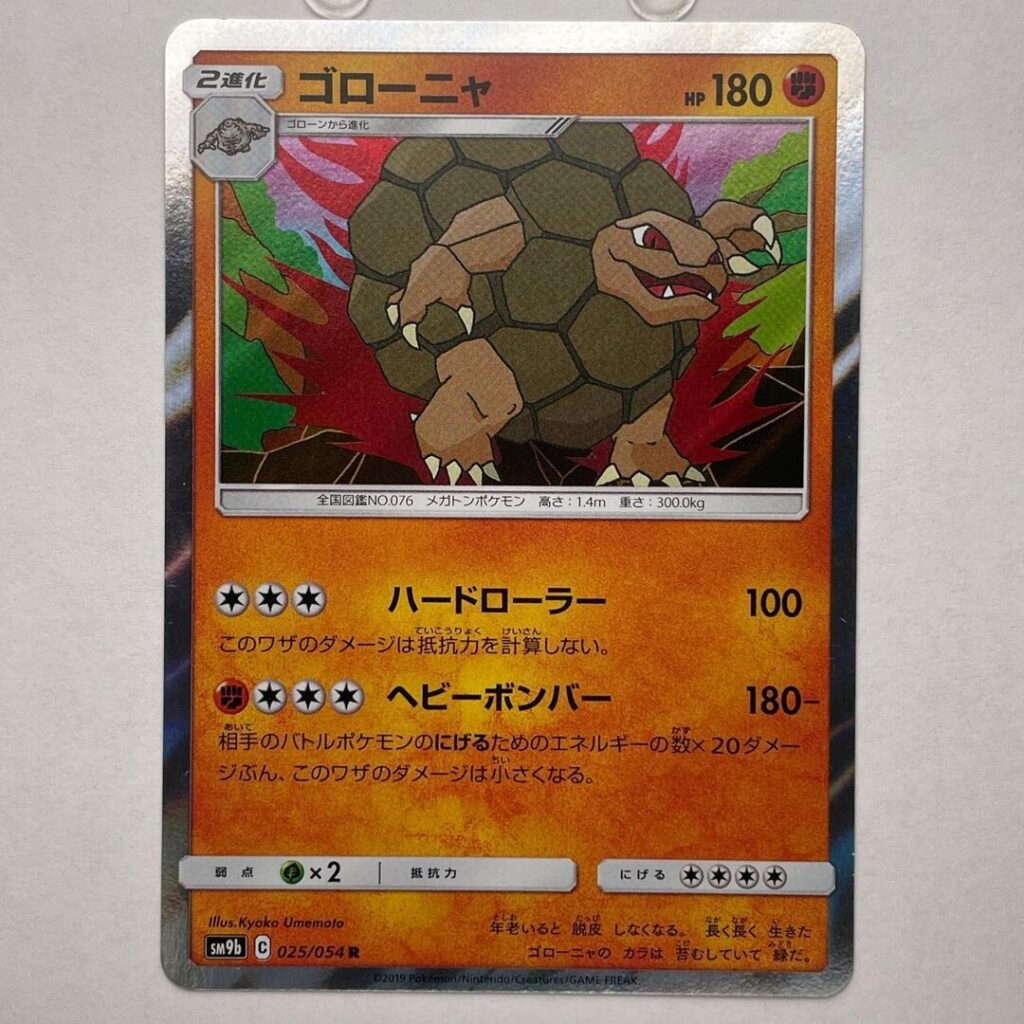
Rare
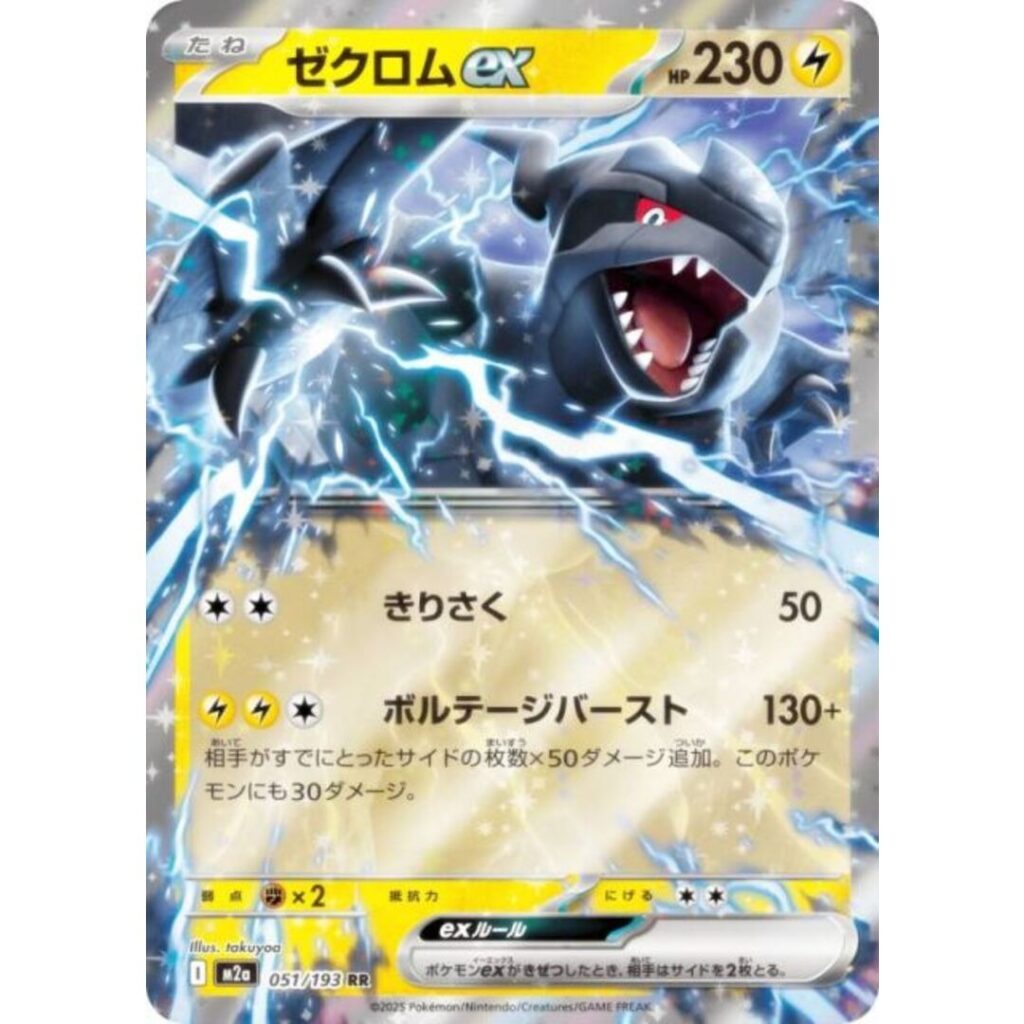
Double Rare
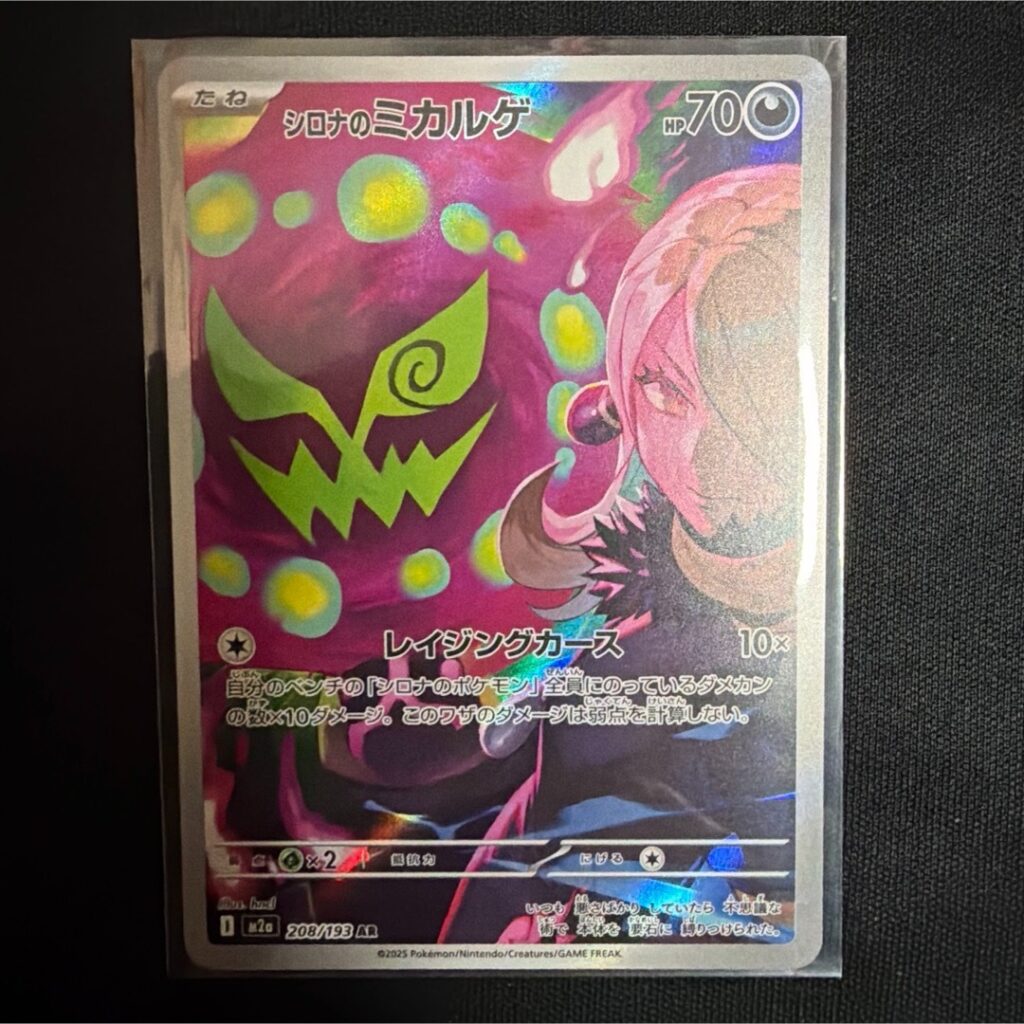
Art Rare
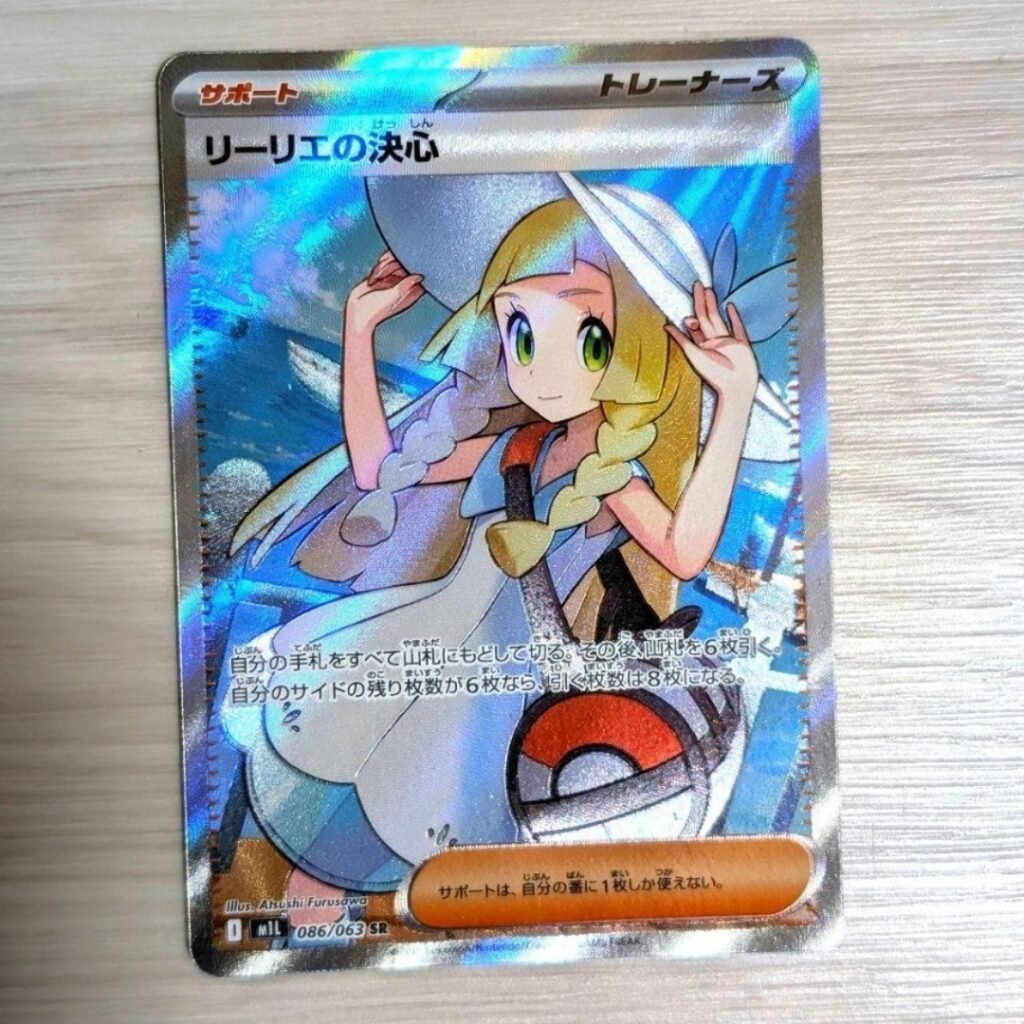
Super Rare
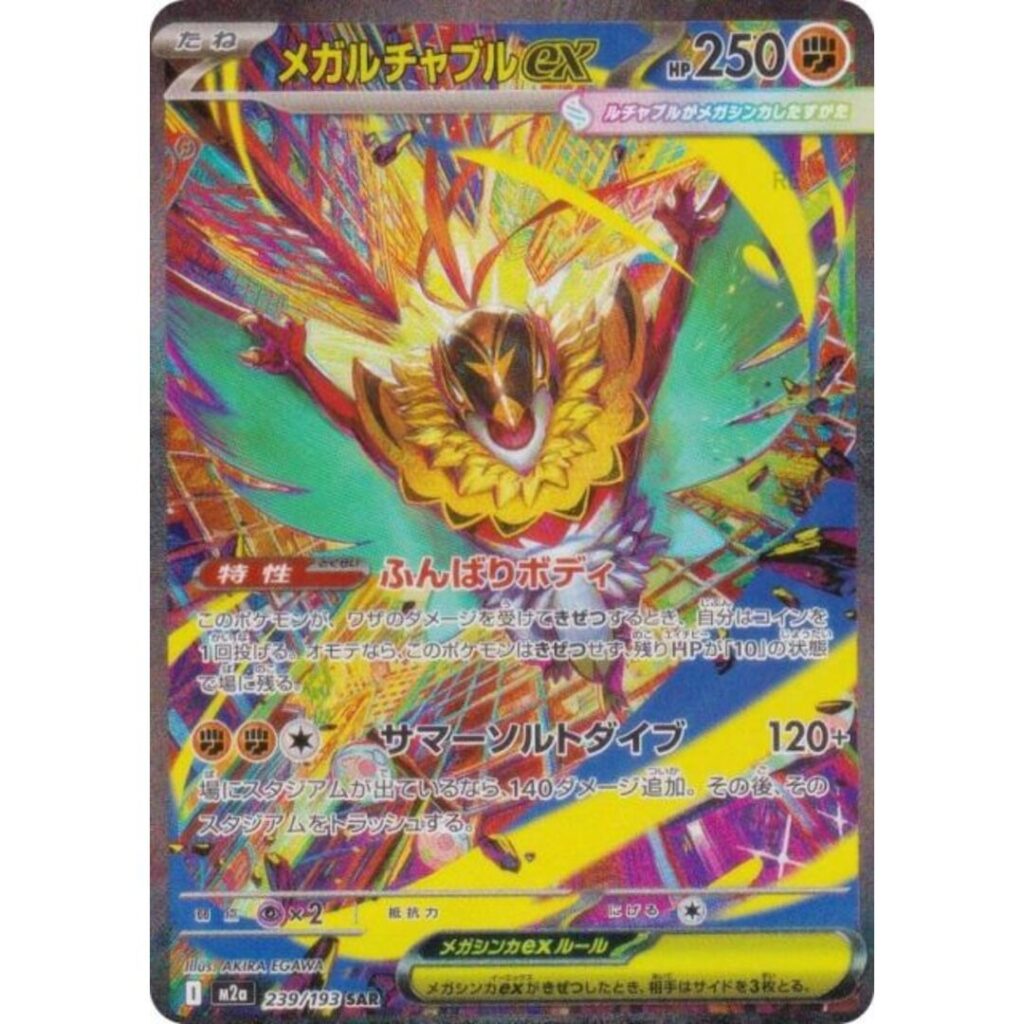
Special Art Rare
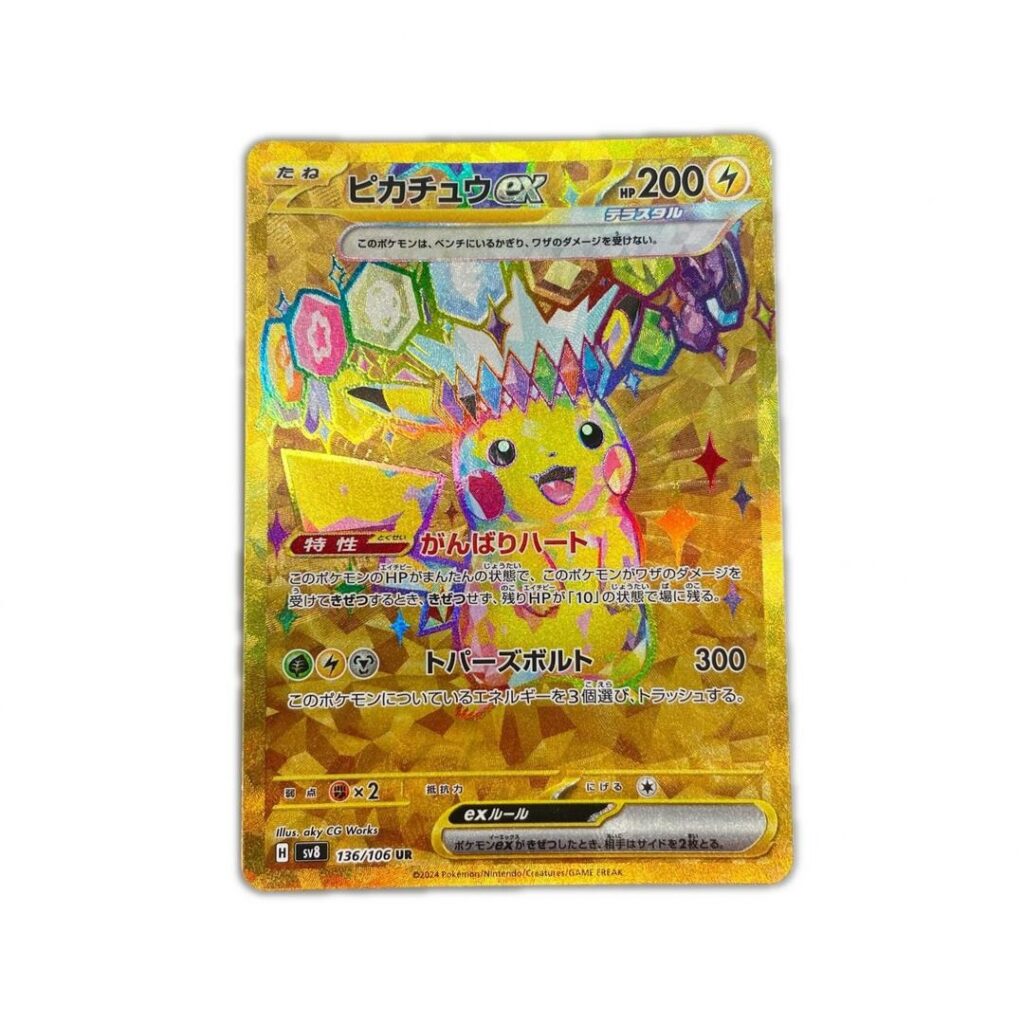
Ultra Rare
Card Pull Rates (Estimates)
While there is no detailed official announcement, standard breakdown estimates when opening a current Regular Expansion Box (30 packs per box) are as follows.
Note: Currently, the standard specification is “Guaranteed 1 SR or higher per BOX.”
| Rarity | Quantity (Per BOX) | Probability (Est.) | Notes |
| R (Rare) | 7〜8 | – | – |
| RR (Double Rare) | 4〜5 | – | Main deck slots. |
| AR (Art Rare) | 3 | Approx. 10% | Almost fixed at 3 per box. |
| SR or higher | 1 (Guaranteed) | 1 per BOX | Hitting a SAR or UR in this slot is a big win. |
| SAR | Approx. 1 in 6 BOXES | ~2 per Carton | Extremely rare slot. |
| UR | Approx. 1 in 12 BOXES | ~1 per Carton | The hardest rarity to pull. |
Note: Probabilities differ for “High-Class Packs” (special sets with 10 cards per pack).
Reasons for Price Surges
- First Editions / Limited Promos: Event distributions or limited-time cards are not reprinted, increasing in value year by year.
- Character Popularity: Demand concentrates on female Trainers like “Iono,” “Lillie,” and “Marnie,” as well as popular Pokémon like “Pikachu,” “Charizard,” and “Eeveelutions.”
- High Artistry: Full illustration cards like SAR are treated as “works of art,” driving high collection demand.
- Graded Cards (PSA/BGS): Cards in top condition submitted to grading services and receiving the highest grades (e.g., PSA 10) trade for 1.5 to 3 times the price of raw cards.
In particular, cards like “Lillie (from GX Battle Boost)” and “Mario Pikachu (Limited Promo)” are often traded for tens of thousands of dollars.
Purchasing Methods and Precautions
Pokémon cards can be obtained via:
- Official Shops (Pokémon Center, electronics retailers, etc.)
- Online Sales (Pokémon Center Online, Amazon, Rakuten, etc.)
- Secondary Market (Mercari, Yahoo! Auctions, eBay)
- Proxy Services (Neokyo, etc. for overseas users)
In recent years, counterfeit cards (replicas) have increased. Be careful of print quality, hologram positioning, and font misalignment. When purchasing high-value cards over hundreds of dollars, always buy Graded (PSA/BGS) or from trusted sellers.
Buy Japan-Exclusive Cards from Overseas with Neokyo
You can safely buy Japan-exclusive promo cards and limited art cards from overseas using Neokyo. It supports cross-searching major Japanese marketplaces like Mercari, Yahoo! Auctions, and Surugaya, handling everything from purchase to shipping.