
Naruto Cards Guide: Rare & Valuable Cards and How to Identify Them
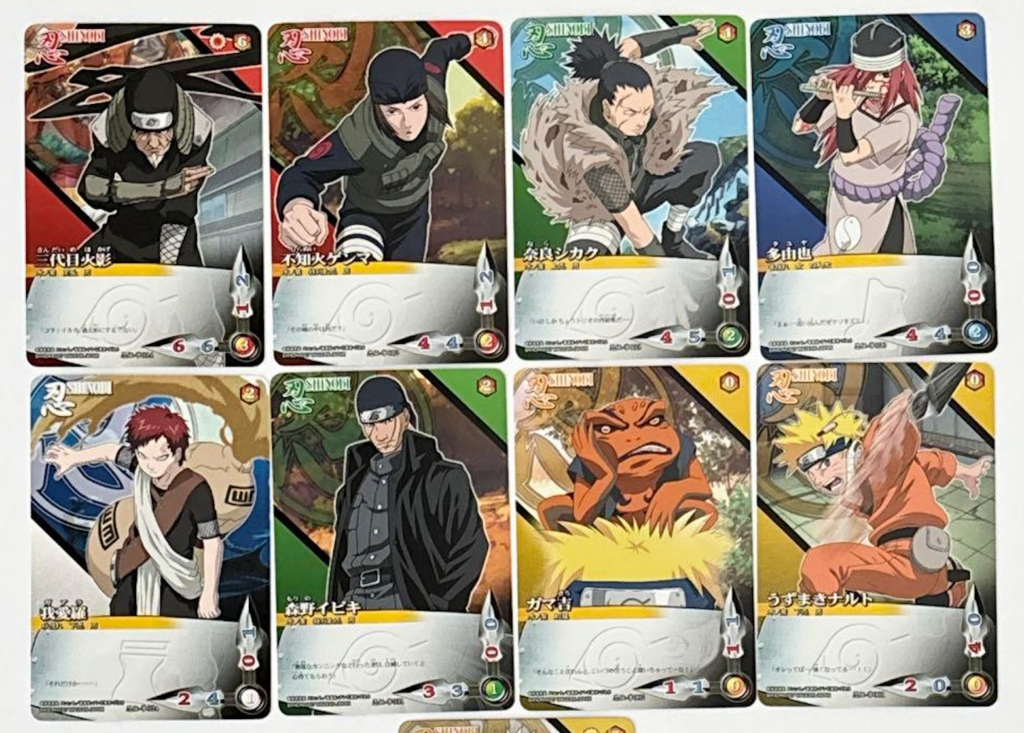
NARUTO is a representative Japanese work that began its serialization in 1999, with an anime that aired for a long period. Due to its high popularity, various card products have been released in Japan alongside the manga serialization and anime development.
On the other hand, NARUTO cards are not a unified Trading Card Game (TCG) like Pokémon or Yu-Gi-Oh!. Because different series are scattered across different periods, it is a genre where it is difficult to understand:
- What kind of cards exist
- Until when they were produced
- Which cards have collection value
In this article, we will organize when and how NARUTO cards were developed and explain in detail why they are currently attracting attention as collectibles and how to identify them.
Chronology of NARUTO Original Work/Anime and Card Development
Original Work & Anime Periods:
- Original Manga: 1999 – 2014
- TV Anime:
- NARUTO (Original): 2002 – 2007
- NARUTO Shippuden: 2007 – 2017
NARUTO is a long-running series with media development spanning over 15 years, and card products were released intermittently during this period.
Periods of Active Card Development: NARUTO cards were released most frequently during the following three periods:
- 2002–2008: The Golden Era
- From the original anime to the early Shippuden era.
- Numerous Carddass and trading cards appeared.
- Large-scale development centered around Bandai.
- Cards from this era currently hold the highest value.
- 2009–2012: Diversification Era
- Mid-Shippuden era.
- Increase in limited distribution cards, such as magazine supplements and campaigns.
- Many bonus cards linked to theatrical film releases.
- 2013–Present: Contraction Era
- Decrease in new large-scale card series.
- Focus shifts to reprints or small-scale releases.
- Gradually faded out following the end of the original manga (2014).
Currently, there are almost no card series being newly and continuously developed.
What Does It Mean That NARUTO Cards Are “Not a TCG”?
Unlike Pokémon or Yu-Gi-Oh!, NARUTO cards do not have unified battle rules or a continuous game system.
Differences from Pokémon and Yu-Gi-Oh!: | Item | Pokémon / Yu-Gi-Oh! | NARUTO Cards | | :— | :— | :— | | Gameplay | Playable with unified rules | Primarily for collection | | Series Development | Continuous release of new sets | Independent series per period | | Rarity System | Unified | Differs by series | | Competitive Scene | Official tournaments exist | None | | Reprints | Popular items are reprinted | Basically no reprints |
Why Didn’t They Become a TCG?
- Nature of the Work: While it is a battle manga, card game elements do not exist in the story.
- Market Strategy: Bandai developed them as “Collection Cards.”
- Competition: Yu-Gi-Oh! and Pokémon had already established the market.
This “Not a TCG” characteristic greatly affects collection value:
- Scarcity tends to increase because they are not reprinted.
- Since there is no “play demand,” it is rare for cards to remain in mint condition.
- Since there is no competitive demand, sudden price spikes are unlikely to occur.
Main Types of NARUTO Cards and How to Identify Them
1. Trading Cards & Carddass (General Distribution)
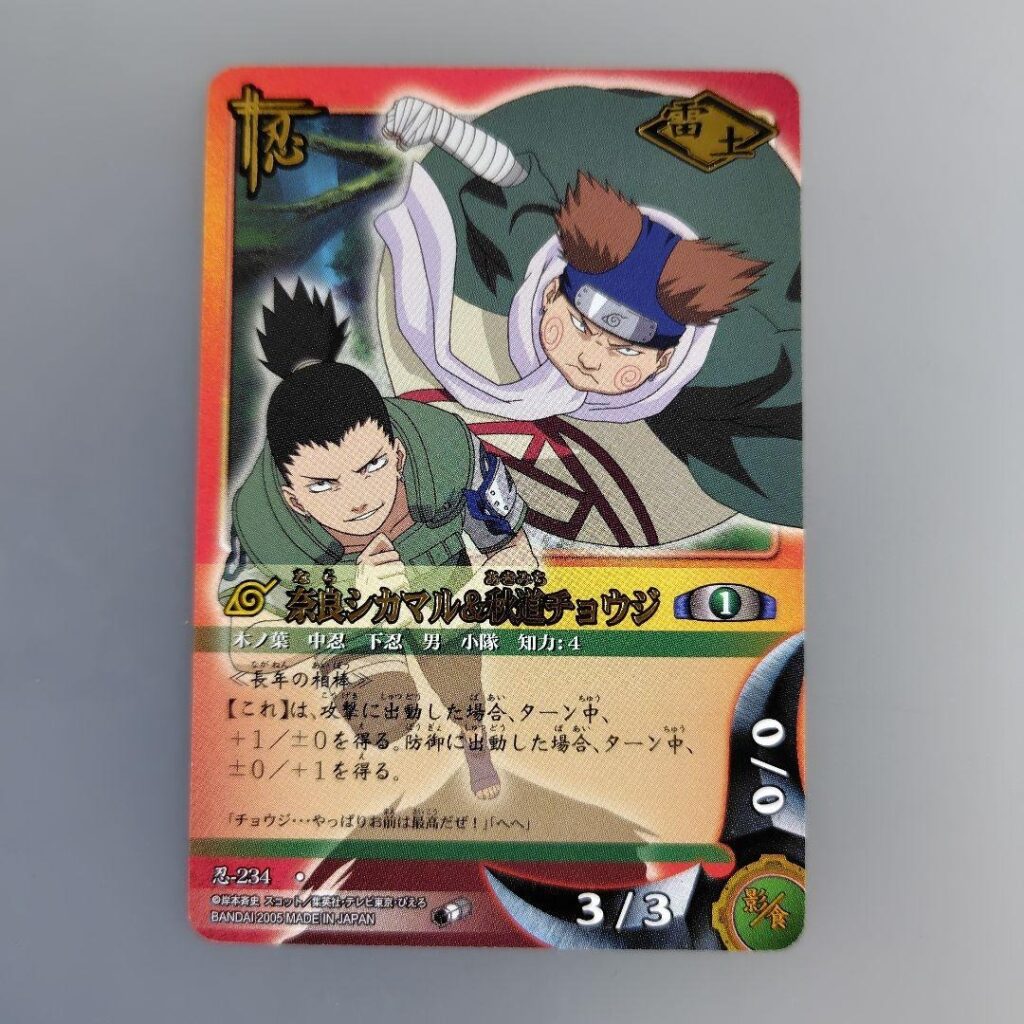
The most widely circulated are the Carddass and trading cards released by Bandai and others.
- Characteristics: Pack-inserted cards, cards for Carddass vending machines, featuring characters and famous scenes. These were general consumer products sold during the anime broadcast, and most are now out of production.
- Identification Points:
- Bandai or Carddass logo on the back.
- Series numbers printed (e.g., No.1/120).
- Notations like “BANDAI” or “CARDDASS.”
- Value: Due to high circulation, they are rarely subject to high-priced trading (generally 100 to 500 yen per card).
2. Magazine Supplements & Campaign Cards (Limited Distribution)
During the peak of the anime and manga, many limited cards were also distributed.
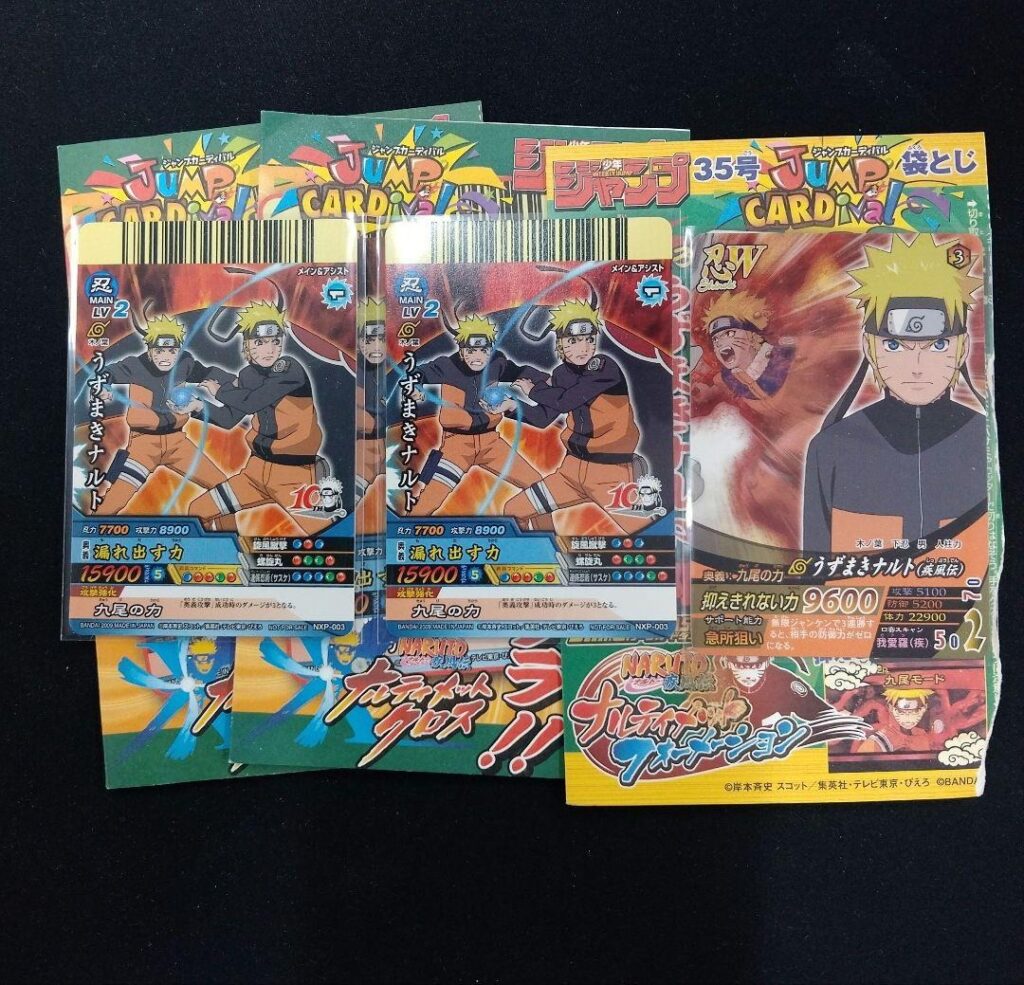
- Distribution Methods: Magazine supplements (Weekly Shonen Jump, etc.), theatrical film/event attendee bonuses, campaign applicant-only cards, and first-press bonuses for video games.
- Identification Points: Look for the following notations on the front or back:
- “PROMO”
- “NOT FOR SALE”
- “非売品” (Not for Sale)
- “○○限定” (Limited to [Event/Movie] etc.)
- Value: Since these were distributed as non-sale items, few remain in good condition, making this the category with the highest collection value.
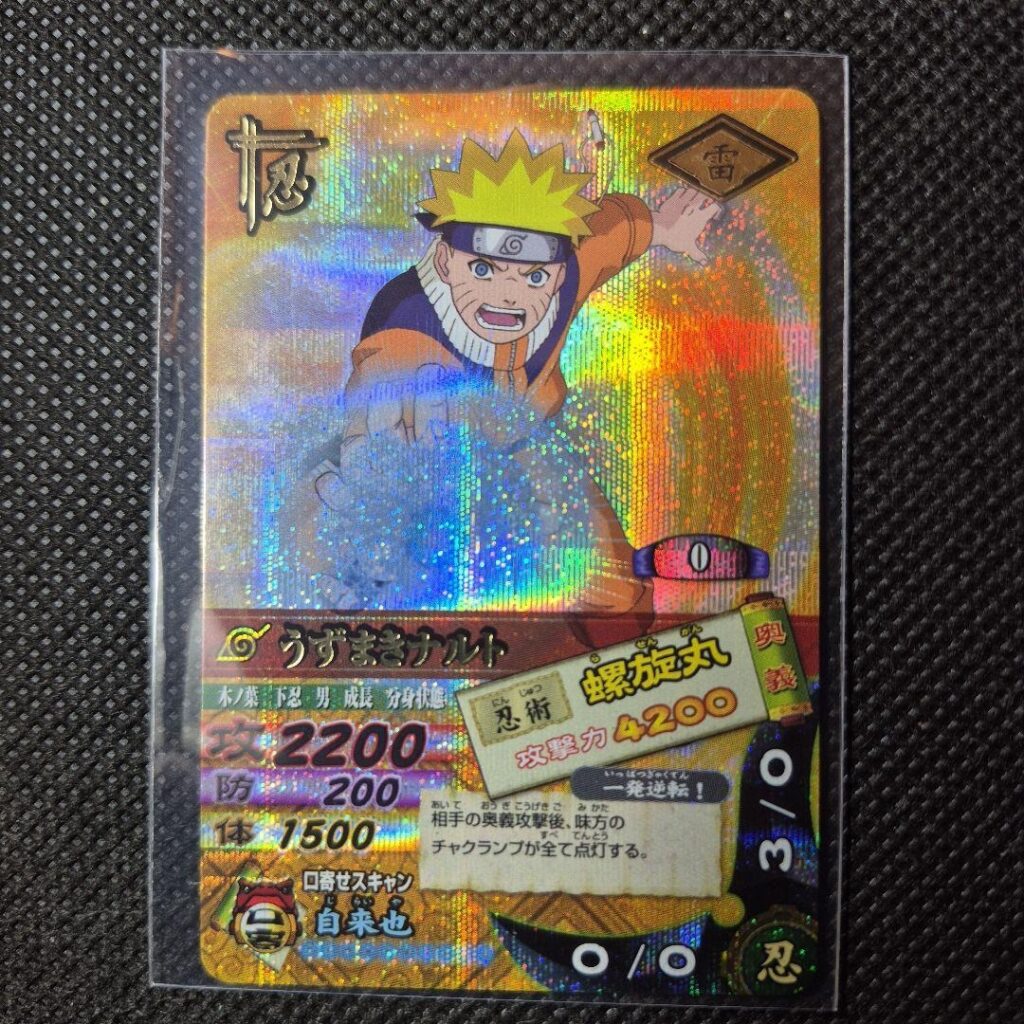
3. Discontinued & Old Series Cards
Most NARUTO cards vanished from the market as they were not reprinted and distribution stopped when the series ended.
- High-Value Early Series: Cards from the original anime era (2002–2004), early Carddass series, and the “NARUTO Card Game” series (which ended after a short period).
- Today, the majority of cards circulate only in the secondhand market.
Characteristics and Identification of High-Value NARUTO Cards
NARUTO cards are not a genre where everything becomes expensive. However, cards that meet the following conditions tend to be highly valued in the collection market. Prices vary greatly (from hundreds to tens of thousands of yen) based on condition, rarity, and demand.
1. Early Promotion Cards (2002–2005)
- Distribution Examples: Jump Festa limited, magazine mail-in rewards.
- Popular Characters: Naruto Uzumaki, Sasuke Uchiha, Itachi Uchiha.
- How to Identify: Look for “PROMO,” “非売品” (Not for Sale), or “○○限定” markings.
- Price Trend: Several thousand to tens of thousands of yen for mint condition.
- Reason for Value: Low distribution numbers and few mint copies remain as they were treated as consumables at the time.
2. Theatrical Film Attendee Bonuses
- Distribution Examples: Bonuses for attendees of the Shippuden movie series.
- Characteristics: Special processing such as holograms and foil-stamping.
- Popular Designs: Nine-Tails Chakra Mode, special forms.
- Price Trend: Several thousand to over 10,000 yen.
3. Event-Only Distribution Cards
- Distribution Examples: Jump Festa, Anime Fair.
- Popular Characters: Itachi Uchiha, Kakashi Hatake, Gaara.
- Price Trend: Several thousand to 20,000 yen depending on scarcity.
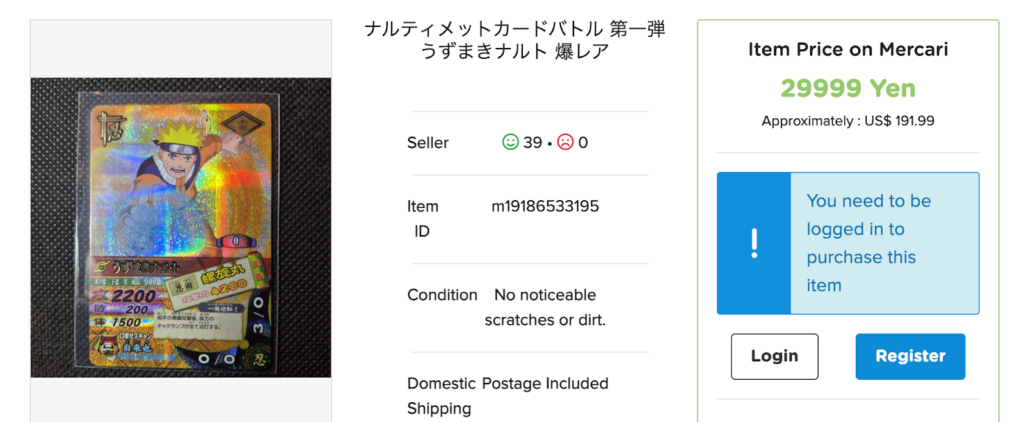
To check the actual market price, it is recommended to look at “Sold” listings on:
- Yahoo! Auctions (Japan)
- eBay (Naruto Promo Card Japan)
- Mercari (Japan)
NARUTO Cards and the International Market
NARUTO is internationally popular, and there is high demand from overseas collectors for Japan-exclusive cards.
In fact, almost all NARUTO cards were manufactured only in Japan. While some overseas-specific card games exist (e.g., North America’s “Naruto CCG”), their designs and rarity systems are different and are often not highly valued by Japanese collectors. In other words, cards issued in Japan are treated as the “authentic” versions.
Consequently, in international markets, these cards may be traded at 1.5 to 2 times the domestic price due to import costs and difficulty of acquisition.
However, purchasing from overseas is difficult because:
- Yahoo! Auctions and Mercari do not ship internationally.
- A Japanese credit card may be required.
- Communication in Japanese is often necessary. → Neokyo solves these challenges.
Precautions When Purchasing/Collecting NARUTO Cards
- Don’t Confuse Common Cards with Promos: Ensure the “PROMO,” “NOT FOR SALE,” or “非売品” markings are present.
- Don’t Judge by Price Alone: High prices don’t always mean high value. Check “Sold” history on multiple sites for reference.
- Check Condition Thoroughly: Look for corner whitening, surface scratches, and warping.
- Overseas Purchasing Risks: Many sellers only ship within Japan. Check return policies and damage risks during international shipping.
Summary: The Appeal of NARUTO Cards
The reality is that NARUTO cards are not a genre where dramatic price surges like Pokémon cards are expected. However, they offer:
- Nostalgia and Fandom: Attachment to the work creates value.
- Scarcity: No reprints mean your collection is unique. Early anime era cards will only increase in scarcity.
- International Demand: Steady demand from both Japan and overseas with the added value of being “Japan Exclusive.”
- Accessibility: Since prices aren’t as inflated as Pokémon, it’s an easy hobby to start now (ranging from several thousand to tens of thousands of yen).
We recommend building your collection at your own pace while having fun and understanding the types and distribution periods.
Buy Japan-Exclusive NARUTO Cards via Neokyo
Many Japanese anime cards, including NARUTO, are mainly circulated in the Japanese domestic market. By using Neokyo, you can:
- Search Japanese sites in English.
- Purchase (Proxy bidding/buying).
- Ship (International delivery with safe packaging).
Get the rare Japan-exclusive NARUTO cards you’ve always wanted with peace of mind.