

A Comprehensive Guide to One Piece Card Rarities | Types and Features of High-Value Cards
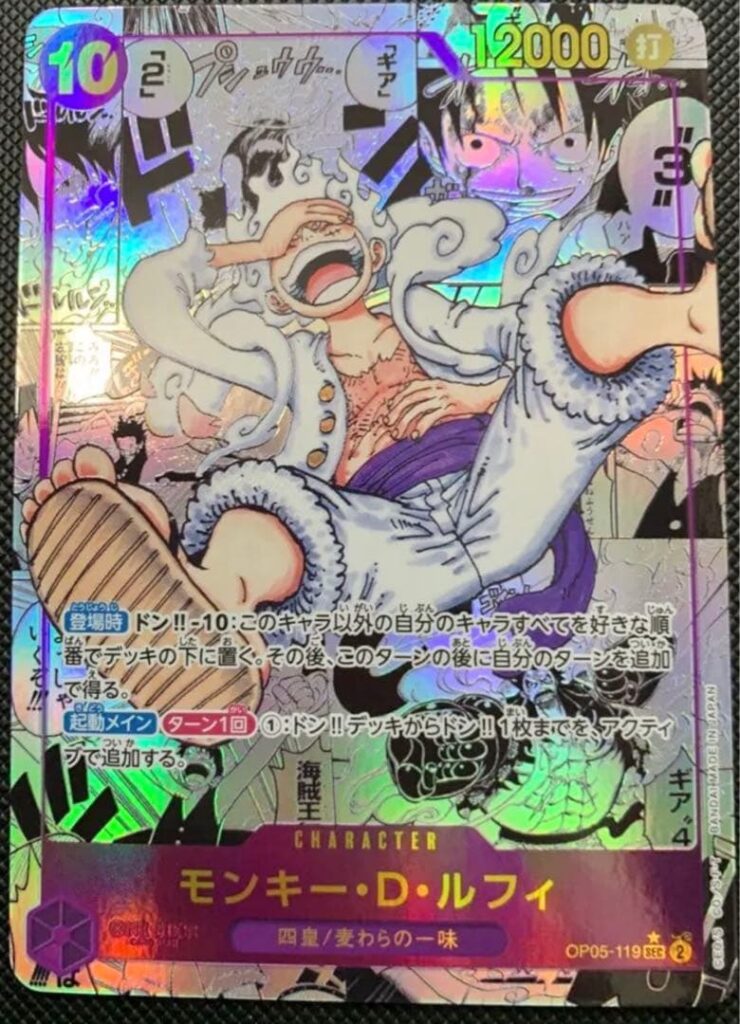
Released in 2022, the “ONE PIECE CARD GAME” immediately gained global popularity. Today, it attracts attention not only in Japan but also in collector markets worldwide. Beautiful character illustrations, original designs, and scarce rarities are key factors influencing prices. This article explains the rarity structure, how to identify them, and the characteristics of popular cards that fetch high prices in the market.
What is the One Piece Card Game?
It is a TCG series produced by Bandai, featuring cards based on famous scenes and characters from the original manga and anime. In the One Piece Card Game, players build decks using color attributes—”Red, Green, Blue, Purple, Black, and Yellow.” Matches are played by combining a central “Leader Card” with “DON!! Cards” used for attacks and skill activation. The series appeals not only to players but also to collectors who seek out original artwork and limited-edition foil processing.
Rarity Types and Features
One Piece cards come in multiple rarities. Their value varies significantly depending on the pull rate, design, and the suffix of the card number.
Rarity List
| Rarity | Abbr. | Features & Estimated Pull Rate |
| Common | C | Most common. Multiple cards per pack. |
| Uncommon | UC | Slightly fewer than C. Many are essential deck parts. |
| Rare | R | Foil finish. Approx. 7-8 cards per BOX. |
| Super Rare | SR | Holographic finish. Approx. 3-4 cards per BOX. A primary “hit” slot. |
| Leader | L | Has a Life value. Approx. 4-6 cards per BOX (*Normal L). |
| Secret Rare | SEC | High rarity. 4-8 cards per CASE (12 BOXES). Varies by set. |
| Parallel | P | Alternate art version of standard cards. At least 1 per BOX (shared slot with SEC Parallel). |
| Special | SP | Limited parallel marked “SP”. Approx. 1 per CASE. |
| Super Parallel | – | Known as “Manga Rare”. Background features manga panels. Ultra-rare (1 in several cases). |
| Promo | PR | Non-for-sale items from events, tournaments, or magazine bonuses. |
Points for Identification
The easiest way to identify a card is by the number and symbol in the bottom right corner (e.g., OP01-121 SEC).
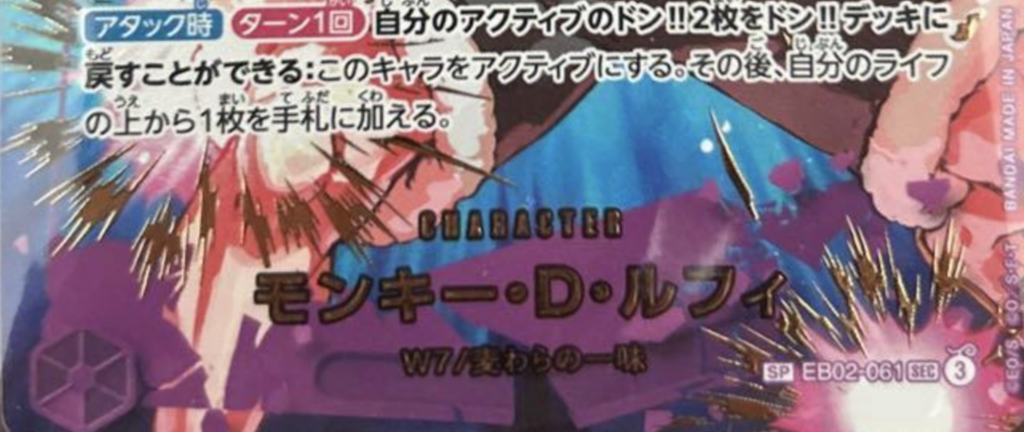
This card is “SEC”, so it is a Secret Rare.
There are processing differences for each rarity:
- R and SR: Metallic processing on the border; appears rainbow-colored when reflecting light.
- L (Leader): Bold font for the name, strong attribute color in the background. The back is red, and the Life value is listed on the bottom right.
- SEC: Background has a 3D holographic effect, giving the entire card a premium feel.
- P (Parallel): An alternate version where the character composition and background differ from the normal version. There is a star mark above the rarity letter in the bottom right.
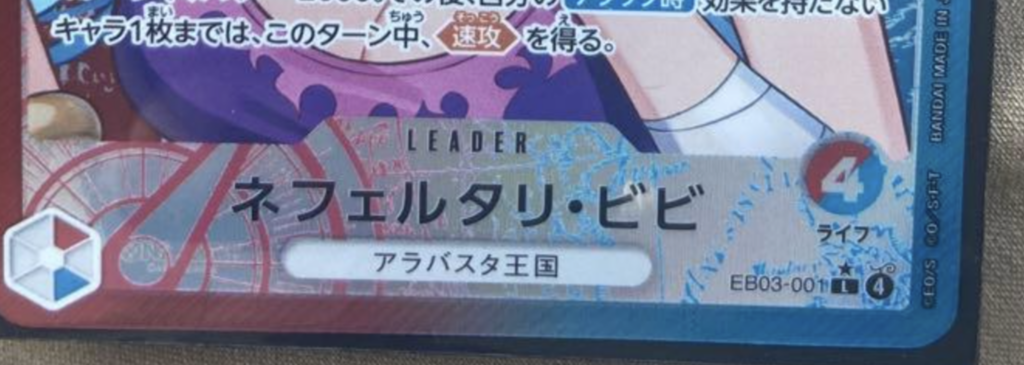
This card is “L” (Leader), and since it has a star, it is a Parallel Leader.
Beginners often get confused by Parallel cards because they “look like completely different cards even though they are the same card.” Even if the card number is identical (e.g., OP01-003), check for the star mark and differences in artwork or framing.

Portgas D. Ace: Secret / Parallel

Nefertari Vivi: Leader / Parallel (Leader cards have no Cost on the top left, but have Life on the bottom right.)
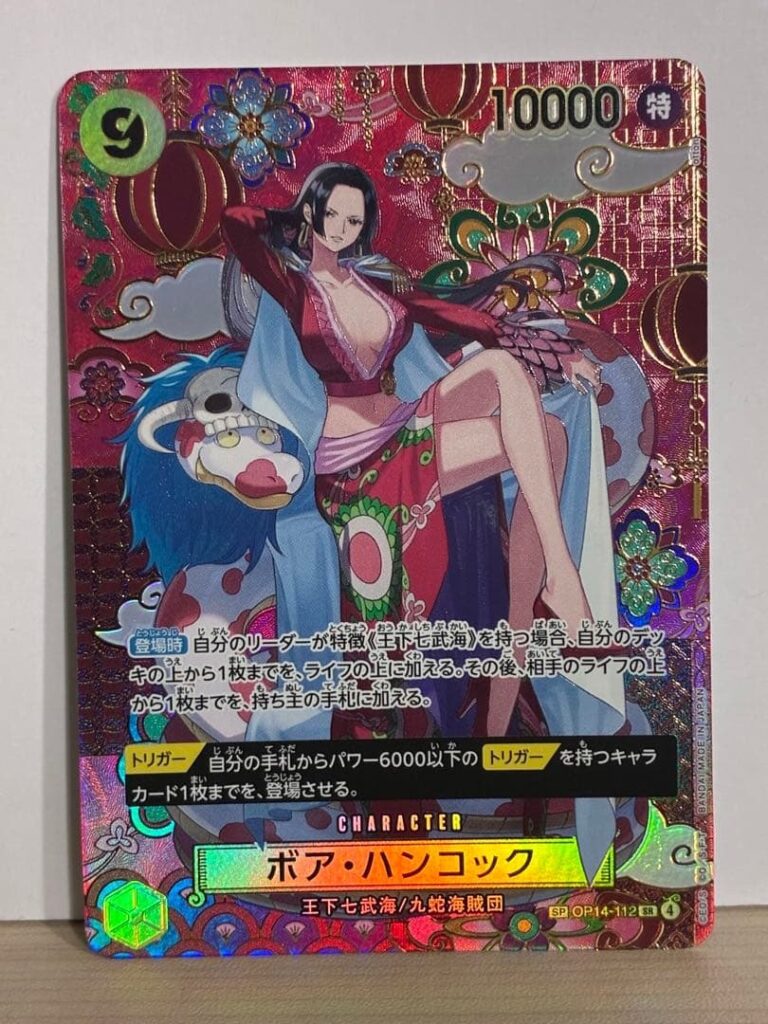
Boa Hancock: Super Rare
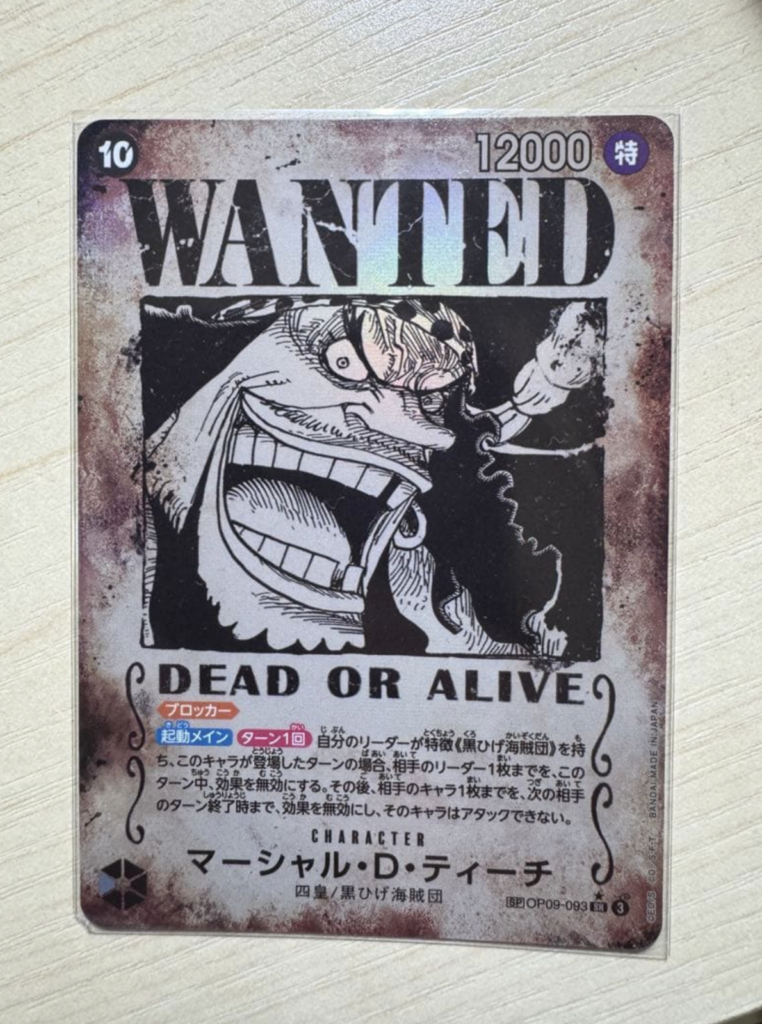
Marshall D. Teach: Super Rare / Parallel
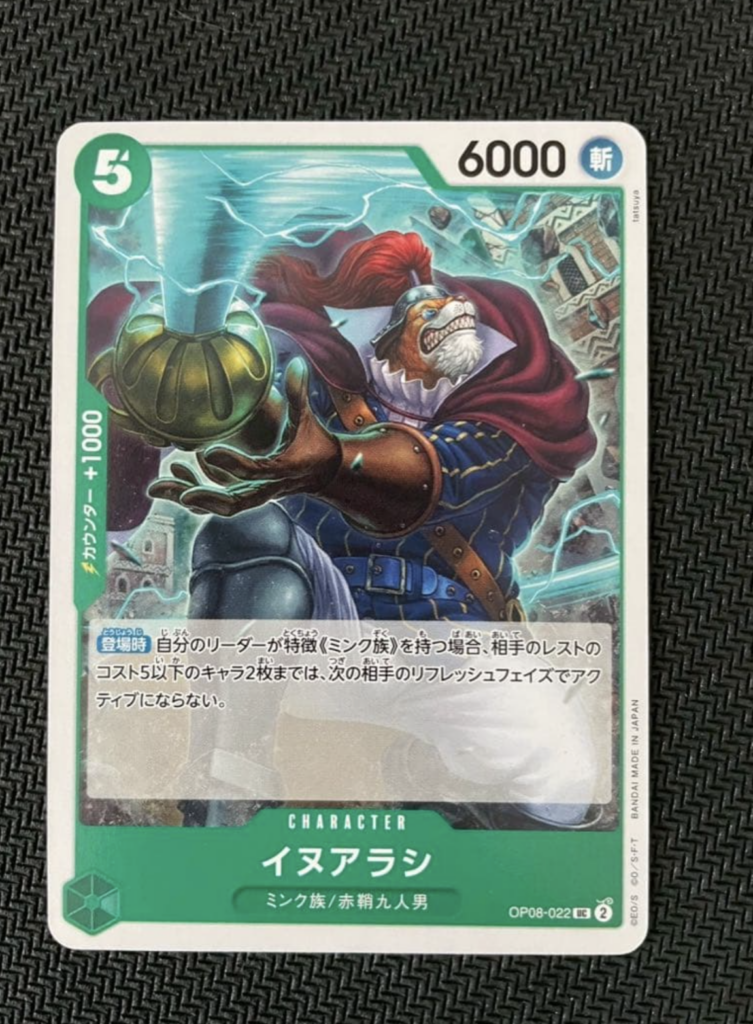
Inuarashi: Uncommon
Card Pull Rates (Estimates)
While official pull rates are not published, reports from opening videos and retailers suggest the following standard breakdown for opening 1 BOX (24 packs).
Note: This may vary slightly by series.
| Rarity | Quantity (Per BOX) | Notes |
| R (Rare) | 7〜8 | Stable in most sets. |
| SR | 3〜4 | Main “hit” cards. |
| Leader (L) | 4〜6 | *Normal Leader count. |
| SEC (Secret) | 1/3 to 1/4 BOX | Approx. 4-8 per CASE. Not guaranteed in every box. |
| Parallel (Normal P) | 1 or more | Shares the slot with SEC Parallels. |
| Special (SP) | 1 per CASE | Very rare. |
| Super Parallel | 1 in several CASES | “Manga Rare”. Varies greatly by series. |
Reasons for Price Surges
- Limited Circulation: First editions and event cards are often not reprinted or are hard to find.
- High Demand: Popular characters (Luffy, Shanks, Ace) have concentrated demand domestically and internationally.
- Extremely Low Pull Rates: High-rarity cards like SP and SEC (Manga Rares) appear only once every few cases (cartons).
- Grading Premiums: Cards graded by PSA or BGS can trade for 2-5 times the price of raw cards.
- Notably, PSA 10 rated “Luffy (OP01-003)” or “Ace (OP02-013)” can trade for thousands of dollars in overseas auctions.
Expansion of the Overseas Collector Market
The popularity of One Piece cards is skyrocketing not only in Japan but also in Asian and Western markets. In particular, Leader Parallels and movie collaboration cards record high prices in overseas auctions when they are PSA-graded mint copies. In English-speaking countries, there is a trend to search for specific queries like “Luffy Parallel” or “Shanks SEC,” and the movement to buy Japanese-exclusive BOXes from overseas is expanding. Since market prices fluctuate with every reprint or limited BOX release, timing your purchase is crucial.
Purchasing Methods and Precautions
One Piece cards can be purchased or obtained via:
- Official Shops: BANDAI Official Store, anime shops, dedicated card shops.
- Second-hand / Overseas: Active trading on eBay, Mercari, etc.
- Proxy Services (Neokyo, etc.): Convenient services for buying Japan-exclusive cards from overseas.
Note: Some counterfeit cards are in circulation. Be careful of differences in gloss, paper quality, and font. For high-value cards, purchasing graded items or buying from trusted shops is recommended.
Buy Japan-Exclusive Cards from Overseas with Neokyo
Rare cards from One Piece, Pokemon, Yu-Gi-Oh!, and Demon Slayer that are only available in Japan can be easily purchased from overseas using Neokyo. Neokyo searches across major Japanese marketplaces like Mercari, Yahoo! Auctions, and Surugaya, supporting you from purchase to shipping.